Enterprise Motion Capture Systems for Virtual Production
Explore real-time wearable mocap suits, specialized data gloves, egocentric computer vision modules, and robotic imitation platforms designed to deliver low-latency telemetry directly to real-time render engines.

The Global State of Motion Capture in Virtual Production (VP)
Virtual production has transformed from an experimental visual effects novelty into an indispensable industrial pipeline. Understanding the convergence of LED volumes, in-camera visual effects (ICVFX), and real-time biomechanical telemetry is crucial for high-efficiency studio design.
Industrial Dynamics: The Demise of the Post-Production Silo
Historically, motion capture (mocap) operated within isolated volumetric stages, separated by weeks or months from the actual filming schedule. Traditional workflows relied on optical retro-reflective spheres, multi-camera arrays, and labor-intensive manual data cleaning in post-production. However, the commercial reality of modern filmmaking, episodic television, and corporate virtual staging has rendered this disconnected model obsolete. The advent of In-Camera Visual Effects (ICVFX) demands that actors, digital doubles, real-time lighting engines, and virtual sets interact synchronously on stage with zero post-hoc guesswork.
Today’s tier-one production facilities rely on synchronized data telemetry where full-body spatial orientation, per-finger articulation, and micro-facial geometry are streamed live into real-time render engines such as Unreal Engine 5.4/5.5. This structural shift transforms motion capture from an animation recording technique into an active set component—enabling virtual parallax calibration, dynamic interactive avatar control, real-time stunt pre-visualization, and automated physical prop interactions without camera occlusion limitations.
Capital Efficiency & Studio Footprint
Traditional passive optical setups require massive, dedicated truss systems, costly environmental control, and clean line-of-sight perimeters. Inertial-driven motion systems eliminate these physical bottlenecks, allowing production houses to transform standard soundstages into fully capable VP stages at 40-60% lower upfront infrastructure expenditure.
Zero-Latency Virtual Interaction
Achieving synchronous visual coherence inside LED volumes requires absolute motion latency below the camera shutter interval. Multi-sensor data fusion operating above 1000Hz guarantees that synthetic characters and interactive live avatars mirror physical performers in sub-frame timeframes.
Cross-Discipline Workflow Unification
Modern mocap architectures bridge disparate departments—unifying camera tracking, stunt choreography, animatronics, and digital asset rigging under standard SMPTE timecode and Genlock protocols for seamless live compositing.
Technology Selection: Inertial vs. Optical vs. Hybrid Stacks
A technical evaluation framework designed to guide studio engineering heads, VFX supervisors, and procurement directors in choosing the optimal tracking stack for virtual production volumes.
| Evaluation Parameter | Wearable Inertial (e.g., VDSuit Full) | Marker-Based Optical Volume | Hybrid Inertial-Optical Pipeline |
|---|---|---|---|
| Line-of-Sight Sensitivity | 100% Occlusion Immune (Wearable IMU) | High vulnerability to props, set dressing & actor clustering | Optimal: Inertial sustains tracking during optical occlusion |
| Stage Setup & Calibration Time | Rapid: 5–10 minutes calibration anywhere | Intensive: 2–4 hours wand calibration & camera tuning | Moderate: Fast calibration with automated alignment anchor points |
| Space Constraint & Portability | Arbitrary: Small spaces, vehicles, stairs, or outdoors | Rigid: Restricted strictly to the calibrated frustum volume | Dynamic: High-precision center volume with expanded inertial margins |
| Capture of Confined Props / Costumes | Flawless inside heavy armor, cockpits, or vehicle interiors | Requires unobstructed surface markers; fail-prone inside sets | Inertial nodes inside vehicle/costume; optical outside tracking |
| Global Positional Drift Over Time | Subject to integration drift without algorithmic zero-velocity update | Absolute global position with sub-millimeter precision | Sub-millimeter absolute precision with drift-free IMU rotation |
| Typical Hardware Expenditure | Ultra-Low CapEx; high operational mobility | Extremely High CapEx (Cameras, Trusses, Cabling, Darkened Room) | Balanced investment maximizing ROI across production types |
Solving Magnetic Distortion and Biomechanical Drift
The primary challenge historically leveled against wearable inertial capture inside broadcast and movie soundstages has been electromagnetic interference (EMI) emanating from steel framing, heavy motor equipment, high-output power transformers, and massive LED display backplanes. To combat this, advanced multi-sensor data fusion utilizes adaptive Kalman filtering combined with 9-axis sensor arrays (accelerometer, gyroscope, and tri-axis magnetometer).
By applying dynamic biomechanical constraints—specifically kinematic human joint limitations, skeletal length enforcement, and ground-contact zero-velocity update (ZUPT) algorithms—modern systems eliminate the foot sliding and orientation warp commonly associated with legacy inertial sensors. Furthermore, when paired with low-node optical anchors or real-time spatial SLAM markers, the inertial suit functions as a high-frequency, drift-free skeletal engine that operates unfazed even within the dense electromagnetic perimeter of modern LED volumes.
Enterprise Virtual Production Engineering Blueprint
The standard multi-layered infrastructure required to execute flawless real-time capture, synchronous engine retargeting, and zero-frame latency compositing.
Sensor Telemetry Layer
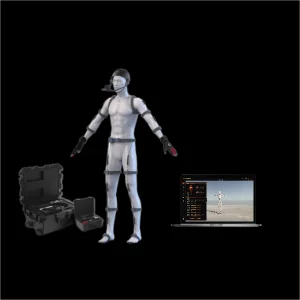
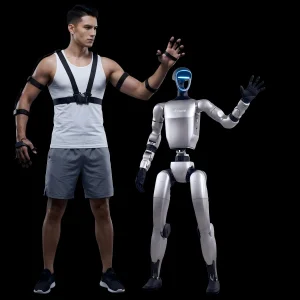
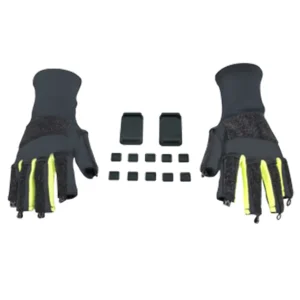
Actors equip the full-body IMU array, multi-node finger tracking gloves, and head-mounted facial capture rigs. Real-time data streams over dual-band 2.4/5.8GHz low-latency wireless transmission to local receiver base stations.
Biomechanical Solver Engine
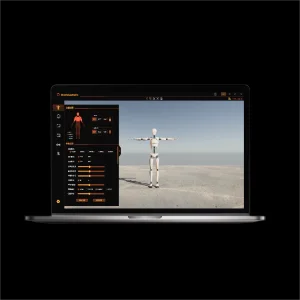
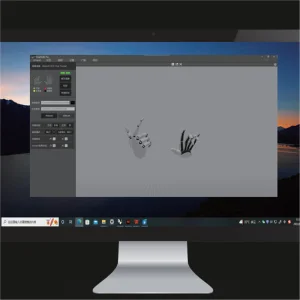
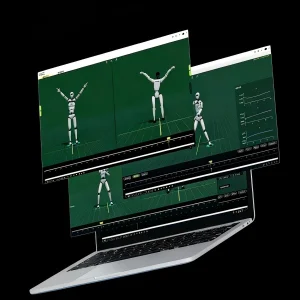
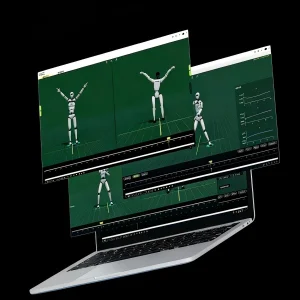
Raw orientation and acceleration vectors enter the desktop fusion engine (e.g., VDMocap Studio Plus / DreamsCap Studio). Biomechanical solvers resolve inverse kinematics, eliminate magnetic distortion, and calculate exact joint rotations.
Live Engine LiveLink & OSC Sync
The skeletal stream is routed into Unreal Engine or Unity through native LiveLink plugins or high-throughput VRPN/OSC protocols, fully mapped to Metahuman or stylized production character rigs.
Genlock & LED In-Camera Composite
Skeletal data and camera tracking coordinates match master SMPTE 2110 / PTP timecode clocks, matching camera exposure frequencies, LED wall frame rates, and virtual parallax updates simultaneously.
Integration Matrix: The Real-Time DCC & Engine Ecosystem
A professional motion capture pipeline must not operate in isolation. True operational agility requires turnkey compatibility across standard digital content creation (DCC) applications:
Autodesk Maya & MotionBuilder
Direct live stream input allows character technical directors (TDs) to monitor skeletal rigs live, fine-tune weighting, and capture high-fidelity FBX/BVH animation assets on the first take without manual keyframe reconstruction.
Unreal Engine Metahuman Framework
Complete per-bone orientation and blendshape streaming translates actor emotion, micro-expressions, and skeletal momentum into photorealistic digital humans in real time, executing complex ICVFX shots seamlessly.
Robotics & Physical Simulators
Beyond entertainment, the exact same motion telemetry maps directly into ROS (Robot Operating System), Isaac Sim, and MuJoCo platforms, facilitating scalable human demonstration datasets for humanoid robotics and teleoperation tasks.
High-Impact Deployment Architectures in Production
Detailed analysis of how production companies, broadcasting networks, and enterprise research facilities leverage flexible mocap systems to solve real-world logistical bottlenecks.
Feature Film Pre-Visualization & Stunt Capture
On massive film sets, stunt performers frequently operate within tight vehicle mockups, harness rigs, or behind dense set dressing where optical line of sight is completely obstructed. Equipping performers with inertial suits like VDSuit Full allows directors to capture authentic combat, dynamic falls, and vehicle choreography anywhere on the stage, streaming live kinematic representations straight to the DP's virtual viewfinder.
Broadcast Live XR & Virtual Influencers
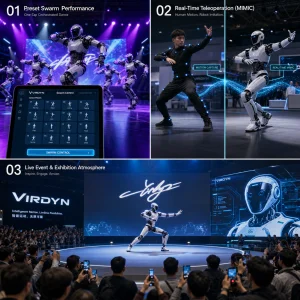
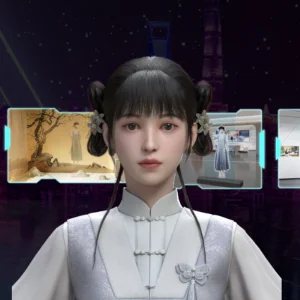
Television studios and live streaming agencies deploy full-body wearable mocap to drive virtual hosts, brand mascots, and real-time VTubers during continuous multi-hour broadcasts. The combination of resilient wireless frequency-hopping, zero camera footprint, and plug-and-play streaming into platforms like Warudo or VRChat eliminates the need for expensive multi-person tracking crews.
Embodied AI & Humanoid Teleoperation
Next-generation robotics manufacturers use the identical motion capture hardware stack—such as DreamsCap X1, half-body VDSuitMini, and mHand Pro data gloves—to harvest thousands of hours of high-precision human demonstration data. Actors manipulate real-world tools while wearable systems collect synchronized skeletal kinematic trajectories and egocentric visual data to train neural policy models.
Higher Education & Media Production Laboratories
Universities and film academies frequently lack the spatial square footage or multimillion-dollar maintenance budgets needed for passive optical stages. Inertial and markerless optical solutions empower classrooms to transform standard lecture halls into active motion tracking laboratories in minutes, enabling students to master modern ICVFX workflows directly.
Technical Roadmap: What Lies Ahead for Virtual Production (2025–2030)
Emerging research paradigms shaping the future of real-time performance capture, spatial computing, and autonomous digital humans.
Neural Kinematics & AI-Assisted Joint Constraint Solvers
The convergence of deep neural networks and traditional biomechanical inverse kinematics (IK) is fundamentally reshaping motion capture processing. Neural kinematics models, trained on millions of ground-truth biomechanical samples, can now predict physical mass, muscle activation, and floor-contact dynamics from sparse sensor arrays. This allows low-sensor-count configurations to deliver the movement fidelity previously requiring 24+ physical nodes, drastically reducing performer fatigue during marathon 12-hour studio sessions.
Furthermore, AI-driven markerless camera systems are bridging the gap with wearable IMUs. In next-generation hybrid stages, computer vision continuously cross-references edge silhouettes against high-frequency IMU joint orientations, autonomously recalculating spatial anchors in real time without human operator intervention.
Standardization Under SMPTE ST 2110 & OpenUSD Pipelines
As virtual production migrates towards fully IP-based studio backbones, motion capture telemetry is transitioning from fragmented proprietary protocols to unified open standards. Future-proof motion capture architectures natively encapsulate timestamped bone rotations and blendshape weights into OpenUSD (Universal Scene Description) schemas and distribute low-latency streams via SMPTE ST 2110 IP video/data fabrics. This standard guarantees microsecond-accurate temporal sync across LED processors, camera tracking systems, lighting consoles, and audio decks.
Virtual Production Motion Capture: Frequently Asked Questions
Technical answers to common architectural, hardware, and operational considerations encountered by production leads and engineering executives.
How does an inertial mocap suit interact with an LED Volume without latency?
Inertial suits like the VDSuit Full capture joint rotation onboard at rates exceeding 500Hz to 1000Hz, processing sensor fusion on hardware before transmitting data packets over high-throughput 2.4/5.8GHz wireless links. Typical hardware-to-software latency is under 15–20 milliseconds. When piped into Unreal Engine via LiveLink, the data updates synchronously with camera shutter Genlock, preventing visual tearing or parallax stutter on the LED screens.
How do you handle magnetic interference from LED walls and studio trussing?
Modern inertial sensors employ adaptive multi-sensor fusion algorithms. By prioritizing gyroscopic and accelerometer vector integration over magnetic orientation when abnormal magnetic gradients are detected, the system dynamically decouples from local magnetic anomalies, completely preserving skeletal stability even when the actor stands inches from high-voltage LED panels.
Can finger tracking and facial performance capture be recorded simultaneously?
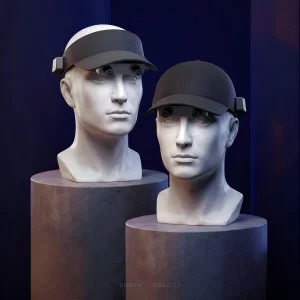
Yes. A modern production pipeline consolidates full-body inertial suits (VDSuit Full), dedicated multi-node flex sensor gloves (such as mHand Pro), and high-frame-rate head-mounted camera helmets (like VDFace) into a unified timecode-synchronized stream. Software like DreamsCap Studio synchronizes these three independent datasets into a single unified FBX export or LiveLink data pipe.
Why is motion capture being used for humanoid robot data collection?
Humanoid robotics relies extensively on imitation learning and reinforcement learning from human demonstrations. High-fidelity motion capture suits and dexterous gloves provide the most direct, natural interface for collecting biomechanically accurate whole-body kinematic trajectories and fine finger manipulations, which are subsequently ingested into simulation environments (such as Isaac Gym or MuJoCo) to train autonomous robot policies.
Advanced Production Software, Datasets & Engineering Tools
Accelerate your virtual production pipeline with specialized motion retargeting software suites, pre-calibrated avatar services, and robust accessories designed for 24/7 studio duty.