Integrated Mocap Systems & Real-Time Solutions
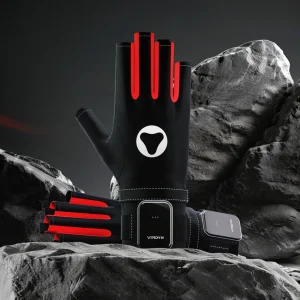
Enterprise deployments require verified, production-ready modules spanning IMU bodies, fine finger articulations, and high-fidelity facial capture hardware.


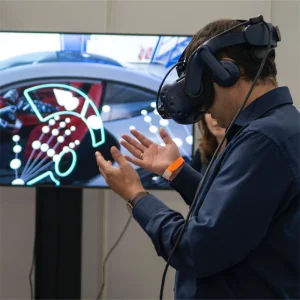
Engineering an Optical & Hybrid Motion Capture Stage
A resilient optical motion capture configuration demands meticulous spatial calibration, dynamic lighting compensation, multi-spectral sensor synchronization, and multi-sensor fusion.
Multi-Camera Optical Volumetrics
Deploying synchronous high-speed infrared (IR) or markerless stereoscopic sensor arrays. Designing optimal frustum overlap guarantees zero-blind-spot coverage across large volumes, preserving trajectory continuity even during violent physical interactions or multi-actor entanglements.
Inertial-Optical Hybrid Sensor Fusion
By coupling absolute global 6DoF positioning derived from optical volumes with angular high-frequency rotation data from IMU nodes, our fusion pipeline eliminates optical marker occlusion while preventing long-term inertial coordinate drift.
Real-Time Low Latency Retargeting
Equipped with native SDK bindings for Unreal Engine 5 (Live Link), Unity, Maya, and Blender. Biomechanical constraints and inverse kinematics (IK) run in real time via GPU acceleration, ensuring clean, jitter-free skeletal streaming under 15ms latency.
China Factory Manufacturing Advantages & Global Sourcing
Enterprise procurement decisions hinge on hardware durability, scalable batch production, full cost transparency, and seamless direct-from-factory customization.
Guangzhou Manufacturing Hub
Centrally located within the Pearl River Delta electronics ecosystem, our manufacturing facility benefits from rapid prototype iteration, local component sourcing, and fully managed precision SMT production lines.
Rigorous In-House QC Standards
Every sensor node and camera undergoes high-g drop testing, thermal drift calibration across -10°C to 50°C, and 72-hour electromagnetic interference stress testing to guarantee industrial reliability.
Tier-1 Price-to-Performance
Eliminating third-party integrator markups allows studios and academic research institutions to procure enterprise-grade optical and inertial systems at up to 60% lower CapEx compared to legacy Western brands.
Rapid Global Freight & Warehousing
Streamlined logistics frameworks ensure duty-prepaid air shipping via DHL/FedEx/UPS, standardized ATA Carnet handling for global demos, and overseas warehouse stocking for replacement nodes and accessories.
Localized Support & Regulatory Compliance
Purchasing global motion capture equipment requires airtight regulatory validation, stringent privacy certifications, and reliable localized engineering support protocols.
International Hardware Compliance
All hardware modules are certified for CE (European Conformity), FCC Part 15 (Federal Communications Commission), RoHS environmental directives, and TELEC radio approvals for low-power wireless data transmission.
24/7 Multi-Tier Remote Support
Our dedicated bilingual FAE (Field Application Engineering) team provides live remote calibration assistance, real-time pipeline troubleshooting, and zero-day patch delivery across North American, European, and Asia-Pacific time zones.
Strict Data Security & Local Processing
Proprietary animation files, actor geometry, and trajectory caches remain 100% on-premises. Systems can operate entirely within closed, air-gapped secure corporate intranets with no cloud dependency or involuntary telemetry tracking.
High-Yield Application Scenarios for Optical & Hybrid Mocap
How state-of-the-art capture planning translates into mission-critical performance improvements across commercial sectors.
Cinematic Virtual Production & AAA Games
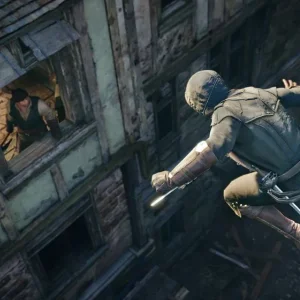
Real-time in-camera visual effects (ICVFX) tracking with LED volumes. Driving digital doubles alongside live actors with zero noticeable frame delay, enabling directors to shoot photorealistic CGI scenes in real time.
Humanoid Robotics & Embodied AI Training
Supplying the fundamental dataset backbone for Imitation Learning (IL) and Reinforcement Learning (RL). Human operators perform micro-manipulations teleoperating bipedal humanoid robots and multi-finger robotic end effectors.
Live Digital Humans & Metaverse VTubing
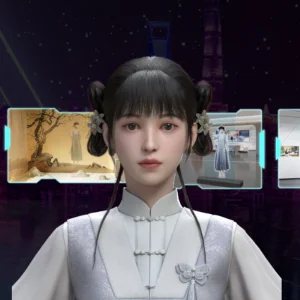
Turnkey solutions empowering interactive virtual streamers, continuous brand activations, and large-scale interactive digital concerts with expressive real-time full-body and facial synchronization.
Emerging Industry Trends in Optical & Spatial Tracking
The motion capture landscape is undergoing tectonic technological transformations driven by computer vision algorithms, AI diffusion architectures, and high-frequency edge computing.
Markerless Neural Radiance Fields (NeRFs)
Traditional passive retro-reflective balls are gradually complemented by dense markerless camera setups leveraging spatial neural reconstructors. High-res spatial arrays calculate skeletal joints directly from raw pixel radiance fields in real time.
Generative AI Real-Time In-Filling
Trained transformer backbones infer missing or occluded limbs during multi-person clashes, synthesizing highly plausible kinematic predictions and reducing tedious manual clean-up passes down to near zero.
Edge Computing In-Camera Tracking
On-sensor image signal processors (ISPs) carry out centroid tracking right inside camera enclosures, sending pre-calculated 2D coordinates across standard gigabit ethernet to slash host server GPU overhead by over 70%.
Comparative Architectural Trade-Off Analysis
A rigorous engineering benchmark to guide CTOs, studio heads, and lead technical directors in choosing the optimal capture architecture for their facilities.
| Evaluation Parameter | Optical Marker System | Markerless Optical (YanDong) | Inertial IMU (VDSuit Full) | Hybrid Optical-Inertial Matrix |
|---|---|---|---|---|
| Spatial Positional Accuracy | < 0.1 mm Global | 1.0 - 3.0 mm Dynamic | Algorithmic Estimate (Drift Managed) | < 0.2 mm Absolute |
| Environmental Restriction | Strict lighting & reflection control | Uniform broadcast lighting | Anywhere / Outdoor field friendly | Indoor calibrated capture volume |
| Marker Occlusion Risk | High during props / close combat | Moderate under extreme visual overlap | Zero occlusion vulnerability | Completely Eliminated |
| Setup Time & Calibration | 45 - 90 mins (Wand & Skeleton T-pose) | 5 - 10 mins (Zero wearable attire) | 3 - 5 mins (Single-user calibration) | 15 - 20 mins (Rapid spatial alignment) |
| Total Deployment Cost (CapEx) | High ($$$$$) | Moderate ($$$) | Extremely Cost-Effective ($) | High Value ($$$) |
| Primary Application Fit | AAA Game cinemapping & Biomechanics | Fitness, VR Crowd previs & Broadcast | Mobile live, Indie Games & Robotics AI | Enterprise Tier-1 Production Studios |
Frequently Asked Questions (FAQ)
Comprehensive solutions to common technical queries and overseas procurement inquiries.
How does Virdyn mitigate magnetic interference in complex industrial environments?
What are the prerequisites for planning a custom motion capture products stage volume?
What are the lead times and overseas shipping terms for global enterprise procurement?
Can Virdyn motion capture hardware stream raw kinematics directly into robotics frameworks?
Comprehensive Studio Production & Virtual Live Catalog
Expand your capture capabilities with dedicated streaming pipelines, virtual host platforms, and creative advertising toolkits.