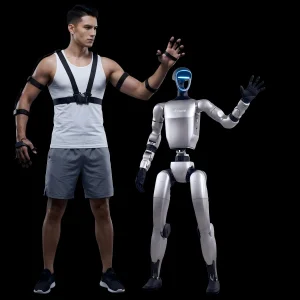
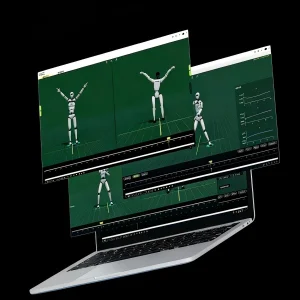
Enterprise Sports Motion Capture Solutions
Explore high-frequency precision inertial systems, optical markerless trackers, and sub-millimeter biometric nodes for biomechanical and kinematic workloads.

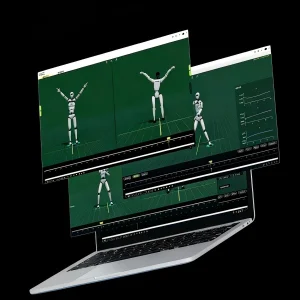
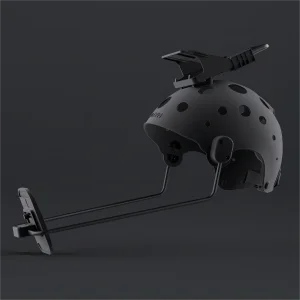
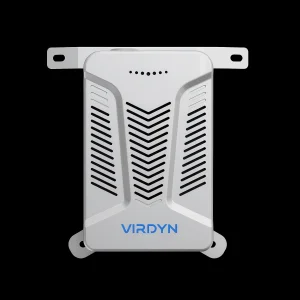

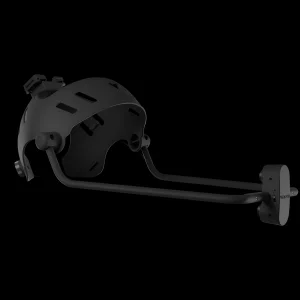
Engineering Human Kinematics for Elite Athletic Diagnostics
A comprehensive architectural guide to transitioning from qualitative training routines to quantitative, data-validated athletic optimization through inertial sensor fusion, spatial biomechanics, and multi-modal edge processing.
High-G Impact Biomechanics
Modern sports analysis requires hardware capable of logging angular velocities exceeding 2,000 deg/s and rapid linear accelerations up to 16G. Standard optical marker rigs experience high failure rates under explosive maneuvers due to marker detachment and field-of-view limits. Advanced MEMS-based 9-axis sensor suites provide continuous kinematic recording across sprint starts, jumping load cycles, and golf swing torques.
Drift-Free Sensor Fusion
By implementing adaptive Extended Kalman Filtering (EKF) alongside magnetic distortion mitigation algorithms, sports science teams isolate true joint torque without baseline drift. Gyroscopic integration errors are continuously calibrated against dynamic gravity vectors, ensuring that multi-hour training camps generate clinical-grade BVH and FBX streams without calibration decay.
Edge Synchronous Ingestion
Capturing accurate ground reaction force correlations demands millisecond time-stamping. Our unified pipeline synchronizes inertial data nodes directly with force plates, high-speed EMG arrays, and markerless optical cameras, eliminating synchronization offset in biomechanical research laboratories.
Global Enterprise Sourcing Architecture for Sports Facilities
Enterprise procurement teams in professional leagues, national Olympic federations, and sports science institutes require hardware reliability, data security, and open software architecture.
Environmental Resiliency
Wearable mocap hardware must survive sweat ingress, impact shocks, and thermal swings from indoor labs to outdoor pitches. Procurement frameworks enforce IP65 sealing, antimicrobial Lycra fabric carriers, and reinforced cabling across joints.
Unrestricted Raw Data APIs
Modern sports analysts reject walled gardens. Institutional purchasing requires direct access to uncalibrated quaternions, Euler angles, accelerations, and angular rates via C++, Python, ROS, and UDP streaming for proprietary machine-learning engines.
Multi-Subject Telemetry
Team sport analytics require tracking 10 to 22 athletes concurrently across an entire arena without radio-frequency collision. Enterprise solutions implement dynamic 2.4GHz/5.8GHz hopping protocols and high-throughput proprietary base-stations.
Zero-Latency Validation
Real-time biofeedback systems demand end-to-end latency below 20ms. Data must transmit from on-body sensor networks to tactical visual coaching boards instantly to allow immediate biomechanical intervention during high-performance drills.
Macro-Industry Sports Motion Analysis Solutions
Precision human kinematic tracking drives performance optimization, rapid return-to-play workflows, and digital media production.
Injury Prevention & Return-to-Play
By mapping joint angles, valgus knee collapse, and spinal rotational shear during high-load deceleration, sports doctors detect mechanical asymmetries before injury occurs. Kinetic baseline metrics allow surgical and athletic training teams to measure precise joint stability during rehabilitation stages.
- ACL/MCL reconstruction rehabilitation monitoring
- Rotator cuff and throwing arm torque analytics
- Spinal flexion & pelvic tilt load analysis
Technical Skill Deconstruction
Elite athletic performance is governed by fine kinematic chains. Whether perfecting the release angle of an Olympic javelin thrower, the swing plane of a PGA golfer, or the release mechanics of a baseball pitcher, motion capture systems translate physical movement into actionable biomechanical variables.
- Kinematic chain sequencing & energy transfer
- Foot-strike ground impact & gait optimization
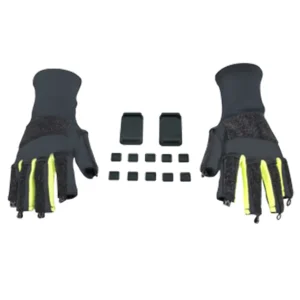
- High-frequency finger & wrist release telemetry
Virtual Sports Broadcasting & SIM
Sports entertainment and high-fidelity video game development rely on authentic biomechanical datasets. Inertial capture suits allow live on-field streaming into Unreal Engine and Unity, powering virtual replays, volumetric tactical analysis, and broadcast avatar overlays in real time.
- Real-time broadcast graphics & volumetric telemetry
- High-fidelity game physics & motion library assets
- Metaverse sports training simulations and XR coaching
Engineering Horizons: Kinematics & AI Convergence
The progression of sports motion analysis from discrete wearable sensors to pervasive, self-learning spatial biomechanical ecosystems.
Hybrid Optical-Inertial Fusion (HOIF)
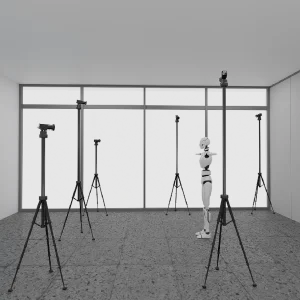
Fusing markerless multi-camera optical setups with lightweight on-body IMUs to cancel both optical occlusion and inertial drift. This delivers sub-millimeter position tracking alongside 500Hz orientation data in unconstrained stadium environments.
Neural Inverse Dynamics On-Chip
Embedding deep neural networks directly into node microcontrollers to calculate internal muscle forces and joint reaction torques locally. This shifts sports analysis from pure kinematics (motion tracking) to kinetics (force modeling) without external force plates.
Embodied Generative Sports Twins
Leveraging high-fidelity multi-season athletic motion capture datasets to train predictive neuromuscular avatars. Coaches run generative simulations to evaluate how mechanical swing adjustments impact joint health over multi-year career spans.
Global Industrial Status & Regulatory Compliance
Operating professional sports diagnostic ecosystems across international jurisdictions requires adherence to data privacy, radio-frequency spectrum approvals, and certified local field engineering support.
Athlete Biometric Data Protection
Biomechanical telemetry constitutes sensitive biometric data under international laws. Enterprise solutions integrate end-to-end AES-256 encrypted wireless transmission, on-premise localized database isolation, and explicit consent architectures conforming to GDPR (EU), HIPAA (US Sports Medicine), and CCPA standards.
RF Spectrum Certification
Real-time, multi-node tracking hardware requires radio compliance certifications to operate in crowded RF stadiums. Our transceivers hold global FCC (United States), CE-RED (European Economic Area), SRRC (China), and TELEC (Japan) certifications, operating harmoniously across industrial wireless frequency banks.
SLA-Backed Global Support
Institutional deployment is supported by certified field engineers stationed across key regional hubs in North America, Europe, and the Asia-Pacific. We provide emergency hot-swapping hardware reserves, priority firmware engineering response, and on-site biomechanical pipeline integration services.
Frequently Asked Questions on Sports Mocap Engineering
Detailed architectural insights for biomechanics researchers, head athletic trainers, and technology procurement directors.
How does inertial motion capture overcome ferromagnetic distortion on indoor gyms or weight training platforms?
Can high-impact sports like sprinting and gymnastics dislodge or decalibrate sensor nodes?
What is the latency threshold required for closed-loop real-time sports biofeedback systems?
How do you synchronize wearable mocap data with external hardware like EMG and force plates?
What software integration paths are available for custom biomechanical sports intelligence engines?
Robotics, Embodied AI & Spatial Kinematics Hardware
Enterprise solutions engineered for humanoid robotics training, dexterous manipulation datasets, and cinematic virtual production.