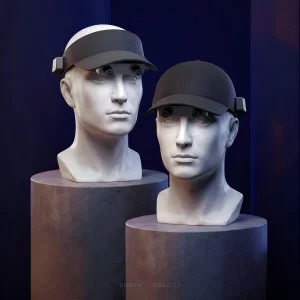
Primary Studio Capture Ecosystem & System Modules
Deploy scalable sensor infrastructure, facial capture helmets, and intelligent retargeting suites tailored for professional motion tracking environments.
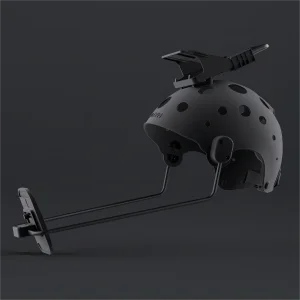
Best Virdyn VDFace Pro Capture System for Real Time Facial Capture with Face Capture Helmet Planning, Solution
Configure Hardware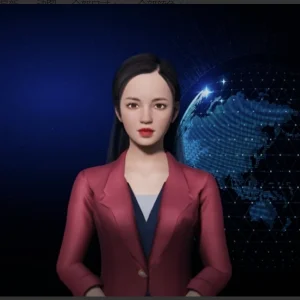
Design Virtual Host Technology: Help Mainstream Media Layout Virtual Reality Industry Planning, Solution
Explore Broadcast Suite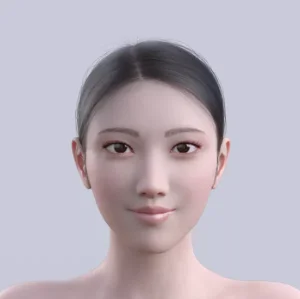
Best Customize Your 3D Virtual Avatar - Personalized High-Quality and Fast Delivery | 3D Custom Avatar Services Planning, Solution
Deploy Custom Avatars
Best How Do Brands Use Virtual Spokesman to Tell Good Stories: Motion Capture Technology Empowers Brand Propagation Planning, Solution
Brand Solutions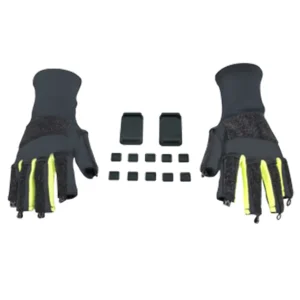
Best Inertia Motion Capture Fingers Capture Accessories Elastic Lycra Fabric Gloves for VDSuit Full(Without Sensors) Planning, Solution
Capture Accessories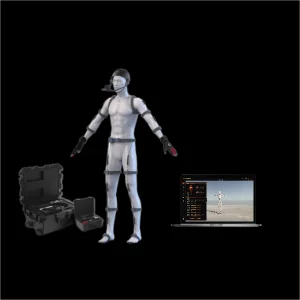
Design DreamsCap X1 Full-Body, Hand & Face Motion Capture for Humanoid Robot Data Collection & Teleoperation Planning, Solution
Robotics Teleoperation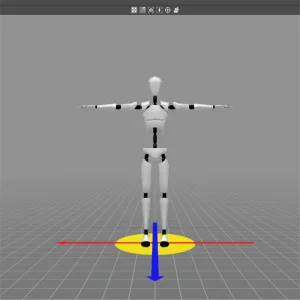
Design Virdyn VDMocap Studio Plus Motion Capture Software System for VDSuit Full Planning, Solution
Studio Plus Engine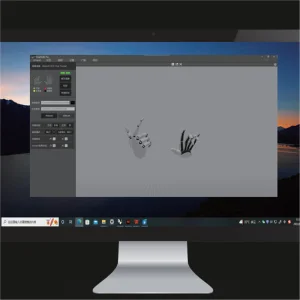
Best Virdyn mHand Studio Motion Capture Gloves Software System for mHand Pro Planning, Solution
Hand Studio SoftwareEngineering Principles of Enterprise Motion Capture Studios
The strategic planning of an industrial-grade motion capture facility necessitates a multi-layered convergence of biomechanical physics, RF space design, and synchronous computational processing.
Electromagnetic & RF Stage Hardening
Modern high-throughput capture spaces demand controlled radiofrequency conditions. Virdyn studio planning engineers integrate dynamic 2.4GHz / 5.8GHz channel hopping protocols with active RF spectrum analysis. By eliminating multi-path interference from structural metal framing and LED display driver matrices, our inertial suits preserve sub-millisecond packet transmission across volumes up to 1000 square meters.
- 2.4/5.8GHz Dynamic Hopping
- Faraday RF Mitigation
- Low Packet-Loss Topology
Genlock & SMPTE Timecode Integration
Zero-frame offset across visual, acoustic, and kinematic capture streams requires strict broadcast-standard synchronization. Our studio pipeline guarantees unified SMPTE LTC / PTP (Precision Time Protocol) timecode alignment across optical camera arrays, head-mounted VDFace cameras, inertial sensors, and target real-time engines such as Unreal Engine 5 Live Link.
- SMPTE ST 2110 Ready
- PTP Timecode Synchronization
- Sub-Frame Alignment
Biomechanical Constraints & Solvers
Inertial kinematics depend intrinsically on mathematical error bounds. VDMocap Studio Plus incorporates hierarchical anatomical skeleton definitions, non-linear Extended Kalman Filtering (EKF), and real-time floor-contact detection algorithms that eradicate foot-sliding and quaternion gimbal drift under prolonged high-intensity capture runs.
- Extended Kalman Filter
- Zero-Gimbal Drift Logic
- Automated Contact Solvers
Enterprise Procurement Matrix: Cross-Industry Solutions
Global enterprises require customized infrastructure configurations depending on their specific throughput, asset requirements, and spatial scale.
Virtual Production & ICVFX LED Volumes
In LED volume filmmaking, reflective markers often fail due to intense infrared bleed from large LED stage panels. Virdyn’s inertial mocap suits operate entirely immune to lighting changes and optical occlusions from props, cameras, and production gear. Directors gain instant character performance pre-visualization directly inside Unreal Engine 5, saving hundreds of post-production hours per scene.
Procurement Requirements: High-bandwidth low-latency Wi-Fi 6 transceivers, synchronized VDFace Pro helmet streaming, and direct OSC network broadcasting to stage visualization consoles.
Embodied AI & Humanoid Robotics Training
Robot foundation model developers need massive volumes of real-world human demonstration data. Using VDSuit Full paired with mHand Pro and VDEgo head-mounted egocentric vision cameras, researchers record continuous multimodal trajectory sets: high-degree-of-freedom finger dexterities, whole-body dynamic balancing, and synchronized RGB egocentric video streams.
Procurement Requirements: ROS/ROS2 node connectivity, URDF kinematic retargeting through VDRobot Studio, haptic glove bidirectional teleoperation SDKs, and timestamp-synchronized MP4/JSON telemetry export.
AAA Game Studios & Dynamic Locomotion
Character animation budgets in interactive gaming require rapid prototyping of athletic locomotion, acrobatics, and complex multi-character stunt choreography. Virdyn hardware delivers robust 3D rotation data at up to 1000Hz internal IMU sampling rates, allowing stunt actors to roll, jump, and interact in non-traditional staging areas—including natural outdoor terrains.
Procurement Requirements: Ruggedized impact-resistant IMU sensor housings, modular Lycra base layers with washable ergonomics, multi-performer RF channel assignment, and automated FBX clean export.
VTuber Agencies & Real-Time Broadcast
Media holding firms and interactive entertainment brands leverage custom 3D avatars to establish virtual hosts and 24/7 interactive livestreams. Fast calibration, one-operator usability, and zero spatial footprint allow commercial broadcast rooms to initiate zero-latency digital human broadcasts instantly without dedicated optical calibration personnel.
Procurement Requirements: Turn-key avatar rigging, automated ARKit 52-blendshape facial mapping, integrated finger posture estimation, and OSC streaming compatibility with Warudo and VRChat.
Comprehensive Technology Trade-Off Matrix
An architectural evaluation across inertial, optical marker-based, and pure markerless computer vision capture methodologies.
| Evaluation Parameter | Virdyn Inertial Hybrid System | Traditional Optical (Retro-Reflective) | Pure AI Markerless Optical |
|---|---|---|---|
| Spatial Infrastructure | Zero fixed spatial requirement; works in offices, stages, and outdoor fields. | Requires rigid, vibration-isolated trussing with 12–48 high-speed IR cameras. | Requires multi-camera video array; sensitive to perspective depth falloff. |
| Occlusion Vulnerability | 100% Occlusion-Free. Body parts never block worn IMUs. | High vulnerability; marker dropout occurs during floor work and prop contact. | Severe vulnerability; complex body crosses degrade skeletal tracking. |
| Calibration Overhead | 15–30 seconds simple posture calibration (A-Pose / T-Pose). | 15–45 minutes wand-waving, origin placement, and per-actor marker placement. | Instantaneous to 2 minutes; camera extrinsic registration required. |
| Data Processing Latency | Ultra-low: <15ms end-to-end pipeline latency. | Low: 5–20ms depending on camera frame rate and server computing power. | Moderate to High: 40–120ms due to multi-layer neural network inference. |
| Total Cost of Ownership (TCO) | Low CAPEX and negligible ongoing maintenance overhead. | Extremely high CAPEX ($100k–$500k+), dedicated stage, and specialized crew. | Moderate CAPEX; requires high-end multi-GPU computing clusters. |
| Finger & Face Modularity | Native modular integration with mHand Pro and VDFace Pro systems. | Requires ultra-dense sub-millimeter marker clusters or secondary cameras. | Subject to camera resolution constraints; struggles with fine finger articulation. |
Technical Roadmap: The Next Era of Motion Capture (2026–2030)
Pioneering advancements across Spatial Computing, Neural Radiance Fields, and Generative Kinematic Models.
3D Gaussian Splatting & NeRF Studio Integration
Future virtual stages will eliminate manual 3D modeling stages entirely. By combining wearable IMU data with dynamic 3D Gaussian Splatting (3DGS), live actors can be reconstructed into view-dependent, photorealistic volumetric avatars in real-time. This reduces photogrammetry and texture mapping cycles from weeks to minutes.
On-Sensor Edge AI Kinematic Filtering
Next-generation Virdyn hardware nodes will embed ultra-low-power neuromorphic inference microcontrollers directly inside every 9-axis sensor node. By filtering environmental electromagnetic anomalies and running localized quaternion predictions at the sensor level, telemetry accuracy is maintained even in high-interference industrial environments.
Embodied Robotics Kinematic Foundation Models
By aggregating thousands of hours of high-precision human locomotion, balance recovery, and dexterous tool manipulation through VDRobot Studio, Virdyn provides the dataset architecture required to train next-generation humanoid Vision-Language-Action (VLA) AI models, bridging the sim-to-real transfer gap.
Compliance, On-Premise Security & Global Support SLA
Robust enterprise deployments demand uncompromising data governance, regional wireless regulatory certification, and technical support access.
Zero-Cloud Local Isolation
Enterprise clients, defense labs, and confidential game studios maintain full sovereign ownership of proprietary movement data. Virdyn software suites operate completely offline without mandatory external cloud connections. Live streams stay confined to internal LAN subnetworks, complying with rigorous studio NDA protocols and zero-trust IT topologies.
Global Wireless Certification
All wearable transceivers and proprietary 2.4G/5.8G RF modules adhere strictly to regional spectrum regulatory compliance standards worldwide, holding official CE (European Economic Area), FCC (United States), TELEC (Japan), and SRRC certifications. This guarantees seamless customs clearance and operational safety in commercial and educational environments.
Tier-3 SLA & Global Replacement
Enterprise procurement includes comprehensive Service Level Agreements. Virdyn delivers guaranteed 24-hour response windows for technical inquiries, direct access to algorithm engineers for custom pipeline retargeting, rapid sensor module replacement kits, and remote onboarding sessions to ensure reliable production uptime.
Frequently Asked Questions: Mo Cap Studio Planning
Answers to common structural, technical, and integration questions encountered by studio architects and procurement directors.
Extended Specialized Solutions & Engineering Demos
Explore precision finger gloves, egocentric AI vision frameworks, cinematic virtual production toolsets, and live demonstration booking options.
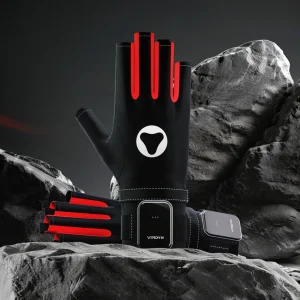
Best Virdyn mHand Pro an Inertia Motion Capture Gloves for Virtual Reality Planning, Solution
Explore Gloves
Design Motion Capture Technology to Help the Development of Creative Advertising with Realistic Effects Planning, Solution
Advertising Solutions
Best Motion Capture Technology Opens a New Era of Animation Development Planning, Solution
Animation Pipelines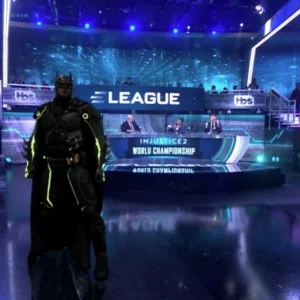
Design Motion Capture Provides Advanced Technology Tools for Virtual Film Production Planning, Solution
Film Production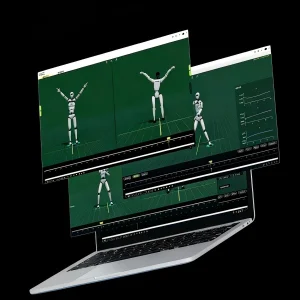
Design VDRobot Studio: Motion Data Collection&Conversion Platform for Robotics | Virdyn Planning, Solution
Robotics Platform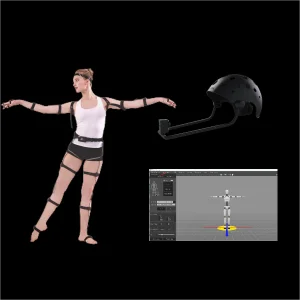
Design VDCap Full Performance Capture Entry-Level Motion Capture Kits for Beginners and Hobbyist Planning, Solution
Entry-Level Kits
Design Book a Demo for VDSuit Full or mHand Pro Planning, Solution
Book Studio Demo