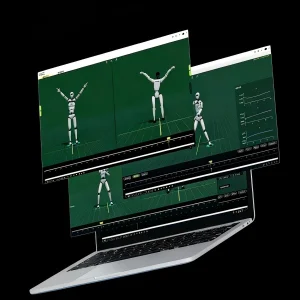
Integrated Helmet Systems & Multimodal Capture Hubs
Explore production-ready facial telemetry helmets, full-body inertial suits, and precision input nodes designed for real-time virtual production pipelines.
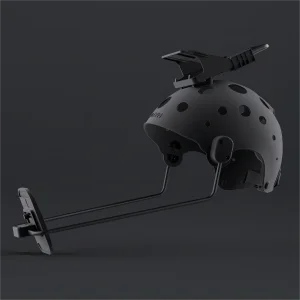
VDFace Pro Real-Time Facial Capture Helmet System
Deploy Solution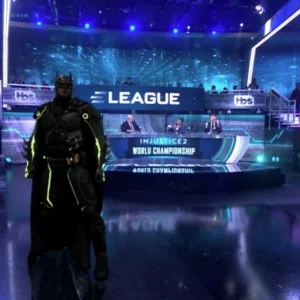
Advanced Technology Tools for Virtual Film Production
Deploy Solution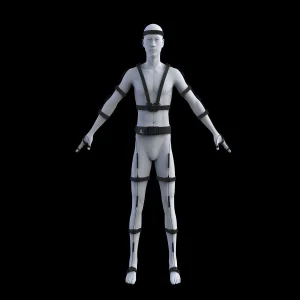
VDSuit Full Body Inertia Motion Capture Suit
Deploy Solution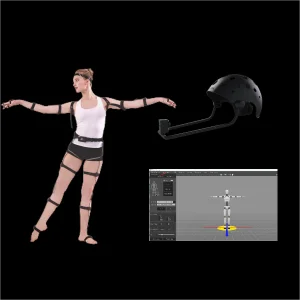
VDCap Full Performance Capture Entry-Level Kits
Deploy Solution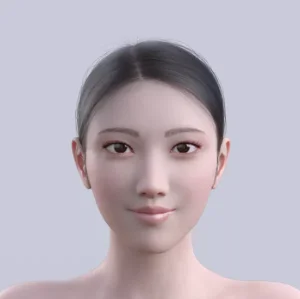
Custom 3D Virtual Avatar Engineering Services
Deploy Solution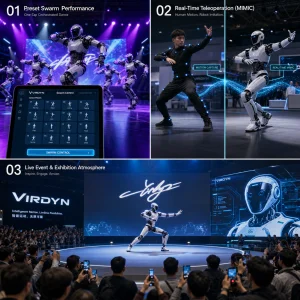
Humanoid Robot Live Performance & Teleoperation
Deploy Solution
Book a Demo: VDSuit Full & mHand Pro Ecosystem
Deploy Solution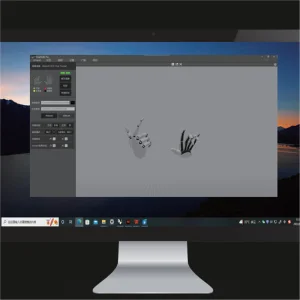
mHand Studio Motion Capture Gloves Software
Deploy SolutionEngineering Principles of Helmet-Mounted Face Capture (HMC)
Understanding the transition from static photogrammetry to zero-latency, dynamic egocentric biometric telemetry for next-generation digital interaction.
Optomechanical Stabilization
The primary barrier in facial capture is micro-slippage of the helmet assembly relative to the cranium. Our designs implement an ergonomically counterbalanced 4-point occipital harness and lightweight carbon-fiber boom armature that completely isolates camera sensors from rapid performer head acceleration.
- Carbon composite boom structure (<240g cantilever)
- Micro-metric dual-axis lockable focal brackets
- Breath-deflecting optical air channels
Infrared Active Illumination
Visible-light capture fails dramatically under shifting studio spotlights or dynamic virtual production LED volumes (disruptive moiré and chromatic spill). The HMC system embeds an array of 850nm / 940nm narrowband NIR (Near-Infrared) surface LEDs with matching optical bandpass filters.
- Shadow-free annular uniform micro-emitters
- Zero eye strain with invisible spectrum illumination
- 100% decoupling from studio ambient stage lighting
Neuromorphic Dense Solving
Moving past standard 52 ARKit blendshapes, the real-time inference engine relies on deep neural networks trained on sub-millimeter anatomical action units (FACS). Edge processing clusters convert high-speed video frames directly to weighted morph targets at up to 120 FPS with minimal compute load.
- Sub-millimeter lip, eyelid, and cheek deformation
- Ultra-low end-to-end latency (<16ms round-trip)
- Direct export into Unreal Live Link and Unity OSC
Global Enterprise Procurement & Operational Requirements
Enterprise procurement divisions within AAA game studios, film visual effects houses, and AI robotics corporations require strict operational standards across mechanical, electrical, and data integrity layers.
Ergonomics & Safety
Long motion capture sessions require high actor endurance. Helmets feature medical-grade breathable padding, dual-dial BOA tensioning, and low total weight (<650 grams total payload including boom) to eliminate performer cervical spine fatigue.
Low-Latency RF Links
Zero wire tethering is mandatory for dynamic martial arts and full-body stunts. Wireless units transmit multi-stream H.265 encoded video over dual-band 5.8GHz / Wi-Fi 6E channels with automated channel-hopping in high-interference studio venues.
LTC / Genlock Sync
To avoid asynchronous audio/video drift across multicam arrays and inertial suits, the HMC hardware supports SMPTE/LTC timecode injection and wireless PTP (Precision Time Protocol) genlock syncing across all pipeline nodes.
Modular Serviceability
Standardized quick-release brackets allow hot-swapping camera modules, changing lenses (3.6mm to 6mm distortion-calibrated optics), and replacing hygiene liners within seconds, reducing expensive on-set studio downtime.
End-to-End Enterprise Deployment Topologies
Helmet-based face capture serves as an indispensable perceptual anchor across four critical industrial and creative domains.
1. Virtual Film Production & AAA Game Cinematics
Within LED volume stages (ICVFX) and motion capture volumes, helmet-based face capture works concurrently with full-body inertial suits (like VDSuit Full) and optical cameras. Performers deliver spoken dialogue while jumping, rolling, and executing tactical choreography without losing facial line of sight.
2. Humanoid Robotics & Embodied AI Imitation Learning
Robotic teleoperation and social humanoid avatars demand multi-modal human demonstration datasets. Helmet systems paired with first-person egocentric cameras (like VDEgo) record synchronized facial micro-expressions, speech prosody, and eye-gaze intent alongside dexterous teleoperation gloves (mHand Pro).
3. Digital Humans, VTubing & Virtual Live Broadcast
Real-time interactive broadcasting relies on zero latency and absolute fidelity. Operators wearing VDFace helmets broadcast 8-hour live interactive sessions across global media platforms without tracking loss caused by sudden head turns or varying room illumination.
4. Clinical Neurological & Ergonomic Biomechanics
Medical research laboratories and ergonomic research institutions deploy HMC hardware for quantified maxillofacial movement analysis, diagnosing cranial nerve disorders (such as Bell's palsy), and assessing speech rehabilitation trajectories under controlled conditions.
Technology Roadmap & Architectural Evolution
The progression of facial telemetry from single-lens consumer cameras to multi-sensor edge computing arrays.
| Development Phase | Hardware Architecture | Solving & Inference Pipeline | Integration & Latency Profiles | Deployment Ready |
|---|---|---|---|---|
| Phase 1: Optical RGB Boom | Single-camera 60FPS visible light sensor, rigid aluminium boom, external battery pack. | 2D landmark extraction, manual retargeting blendshape mapping via desktop processing. | USB wired tethering, 35–45ms latency, vulnerable to ambient lighting changes. | Established legacy standard |
| Phase 2: Active NIR & IMU Hybrid (Current Standard) | Dual/Single Global Shutter NIR camera, 850nm active IR, ultra-light carbon fiber, head-tracking 6-DoF IMU. | Deep neural FACS solver, real-time edge filtering, automatic tongue & gaze tracking. | Wireless 5.8GHz / Wi-Fi 6, <16ms latency, native Unreal Engine Live Link / Unity OSC. | Enterprise production ready |
| Phase 3: Neuromorphic Event-Based Sensing (Next-Gen) | Event-based bio-inspired vision sensors (>1000 FPS temporal resolution), on-helmet NPU coprocessor. | Continuous temporal micro-expression tracking, zero motion blur, sub-millivolt dynamic power draw. | Direct on-chip neural solving, <4ms latency, ultra-wide dynamic range (>120dB). | Emerging R&D pipeline |
Enterprise Biometric Governance & Global Support
Facial tracking systems handle sensitive biometric information. Virdyn enforces rigorous data integrity protocols while maintaining dedicated global technical support channels.
GDPR & Biometric Privacy Standards
Our desktop systems and runtimes process facial telemetry locally at the edge. No biometric vectors or facial imagery are uploaded to external cloud servers without explicit operational authorization, fulfilling strict ISO/IEC 27001, GDPR Title III, and CCPA enterprise security requirements.
Worldwide Technical Engineering Support
From initial stage planning to on-site studio integration, Virdyn delivers technical consultation with guaranteed response times under 24 business hours. Complete software updates, custom API bindings, and replacement parts are supplied directly to North American, European, and Asia-Pacific production hubs.
Turnkey Integration & Custom SDKs
We provide full C++, Python, and C# developer SDKs alongside ready-to-run plugins for Autodesk Maya, MotionBuilder, Blender, Unity, and Unreal Engine. Teams can easily link HMC facial outputs directly into internal character rigging systems.
Frequently Asked Questions: Face Capture Planning & Solution
Direct technical answers addressing system setup, mechanical calibration, integration pipelines, and volume procurement.
How does the helmet manage slippage during high-intensity stunt performance?
The helmet combines an ergonomic counterbalanced occipital cradle, dynamic micro-ratcheting dials, and anti-slip silicone lining. This holds optical boom orientation stable through rapid head rotations, acrobatic falls, and aggressive motion capture stunts without losing facial alignment.
Can the system sync with our existing optical mocap or inertial suit setup?
Yes. The system natively accepts hardware Genlock and SMPTE/LTC timecode inputs, enabling sub-frame synchronization across full-body inertial suits (like VDSuit Full), optical camera rigs (such as Vicon or OptiTrack), spatial audio microphones, and production camera feeds.
What is the latency between physical expression and game engine display?
When running over high-speed wireless or low-latency tethered configurations, total round-trip latency—from physical skin deformation through deep neural inference to Unreal Engine Live Link—is typically under 16ms (within a single 60 FPS frame window).
Is the system immune to LED volume wall reflections and shifting stage lighting?
Yes. The VDFace Pro helmet uses active 850nm / 940nm Near-Infrared illumination with matching physical bandpass optical filters. This isolates the tracking sensors from stage illumination variations, green spill, and intense LED wall reflections.
Extended Motion Tracking, Teleoperation & Robot Data Hubs
Complete your studio setup with specialized half-body trackers, robot imitation learning systems, and motion accessories.
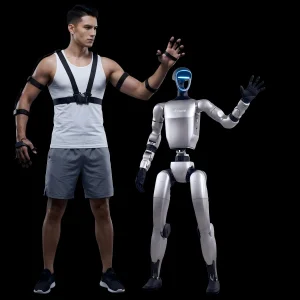
VDSuitMini Half-Body Mocap & Robot Teleoperation
Deploy Solution
Virtual Spokesman Brand Propagation Solutions
Deploy Solution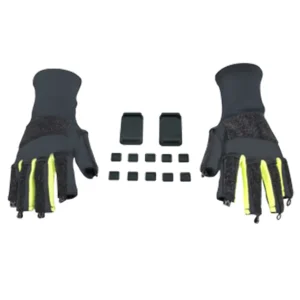
Elastic Lycra Finger Capture Gloves for VDSuit Full
Deploy Solution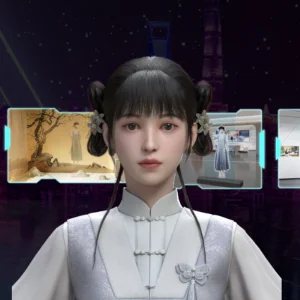
Digital Human Activation & Virtual Marketing Systems
Deploy Solution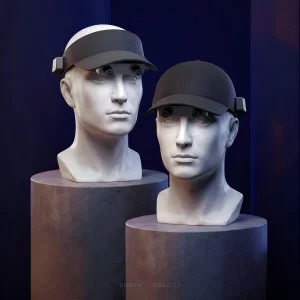
VDEgo Egocentric FPV Data Collection Camera
Deploy Solution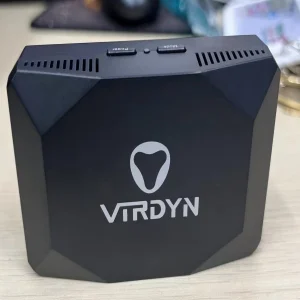
Full Body Motion Capture Hub & Stage Accessories
Deploy Solution
High-Fidelity Mocap for Creative Advertising Effects
Deploy Solution