Design Motion Capture Unity Integration Planning & Solution
System Architecture, Latency Benchmarking, and Scalable Hardware-in-the-Loop Pipelines for AAA Virtual Production, Digital Humans, and Embodied AI Robotics
Integrated Motion Capture Hardware Systems (Phase I Deployments)
Enterprise hardware configurations optimized for zero-overhead streaming into Unity Native XR pipelines, Mecanim avatars, and real-time physics solvers.

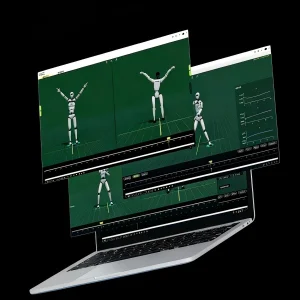
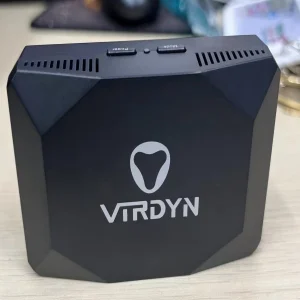
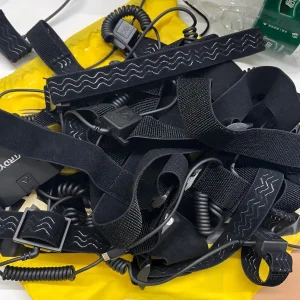
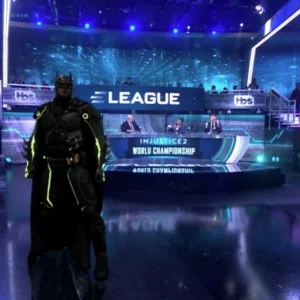
Global Mocap Integration Landscape & Unity Engine Architecture
A technical examination of how multi-sensor telemetry integrates into real-time rendering pipelines, mitigating deterministic latency and rotational drift.
In modern computer graphics, interactive media, and physical AI, the integration between inertial motion capture (mocap) systems and Unity stands as a cornerstone pipeline. Historically, motion capture for game engines was dominated by high-maintenance optical marker rings confined within multi-million-dollar acoustic volumes. Today, global commercial deployments demand agile, ambient-tolerant, and untethered spatial tracking capabilities capable of operating in daylight, industrial factory floors, and live broadcast studios.
Algorithmic Coupling: Data Streaming via Unity C# Native Plugins
Achieving lifelike motion synchronization without perceptual artifacting or phase delay requires rigorous system planning. High-throughput motion capture suites deploy 9-axis micro-electro-mechanical system (MEMS) sensors running proprietary on-chip Kalman filtering. The raw IMU positional and angular telemetry is transmitted via 2.4GHz proprietary RF channels or Wi-Fi 6 protocols directly to a broadcast hub.
Within Unity, the architectural pipeline is implemented through zero-allocation C# asynchronous socket receivers. Incoming UDP or OSC datagrams are parsed off the main thread to avoid garbag-collection pauses. Bone quaternions and translational vectors are mapped dynamically onto Humanoid Avatar Rigs using Unity's AnimationJob and PlayableGraph API, ensuring that computational overhead remains bounded even when orchestrating multi-actor cinematics.
Sensor Fusion & Calibration
Combines multi-axis accelerometer, angular rate gyro, and magnetometers to maintain bone vector consistency without drift during rapid dynamic actions.
- Extended Kalman Filter (EKF) stabilization
- Single-pose (T-Pose / A-Pose) instant calibration
- Dynamic anti-magnetic field drift compensation
Streaming & Networking Layer
Low-overhead zero-copy network pipelines delivering skeletal payloads directly into Unity's active scene memory buffers with deterministic frame timing.
- Direct UDP broadcast, Named Pipes, and TCP fallback
- Native VRChat OSC and Warudo streaming protocols
- Multi-actor concurrent network socket management
Unity Runtime Retargeting
Direct mapping onto Unity Humanoid rigs, custom robotic kinematics chains, or blendshape facial expressions via C# native bindings.
- Full Mecanim avatar auto-mapping & spine solving
- Joint limit enforcement preventing unnatural hyper-extension
- Real-time root motion extraction and world displacement
Chinese Advanced Manufacturing & Global Sourcing Efficiency
How the integration of world-class hardware assembly, rapid prototyping, and software engineering delivers superior cost-to-performance benchmarks for international buyers.
The global motion capture market is experiencing a profound transition from cost-prohibitive Western legacy optical stages to robust, highly integrated smart hardware manufactured within the Pearl River Delta high-tech manufacturing corridor. Based in Guangzhou, Virdyn leverages complete, localized supply chain integration—from micro-machining of high-frequency IMU brackets and precision Lycra sensor weave fabrication to integrated circuit SMT assembly and proprietary sensor firmware calibration.
Measurable Sourcing Advantages for International Studios & Integrators
For international procurement teams across North America, Europe, Japan, and Southeast Asia, partnering with an agile Chinese mocap original equipment manufacturer (OEM) provides critical logistical and financial benefits:
| Evaluation Parameter | Legacy Optical Capture Rig | Virdyn Advanced Inertial / Hybrid Integration |
|---|---|---|
| Setup Time & Footprint | 1-3 days calibration; dedicated 100m² darkened volume | 5 minutes; wearable plug-and-play anywhere, indoors/outdoors |
| Hardware Procurement Cost | $80,000 – $250,000+ USD | Fraction of optical cost, with full turnkey Unity SDK license |
| Manufacturing Lead Times | 12 to 24 weeks for specialized cameras and retro-markers | 1 to 3 weeks via direct automated production and testing lines |
| Field Maintenance & Occlusion | Fragile; occluded easily by props, furniture, and bodies | Zero line-of-sight occlusion; resilient elastic Lycra suit |
| Unity Live Stream Setup | Complex bridge servers and multi-machine sync | One-click streaming via native Unity Package Manager (UPM) |
Localized Application Scenarios
Across diverse enterprise domains, the integration of Unity and Virdyn's motion tracking technology provides targeted capabilities:
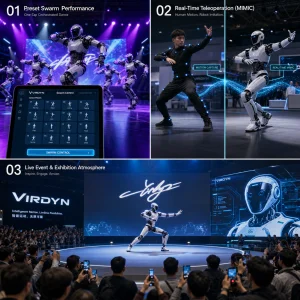
1. Embodied AI and Humanoid Robotics Teleoperation: As artificial intelligence transitions from large language models to physical embodiment, robotics laboratories require millions of tokens of high-fidelity human kinematic demonstrations. Wearable systems stream joint vectors directly to Unity digital twin simulations, matching human degrees of freedom to robotic actuators in real time.
2. High-Fidelity VTuber Live Broadcasting: Virtual influencers and live commerce streamers require zero latency, jitter-free full-body and facial capture capable of continuous 8-hour daily operation. Unity-driven virtual broadcast studios execute real-time shader pipelines alongside Virdyn's live avatar retargeting.
3. Film Pre-visualization & AAA Game Cinematics: Directors and animators review cutscenes directly in the Unity Game View with real-time digital actors, dramatically collapsing iteration cycles from weeks of manual keyframing into a single live performance session.
Industry Trends & Enterprise Procurement Methodology
Key technological directions shaping motion capture and a systematic framework for institutional buyers.
Multimodal Sensor Convergence
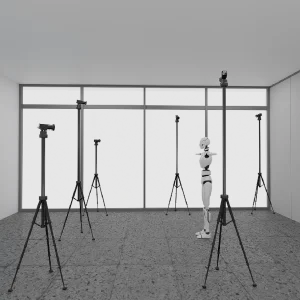
The industry is converging toward hybrid workflows that combine the non-occlusive freedom of wearable IMU sensors with the absolute spatial reference points of egocentric cameras and markerless optical machine vision.
On-Device Neural Denoising
Integration of lightweight transformer networks directly into the real-time pipeline to predict contact phases, eliminate floor penetration, and reconstruct natural foot-ground interactions without latency degradation.
Standardized Embodied AI Toolchains
Rapid expansion from traditional entertainment animation into robotics datasets formatted for imitation learning, reinforcement learning policies, and physics engine validation in Unity and ROS.
Institutional Procurement Evaluation Checklist
Enterprise procurement departments, game studio technical directors, and robotics research PIs should evaluate suppliers against four foundational technical criteria:
1. SDK Extensibility & Engine Native Support: Ensure the vendor supplies native C# Unity packages with accessible source wrappers, support for both OpenXR and traditional displays, and continuous compatibility with Unity Long-Term Support (LTS) releases.
2. Magnetic Immunity & Hardware Resilience: Verify that the IMU fusion software handles ferrous environments (such as steel reinforcement in modern office buildings or production studios) without severe heading deviations.
3. Dual Streaming & Raw Recording Formats: Ensure support for concurrent real-time live streaming into Unity alongside raw uncompressed data recording for post-production editing, motion curves adjustment, and multi-format export (FBX, BVH, CSV).
4. Lifecycle SLA & Direct Factory Support: Select manufacturers that offer comprehensive engineering support, expedited spare parts delivery, and direct firmware updates for custom rig requirements.
Frequently Asked Technical Questions (Engineering FAQ)
Comprehensive responses to core design, integration, and operational questions regarding Unity motion capture implementation.
How does Virdyn tackle positional drift in Unity during long takes?
Inertial capture calculates orientation through rotational gyros and accelerometers. For absolute displacement, Virdyn's VDMocap Studio incorporates proprietary zero-velocity updates (ZUPT) and dynamic ground contact solvers. When integrated into Unity, users can utilize root-motion constraints or combine the setup with external spatial markers (such as Vive trackers or optical anchors) for long-duration drift-free positioning.
What is the typical end-to-end streaming latency into Unity?
Under recommended Wi-Fi 5/6 or 2.4GHz RF communication conditions, sensor acquisition, on-board fusion, packet transmission, and Unity socket deserialization incur an end-to-end latency of under 15 milliseconds. This easily accommodates 60fps to 120fps interactive XR pipelines and real-time VTubing broadcast systems.
Can the system synchronize body, finger, and facial capture concurrently?
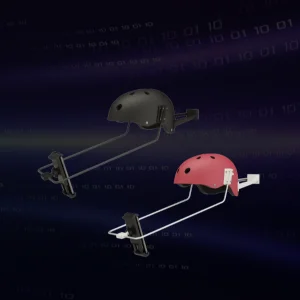
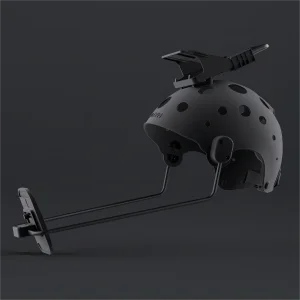
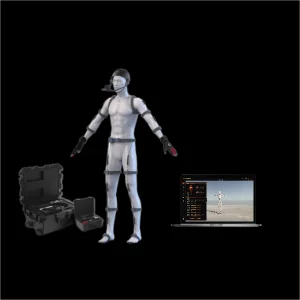
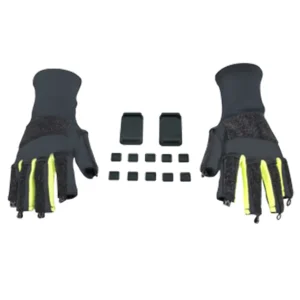
Yes. The Virdyn architecture synchronizes full-body inertial suits (VDSuit Full), high-precision multi-node finger gloves (mHand Pro), and high-resolution facial helmets (VDFace / AH-D) within a unified unified clock domain. The combined skeletal and blendshape data stream is transmitted synchronously into a single unified avatar in Unity.
How does Unity handle multi-actor capture simultaneously?
Each mocap hardware hub broadcasts over a distinct UDP port or tagged network ID. The Unity plugin instantiates multiple client receivers, allowing technical directors to bind each hardware stream to an independent Humanoid character rig in the scene without cross-talk or performance degradation.
Advanced Tracking Systems & Robotics Teleoperation Hardware (Phase II)
Specialized optical, facial, and embodied AI data acquisition products engineered for cross-platform research and deployment.