Integrated Node Hardware Systems
Turnkey wearable hardware and sensor configurations engineered for real-time skeletal telemetry, zero-latency feedback, and industrial durability.



< 15ms
End-to-End Pipeline Latency
1000Hz
Internal Sensor Sampling Rate
0.05°
Static Attitude Dynamic Resolution
10+
Cross-Engine & ROS2 Integrations
Executive Engineering Summary: Motion Capture Node Suit Architecture
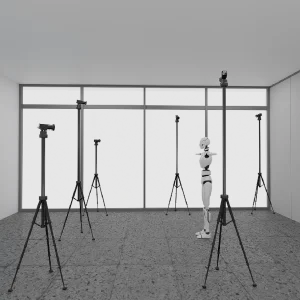
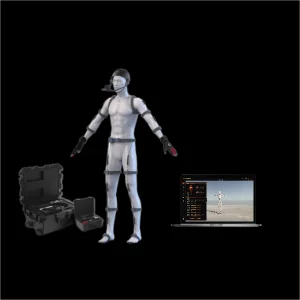
The transition from passive optical reflective tracking systems to decentralized, wearable inertial measurement unit (IMU) node suits represents a fundamental paradigm shift in kinematic data acquisition. A modern Motion Capture Node Suit does not function merely as a fabric garment; it operates as an enterprise-grade biological-to-digital sensor network. By distributing 17 to 27 multi-axis inertial nodes along critical human skeletal articulation points, these systems compute orientation, angular velocity, and acceleration vectors without requiring direct line-of-sight visual feedback.
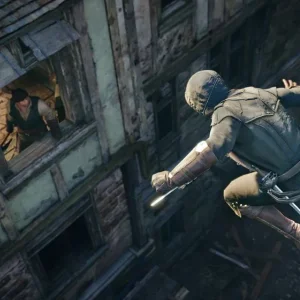
In high-fidelity production environments—spanning triple-A game character animation, volumetric film production, and teleoperated embodied AI—traditional optical mocap faces crippling bottlenecks: occlusion during multi-actor interactions, high infrastructure calibration overheads, and non-transportable physical volumes. Wearable node systems resolve these friction points through onboard Extended Kalman Filters (EKF) and proprietary multi-sensor data fusion. Kinematic data streams directly into runtime environments (Unreal Engine 5, Unity, Maya, and ROS2), reducing the post-processing animation clean-up pipeline by up to 70%.
China Factory Advantages: Scale, Calibration & Supply Chain Dominance
How the integration of Shenzhen-Guangdong precision hardware clusters accelerates industrialization, testing rigor, and commercial accessibility.
Tier-1 MEMS Sourcing Clusters
Direct integration with the Pearl River Delta electronics ecosystem grants immediate access to top-tier 9-axis MEMS sensor wafer batches. High-yield selection protocols eliminate thermal hysteresis and zero-bias drift at the component level prior to SMT fabrication.
Automated Multi-Axis Calibration
Our automated production facilities deploy specialized multi-axis CNC turn-tables and Helmholtz magnetic compensation chambers. Every individual sensor node undergoes automated 3-axis temperature, angular rate, and magnetic field profiling before integration into suits.
Smart Ergonomic Textiles
Textile R&D incorporates high-tensile, antibacterial Lycra with integrated micro-ribbon routing channels. Factory facilities achieve rapid iterative mechanical prototyping, balancing performer breathability, mechanical shock protection, and absolute anatomical sensor stability.
Future-Proof Trajectories: The Evolution of Motion Capture Node Systems
Emerging technology vectors transforming wearable kinematics from niche studio assets into ubiquitous real-world sensory networks.
Sensor-Level AI Fusion
Edge-computing microcontrollers directly embedded within each node run neural network-based predictive filters. These models compensate for soft-tissue artifacts and magnetic anomalies in real time, drastically mitigating long-duration spatial integration drift.
Hybrid Sensor Convergence
Modern studio suites are breaking down technological silos. Hybrid system solutions combine inertial node suits with low-latency optical SLAM or ultra-wideband (UWB) spatial anchors, achieving millimeter-level absolute world positioning with total immunity to joint occlusion.
Embodied AI Training Pipelines
Motion capture suits are transitioning from entertainment tools into critical infrastructure for robotic foundation models. High-frequency human demonstration teleoperation datasets power imitation learning for bipedal humanoids and multi-finger robotic end-effectors.
Targeted Deployment Scenarios
Precision-engineered solutions configured for diverse production, training, and clinical computational environments.
Virtual Production & Film Previs
Enables directors to execute live on-set previz within LED volumes or green-screen studios. Real-time camera metadata syncs with actor node data, eliminating traditional tracking post-production lead times.
E-Commerce & VTuber Broadcasting
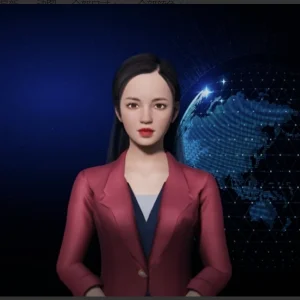
Streamlined node suits and gloves power autonomous digital human influencers. Continuous, drift-free broadcast sessions run uninterrupted for 8+ hours via low-power wireless transmission protocols.
Teleoperation & Robotics Research
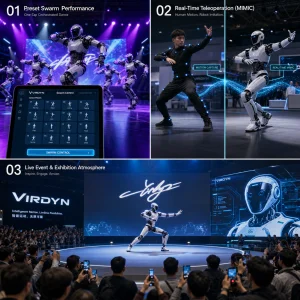
Researchers map biomechanical joints to robotic kinematic chains. The integration with ROS/ROS2 allows low-latency direct-drive control of humanoid balance and dextrous manipulators.
Clinical Biomechanics & Sports Science
Quantifies range of motion (ROM), angular acceleration, and postural asymmetry without restricting patient or athlete mobility to laboratory optical capture stages.
Global Procurement & Enterprise Procurement Criteria
A systematic framework for technical directors, university lab managers, and procurement officers evaluating node mocap infrastructure.
Anti-Interference Architecture
Verify whether IMU hardware incorporates active magnetic immunity algorithms. Enterprise deployments demand stability in steel-reinforced architecture, proximity to electronic rigs, and motor-dense robotics laboratories.
SDK & Pipeline Extensibility
Procurement teams must ensure zero vendor lock-in. Our software stacks export clean FBX, BVH, and CSV joint angles while streaming high-rate UDP/TCP data directly to Unreal LiveLink, Unity, and custom Python/C++ SDKs.
Lifecycle TCO & Field Modularity
Evaluate total cost of ownership (TCO). Industrial systems require field-swappable sensor nodes, detachable textile harnesses for washing and sanitation, and global hot-swap spare parts logistics.
Technical & Commercial FAQ
Direct answers from our engineering specialists regarding deployment, performance limitations, and operational integration.
How do Motion Capture Node Suits overcome ferromagnetic environmental interference?
Our hardware integrates adaptive multi-sensor fusion algorithms. While typical consumer IMUs suffer from compass heading deviation near steel beams or concrete reinforced floors, our industrial nodes dynamically down-weight magnetometer reliance during localized field distortion events, relying on high-frequency gyroscopic integration and inverse kinematics constraints to maintain orientation integrity.
What is the typical setup and calibration time for enterprise deployment?
A single performer can suit up, connect wireless dongles, and complete the postural calibration (A-pose or T-pose) in under 5 minutes. No external optical camera alignment, room dimension measurement, or lighting tuning is required, making node suits fully operational indoors, on moving stages, or outdoors.
Can node suits capture fine finger articulation and facial micro-expressions?
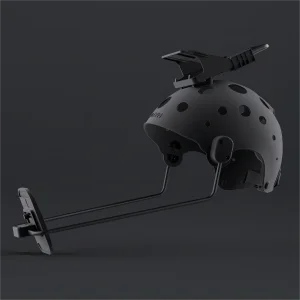
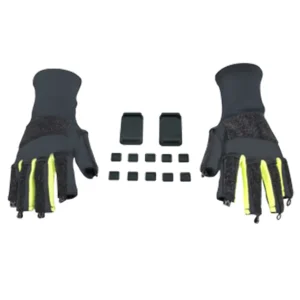
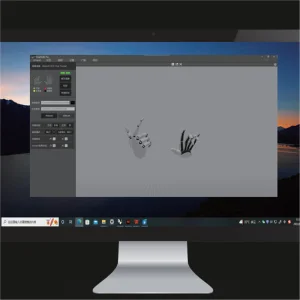
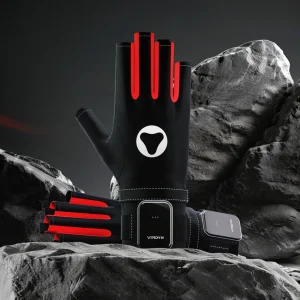
Yes. The system architecture is built around synchronous multi-modal capture. The body node suit interfaces natively with mHand Pro inertial gloves (up to 16 extra nodes for individual knuckle degrees of freedom) and head-mounted video capture helmets (e.g., VDFace Pro) to drive skeletal, digit, and blendshape rigs over a unified timecode.
How is real-time teleoperation handled for embodied AI and robotics?
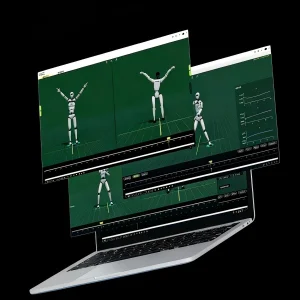
VDRobot Studio converts human anatomical kinematic data into URDF-compliant joint spaces in real time. Latency is minimized to under 15 milliseconds via direct socket streaming or ROS2 nodes, allowing operators to manipulate teleoperated robotic limbs with natural proprioceptive feedback.
What OEM / ODM customization services does the China manufacturing hub provide?
As an integrated source manufacturer based in Guangzhou, we offer comprehensive OEM/ODM programs including custom node count configurations, specialized textile dimensions (flame retardant, sports grade, medical compression), firmware protocol adaptations, and private-label software suite integrations.
Specialized Mocap Platforms & Accessories
Complete your motion capture pipeline with specialized facial tracking helmets, markerless optical suites, ergonomic gloves, and industry-tailored platforms.