
Primary Mocap Systems for Stage & Studio Deployment
-
Best How Do Brands Use Virtual Spokesman to Tell Good Stories: Motion Capture Technology Empowers Brand Propagation Planning, Solution
Explore Solution -
Design VDEgo - Egocentric Video Data Collection Service at Scale | FPV Head-Mounted Camera Planning, Solution
Explore Solution -
Best Full Body Motion Capture Accessories for Suit Elastic Tapes Planning, Solution
Explore Solution -
Design VDTraining: One-Stop Robot Reinforcement & Imitation Learning Platform Planning, Solution
Explore Solution -
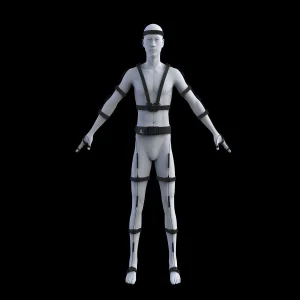
Design Virdyn VDSuit Full for Full Body Function Inertia Motion Capture Suit Planning, Solution
Explore Solution -

Best Motion Capture Technology Opens a New Era of Animation Development Planning, Solution
Explore Solution -
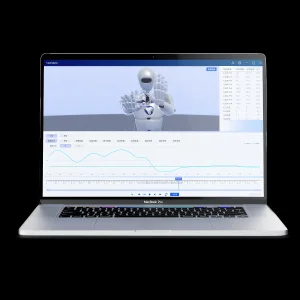
Best Valyze | Visualized Intelligent Motion Data Analysis Software for ce, Sports, Rehabilitation & Education Planning, Solution
Explore Solution -
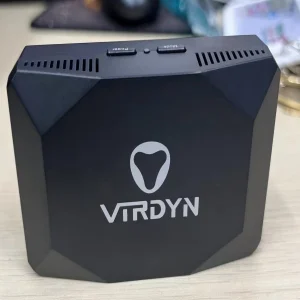
Design Full Body Motion Capture Accessories for Suit Hub Planning, Solution
Explore Solution
Global Film Production Architecture: The Paradigm Shift to Real-Time Spatial Capture
Motion capture has transcended its historical status as an isolated post-production visual effects (VFX) utility. In premier studio operations across North America, EMEA, and the Asia-Pacific region, motion tracking serves as the core spatial spine of modern in-camera visual effects (ICVFX), LED volume stages, and collaborative virtual cinematography.
Core Thesis: "Modern virtual film production eliminates the historical boundary between pre-production, principal photography, and visual effects. By synchronizing high-precision multi-sensor body inertial telemetry, dense optical spatial markers, and low-latency facial photogrammetry within real-time rendering environments like Unreal Engine 5, film directors evaluate final-frame lighting, actor blocking, and dynamic synthetic sets directly on set."
Pre-Visualization (Previs) Modernization
Traditional storyboard animatics are replaced by real-time interactive performance blocking. Stunt coordinators and directors rehearse intricate choreography inside scale virtual environments, recording digital camera camera passes and skeletal data in parallel.
LED Volume & In-Camera VFX (ICVFX)
Real-time motion tracking ties the physical camera rig and performers to the off-axis perspective rendering engine. Parallax calculations project dynamic perspectives on LED walls behind physical stage props with zero human-perceptible latency.
Post-Production Asset Acceleration
By outputting clean, biomechanically solved skeletal data conforming directly to production standard character rigs (Maya HumanIK, Unreal Control Rig), character technical directors bypass weeks of manual manual rotomation and cleanup keyframing.
System Planning: Inertial, Optical & Hybrid Pipeline Integration
Cinema-grade motion capture demands uncompromising data integrity. Selecting the optimum capture technology requires balancing operational space constraints, magnetic interference thresholds, field transportability, and skeletal fidelity.
| Evaluation Parameter | Inertial Multi-Sensor (e.g., VDSuit Full) | Optical Marker Array (Passive/Active) | Hybrid Tracking (IMU + Optical Stage) |
|---|---|---|---|
| Stage Setup & Calibration Time | 10–15 minutes (suit-up + 4-pose calibration); operable on any stage, sound booth, or wild exterior set. | 4–8 hours (rigid camera scaffolding, focal length tuning, thermal warm-up, optical wand cal). | 45–60 minutes (global anchor alignment + body sensor pairing). |
| Occlusion Vulnerability | Zero optical line-of-sight vulnerability. Performers can grapple, roll, or navigate inside vehicle cockpits. | Extreme vulnerability during multi-actor physical stunts, complex wardrobe drapery, and props. | Negligible. IMU sensors bridge trajectory estimates whenever optical line-of-sight markers are occluded. |
| Global Root Drift Attenuation | Managed through high-rate zero-velocity update (ZUPT) algorithms and contact surface ground solvers. | Sub-millimeter absolute position consistency within the calibrated optical bounding volume. | Absolute global coordinates supplied by optical anchors; joint rotations filtered by 9-axis IMU nodes. |
| Direct Pipeline Integration | Native Unreal Engine Live Link, MotionBuilder TCP/IP streaming, Maya plug-in architecture. | Dedicated optical tracking host machine streaming skeletal streams via VRPN / NatNet / Live Link. | Unified runtime solving client syncing all skeletal nodes to SMPTE genlock masters. |
| Capital Expenditure & Portability | Low-to-medium footprint; packs into field road cases for remote documentary and on-location shooting. | High capital investment ($80k–$400k+); requires dedicated air-conditioned studio volumes. | Medium footprint; scalable node packages customized to production scale. |
Full-Stack Sensor Topology: Anatomy of an Uncompromising Take
Full-Body IMU Array
27 to 32 high-G 9-axis inertial measurement units sampling orientation vectors at 240Hz, calculating real-time joint angular velocity, acceleration, and quaternion orientations with sub-degree rotational accuracy.
Micro-Articulated Gloves
Glove hardware equipped with 16 to 20 individual flex sensor strips and 6-axis fingertip IMUs, capturing intricate finger curling, splay, and delicate prop interactions without occlusion dropouts.
Facial Telemetry Helmets
Ergonomic head-mounted carbon rigs deploying synchronized high-frame-rate infrared illumination cameras. Onboard algorithms resolve 52 standard Apple ARKit blendshapes and FACS muscles in real time.
Master Timecode & Genlock
Hardware-level synchronization via SMPTE LTC (Linear Timecode) and PTP (Precision Time Protocol IEEE 1588). Aligns motion packets with cinematic cameras (ARRI, RED, Sony) frame-for-frame at 23.976, 24.0, or 29.97 FPS.
Specialized Cinematographic Scenarios & Real-World Execution
Motion capture deployment protocols differ drastically depending on narrative scale, production environments, and mechanical staging constraints. Examine how specialized engineering resolves mission-critical on-set challenges.
LED Volume Stunt Previs & In-Volume Action
When physical action stars interact with colossal fantasy creatures within an LED volume, actors wearing ultra-low-profile inertial suits perform combat sequences safely on cushioned mats. The real-time skeleton casts dynamic reflections and cast shadows onto virtual environment surfaces on the LED wall, preventing lighting disconnects.
Virtual Camera (VCam) Cinematographer Rig
Director of Photography operations utilize hand-held virtual director monitors tracked in identical coordinate space. Using an inertial or optical tracking bracket mounted to an iPad or Atomos monitor, the cinematographer orbits around digital characters performing their scenes, choosing framing, lens focal lengths, and camera depth-of-field dynamically.
Crowd & Secondary Character Mass Synthesizer
Rather than animating tens of thousands of background extras by hand, performers execute specialized military marches, casual crowd conversations, and stadium panic runs. Captured takes are cataloged into motion libraries and ingested into crowd orchestration software (such as Massive or Houdini Crowd), preserving nuanced biomechanical authenticity.
Enterprise-Grade Field Support, Wireless Telemetry & Studio Compliance
Deploying wireless motion capture technology on Tier-1 film studio soundstages requires strict adherence to international RF broadcasting mandates, biometric privacy laws, and robust data integrity frameworks.
RF Spectrum Management
Equipped with adaptive 2.4GHz and 5.8GHz frequency-hopping spread spectrum (FHSS) transceivers compliant with FCC (USA), CE (Europe), and MIC (Japan) telecommunications regulations. Transmissions avoid crosstalk with complex DMX lighting rigs and wireless follow-focus systems.
Biometric Actor Security
Adherence to SAG-AFTRA performance capture guidelines and GDPR/CCPA data privacy regulations. Skeletal telemetry streams and facial micro-expression training data feature AES-256 encrypted local staging to protect digital likeness rights from unauthorized model training.
Magnetic Field Immunity
Stage floors constructed with reinforced structural I-beams and high-current electrical cables generate intense localized electromagnetic interference. Next-generation multi-sensor fusion engines dynamically deprioritize drift-prone magnetometers in favor of algorithmic kinematic joint constraints.
Rapid Swap Field Hot-Plugs
Production cannot stall during multi-million-dollar shooting days. Ergonomic suit textiles feature quick-release modular elastic straps, magnetic node docking ports, and hot-swappable dual-cell lithium batteries supporting 6+ hours of uninterrupted studio performance.
The Technological Horizon: Neural Physics, Gaussian Splatting & Embodied AI
The convergence of generative deep learning models, neural rendering, and spatial computing is redefining film pipelines over the next decade. Explore the definitive trajectory of motion tracking technologies.
AI-Assisted Biomechanical In-Filling
Deep learning autoencoders trained on massive empirical human motion datasets instantly identify, filter, and reconstruct micro-jitters, foot-sliding anomalies, and extreme dynamic accelerations in real time, delivering pristine kinematic data with zero post-shoot clean-up artist intervention.
Volumetric Gaussian Splatting & Mocap Fusion
Hybrid capture environments will unite 3D Gaussian Splatting with wearable inertial skeletons. Rather than retrofitting rigid polygonal character rigs, the system tracks the dynamic deformations of actors directly in photorealistic volumetric space, retaining authentic skin, cloth, and hair dynamics.
Embodied AI & Humanoid Robot Stunt doubles
Motion capture data gathered on set functions symmetrically as the reinforcement imitation learning substrate for embodied AI humanoid robots. Stunt performers teach autonomous physical stunt doubles how to execute hazardous high-impact falls and acrobatic stunts directly in physical studio spaces.
Frequently Asked Questions: Motion Capture for Film Production Planning
Explore authoritative answers from lead virtual production engineers addressing real-world pipeline integration, latency mitigation, synchronization, and procurement protocols.
How do inertial mocap systems solve foot slippage and ground contact penetration in virtual environments?
What is the exact synchronization topology required to lock motion data to cinematic camera film frames?
Can inertial mocap systems perform reliably inside LED Volumes surrounded by high-power electronics?
What is the end-to-end latency threshold for real-time in-camera visual effects (ICVFX) tracking?
How do multi-actor scenes manage wireless RF congestion on busy soundstages?
Advanced Virtual Production & Data Analysis Engines
-
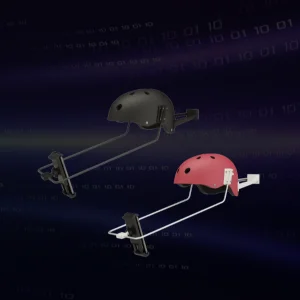
Best Virdyn VDFace Capture System for Real Time Facial Capture with Face Capture Helmet Planning, Solution
Explore Solution -
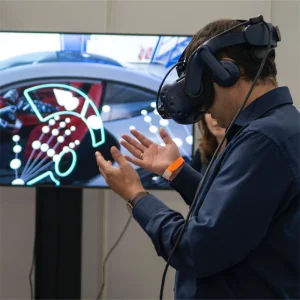
Design Book a Demo for VDSuit Full or mHand Pro Planning, Solution
Explore Solution -
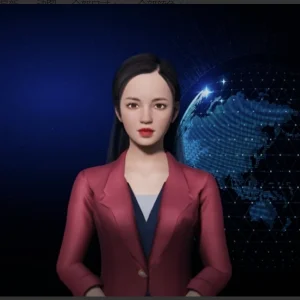
Design Virtual Host Technology: Help Mainstream Media Layout Virtual Reality Industry Planning, Solution
Explore Solution -
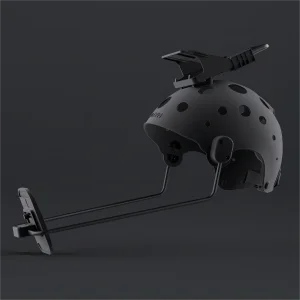
Best Virdyn VDFace Pro Capture System for Real Time Facial Capture with Face Capture Helmet Planning, Solution
Explore Solution -
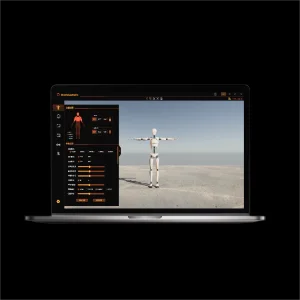
Design Virdyn DreamsCap Studio Motion Capture System Engine For Professional Animators Film and Game Producers Planning, Solution
Explore Solution -
Design Motion Capture Technology to Help the Development of Creative Advertising with Realistic Effects Planning, Solution
Explore Solution -
Design Motion Capture Provides Advanced Technology Tools for Virtual Film Production Planning, Solution
Explore Solution -
Design Ready-to-Use Robot Motion Datasets | Virdyn Planning, Solution
Explore Solution