
Precision Capture Units & Studio Modules
Explore our production-grade inertial suits, teleoperation gloves, and AI imitation learning platforms engineered for high-throughput motion capture data synthesis.
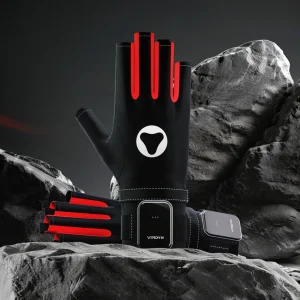
Best Virdyn mHand Pro an Inertia Motion Capture Gloves for Virtual Reality Planning, Solution
Explore Specification
Best Motion Capture Technology Opens a New Era of Animation Development Planning, Solution
Explore Specification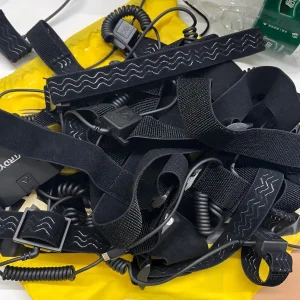
Best Full Body Motion Capture Accessories for Suit Elastic Tapes Planning, Solution
Explore Specification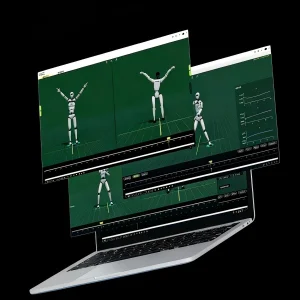
Design VDTraining: One-Stop Robot Reinforcement & Imitation Learning Platform Planning, Solution
Explore Specification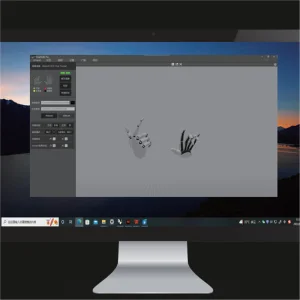
Best Virdyn mHand Studio Motion Capture Gloves Software System for mHand Pro Planning, Solution
Explore Specification
Best Virtual Human Live Streaming Rapidly Gaining Popularity: Motion Capture Suit Becomes a Key Tool Planning, Solution
Explore Specification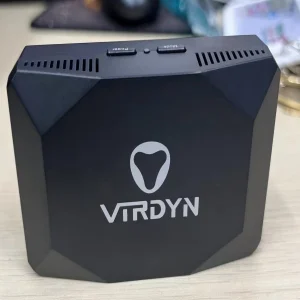
Design Full Body Motion Capture Accessories for Suit Hub Planning, Solution
Explore Specification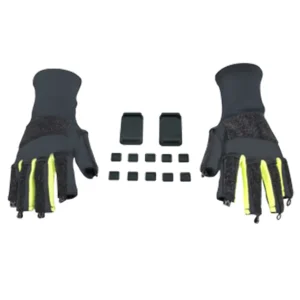
Best Inertia Motion Capture Fingers Capture Accessories Elastic Lycra Fabric Gloves for VDSuit Full(Without Sensors) Planning, Solution
Explore SpecificationEngineering Principles of Next-Gen Motion Analysis
Modern kinematic analytics requires transcending classical optical markers through deterministic multi-modal sensor fusion, real-time inverse kinematics (IK) solvers, and edge-calculated biomechanical validation.
Deterministic Sensor Fusion
Virdyn integrates Extended Kalman Filtering (EKF) with gradient descent quaternion calculation. By analyzing 9-axis spatial micro-electro-mechanical sensors (accelerometer, gyroscope, and tri-axis magnetometer) at up to 1000Hz, positional accumulation drift and electromagnetic distortion are suppressed in complex factory and studio environments.
Sub-Millimeter Biomechanical IK
Real-time kinematic solvers enforce skeletal bone length invariants and physiological joint degree-of-freedom (DoF) angle thresholds. This guarantees physically plausibly retargeted movement patterns without artifactual limb dislocation, foot sliding, or hyper-extension in high-frequency trajectories.
Autonomous Edge Teleoperation
Designed from the bare metal up to support ROS 2 and DDS communication protocols. High-dimensional finger and limb kinematics are converted directly to robot joint space matrices with latency under 15ms, fulfilling strict criteria for real-time bilateral teleoperation and digital twin simulation loops.
Mission-Critical Industry Solutions
Scalable motion capture software architecture configured to address specialized regulatory, computational, and spatial requirements across diverse enterprise fields.
1. Embodied AI & Humanoid Robotics Imitation Learning
Humanoid robotics research faces a significant bottleneck in empirical motion training datasets. By planning and deploying the VDTraining and VDRobot Studio software framework, industrial laboratories can capture hundreds of hours of complex manipulative actions—such as bimanual assembly, tool usage, and agile locomotion. The motion analysis software translates continuous analog joint trajectories into normalized datasets compatible with reinforcement learning models, Diffusion Policies, and Vision-Language-Action (VLA) multi-modal transformers. Egocentric camera feeds and multi-point hand telemetry bridge the sim-to-real transfer gap effectively.
2. AAA Game Development & Virtual Film Pre-Visualization
Traditional animation keyframing requires substantial artist time per minute of interactive gameplay sequence. Motion analysis software planning streamlines the ingestion workflow directly into Unreal Engine 5 (via Live Link) and Autodesk Maya. Performers wear inertial capture hardware (such as VDSuit Full and mHand Pro) within non-specialized soundstages or outdoor settings, avoiding optical marker occlusion. The pipeline streams calibrated skeleton hierarchies, facial blendshapes, and finger articulation simultaneously, saving up to 70% of character turnaround lead times while maintaining nuance in stunt and cinematic sequences.
3. Clinical Biomechanics, Ergonomics & Sports Performance
In sports rehabilitation, gait pathology assessment, and automotive cabin ergonomic validation, millimeter accuracy is essential. The motion analysis software suite provides quantitative spatial angle telemetry, joint velocity computation, and angular acceleration reports. Clinicians and biomechanists can compute moments of force without subject intimidation caused by cumbersome camera environments, enabling natural range-of-motion assessments under authentic daily stresses.
Comprehensive Motion Capture Architecture Matrix
Analyze performance metrics and deployment characteristics to select the ideal mocap methodology for your organization's computational pipeline.
| Evaluation Parameter | Virdyn Inertial IMU Systems | Optical Passive Marker Stages | Vision-Based Markerless AI |
|---|---|---|---|
| Operating Environment | Unbounded indoors & outdoors; impervious to ambient illumination | Strictly controlled indoor stage with multi-camera calibration | Moderately controlled lighting; sensitive to foreground occlusion |
| Spatial Occlusion Sensitivity | Zero occlusion vulnerability; sensors mounted to skeletal nodes | High vulnerability when markers are hidden by props or bodies | Medium-to-high vulnerability during complex multi-person entanglement |
| Setup & Calibration Speed | Under 5 minutes; single T-pose / A-pose magnetic calibration | 45–90 minutes; precise wand calibration & marker suits | 10–15 minutes; camera intrinsic and extrinsic matrix calibration |
| Compute Overhead & Latency | Extremely low (<15ms); onboard sensor mathematical EKF | Medium (<20ms); spatial vector triangulations | High (30–65ms); heavy neural network inference loads |
| Robotics Teleoperation Fit | Ideal: lightweight, wearable, direct joint-angle telepresence | Limited: physical robot hardware frequently blocks optical paths | Acceptable: suitable for macro navigation, limited in fine dexterity |
China Industry 4.0: Supply Chain Resilience & Efficiency
How localized hardware-software co-design, vertically integrated precision tooling, and high-capacity manufacturing hubs provide global enterprises with unmatched cost-to-performance advantages.
Vertically Integrated Sensor Sourcing & SMT Precision
Situated at the heart of the Greater Bay Area technological ecosystem in Guangzhou, Virdyn maintains end-to-end sovereignty over its electronic fabrication and algorithm stacks. From multi-layer rigid-flex PCB design to high-speed surface-mount technology (SMT) with automated optical inspection (AOI), every IMU module undergoes strict high-G vibration testing and multi-temperature thermal calibration. This geographic clustering creates an agile prototyping loop: engineering firmware iterations migrate from validation bench to mass production lines within days rather than months.
High-Volume Scale with Rigorous Quality Verification
By leveraging advanced industrial automation, Virdyn delivers institutional-grade motion capture hardware at a cost point substantially more competitive than legacy Western vendors. Global buyers benefit from resilient supply channels shielded from single-source silicon vulnerabilities. Each VDSuit Full, mHand Pro glove, and VDFace helmet undergoes 72 hours of uninterrupted wireless stress-testing, automated magnetic disturbance verification, and mechanical strain-relief benchmarking before international shipping.
Technology Roadmap & Future Outlook
Anticipating algorithmic breakthroughs, hybrid sensor modalities, and foundational models for spatial computing and autonomous robotic dexterity.
Phase 1: Hybrid Neuromorphic Tracking
Integrating neuromorphic event-based vision with high-speed 9-axis inertial nodes. Event cameras capture microsecond intensity variations while IMU nodes solve skeletal topology, completely eliminating motion blur during extreme athletic movement or explosive martial arts capture.
Phase 2: World-Model Kinematic Priors
Deploying deep generative kinematic priors trained on massive open-source and proprietary human movement corpuses. When magnetic anomalies occur in dense metallic environments, onboard neural networks predict plausible joint kinematics, ensuring zero tracking breakdown.
Phase 3: Decentralized Cloud Stream Networks
Transitioning to WebRTC/WebSockets multi-stream nodes enabling global collaborative motion production. Studio animators in Tokyo, London, and San Francisco can simultaneously direct, inspect, and evaluate full-body performance takes streaming directly from performers in real-time.
Localization Support & Compliance Assurance
International certification frameworks, multi-language engineering support, and stringent data security protections built for multinational corporate deployment.
Global Regulatory Compliance
All Virdyn hardware models—including wireless transceivers, Li-ion battery management systems (BMS), and sensor enclosures—fully comply with CE (European Conformity), FCC (Federal Communications Commission), RoHS, and REACH toxicological standards. Comprehensive UN38.3 lithium battery air-freight certifications guarantee streamlined customs passage across all worldwide logistical hubs.
Bilingual Technical Account Services
We provide enterprise clients with dedicated bilingual (English & Mandarin) field application engineers (FAEs). Through personalized remote diagnostic sessions, live pipeline integration calls, and tailored SDK support on GitHub and GitLab, institutional developers receive responses within 24 hours across all standard working days.
Air-Gapped Data Privacy & NDA Security
For defense, medical robotics, and confidential entertainment intellectual property, our desktop capture suites operate in completely air-gapped network configurations. No diagnostic telemetry, skeletal coordinates, or proprietary biometric markers are transmitted offsite without explicit administrative cryptographic keys.
Global Enterprise Sourcing & Procurement Framework
Strategic guide for Chief Technology Officers, university laboratory directors, and procurement executives evaluating long-term motion analysis technology investments.
Standard Evaluation Checklist for Institutional RFP/RFQ
Procurement teams should verify the following architectural factors when issuing tenders for motion software:
- Total Cost of Ownership (TCO): Ensure no mandatory recurring annual license fees lock out hardware functionality after year one.
- Hardware Modularity: Ability to swap individual sensor nodes, strap ribbons, or hubs without replacing the entire hardware suite.
- SDK Portability: Direct C++, Python, and ROS 2 SDK availability with source examples for custom real-time kinematics pipeline compilation.
- Multi-Actor Tracking: Software architecture capability to ingest up to 10 performers concurrently within the same wireless receiver frequency space.
The Virdyn Supply Chain Guarantee
How we protect international institutional and corporate capital expenditure:
- Comprehensive 12-Month Hardware Warranty: Rapid component turnaround with regional reserve stockpiles for expedited replacement.
- Lifetime Software Upgrades: Ongoing algorithmic maintenance for VDMocap Studio and mHand Studio ensuring future game engine compatibility.
- OEM / ODM Customization: Industrial bespoke firmware modification, branded textile integration, and custom connector engineering available for robotics manufacturers.
- Educational & Volume Discounts: Specialized tier structures for university research labs and multi-seat training academies.
Specialized Production & Emulated Intelligence Modules
Complete your studio deployment with our intelligent voice development kits, markerless optical facial tracking helmets, and digital human marketing systems.
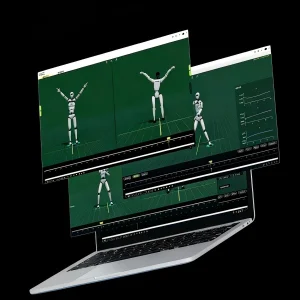
Design VDRobot Studio: Motion Data Collection&Conversion Platform for Robotics | Virdyn Planning, Solution
Explore Specification
Design Virtual Human Technology: Digital Human Activation Brand Marketing New Path Planning, Solution
Explore Specification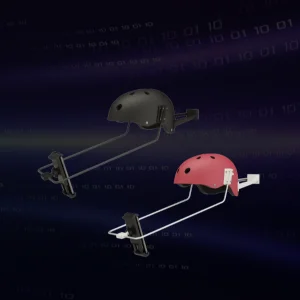
Best Virdyn VDFace Capture System for Real Time Facial Capture with Face Capture Helmet Planning, Solution
Explore Specification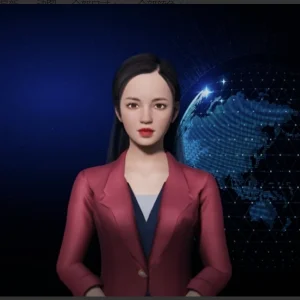
Design Virtual Host Technology: Help Mainstream Media Layout Virtual Reality Industry Planning, Solution
Explore Specification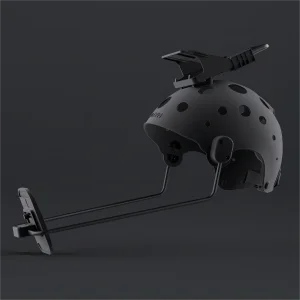
Best Virdyn VDFace Pro Capture System for Real Time Facial Capture with Face Capture Helmet Planning, Solution
Explore Specification
Best How Do Brands Use Virtual Spokesman to Tell Good Stories: Motion Capture Technology Empowers Brand Propagation Planning, Solution
Explore Specification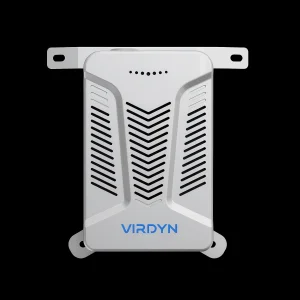
Best Humanoid Robot Intelligent Voice Interaction Development Kit Planning, Solution
Explore Specification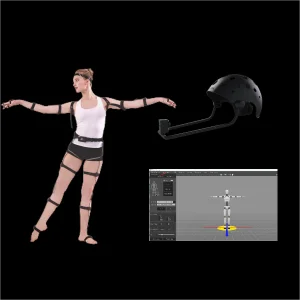
Design VDCap Full Performance Capture Entry-Level Motion Capture Kits for Beginners and Hobbyist Planning, Solution
Explore SpecificationFrequently Addressed Technical Questions
In-depth engineering clarifications regarding protocol latency, magnetic immunity, robotics integration, and pipeline scalability.