

Hardware Ecosystem I
Metaverse Infrastructure Hardware & Customization Systems
Explore the premier tier of wearable inertial suits, real-time avatar customization kits, and intelligent voice interaction runtimes engineered for persistent virtual ecosystems.

Custom 3D Virtual Avatar Personalization Framework
Explore Solution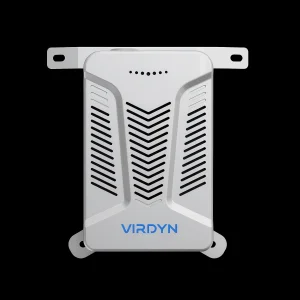
Humanoid Robot Intelligent Voice Interaction Kit
Explore Solution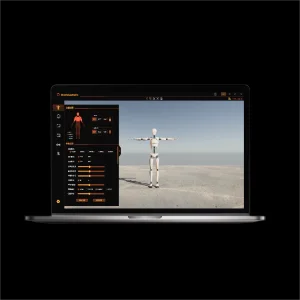
DreamsCap Studio Professional MoCap Engine
Explore Solution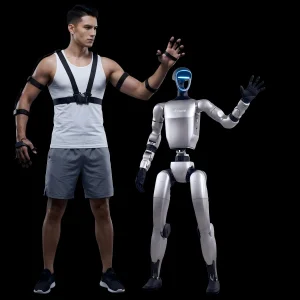
VDSuitMini Half-Body Teleoperation & Robot MoCap
Explore Solution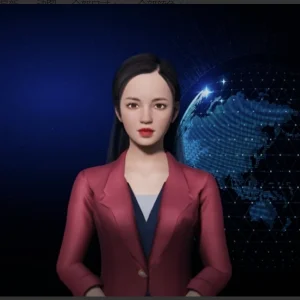
Virtual Host Interactive Broadcast Architecture
Explore Solution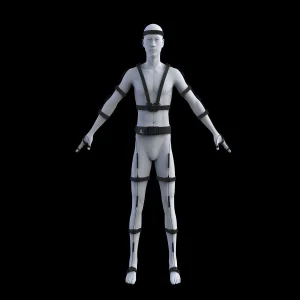
VDSuit Full Inertial Wearable Biomechanical System
Explore Solution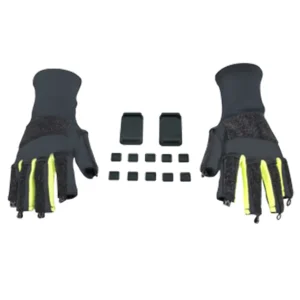
Ergonomic Lycra Glove Chassis for Finger Capture
Explore Solution
System Engineering
Metaverse Motion Capture Architectural Paradigm
A rigorous examination of multi-sensor fusion, micro-electromechanical systems (MEMS), and low-latency spatial retargeting across decentralized virtual topologies.
Quasi-Static Magnetic & Drift Compensation
Traditional IMU mocap experiences rotational yaw drift over prolonged capture phases. Our enterprise architecture deploys proprietary extended Kalman filters (EKF) with zero-velocity update algorithms (ZUPT). By analyzing micro-contact moments during ground reaction phases, cumulative trajectory divergence is continuously nullified without requiring optical line-of-sight.
Sub-20ms Deterministic Streaming Pipelines
Real-time presence across Web3 and metaverse spaces mandates deterministic low latency. Virdyn's transmission protocols utilize hybrid 2.4GHz ultra-low latency direct frequency-hopping alongside high-throughput Wi-Fi sockets. Native Open Sound Control (OSC) and WebSockets support allow continuous skeletal transform distribution into Unreal Engine 5 Nanite/Lumen pipelines and Unity XR setups.
Hierarchical Anatomical Kinematic Solvers
Translating sensor-level angular velocities into believable avatar kinetics demands anatomical joint boundary modeling. The biomechanical calculation model integrates 27 degrees of freedom (DoF) with inverse kinematics constraint propagation. This prevents hyper-extension artifacts, unnatural bone twisting, and interpenetration during dynamic actions like martial arts, acrobatic maneuvers, and industrial training runs.
< 18ms
Global Sensor-to-Display Latency
1000Hz
Internal IMU Node Sampling Frequency
27 DOF
Precision Biomechanical Skeletal Resolution
99.4%
Long-Range Packet Reception Reliability
Deployment Verticals
Localized Real-World Metaverse Applications
Bridging physical human kinetic capability with localized spatial computing, industrial micro-operations, and next-generation virtual commerce across worldwide regions.
Regional E-Commerce & Live Digital Avatars
Metaverse live commerce in East Asia and Latin America relies heavily on high-engagement, real-time interactive avatars. Using the VDSuit Full combined with the AH-Double Camera Face Helmet, single performers operate continuously for 8-hour retail shifts. Real-time cloth simulation retargeting directly into TikTok and Taobao Live streams lowers operational overhead by over 60% compared to traditional green screen video capture setups.
Industrial Digital Twin & Hazardous Maintenance
European and North American chemical, maritime, and utility operators utilize VDSuitMini and mHand Pro gloves to reconstruct technician actions within digital twin factory models. Telepresence operators inspect high-voltage, radiation-heavy, or confined spaces via VR headsets while kinematic sensor data feeds spatial safety simulation engines to log compliance and detect hazardous postures.
Intangible Heritage & Traditional Performance Archiving
Localized preservation programs use Virdyn's portable mocap hardware to digitize indigenous dances, classical theater, and historical martial arts across Japan, Southeast Asia, and Europe. Unencumbered by stationary optical rigs, researchers capture movements directly inside sacred sites, temple grounds, and outdoor festivals to preserve dynamic human culture in permanent metaverse libraries.
Manufacturing Resilience
China Factory Supply Chain Resilience & Production Velocity
Analyzing the strategic engineering and rapid iteration capabilities anchored in the Greater Bay Area hardware ecosystem.
Integrated MEMS Calibration Infrastructure
Our Guangzhou manufacturing center maintains multi-axis robotic calibration turntables and Helmholtz coils that stress-test individual sensor nodes across temperature variances from -20°C to +60°C. High-density calibration matrices verify that magnetic heading tolerances remain uniform across production batches, delivering laboratory-grade precision straight out of the box.
Component Traceability & Agile Sourcing
Backed by the Pearl River Delta industrial belt, Virdyn maintains an uninterrupted supply chain spanning flexible anti-pull internal cabling, military-grade Lycra fabrics, high-frequency RF transceivers, and lithium polymer safety cells. Rapid iteration turnaround enables custom structural redesigns in as little as 14 business days to meet custom client requirements.
End-to-End Vertical Quality Control
By keeping industrial design, embedded firmware, PCB surface-mount assembly, algorithm development, and final quality checks under one roof, we eliminate third-party assembly deviations. Every VDSuit Full and mHand Pro system undergoes an intensive 72-hour continuous burn-in and wireless packet loss validation cycle prior to international dispatch.
Future Horizon
Technology Roadmap & Global Industrial Trajectory
Strategic development projections: bridging the convergence of generative AI models, embodied robotic systems, and photorealistic spatial rendering.
Phase I: Current Global State
Decentralized Real-Time Pipelines
Current industrial mocap is rapidly moving away from expensive optical marker volumes toward portable, hybrid inertial architectures. Worldwide virtual studios prioritize rapid deployment, zero occlusion sensitivity, and cross-platform network distribution via OSC, WebRTC, and USD (Universal Scene Description) interchange schemas.
Phase II: Near-Term Integration (2025–2026)
Embodied AI & Diffusion Kinetics
Deep integration of egocentric camera inputs (VDEgo) and dexterous teleoperation gloves with diffusion-based neural motion priors. The focus shifts toward training humanoid robots through imitation learning (Behavior Cloning), using high-frequency human kinematic trajectories to train real-world task execution.
Phase III: Long-Term Outlook (2027+)
Neuromorphic Sensor Fusion
Next-generation metaverse interactions will integrate neuromorphic event-based vision with micro-solid-state quantum IMU nodes. The resulting pipeline achieves sub-millimeter trajectory estimation with sub-5ms total pipeline latency, dissolving the barrier between biological human movement and synthetic metaverse entities.
Global Governance
Enterprise Localized Support & Regulatory Compliance
Ensuring cross-border deployments comply with electromagnetic certifications, radio frequency allocations, and strict international data privacy standards.
Worldwide RF Compliance (FCC, CE, TELEC)
Wireless capture nodes conform to strict international frequency standards. Transceivers support adaptive channel hopping within licensed industrial bands, passing FCC Part 15 Class B (North America), CE RED (European Union), and MIC/TELEC (Japan) tests to ensure zero interference with critical enterprise communication equipment.
Local Data Sovereignty & Privacy
All skeletal kinematics, video data streams, and biometric posture vectors are captured and processed on local client hardware. Zero mandatory cloud syncing guarantees that proprietary digital avatar assets, proprietary industrial workflows, and actor biometric performances remain protected under GDPR (EU) and CCPA (California) frameworks.
Tier-1 Engineering Deployment & SLA
Virdyn offers comprehensive enterprise warranties, expedited global parts replacement, and specialized integration engineers who provide direct SDK support across time zones. We conduct custom rig retargeting and on-site or remote training to keep your operations running smoothly worldwide.
Hardware Ecosystem II
Robotics Data Collection, Facial Capture & Spatial Sensors
Complete your production setup with specialized facial capture helmets, egocentric AI training rigs, and verified humanoid dataset tools.
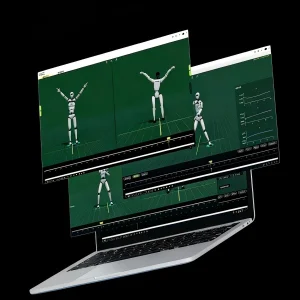
Standardized Robot Motion Kinematics Datasets
Explore Solution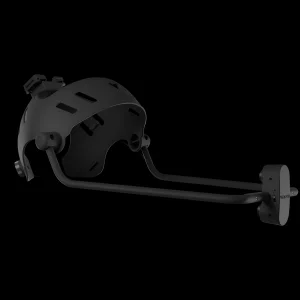
AH-D Dual 1080P RGB Facial Capture Helmet
Explore Solution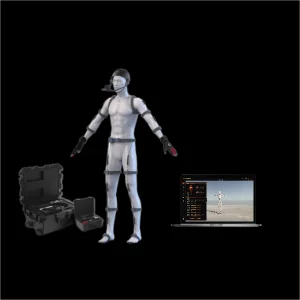
DreamsCap X1 Unified Body-Hand-Face MoCap Array
Explore Solution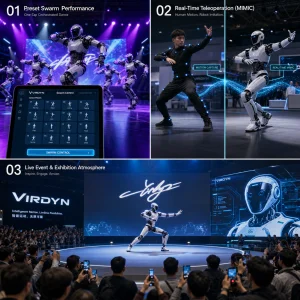
Humanoid Robot Stage Performance Solution
Explore Solution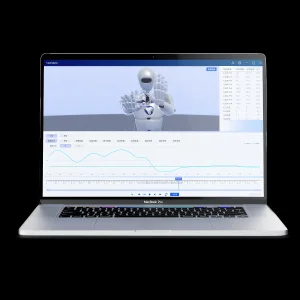
VDAnalyze Biomechanical Evaluation Suite
Explore Solution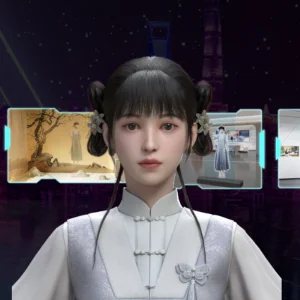
Enterprise Digital Human Activation System
Explore Solution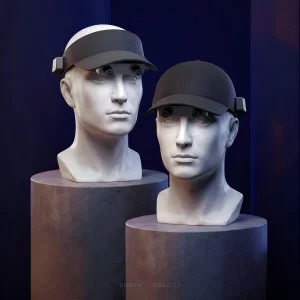
VDEgo Wearable FPV Egocentric Vision Capture Rig
Explore Solution
Creative Advertising Rapid Previs & MoCap Solution
Explore Solution
Knowledge Base
Frequently Asked Technical & Procurement Questions
In-depth engineering answers addressing hardware performance, pipeline integration, and international logistics.
How does Virdyn inertial motion capture manage metal interference in industrial sites?
Our latest sensor generation employs multi-sensor fusion combining 3-axis gyroscopes, 3-axis accelerometers, and 3-axis magnetometers with algorithmic dynamic interference rejection. When working near large steel girders or machinery where magnetic anomalies occur, the fusion engine automatically shifts yaw estimation from magnetic headings to high-frequency gyroscopic angular integration and ground contact kinematics. This completely eliminates the wild skeletal distortion typical of older IMU systems.
Can Virdyn motion capture drive custom 3D avatars directly inside Unreal Engine 5 and Unity?
Yes. Virdyn provides native live-link plugins for Unreal Engine 5 and Unity, alongside Autodesk Maya, MotionBuilder, 3ds Max, Blender, and iClone. By mapping bone hierarchies in VDMocap Studio or DreamsCap Studio, transformed joint rotations stream live via local UDP network sockets directly to UE5's Control Rig and Live Link components at up to 120 FPS.
What are the key technical differences between VDSuit Full and optical marker capture stages?
Optical systems require calibrated truss rings, complex multi-camera arrays, and direct line-of-sight to reflective spheres. They are vulnerable to occlusion whenever actors cross paths, crawl, or interact with physical props. In contrast, the VDSuit Full uses wearable IMU sensor nodes directly on skeletal segments, making it completely immune to visual occlusions. It can be set up in just 5 minutes anywhere—indoors, outdoors, or inside vehicles—lowering studio costs by up to 80%.
How are motion capture suits and mHand Pro gloves utilized for humanoid robot teleoperation?
Humanoid robotics teams rely on VDSuitMini, mHand Pro, and VDEgo systems for teleoperation and demonstration data collection. High-frequency joint angles are retargeted to robot URDF kinematic models via ROS1/ROS2 nodes with sub-20ms latency. The operator's movements guide the robot's real-time motion, while egocentric cameras and glove sensors record synchronized datasets for imitation learning and diffusion-based AI models.
What lead times, worldwide shipping, and after-sales support does Virdyn provide?
Standard systems ship within 3 to 7 business days via international couriers (DHL, FedEx, UPS) directly from our Guangzhou facility. Every kit includes a 1-year hardware warranty, software updates, and direct engineering support via remote session, email, or WhatsApp. Customized enterprise builds and OEM/ODM hardware orders are reviewed and scheduled based on specific project needs.