
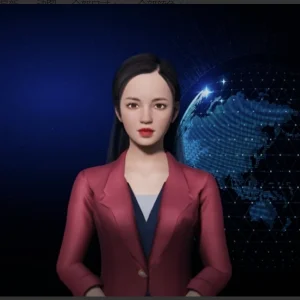
Integrated Hologram Stage & Performance Hardware Ecosystem
Enterprise-ready motion tracking nodes, interactive data gloves, and high-frequency real-time capture infrastructure designed for mission-critical concert environments.
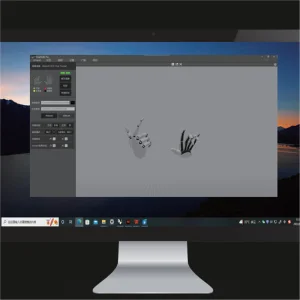
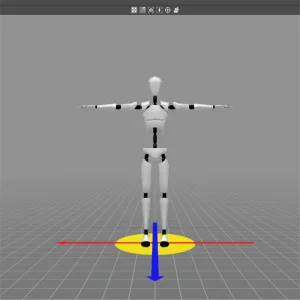
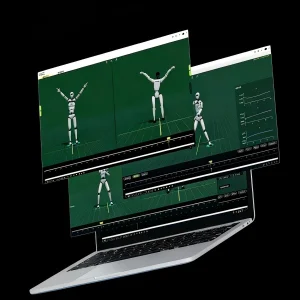


Concert Hologram Motion Capture Architecture: Strategic Industry Evolution
An engineering framework resolving temporal jitter, radio frequency degradation, and optical stage occlusion in stadium hologram spectacles.
The global concert entertainment landscape is undergoing an unprecedented architectural shift toward spatial virtualization and photorealistic holographic presence. Contemporary audiences no longer settle for static LED backdrop video loops; they demand living, responsive, three-dimensional avatars performing synchronously alongside human artists or commanding arena-sized stages autonomously. Designing a bulletproof concert hologram motion capture infrastructure requires solving acute physics and telecommunication hurdles: massive RF interference from multi-kilowatt stadium PA systems, blinding moving stage heads, optical occlusion behind translucent holographic mesh (such as Holo-Gauze or specialized semi-reflective Pepper’s Ghost foil arrays), and the absolute intolerance for latency in live musical timing.
Key Engineering Standard: Live holographic concert production mandates an end-to-end motion-to-photon latency profile below 18 milliseconds. Any latency exceeding this threshold decouples human musical articulation (drumming, guitar strumming, rapid dance chorography) from the holographic avatar's spatial projection, instantly breaking perceptual immersion for the stadium audience.
To resolve these constraints, leading production technical directors have transitioned from brittle purely-optical camera arrays to Hybrid Inertial-Optical Fusion Infrastructures. In this paradigm, industrial wearable sensor rigs equipped with high-g 9-axis Inertial Measurement Units (accelerometer, tri-axial gyroscope, and high-frequency geomagnetic compensation modules) deliver high-frequency (240Hz+) localized joint rotation data directly to edge-compute workstations. Simultaneously, a sparse constellation of wide-angle optical cameras or ultra-wideband (UWB) spatial anchors establishes absolute root position within 3D world space. This architectural union eliminates tracking occlusion when dancers cross paths or interact with physical stage props while maintaining centimeter-level stage positioning.
Furthermore, the evolution of real-time render engines like Unreal Engine 5 (leveraging Chaos physics and Nanite live mesh deformation) and generative visual pipelines like Notch has bridged the gap between raw motion vector streams and cinematic-quality stage lighting responses. As motion data is captured from back-stage or remote studio performers, live DMX lighting consoles simultaneously drive both physical stage fixtures and the holographic avatar’s virtual lighting environment, delivering identical specular highlights and ambient occlusion that trick the human eye into perceiving authentic physical presence on stage.
Turnkey Concert Hologram Motion Capture Architecture
A multi-tiered hardware, algorithmic, and optical pipeline designed for continuous arena deployment.
Tier 1: Wearable Telemetric Rigging
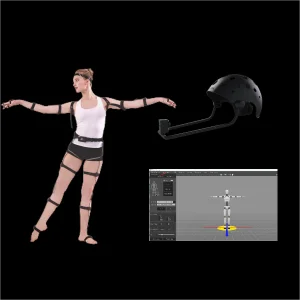
Equipped with 17 to 27 military-grade 9-axis sensor clusters with anti-magnetic distortion algorithms, shielded inside ballistic elastane textiles. Real-time data streams via redundant dual-band 2.4GHz/5.8GHz frequency hopping protocol to defeat arena-level wireless saturation.
Tier 2: Real-Time Biomechanical Solver
Proprietary forward kinematics engine dynamically counteracts skeletal elongation and foot sliding. Ground-plane constraint contact algorithms calculate instantaneous velocity vectors, ensuring the avatar’s foot planting exactly locks with the stage tempo without drift.
Tier 3: Live Retargeting & Stream Protocol
Direct low-overhead SDK pipelines stream raw BVH/FBX skeletal data via zero-copy Named Pipes or UDP sockets directly into Unreal Engine Live Link, Unity, Notch, or disguise media servers, eliminating intermediate parsing bottlenecks.
Tier 4: Dynamic SMPTE Timecode Lock
Precision Genlock synchronization using SMPTE LTC or PTP (IEEE 1588) ensures mocap frames align sample-accurately with front-of-house (FOH) audio playback, in-ear monitors (IEM), and lighting cues, eliminating visual phase jitter during live broadcasts.
Tier 5: Optical Holographic Diffusion Surface
Engineered matching with 30,000+ ANSI lumens 4K laser projectors firing onto 98% transparency Holo-Gauze metallic scrims or transparent Micro-LED crystal displays, producing pitch-black transparency with hyper-vivid holographic foreground contrast.
Tier 6: Spatial Audio & Actor Feedback Loop
Bi-directional stage audio integration that feeds multi-channel binaural IEM mixes back to the motion capture performer, allowing subtle physical reaction to live audience applause and physical musician tempo fluctuations in real time.
High-Yield Application Scenarios for Holographic Concerts
Proven operational workflows deployed across global entertainment tours, festivals, and high-prestige broadcast galas.
1. Virtual Pop Idol & VTuber Arena Tours
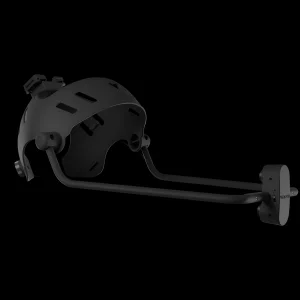
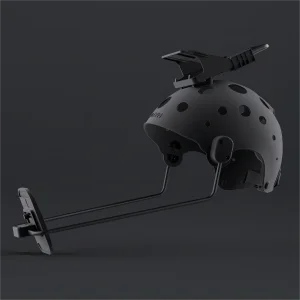
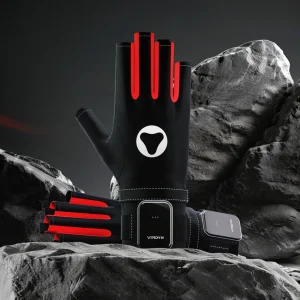
Full-scale stadium concerts where synthetic artists (e.g., Hatsune Miku, VTuber collectives, anime personas) interact spontaneously with crowds. Actors perform behind the stage or in a remote optical studio, streaming high-speed finger articulation and facial micro-expressions via mHand Pro and VDFace helmets directly onto the front holographic scrim.
2. Live EDM Giant Puppets & DJ Visual Avatars
Electronic dance music headliners driving colossal, 30-meter virtual holographic mechas or mythical creatures floating above the festival crowd. The DJ or designated stage dancer wears lightweight half-body VDSuit rigs, controlling the towering avatar's limbs and reactive visual effects in sync with musical drops.
3. Deceased Legend Revivals & Broadway Galas
Historical vocal legends resurrected for symphonic tours or theatrical performances. A professional mimic wears the full-performance mocap suit to reproduce iconic dance mannerisms, while deep neural networks map facial features and voice onto the holographic projection, delivering authentic emotional resonance.
4. Multi-City Simulcast Hologram Concerts
A single live star performing in Tokyo or London simultaneously projected as an interactive hologram in arenas across Los Angeles, Paris, and Shanghai. Ultra-low latency WAN motion data streaming allows one central live performance to be replicated across five continents in real time with minimal transport bandwidth.
5. Holographic Brand Ambassadors & Product Launches
Global automotive and luxury product reveals where virtual spokespersons walk around physical prototype vehicles, pointing to features and responding to live questions from keynote moderators with zero mechanical delay or awkward latency pauses.
6. Hybrid Reality Live Esports Tournaments
In-game champions and heroes manifested physically on the stadium stage floor. Professional performers match player abilities in real time during opening ceremonies, executing acrobatic stunts and magical spell animations that harmonize with physical pyrotechnics.
China Manufacturing & Supply Chain Engineering Dominance
Why Tier-1 concert production agencies leverage our Guangzhou manufacturing hub for end-to-end motion capture procurement.
Full-Stack Sensor Integration
Direct integration with the Pearl River Delta electronics cluster enables rapid automated SMT assembly, sub-micron IMU sensor alignment, and proprietary electromagnetic shielding fabrication that drops BOM costs by 45% compared to Western competitors.
Rigorous Factory Calibration
Every motion suit undergoes 72-hour robotic stress testing, multi-axis automated temperature cycling (-10°C to +55°C), and continuous drift-rate calibration in anechoic chambers to guarantee arena reliability before export.
Agile OEM/ODM Prototyping
Custom tailored ergonomic suit design, personalized node placement for specialized acrobatic performers, and rapid turnarounds from initial CAD drawings to functional production-grade prototypes within 14 business days.
Robust Global Logistics & Compliance
Full international certification footprint including CE, FCC, RoHS, and SRRC compliance, supported by bonded warehouse logistics hubs that guarantee replacement part delivery to any major concert tour city within 48 to 72 hours.
Enterprise Motion Capture Procurement Matrix for Concert Production
A rigorous specification comparison designed for technical directors, CTOs, and stage lighting/VFX procurement leads.
| Evaluation Parameter | Virdyn Concert Hologram IMU Solution | Traditional Optical Multi-Camera | Markerless Camera Vision |
|---|---|---|---|
| Stage Setup Footprint | Zero stage footprint; performer can be backstage or in remote booth | Requires 24-64 truss-mounted cameras around performance zone | Requires 4-8 specialized depth cameras facing performer |
| Arena Occlusion Immunity | 100% immune (wearable multi-node IMU telemetry) | Vulnerable to stage props, lighting towers, and co-performers | High vulnerability to extreme lighting, smoke, and costumes |
| End-to-End Latency | < 15ms (direct socket streaming to Unreal Engine) | 25ms - 45ms (complex multi-ray triangulation) | 60ms - 120ms (heavy neural network processing overhead) |
| Touring Calibration Time | 2 minutes (one-click T-pose / A-pose calibration) | 4 - 8 hours per arena (wand waving and lens calibration) | 30 - 60 minutes per lighting configuration change |
| Cost of Deployment (USD) | High ROI ($5,000 - $18,000 complete turnkey bundle) | Extremely high capital expense ($80,000 - $250,000) | Moderate ($15,000 - $40,000 with high-end server rigs) |
| Mobility & Tour Portability | Fits in two flight cases; travel on commercial flights | Requires dedicated truck transport and rigid rigging trusses | Compact server rack and several industrial tripods |
Core Procurement Checklist for Touring Holographic Rigs
When global entertainment companies source motion capture solutions for arena hologram tours, production engineers must insist upon six non-negotiable specifications: (1) Anti-Magnetic Jamming Architecture: Arenas feature massive inductive magnetic fields from high-amperage power transformers, moving stage trusses, and subwoofers. Rigs must feature dynamic drift compensation. (2) Redundant Wireless Failover: Systems must support concurrent multi-channel broadcast with auto-switching to eliminate packet loss caused by 50,000 attendee mobile phones saturating Wi-Fi spectrums. (3) Multi-Performer Interlacing: Software architectures must support synchronous tracking of multiple dancers simultaneously without skeletal cross-talk. (4) Native Live Link Plugins: Zero-intermediary streaming directly to Unreal Engine 5.3+, Notch, and Unity. (5) Battery Quick-Swap: Transmitters must support hot-swappable batteries with runtimes exceeding 5 continuous hours per cell. (6) Rugged Washable Textile Enclosures: Sensor harnesses must detach instantly to allow industrial laundering of dance suits between high-energy tour stops.
Frequently Asked Questions: Concert Hologram Mocap Engineering
In-depth technical answers addressing system setup, stage optics, latency management, and RF interference mitigation.
How is motion drift resolved during a 2-hour uninterrupted live concert set?
Motion drift in inertial capture typically stems from gyroscope integration accumulation and local magnetic field distortion. Our VDSuit systems utilize an advanced 9-axis sensor array coupled with an adaptive Extended Kalman Filter (EKF). When magnetic anomalies are identified (e.g., dancing near steel substructures), the solver dynamically deprioritizes the magnetometer and leverages high-frequency zero-velocity updates (ZUPT) and biomechanical skeletal constraints. This ensures zero foot-sliding or skeletal distortion throughout multi-hour stadium sets without recalibration.
What projection and screen technology pairs best with real-time holographic mocap?
The global touring standard utilizes high-gain, 98% transparency metallic scrims (such as Holo-Gauze or 3D silver holographic mesh) combined with dual-stacked 30,000+ ANSI lumens 4K RGB laser projectors. The high transmission rate renders the screen invisible to the human eye, while the metallic particles catch high-intensity projected photons. When paired with dark backstage depth and contrasting virtual rim lighting generated directly in Unreal Engine from mocap data, the virtual character appears to float solidly in three-dimensional space.
Can the backstage performer see and hear the stadium audience in real time?
Yes. In our standard concert architecture, we construct a low-latency bilateral monitoring bridge. A return video feed from stage-front tracking cameras is displayed inside the performer's ultra-low-latency head-mounted display or confidence monitor, while a stereo audience ambient microphone mix is routed to their in-ear monitors (IEM). This bi-directional communication empowers the performer to react instantly to individual audience members, wave at specific sections, and synchronize their movements with crowd energy.
How do you overcome wireless packet loss in arenas packed with 50,000 mobile devices?
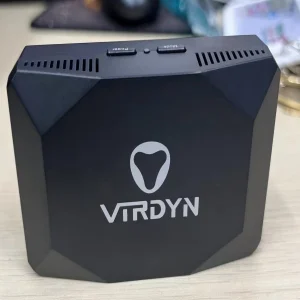
Arena crowd density produces extreme radio frequency pollution in standard 2.4GHz consumer Wi-Fi bands. Our hardware circumvents this by employing military-grade frequency-hopping spread spectrum (FHSS) telemetry in both 5.8GHz ISM and dedicated 915MHz/868MHz ultra-wideband communication bands. Additionally, our receiver hubs can be positioned directly adjacent to the performer’s backstage green room or optical tracking volume and connected via optical fiber to front-of-house render engines, isolating data streams from stadium interference.
Can this pipeline drive real-time physics such as hair, cloth, and dynamic lighting?
Absolutely. Our live SDK sends raw bone rotation and velocity matrices directly into Unreal Engine's Chaos Physics solver. When the live performer performs rapid turns or jumps, the avatar's virtual hair, garments, and stage accessories react dynamically with accurate physical mass, gravity, and drag. Furthermore, real-time DMX tracking protocols (such as Art-Net or sACN) allow the concert's physical lighting director to illuminate the virtual avatar identically to the live band.
Advanced Production Sensors & Teleoperation Software Matrix
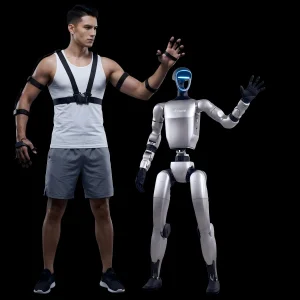
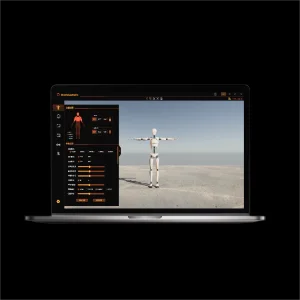
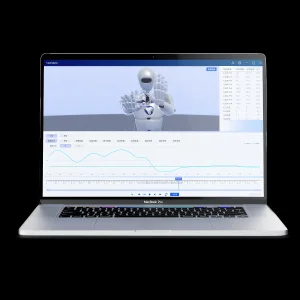
Complete your concert virtual pipeline with high-fidelity facial capture helmets, haptic data gloves, and enterprise analysis software.

Direct Engineering Support
Plan Your Concert Hologram Stage Infrastructure Today
Connect directly with our senior spatial tracking engineers in Guangzhou to review stage blueprints, projector lumens requirements, sensor density configurations, and custom OEM firmware integration.
Request Hologram Stage Blueprint Consultation