Hardware Architecture
Precision Motion Capture Telemetry Infrastructure
Enterprise tracking suits, optical hardware, and algorithmic gloves deployed to capture esports athlete physical kinematics, digital twins, and broadcast interactions.
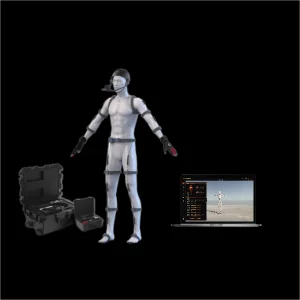
Design DreamsCap X1 Full-Body, Hand & Face Motion Capture for Humanoid Robot Data Collection & Teleoperation Planning, Solution
Explore Solution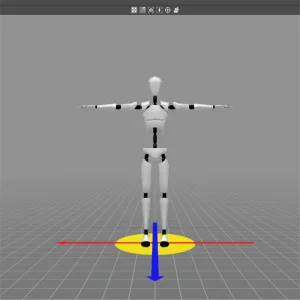
Design Virdyn VDMocap Studio Plus Motion Capture Software System for VDSuit Full Planning, Solution
Explore Solution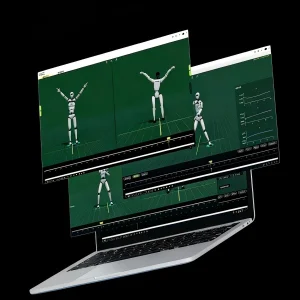
Design Ready-to-Use Robot Motion Datasets | Virdyn Planning, Solution
Explore Solution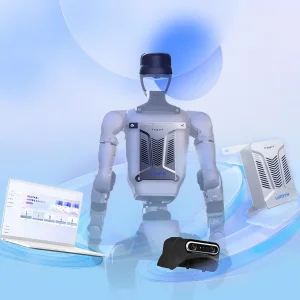
Design AI LingSi System | Robotic Intelligent Creation Platform & Intelligent Voice Interaction Planning, Solution
Explore Solution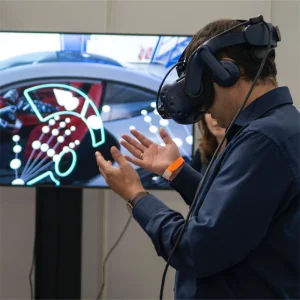
Design Book a Demo for VDSuit Full or mHand Pro Planning, Solution
Explore Solution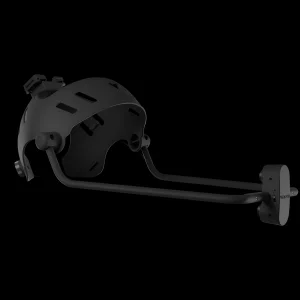
Design AH Double Camera-Based Face Capture Helmet With HD 1080p Embedded RGB Camera Planning, Solution
Explore Solution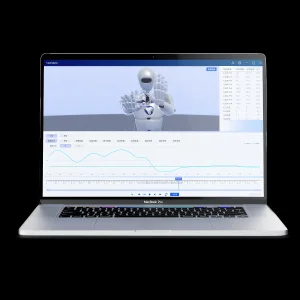
Best Valyze | Visualized Intelligent Motion Data Analysis Software for ce, Sports, Rehabilitation & Education Planning, Solution
Explore Solution
Market Evolution
The Paradigm Shift: Motion Capture In Professional Esports Ecosystems
Competitive electronic sports has outgrown simple 2D screen broadcasts. Today's AAA tournaments and digital entertainment brands leverage volumetric athlete data to drive engagement and performance.
< 15ms
Inertial-to-Engine Latency
1000 Hz
IMU Sensor Internal Update Rate
0.05 mm
Micro-Finger Articulation Accuracy
99.8%
Magnetic Interference Suppression
Next-Gen Broadcast Telemetry
Esports broadcast directors are integrating live biomechanical overlays. By tracking real-time finger actuation frequency (APM) and micro-postural adjustments of pro gamers via inertial mocap gloves, audiences gain unmatched analytical depth during high-stakes finals.
- Live HUD integration into Unreal Engine broadcast suites
- Direct skeletal retargeting for instant digital avatars
- Biometric and kinetic feedback synchronization
Virtual Studio Hosts & Influencer Twins
Digital talent and VTuber brand ambassadors demand seamless tracking across multiple stages without optical occlusion. Inertial mocap systems provide agile tracking in standard studio offices, eliminating million-dollar optical rigs while maintaining broadcast-grade fidelity.
- Zero occlusion in multi-talent desk setups
- Rapid 5-minute pre-broadcast calibration
- Instantaneous fallback fail-safes for live streaming
Ergonomic & Health Optimization
Esports medicine centers utilize systems like Valyze to study repetitive strain injury (RSI), cervical spine compression, and carpal tunnel syndrome in elite athletes, delivering data-driven corrective training regimens to extend career longevity.
- Micro-movement kinematic analysis for wrist mechanics
- Dynamic spine and shoulder torque distribution
- Quantified physical fatigue performance indexes
Strategic Sourcing
Global Enterprise Procurement Requirements
Enterprise procurement directors evaluate motion capture hardware based on total cost of ownership (TCO), SDK versatility, latency envelopes, and electromagnetic environment resilience.
Industrial Interference Rejection
Modern esports arenas are saturated with high-voltage LED walls, wireless intercom arrays, and complex server racks. Enterprise-grade IMUs must integrate autonomous Kalman filters and active geomagnetic compensation to prevent coordinate drift under intense radio frequency environments.
Open Pipeline Scalability
Procurement teams demand frictionless connectivity with established production stacks. Virdyn delivers robust SDK support across Unity, Unreal Engine 5, Autodesk Maya, Blender, and ROS/ROS2, ensuring single-source hardware operates across broadcast, game development, and embodied AI.
Continuous High-Duty Reliability
Esports tournaments run continuous 10-hour live segments. Hardware resilience requires hot-swappable dual-battery configurations, antibacterial breathable Lycra bases, and ultra-durable strain-relief connectors designed for rapid performer handoffs.
Advanced Manufacturing
China Industry 4.0: Supply Chain Resilience & Precision Advantage
How state-of-the-art manufacturing hubs in Guangzhou provide unmatched cost-to-performance ratios and zero-delay global hardware deployment.
Vertical Hardware-Firmware Integration
By housing SMT automated PCB placement, multi-axis robotic sensor calibration jigs, and firmware development within the same production clusters in the Greater Bay Area, Virdyn eliminates Tier-2 supply bottlenecks, achieving 300% faster design iteration compared to fragmented western supply chains.
Stringent Military-Grade QC Protocols
Every IMU module is subjected to continuous thermal cycling (-20°C to +60°C), multi-axis vibrational stresses, and automated optical calibration matrices. This ensures individual sensor nodes demonstrate zero positional variance before system integration.
Rapid Global Lead Times
Operating adjacent to global logistics hubs allows Virdyn to fulfill multi-unit enterprise orders within 5 to 7 business days worldwide, backed by redundant parts inventory, responsive express maintenance pathways, and round-the-clock technical operations.
Deployment Scenarios
Localized Turnkey Motion Capture Application Scenarios
Scalable engineering configurations mapped to specific commercial esports environments.
1. Arena Live Holographic Stage
Synchronize actor full-body inertial suits (VDSuit Full) and facial capture helmets (AH Double Camera) with augmented reality broadcast cameras to display giant live-action champions appearing directly inside the tournament stadium in real time.
2. High-Performance Training Facility
Deploy multi-node gloves (mHand Pro) paired with the Valyze motion analysis suite to quantify microsecond hand kinematics, helping coaches identify split-second tactical hesitations and refine mouse grip mechanics for pro rosters.
3. Dynamic Virtual Production Set
Enable game developers to rapidly record high-energy cinematic promo cinematics and victory animations in non-specialized convention hall spaces without expensive camera trusses or calibration teardowns.
Technical Clarifications
Frequently Asked Questions Regarding Esports Motion Capture
Key architectural and procurement answers compiled by our engineering directors.
Why is inertial motion capture preferred over optical camera rigs in live esports broadcasts?
Inertial motion capture suits like the VDSuit Full eliminate the need for fixed camera perimeters and direct line-of-sight tracking. In live esports arenas where stage structures, giant LED displays, and mobile camera cranes cause severe optical occlusion, wearable IMU sensors guarantee uninterrupted 360-degree tracking with rapid setup times and zero lighting sensitivity.
How does the system mitigate electromagnetic interference from tournament stage hardware?
Virdyn’s sensor nodes utilize advanced 9-axis fusion algorithms combining internal accelerometers, gyroscopes, and magnetometers with predictive algorithmic filtering. The software dynamically identifies magnetic anomalies and switches to high-accuracy 6-axis dead-reckoning fusion, entirely isolating character skeletons from local electrical interference.
Can Virdyn mocap data be streamed directly into Unreal Engine 5 for live virtual shows?
Yes. VDMocap Studio Plus provides a native LiveLink plugin for Unreal Engine 5 as well as direct streaming adapters for Unity. The end-to-end network latency remains consistently below 15-20 milliseconds, providing frame-accurate synchronization with live broadcast broadcast switchers.
What is the calibration time required between different performers during live stage operations?
System initialization requires standard T-pose, A-pose, or S-pose stances that take less than 10 seconds to execute in the software interface. When swapping suits between athletes, calibrated skeletal profiles can be recalled instantly via pre-saved operator profiles.
What warranty and post-deployment technical services are extended to international buyers?
All enterprise systems include a 1-year comprehensive hardware warranty, lifetime software updates, and 24-hour English technical engineering support via dedicated project communication channels. Modular replacement units can be expedited directly from our Guangzhou facility.
Production Software & Ecosystem
Integrated Software, Sensor Suites & Studio Kits
Complete your deployment stack with professional analysis engines, accessories, and scalable capture software suites.
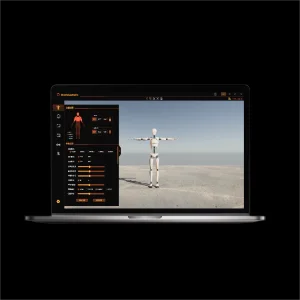
Design Virdyn DreamsCap Studio Motion Capture System Engine For Professional Animators Film and Game Producers Planning, Solution
Explore Solution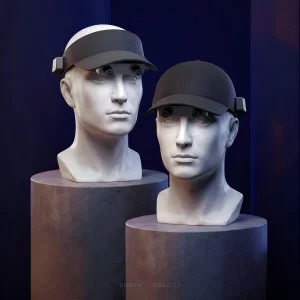
Design VDEgo - Egocentric Video Data Collection Service at Scale | FPV Head-Mounted Camera Planning, Solution
Explore Solution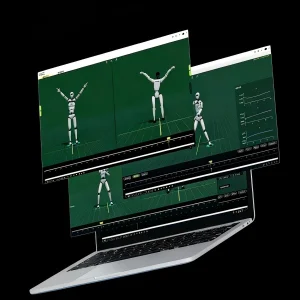
Design VDTraining: One-Stop Robot Reinforcement & Imitation Learning Platform Planning, Solution
Explore Solution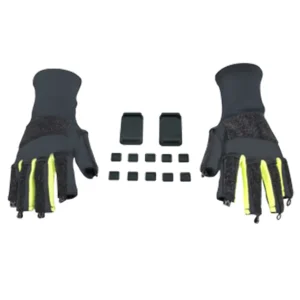
Best Inertia Motion Capture Fingers Capture Accessories Elastic Lycra Fabric Gloves for VDSuit Full(Without Sensors) Planning, Solution
Explore Solution
Design Virtual Human Technology: Digital Human Activation Brand Marketing New Path Planning, Solution
Explore Solution
Best How Do Brands Use Virtual Spokesman to Tell Good Stories: Motion Capture Technology Empowers Brand Propagation Planning, Solution
Explore Solution
Design Virtual Host Technology: Help Mainstream Media Layout Virtual Reality Industry Planning, Solution
Explore Solution