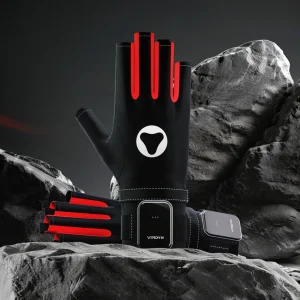
Primary AR Motion Capture Suites & Platforms
Explore our industrial-tested full-body inertial suits, dual-camera facial tracking rigs, voice-interactive robotics engines, and real-time animatronic drivers calibrated for low-latency AR execution.
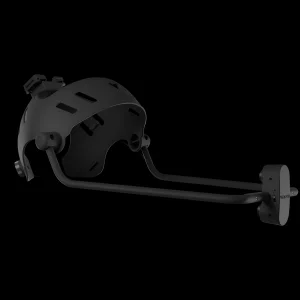
Design AH Double Camera-Based Face Capture Helmet With HD 1080p Embedded RGB Camera Planning, Solution
Explore Solution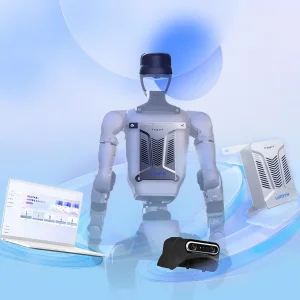
Design AI LingSi System | Robotic Intelligent Creation Platform & Intelligent Voice Interaction Planning, Solution
Explore Solution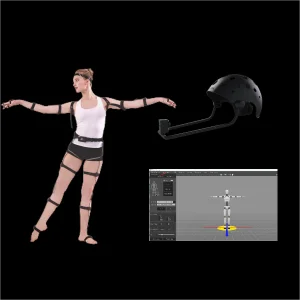
Design VDCap Full Performance Capture Entry-Level Motion Capture Kits for Beginners and Hobbyist Planning, Solution
Explore Solution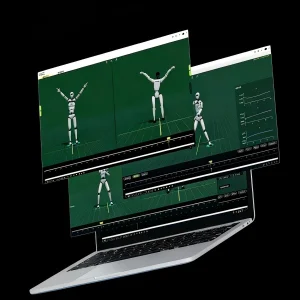
Design VDRobot Studio: Motion Data Collection&Conversion Platform for Robotics | Virdyn Planning, Solution
Explore Solution
Design Motion Capture Technology to Help the Development of Creative Advertising with Realistic Effects Planning, Solution
Explore Solution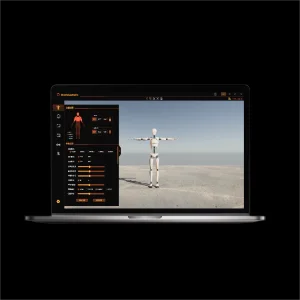
Design Virdyn DreamsCap Studio Motion Capture System Engine For Professional Animators Film and Game Producers Planning, Solution
Explore Solution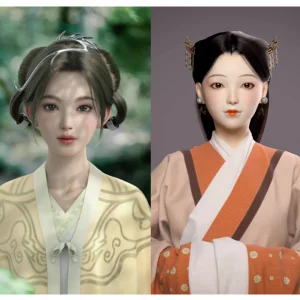
Best How Do Brands Use Virtual Spokesman to Tell Good Stories: Motion Capture Technology Empowers Brand Propagation Planning, Solution
Explore Solution
Design Virtual Actors: How the Film Industry Should Layout the Virtual Market Planning, Solution
Explore SolutionThe Global Commercial & Industrial Status of Motion Capture in Augmented Reality
How real-time biomechanical tracking transitioned from film soundstages into spatial enterprise workflows, contextual computing, and autonomous human-machine interfaces.
The convergence of Augmented Reality (AR), Mixed Reality (MR), and advanced spatial computing has created a structural inflection point in human-machine interfaces. Historical motion capture systems, once constrained to sterile biomechanics laboratories and million-dollar multi-camera optical VFX soundstages, are now mandatory infrastructure for enterprise AR architectures. As head-mounted displays (HMDs) such as Apple Vision Pro, Meta Quest 3, and industrial HoloLens units proliferate across commercial sectors, virtual models can no longer remain static holograms. Users demand physical fidelity, responsive avatar telepresence, micro-gesture manipulation, and zero-latency anatomical synchronization.
In the global marketplace, Motion Capture for AR planning has bifurcated into three discrete tiers: enterprise spatial teleoperation, real-time avatar engagement (e.g., VTubing, brand ambassadorship, broadcasting), and generative humanoid robotics data harvesting. Enterprise buyers no longer evaluate motion capture purely on raw coordinate precision within a dark room; they demand spatial agility, resistance to electromagnetic interference (EMI), instant outdoor deployment, and seamless pipeline transmission over 5G/Wi-Fi 6 networks directly into native rendering engines such as Unreal Engine 5 (Chaos/Live Link), Unity, and OpenXR frameworks.
Engineering Consensus: Pure optical tracking fails outside line-of-sight conditions; pure inertial tracking experiences positional drift over prolonged timelines. The undisputed gold standard for AR spatial computing is Hybrid Sensor Fusion—combining high-frequency wearable IMUs (Inertial Measurement Units) with egocentric optical visual-inertial odometry (VIO) and edge AI pose estimations.
According to recent spatial computing benchmarks, enterprise efficiency climbs by 42% when complex instructional tasks are augmented by full-body digital human demonstrations compared to flat 2D screen guidance. This paradigm shift requires enterprise system architects to draft clear, robust deployment solutions that encompass sensor ergonomics, spatial coordinate anchors, skeletal retargeting rigs, and real-time network protocol management.
Inertial Freedom & Zero Occlusion
Overcoming physical line-of-sight barriers through multi-node 9-axis sensor arrays. Captures complete bodily performance under vehicles, inside equipment cabs, or across expansive warehouses.
- High-G dynamic sensor ranges without frame loss
- Active ferromagnetic calibration algorithms
- Untethered real-time UDP / TCP streaming
Sub-Millimeter Facial & Hand Articulation
Micro-expression tracking and per-finger dexterous articulation are vital for interactive AR. Dual-camera 1080p helmets and multi-node gloves unlock nuanced interpersonal communications.
- 52 ARKit BlendShapes live driver sync
- Individual distal and proximal joint telemetry
- Ultra-lightweight aerospace carbon fiber frames
Spatial Coordinate Co-Registration
Binding wearable biomechanics to global world anchors. Aligns the captured actor directly with AR point clouds, digital twin CAD models, and real-world industrial machinery.
- Spatial anchor zeroing with QR / ArUco markers
- Continuous SLAM odometry drift correction
- Sub-10ms retargeting engine latency
Localized Contextual Application Scenarios in AR
Proven industrial architectures across healthcare, aeronautics, live broadcast XR, and intelligent robotics telepresence.
1. Remote Industrial AR Maintenance & Tele-Guidance
When complex equipment malfunctions in offshore oil rigs or remote semiconductor cleanrooms, flight costs and response delays are catastrophic. By equipping an expert engineer at headquarters with a full-body inertial mocap suit (VDSuit Full) and mHand Pro data gloves, their precise bodily kinematics are instantly streamed as a life-sized holographic mentor superimposed directly onto the on-site technician's AR smart glasses. The technician sees exactly how the expert maneuvers their wrists, applies torque, and positions tools around physical equipment in real space.
2. Interactive AR Brand Ambassadors & Virtual Live Commerce
Modern brand propagation demands authentic real-time engagement. Utilizing Virdyn's unified motion, facial (VDFace Pro), and finger capture pipelines, human performers drive photorealistic AR avatars during live hybrid brand events, e-commerce livestreams, and VIP interactive booths. The virtual ambassador shares the physical stage with real humans, interacting dynamically with attendees who view the event through spatial headsets or venue projection mappings without perceptible latency or unnatural clipping.
3. Embodied AI & Humanoid Robot Teleoperation
Humanoid robotics development hinges on massive quantities of high-fidelity human demonstration data. Using motion capture paired with AR spatial view cameras (egocentric viewpoints), human operators teleoperate bipedal robots and multi-finger robotic hands to perform delicate manipulation tasks. The operator perceives the robot’s environment via an AR overlay while their motion commands are converted in real time through VDRobot Studio into joint angle commands, feeding deep reinforcement learning pipelines.
Macro Industry Planning & Solution Architecture
A five-tier systems engineering methodology for enterprises planning large-scale AR motion capture integrations.
Deploying an institutional-grade AR motion capture infrastructure requires holistic integration across hardware sensory inputs, computational edge nodes, local-area wireless infrastructure, and runtime 3D game engine bridges. Below is the blueprint endorsed by Virdyn’s solutions architects for scalable, interference-immune operations:
Phase 1: Environmental Electromagnetic Audit & Spatial Datum Registration
Before deployment, an RF spectrum audit must verify 2.4 GHz / 5.8 GHz wireless band availability. In industrial settings containing significant structural steel or high-voltage transformers, inertial sensors are pre-calibrated using dynamic compensation matrixes. A physical world origin point (Datum) is established using optical fiducials (ArUco / AprilTags) to bind the inertial skeletal reference coordinates with the AR headset's SLAM spatial coordinate grid.
Phase 2: Hardware Sensor Fusion & Performance Capture Ingestion
Performers don the VDSuit Full featuring 27 medical-grade IMU nodes, synchronized with mHand Pro gloves and the VDFace Pro dual-camera helmet. Capture telemetry streams simultaneously at 120Hz via proprietary 2.4GHz ultra-low latency protocols to a local edge processor running VDMocap Studio, guaranteeing zero frame collision and deterministic packet delivery.
Phase 3: Real-Time Algorithmic Retargeting & Biomechanical Constraints
Raw quaternion orientation arrays pass through biomechanical Inverse Kinematics (IK) solvers. Foot-contact detection and ground-plane clamping algorithms eradicate foot sliding and elevation float. The skeletal rig is dynamically mapped onto target AR avatars regardless of varying bone length ratios, preserving organic posture and athletic momentum.
Phase 4: Game Engine Live Link & Spatial Compositing
Data streams directly into Unreal Engine 5 via Live Link or Unity via Virdyn’s native C# SDK. Within the engine, motion frames are composited with virtual lighting, shadows, and occluding meshes extracted from LiDAR scans of the real-world venue, ensuring the AR asset appears physically grounded behind real obstacles.
Phase 5: AR Edge Rendering & HMD Packet Distribution
Processed spatial data is distributed to client AR glasses (VisionOS, Android XR, OpenXR) via WebRTC or low-latency OSC sockets. Rendering occurs either on the client device or is streamed through edge server pixel streaming, enabling photoreal digital humans to appear in front of thousands of simultaneous AR participants.
Technology Roadmap & Future Outlook (2025–2030)
Anticipating the technological convergence driving the next decade of spatial tracking and intelligent human-machine embodiment.
Neural IMU Calibration & Zero-Setup Calibration
Machine learning models embedded directly in firmware will predict and compensate for magnetic distortions and sensor alignment variances in real time. Performers will simply put on the suit without requiring traditional 'T-Pose' or static calibration sequences.
Egocentric Markerless AI Integration
Seamless integration between AR headset outward-facing RGB-D cameras and wearable inertial nodes. Dual-modality SLAM fusion will eliminate drift permanently over miles of outdoor operation without auxiliary base stations.
Bidirectional Micro-Haptic Force Telepresence
Transitioning mocap gloves from purely input devices to dual input-output sensory interfaces. As users interact with virtual AR objects, micro-fluidic or electro-tactile actuators will return realistic surface tension and physical compliance.
Autonomous Embodied Digital Twins
Motion capture datasets captured during AR workflows will train foundation behavior models. Human demonstrations in AR will instantly spawn autonomous digital workers capable of performing multi-step industrial physical work alongside humans.
Frequently Asked Questions: Motion Capture for AR Planning
In-depth technical answers addressing latency, magnetic interference, software compatibility, and hardware selection for system integrators.
Why is inertial motion capture superior to optical capture for augmented reality installations?
How does Virdyn resolve magnetic interference (EMI) in industrial environments with heavy steel equipment?
What is the true end-to-end latency when driving a real-time AR avatar through Unity or Unreal Engine?
Can Virdyn facial helmets and motion gloves be synchronized with third-party AR headsets like Apple Vision Pro?
How does motion capture accelerate embodied AI and humanoid robot training in AR simulations?
Comprehensive Hardware Catalog & Enterprise Solutions
Select from our flagship inertial capture suits, precision multi-finger gloves, professional face helmets, and turnkey motion datasets.
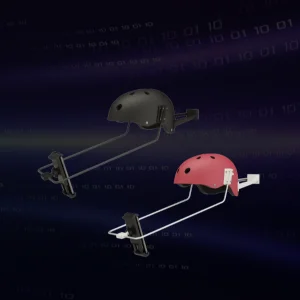
Best Virdyn VDFace Capture System for Real Time Facial Capture with Face Capture Helmet Planning, Solution
Explore Solution
Design Motion Capture Provides Advanced Technology Tools for Virtual Film Production Planning, Solution
Explore Solution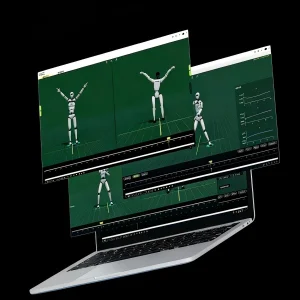
Design Ready-to-Use Robot Motion Datasets | Virdyn Planning, Solution
Explore Solution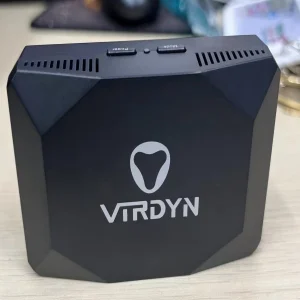
Design Full Body Motion Capture Accessories for Suit Hub Planning, Solution
Explore Solution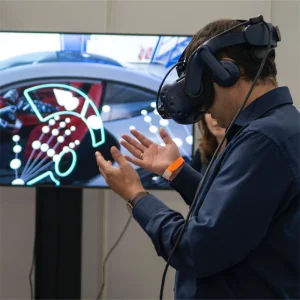
Design Book a Demo for VDSuit Full or mHand Pro Planning, Solution
Explore Solution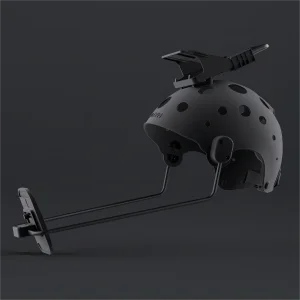
Best Virdyn VDFace Pro Capture System for Real Time Facial Capture with Face Capture Helmet Planning, Solution
Explore Solution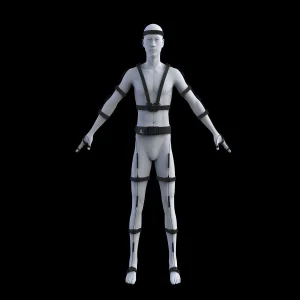
Design Virdyn VDSuit Full for Full Body Function Inertia Motion Capture Suit Planning, Solution
Explore Solution