
Industrial Deployment Portfolio · Series I
Enterprise Motion Capture Systems: Immediate Production Assets
Explore high-fidelity wearable inertial suits, markerless optical rigs, and specialized robotics teleoperation setups engineered for instantaneous pipeline ingestion and field-proven reliability.
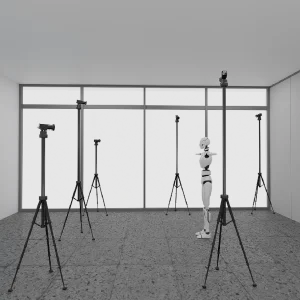
Camera Optical Markerless Full Body, Hands & Face Capture Solution
Explore Solution
Advanced Virtual Film Production Motion Capture Planning System
Explore Solution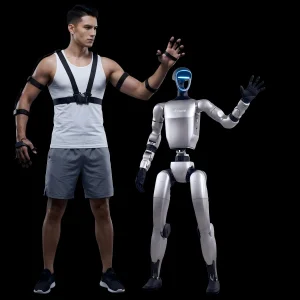
VDSuitMini Half-Body Robot Teleoperation & Data Collection Rig
Explore Solution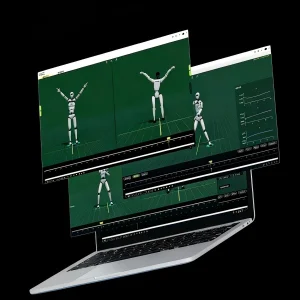
VDTraining Robot Reinforcement & Imitation Learning Platform
Explore Solution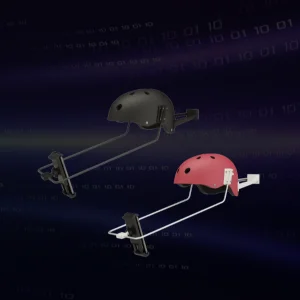
Virdyn VDFace Real-Time Facial Capture Head-Mounted Rig
Explore Solution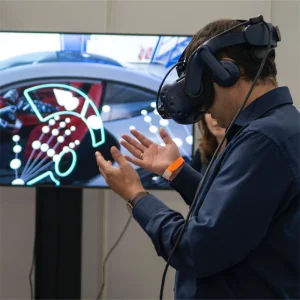
Enterprise Trial & Live Demo for VDSuit Full & mHand Pro
Explore Solution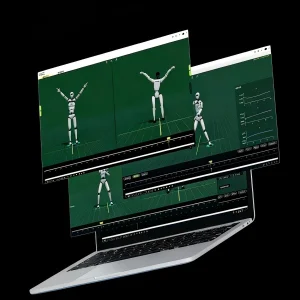
Ready-to-Use High-Precision Robot Motion Kinematic Datasets
Explore Solution
Industry Macro Paradigm Shift
Enterprise Motion Capture: The Technological Crossroads of Spatial Intelligence
From proprietary high-cost optical setups to accessible multi-sensor fusion architectures, modern enterprise motion capture has transitioned from a niche entertainment service into the primary data engine powering industrial automation, digital human activation, and embodied AI.
Phase 1: Optical Monopolies
Traditional multi-camera retro-reflective marker arrays dominated VFX for decades. While offering pinpoint spatial coordinates, they imposed astronomical setup costs, mandatory climate-controlled volumes, lengthy occlusion cleanups, and zero operational mobility outside the studio grid.
Phase 2: Inertial Freedom
The introduction of high-bandwidth MEMS (Micro-Electro-Mechanical Systems) IMU nodes enabled wearable full-body tracking anywhere. The elimination of line-of-sight constraints empowered location-agnostic live performance, mobile athletic evaluation, and zero-latency real-time previewing.
Phase 3: Embodied AI Fusion
Today's enterprise frontier combines 9-axis IMU kinematic nodes, egocentric vision, and markerless optical solvers to generate multi-modal datasets for humanoid robots, generative animation models, and enterprise-grade teleoperation environments.
< 15 ms
End-to-End Wireless Telemetry Latency
10+ Engines
Native LiveLink & SDK Connectors
99.4%
Biomechanical Kinematic Solving Accuracy
70% TCO
Average Procurement & Maintenance Savings
Enterprise Due Diligence
Global Enterprise Procurement Requirements: Critical Engineering Benchmarks
Chief Technology Officers and Studio Directors must look beyond cosmetic sensor counts. Evaluating enterprise motion capture solutions demands stringent architectural assessment across magnetic immunity, raw latency, SDK flexibility, and cross-platform synchronization.
1. Dynamic Magnetic Immunity & Extended Drift Compensation
Real-world enterprise deployments operate in electrically noisy settings: steel-reinforced soundstages, industrial warehouses with heavy robotic manipulators, and high-density computing servers. Enterprise IMU suits must integrate advanced multi-sensor Extended Kalman Filtering (EKF) alongside magnetometer-free zero-velocity update (ZUPT) algorithms to guarantee posture stability without positional distortion over long sessions.
2. Zero-Pipeline Latency & Genlock Synchronization
For high-end virtual production using Unreal Engine nDisplay LED volumes and broadcast AR, telemetry latency exceeding 20ms introduces catastrophic parallax disassociation. Enterprise pipelines demand sub-15ms end-to-end packet processing with support for wireless master clock synchronization, SMPTE timecodes, and direct hardware genlock alignment across cameras and audio chains.
3. Full Biomechanical Kinematic Rigidity (No Bone Stretch)
Animation clean-up constitutes up to 45% of traditional mocap labor overhead. A superior enterprise mocap suite incorporates rigorous anatomical constraint solving natively within the capture daemon. It locks segment lengths strictly to the performer's calibrated skeletal profile, eliminating joint popping, unnatural spine inversion, and foot-sliding during high-dynamic athletic motion.
4. Open API Architecture & Embodied AI Protocol Support
Modern enterprise procurement rejects closed black-box software silos. Forward-thinking organizations require direct C++, Python, ROS/ROS2, and UDP/TCP broadcast access to raw quaternions, angular velocities, and linear acceleration vectors. This allows simultaneous retargeting to Unreal Engine LiveLink for creative teams and real-time inference in humanoid robot simulation environments.
China Factory 4.0 Ecosystem
Precision Hardware Manufacturing, Supply Chain Resilience & Agility
Headquartered in Guangzhou, China, Virdyn capitalizes on the world's most sophisticated mechatronics and sensor manufacturing ecosystem to deliver military-grade reliability at a fraction of legacy Western hardware costs.
Automated SMT & Multi-Axis Calibration
Every IMU sensor node is manufactured using automated surface-mount technology (SMT) and calibrated on proprietary high-precision 3-axis rotation turntables. This individual temperature and bias profiling minimizes sensor noise variance to under 0.05 deg/sec RMS, ensuring peerless unit-to-unit consistency.
Deep Pearl River Delta Cluster Efficiency
By leveraging the specialized electronic component supply chain of the Greater Bay Area, Virdyn compresses prototyping and iteration cycles from typical 6-month timelines down to 3 weeks. Procurement teams benefit from guaranteed spare parts inventories, scalable bulk assembly, and resilient supply lines immune to single-source bottlenecks.
Rigorous Military-Grade Quality Assurance
Each batch undergoes cyclic thermal shock testing (-20°C to +60°C), multi-drop kinetic impact simulation, and intensive 72-hour continuous RF stress evaluation. Enterprise customers receive verifiable CE/FCC compliance certificates and rigorous hardware MTBF (Mean Time Between Failures) documentation exceeding 15,000 operational hours.
Industrial & Creative Convergence
Global Landscape: From AAA Entertainment to Embodied AI Infrastructure
Enterprise motion tracking has outgrown its legacy creative boundaries. Today, it functions as the critical translation layer converting biological kinematics into actionable digital intelligence across four massive commercial verticals.
Virtual Film & Previs
Real-time in-camera visual effects (ICVFX) demand instant skeletal telemetry directly into Unreal Engine. Directors evaluate complex camera framing, actor staging, and synthetic lighting simultaneously on LED stages without waiting for post-production tracking cleanups.
AAA Game Cinematics
Modern interactive narratives require thousands of locomotion assets, combat transitions, and expressive character micro-gestures. Inertial suites allow developers to capture dozens of takes per day directly inside standard sound booths or outdoor terrain.
Embodied AI & Robotics
Humanoid bipedal robots and dexterous robotic manipulators rely on human imitation learning (IL) and reinforcement learning (RL). Mocap suits and data gloves provide the high-frequency kinodynamic demonstration datasets needed to train neural policy models.
Biomechanical Ergonomics
Occupational therapy, athletic performance analytics, and automotive assembly line ergonomic evaluations use continuous IMU joint angle recording (Valyze system) to identify musculoskeletal strain and improve physical human-machine collaboration.
Technical Evaluation Matrix
Comprehensive Architecture Trade-Off Analysis
A clear comparative framework contrasting wearable inertial sensor arrays, marker-based optical camera setups, and pure AI computer vision markerless tracking systems across critical operational parameters.
| Evaluation Vector | Virdyn Inertial Array (VDSuit Full / mHand) | Legacy Optical Marker-Based Stage | Virdyn YanDong Markerless Optical |
|---|---|---|---|
| Spatial Environment | Unlimited. Indoor, outdoor, cramped vehicles, elevated platforms; zero camera volume limits. | Constrained to rigid, pre-calibrated capture volume surrounded by high-speed strobe cameras. | Moderate. Defined by camera field of view, operates in standard lit production offices. |
| Optical Occlusion Vulnerability | 100% Occlusion Immune (IMU sensors calculate joint angles independently of visual line of sight). | High vulnerability; requires tedious manual marker swapping clean-up when performers touch or roll. | Handled via temporal AI spatial heuristics, but extreme limb intersections require post-correction. |
| End-to-End Latency | < 15ms continuous real-time wireless transmission (2.4GHz / Wi-Fi 6 proprietary mesh). | 10 - 25ms depending on server camera count, network switch architecture, and marker resolution. | 30 - 50ms (governed by multi-stream neural network computer vision inference cycles). |
| Setup & Calibration Time | < 3 minutes per performer (Single-pose N/T-pose dynamic sensor alignment). | 45 - 90 minutes (Rigid room wand calibration, marker suits placement, individual skinning). | Instantaneous setup; zero wearable garments, automated camera intrinsic calibration. |
| Global Root Positional Accuracy | Estimated via forward kinematics + foot contact solvers; excellent for local movement sets. | Sub-millimeter absolute Cartesian coordinates across the full global camera capture volume. | Accurate relative global positioning within calibrated 3D room perimeter. |
| Enterprise Capital Expenditure (CapEx) | Low to Moderate. Eliminates expensive optical rigging, soundstage trusses, and high-wattage power. | Extremely High ($80,000 - $350,000+ for professional camera rigs and server infrastructure). | Very Low (Standard industrial USB3/GigE cameras coupled with workstation GPU processing). |
Implementation Blueprints
End-to-End Pipeline Workflows for Demanding Enterprise Deployments
Turnkey enterprise solutions require seamless integration across industry-standard digital content creation (DCC) suites, real-time render engines, and robotic operating systems.
Blueprint A: AAA Game Studio Live Virtual Production
Stack: VDSuit Full + mHand Pro + Unreal Engine 5.4 LiveLink.
Workflow: Performers execute cinematic stunts in a basic training room. Body quaternions and finger articulation stream via 2.4G wireless to VDMocap Studio Plus, which applies real-time foot contact inverse kinematics. Data streams over UDP LiveLink directly into MetaHuman skeletons inside Unreal Engine, enabling real-time multi-character combat capture with immediate FBX master take recording.
Blueprint B: Humanoid Robot Teleoperation & Imitation Learning
Stack: VDSuitMini + mHand Pro Haptic Gloves + VDEgo Egocentric Vision + ROS2.
Workflow: A human operator performs complex warehouse bin-picking and fine assembly tasks. Hand flex nodes track joint positions while egocentric RGB-D cameras record point-cloud actions. Skeletal teleoperation vectors are published directly to ROS2 topics via Python APIs to drive a 1:1 humanoid robot in real time while archiving high-quality HDF5 training datasets for model distillation.
Blueprint C: Broadcast 24/7 Virtual Anchor & Live Streaming
Stack: VDSuit Full + AH Double Camera Facial Helmet + Warudo / VRChat (OSC).
Workflow: Commercial live streamers broadcast continuous interactive e-commerce shows. The dual-camera facial helmet tracks 52 ARKit blendshapes simultaneously with full-body body gesture capture. The system runs on a single standard workstation with sub-1% CPU drop rates, enabling rock-solid, uninterrupted multi-hour commercial broadcasts.
Industrial Deployment Portfolio · Series II
Precision Capture Hardware, Dexterous Gloves & Software Suites
Complete your enterprise motion capture pipeline with specialized multi-camera facial helmets, multi-node inertial gloves, dedicated AI creation engines, and custom avatar services.
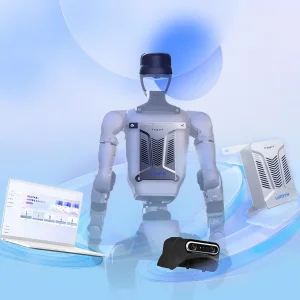
AI LingSi Robotic Intelligent Creation Platform & Voice Interaction
Explore Solution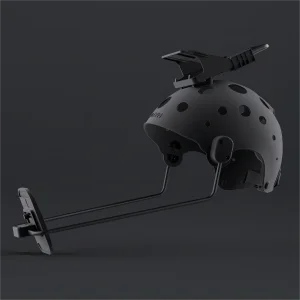
VDFace Pro Real-Time Studio Facial Capture Helmet System
Explore Solution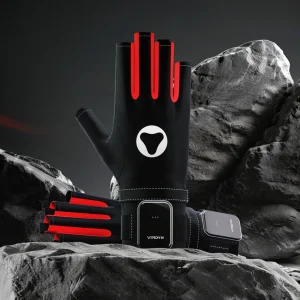
mHand Pro High-Precision Inertial VR & Robotics Mocap Gloves
Explore Solution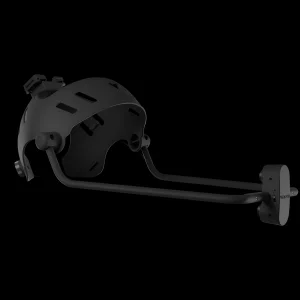
AH Dual-Camera Facial Capture Helmet with Embedded 1080P RGB
Explore Solution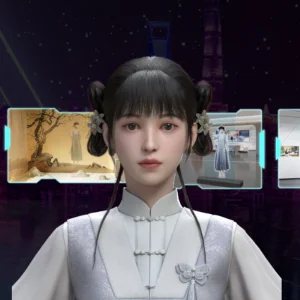
Digital Human Activation & Virtual Marketing Production Suite
Explore Solution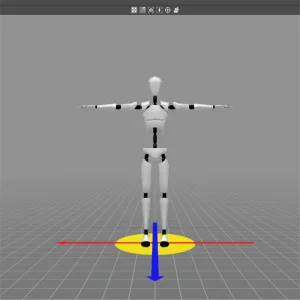
VDMocap Studio Plus Enterprise Motion Capture Daemon & Solvers
Explore Solution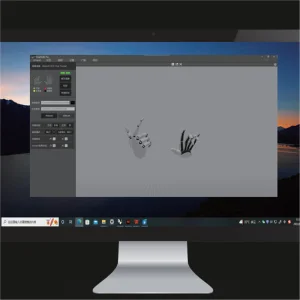
mHand Studio Dexterous Finger Articulation Analysis Software
Explore Solution
Personalized 3D Virtual Avatar Rigging & Modeling Services
Explore Solution
Technical Clarifications & Sourcing FAQ
Frequently Asked Enterprise Questions (FAQ)
In-depth technical answers addressing common procurement questions on sensor drift, multi-performer synchronization, robotics retargeting, and global logistics support.
1. How does Virdyn's inertial hardware handle cumulative positional drift over long capture sessions?
Unlike simple consumer-grade gyroscopes that experience rapid angle drift, Virdyn's enterprise systems combine 9-axis IMU sensors (integrating high-precision accelerometers, gyroscopes, and magnetometers) running an advanced Extended Kalman Filter (EKF). Furthermore, VDMocap Studio incorporates proprietary Zero-Velocity Update (ZUPT) algorithms coupled with dynamic contact-point solving at the feet. When a foot establishes floor contact, linear velocity drift is instantaneously set to zero, maintaining rock-solid spatial stability during long theatrical or continuous live streaming performances without requiring frequent recalibrations.
2. Can the system operate smoothly in environments with significant electromagnetic interference?
Yes. Modern industrial soundstages and server rooms contain significant metal framing and electrical cables that distort ambient magnetic fields. Virdyn firmware provides a dedicated "Anti-Magnetic Interference Mode" that dynamically down-weights magnetometer dependence during detected local flux anomalies, relying instead on high-frequency gyroscope integration and anatomical biomechanical constraints to maintain skeletal stability.
3. How does Virdyn support embodied AI robotics and dexterous hand teleoperation?
Virdyn provides a comprehensive hardware-to-software stack for robotics: the VDSuitMini half-body suit, mHand Pro multi-node gloves, and VDEgo first-person vision capture. Through our open C++ and Python SDKs as well as our VDRobot Studio daemon, kinematic joint rotations can be mapped directly to robot URDF models over ROS/ROS2 topics. Operators teleoperate humanoid robots and dexterous multi-finger end-effectors in real time, capturing human manipulation trajectories and policy demonstrations for downstream imitation and reinforcement learning.
4. What native integrations are supported across professional DCC engines?
Virdyn maintains turnkey, actively supported plugins and live streaming connectors for Unreal Engine (LiveLink support across UE4 and UE5), Unity (Animators and Humanoid avatar pipelines), Autodesk Maya, Autodesk MotionBuilder, 3ds Max, Blender, and Reallusion iClone. For interactive virtual performance, we provide out-of-the-box OSC support for VRChat and dedicated integration with Warudo, alongside raw BVH/FBX offline batch export capabilities.
5. How does Virdyn structure overseas B2B procurement, warranties, and enterprise support?
We work directly with international studios, academic research labs, and regional equipment distributors worldwide. Every enterprise purchase includes a full 1-year hardware warranty, lifetime access to base software updates, and 24-hour SLA technical engineering support via dedicated project communication channels. We provide remote setup onboarding, custom rig calibration support, and fast air courier replacement part logistics.
Strategic Engineering Partnership
Architecting Your Enterprise Motion Tracking Infrastructure
Whether establishing a multi-seat virtual production facility, equipping a biomechanical research laboratory, or deploying a high-throughput human demonstration rig for embodied AI, Virdyn provides the engineering expertise to de-risk your deployment.
1. Architectural Pipeline Audit
Our senior technical solution engineers analyze your engine requirements, network latency ceilings, and skeletal rigging constraints to design an optimized hybrid capture configuration tailored to your specific budget and workflow.
2. Interactive Remote Live Demo
Experience live streaming directly onto your studio's custom character rigs over secure video conference. Verify joint stability, zero-latency finger responsiveness, and facial sync before issuing purchase orders.
3. Factory-Direct Global Delivery
Benefit from verified CE/FCC hardware compliance, comprehensive API documentation, and agile shipment dispatch backed by the world-class manufacturing resilience of Guangzhou Factory 4.0.