Precision Photogrammetry, Sub-Millimeter Spatial Tracking & Hybrid IMU-Optical Production Ecosystems Engineered for Game Development Studios, VFX Studios, Biomechanics and Robotics in Vietnam.
Sub-millimeter 3D spatial marker reconstruction under multi-camera optical setups.
<15ms
Ultra-Low Latency
Real-time pipeline latency from photogrammetry cluster to UE5.4 LiveLink engine stream.
240FPS
High-Speed Optical Tracking
High-framerate synchrony preserving extreme athletic and martial arts kinetics without motion blur.
100%
Occlusion Resilience
Hybrid optical-inertial fusion automatically resolving line-of-sight dropouts in complex scenes.
Strategic Whitepaper
Optical Motion Capture Infrastructure in Vietnam: Industrial & Commercial Landscape
An in-depth technical analysis of spatial computing, VFX outsourcing, biomechanics, and embodied AI robotics across Southeast Asia’s fastest-growing digital economy.
1. The Industrial Inflection Point of Digital Production in Vietnam
Vietnam is undergoing a profound structural transition from a low-cost software development destination into a Tier-1 creative technology and high-precision digital asset hub. In metropolitan economic powerhouses—principally Ho Chi Minh City (District 1, District 7, and Thu Duc Innovation City), Hanoi (Cau Giay and Hoa Lac Hi-Tech Park), and the burgeoning digital corridor of Da Nang—local studios are increasingly handling core creative IP rather than mere asset clean-up. Global AAA game publishing pipelines, cinematic VFX co-productions (spanning Japanese anime, Korean cinematic series, and Hollywood pre-visualization), and real-time virtual broadcasting demand spatial fidelity that traditional manual keyframing cannot deliver at scale.
Historically, studios in Vietnam relied predominantly on pure inertial motion capture suites due to their agility, absence of calibrated volumes, and rapid field deployment. However, as local engineering capabilities expand into cinematic cutscenes, photorealistic digital actors, complex multi-actor stunt choreographies, and dual-actor interaction, the limitations of pure inertial tracking—namely cumulative spatial drift, ground-contact penetration, and the lack of absolute six-degrees-of-freedom (6-DoF) global referencing—have become bottlenecks. This has initiated a strong commercial transition toward turnkey Optical Motion Capture (mocap) stages and Hybrid Optical-Inertial Architectures.
Key Market Dynamic in Vietnam: The rapid expansion of local gaming heavyweights alongside regional VFX production houses has created an immediate requirement for calibrated mocap volumes ranging from 36 m² (compact game-studio rigs) to 200 m² (commercial stunt and multi-performer cinematic volumes). Incorporating optical tracking allows Vietnamese studios to bid directly on top-tier international production packages with sub-millimeter geometric accuracy.
2. Global Technological Shift: Optical, Markerless, and Hybrid Convergence
On a global scale, the motion capture domain has moved past the dogmatic dichotomy between optical retro-reflective marker systems and wearable IMU trackers. While legacy high-end studios previously treated multi-million-dollar optical camera rigs as sovereign, isolated setups, contemporary real-time workflows demand multi-modal sensor fusion.
Contemporary optical motion capture leverages high-framerate infrared (IR) or near-infrared (NIR) strobe arrays synchronizing between 12 to 64 high-speed machine vision sensors operating at 120 FPS to 480 FPS. Global software ecosystems have transitioned to real-time spatial triangulation using non-linear least squares bundle adjustment, running directly into machine learning-assisted skeleton solvers. Concurrently, markerless optical vision models—powered by synthetic training datasets, multi-view convolutional neural networks, and Vision Transformers (ViT)—are emerging for rapid previs and crowds, while marker-based optical remains the undisputed gold standard for ground-truth physical precision, biomechanics, and tight skeletal articulation.
Sub-Millimeter Reconstruction
Active and passive retro-reflective retrofitting provides 3D spatial coordinates with volumetric root-mean-square (RMS) error below 0.3 mm, ensuring zero foot-sliding and rigid root tracking.
Hybrid Fusion Resilience
Bridging optical tracking with IMU sensors eliminates occlusion vulnerabilities during ground combat, wrestling, tumbling, and close-quarter prop interactions.
Instant Engine Telemetry
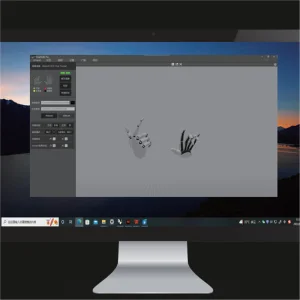
Direct low-latency telemetry streaming over UDP/OSC protocol directly into Unreal Engine LiveLink, Unity Rigging, Maya HumanIK, and ROS2 robot architectures.
3. Localized Application Vectors Across Vietnam's Industries
Deploying an optical motion capture facility within Vietnam requires deep alignment with the country's specific commercial priorities. Below are the core sectors where optical planning and systems integration deliver immediate competitive differentiation:
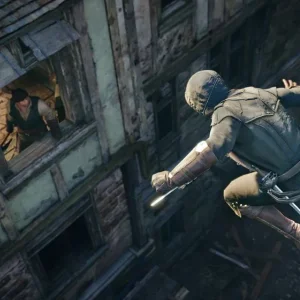
A. High-End Game Locomotion and Combat Pipelines (HCMC & Hanoi): Vietnam’s gaming sector is evolving rapidly from casual hyper-casual mobile titles into complex mid-core, RPG, and multi-platform action titles. Developers require massive motion libraries consisting of balanced combat, parkour, weapon handling, and nuanced character idle states. Optical capture volumes enable clean capture of props (swords, shields, firearms) through 6-DoF rigid-body markers, ensuring that weapon contact points synchronize precisely with skeletal grip matrices without manual frame-by-frame cleanup.
B. Virtual Production & LED In-Camera VFX (ICVFX): Broadcast networks and commercial film studios in Hanoi and Ho Chi Minh City are aggressively exploring virtual production stages with LED volumes. In these setups, optical tracking serves dual purposes: continuous sub-millimeter 6-DoF camera tracking with zero latency to maintain perspective projection frustums on LED walls, alongside simultaneous tracking of live physical actors and stunt doubles within the same coordinated spatial reference frame.
C. Robotics, Humanoid Embodied AI & Smart Manufacturing: As northern and southern industrial parks (such as Bac Ninh, Hai Phong, and Binh Duong) evolve into smart manufacturing clusters, robotics research institutes (including Vietnam National University and Hanoi University of Science and Technology - HUST) require optical motion data collection. High-speed optical tracking provides ground-truth kinematic datasets necessary to train reinforcement learning models for humanoid locomotion, dexterous robot hands, and human-robot cooperative assembly safety verification.
D. Clinical Biomechanics, Ergonomics & Sports Science: Sports medicine facilities, athletic institutes, and physical rehabilitation centers across Vietnam are modernizing their diagnostic capabilities. Optical motion capture combined with calibrated force plates and electromyography (EMG) sensors delivers objective joint kinematic analysis, gait metrics, and injury prevention profiles for high-performance athletes and post-operative patients.
4. Turnkey Engineering Blueprint: Designing a Stage for Tropical Climates
Deploying an optical mocap facility in Vietnam demands specialized hardware ruggedization and acoustic-thermal planning. High relative humidity and temperature variations common in monsoon climates can cause thermal expansion of aluminum camera trusses, causing microscopic lens displacements and degrading wand calibration accuracy over time.
Virdyn’s engineering planning services resolve these localized challenges through carbon-fiber composite calibration wands, temperature-compensated camera mounts, active HVAC airflow mitigation (to prevent thermal convection currents from bending infrared light beams), and specialized strobe thermal dissipation protocols. Furthermore, our turnkey pipeline integrates uninterrupted power supply (UPS) conditioned arrays to isolate sensitive high-speed machine vision hardware from regional power grid voltage spikes.
As spatial computing evolves toward 3D Gaussian Splatting, NeRF-based dynamic scene reconstruction, and embodied AI robotics foundations, the role of optical motion capture is undergoing rapid transformation:
Autonomous Multi-Camera Self-Calibration: Integration of continuous machine-vision background auto-calibration algorithms that eliminate the requirement for daily manual wand sweeps.
Low-Shot Generative Infilling: AI-driven neural kinematics that automatically predict joint rotations when retro-reflective markers are entirely obstructed by complex studio props or set geometry.
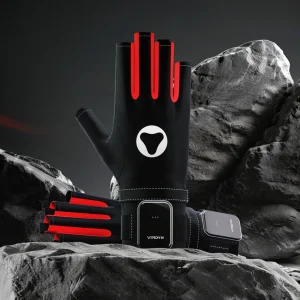
Sub-System Synchronized Biometrics: Native clock-synchronized integration bridging full-body optical kinematics with VDFace high-framerate expression capture and mHand Pro multi-node finger articulation into a single unified telemetry packet.
Embodied AI Learning from Demonstration (LfD): Generating standardized multimodal demonstration data (first-person vision via VDEgo, spatial pose matrices, tactile torque responses) to train bipedal humanoid robots for domestic and industrial execution.
Ready to Plan Your Optical Mocap Stage in Vietnam?
Our studio architects and sensor fusion engineers offer full turnkey facility planning—including room dimensioning, truss calculation, camera placement coverage simulation, and on-site deployment across Vietnam.
Frequently Asked Questions: Optical Mocap Solutions for Vietnam
Technical, logistical, and commercial answers for engineering directors, lead animators, and university lab researchers.
What room dimensions are required to install an optical mocap stage in Vietnam?
A standard production volume requires a minimum clearance of 6m x 6m with a ceiling height of 3.2m to provide a 4m x 4m clean capture area. For stunt choreography, acrobatic capture, and multi-actor fight scenes in game studios, a 10m x 8m volume with 4.5m ceiling height is recommended to allow full camera field-of-view overlap.
How does Virdyn support equipment delivery, customs, and technical setup in Vietnam?
We provide comprehensive logistics coordination for direct importation into Vietnam, compliant with local telecommunications and electronics certifications. Our engineering team delivers remote 3D spatial coverage simulation prior to shipping, followed by on-site or guided remote installation, truss calibration, and engineer training.
Can Virdyn optical and inertial systems be combined in a single live pipeline?
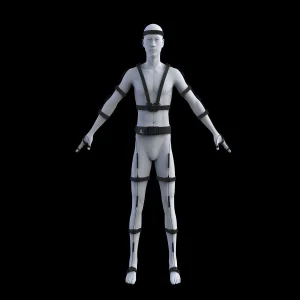
Yes. Virdyn’s software architecture supports synchronous hybrid data streaming. You can deploy optical marker tracking for absolute spatial positioning and weapon props while utilizing the VDSuit Full and mHand Pro for joint angle rotations, completely eliminating marker occlusion issues during complex multi-actor grappling.
How do environmental conditions in Vietnam (high humidity and heat) affect calibration?
High humidity and ambient heat can cause minor thermal expansion on standard aluminum trusses. We mitigate this through rigid carbon-fiber calibration wands with near-zero thermal expansion coefficients and optical camera housings with high passive thermal dissipation, maintaining sub-millimeter precision year-round.
What export formats and game engine plugins are natively supported?
Our pipeline provides zero-latency live plugins for Unreal Engine (5.1 through 5.4+ LiveLink), Unity, Autodesk Maya HumanIK, MotionBuilder, 3ds Max, Blender, and iClone. For offline production, clean skeletal data exports directly to standard FBX and BVH formats with embedded timecode.
Is the system suitable for robotics and Embodied AI data collection in Vietnam?
Absolutely. Through our VDRobot Studio framework, high-frequency human motion kinematics and dexterous manipulation data captured via mHand Pro gloves are retargeted directly into humanoid robot URDF models, ROS/ROS2 nodes, and reinforcement learning environments for advanced industrial teleoperation.
Complete Hardware & Software Suite
End-to-End Motion Capture Solutions for Vietnamese Studios
Explore our integrated hardware units, dexterous data gloves, and production software platforms built to scale creative output.
Game Production
Game Studio Locomotion Capture Solution
Designed for rapid animation asset prototyping, combat choreography, and direct integration into Unity and UE5.