
Enterprise Motion Capture Platforms Configured for Manila Studios
Deploying advanced spatial measurement, hybrid inertial-optical telemetry, and zero-drift algorithmic processing to empower creative production lines across Makati, BGC, and Ortigas media hubs.
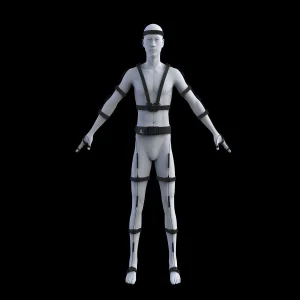
Manila Studio Edition: Virdyn VDSuit Full-Body Inertial Kinetic System
Design Virdyn VDSuit Full for Full Body Function Inertia Motion Capture Suit Planning, Solution
Metro Manila Animation Pipeline: Optical-Inertial High-Throughput Suite
Best Motion Capture Technology Opens a New Era of Animation Development Planning, Solution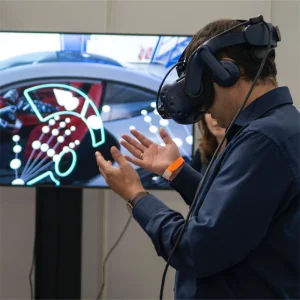
Enterprise On-Site & Remote Technical Demonstration: Manila Facilities
Design Book a Demo for VDSuit Full or mHand Pro Planning, Solution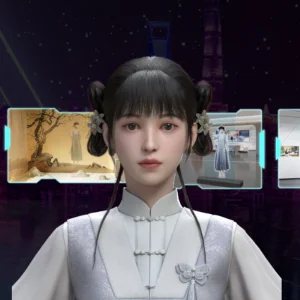
Digital Human Brand Marketing & Live Activation Architecture (Manila)
Design Virtual Human Technology: Digital Human Activation Brand Marketing New Path Planning, SolutionOptical Motion Capture in Metro Manila: The Industrial Paradigm Shift
The Philippines’ digital creative industry is transitioning rapidly from traditional labor-intensive 2D illustration and voice-centric BPO operations into high-margin Unreal Engine 5 AAA co-development, virtual film production, and embodied artificial intelligence.
The Creative BPO & Game Development Expansion
Metro Manila stands at the geographic epicenter of Southeast Asia's creative services boom. With major animation clusters operating across Quezon City, Pasig, and Makati, and premier AAA co-developers anchoring operations in Bonifacio Global City (BGC), the pressure on asset delivery speed has multiplied exponentially. Keyframe animation alone is no longer economically viable when bidding on international AAA character rigging and cutscene deliverables.
By implementing turnkey Optical Mocap and Hybrid Tracking Solutions, local development studios bridge the technical delta between regional outsourcer and co-development partner. Integrating real-time sub-millimeter positional solving within Maya, Blender, and Unreal Engine workflows allows Manila-based artists to deliver thousands of clean motion frames daily, radically lowering overhead while expanding revenue capacity.
- Elimination of multi-week keyframing bottlenecks for AAA game cycles
- Native multi-actor performance sync for cinematic combat systems
- Direct export compatibility with ACPI and GDAP studio pipeline standards
Infrastructure Realities: Space, HVAC, and Calibration Resilience
Deploying dedicated optical tracking stages within Metro Manila presents specific physical engineering challenges. High commercial real estate costs per square meter in prime CBDs mandate optimized camera placement geometries that maximize the capture volume without necessitating massive architectural footprints. Furthermore, the tropical climate, ambient humidity, and intermittent structural vibrations in multi-tenant high-rises require ruggedized mounting and high thermal-stability hardware.
Our Optical Mocap Planning resolves these constraints through custom-calculated wide-angle lens arrays, active thermal compensation algorithms, and hybrid multi-sensor calibration that prevents coordinate system drift during long, uninterrupted multi-hour capture sessions under high-ambient HVAC operation.
- High-rigidity carbon-fiber truss and wall mount assemblies
- Anti-vibration optical brackets compensating for urban transit frequencies
- Rapid single-operator wand recalibration completed in under 120 seconds
Global Technological Convergence: From Marker-Based to AI Multi-Sensor Fusion
Optical motion capture is undergoing an unprecedented architectural evolution. Modern industrial pipelines no longer operate optical arrays in isolation; they integrate neural computer vision, high-frequency IMU fusion, and edge computing to eradicate occlusion and marker dropouts.
1. Passive Retroreflective Optical Arrays
The global benchmark for absolute spatial fidelity in biomechanics, stunt capture, and AAA cinematic sequences. High-resolution stroboscopic infrared cameras cast pulsed light onto spherical retroreflective markers, triangulating 3D coordinate trajectories with extreme mathematical sub-millimeter precision.
While historically vulnerable to line-of-sight occlusion in complex multi-actor wrestling or prop handling, contemporary software incorporates predictive biomechanical inverse kinematics (IK) algorithms that solve occluded limbs autonomously in real time.
2. Neural Markerless Computer Vision
Utilizing high-speed RGB or monochromatic machine-vision sensors powered by deep convolutional networks and spatial transformer models. Markerless optical systems estimate complete 24-joint 3D skeletons directly from raw video feeds without suits, markers, or performer prep time.
Ideal for rapid pre-visualization in virtual film stages, interactive broadcast studios, public sports analytics, and commercial live event booths throughout Metro Manila where actors cannot spend 30 minutes in wardrobe donning sensor suits.
3. Hybrid Optical-Inertial Data Fusion
The definitive enterprise answer to occlusion and space limitations. Wearable 9-axis inertial measurement units (IMUs) track internal joint rotations at 500Hz+, while a perimeter optical camera ring tracks global root position and corrects magnetic distortion.
This hybrid configuration yields an indestructible pipeline: if an actor rolls on the floor, hides inside a physical vehicle prop, or performs close combat, orientation fidelity remains uncorrupted by utilizing IMU data while the optical system maintains perfect zero-drift stage telemetry.
High-Yield Deployment Scenarios Across the Greater Manila Economy
Virdyn’s motion capture architecture integrates seamlessly into four vital sectors fueling the Philippines' digital economy.
A. AAA Game Co-Development & Character Pipeline (BGC / Ortigas)
Manila’s game studios frequently manage critical assets for premier global gaming publishers. Meeting exacting technical standards requires native skeletal solving directly within Unreal Engine 5’s Control Rig. Our optical planning provides turnkey volume setup—from camera placement to Live Link bridge streaming—allowing character animators to record complex martial arts, locomotion sets, and weapon choreographies with zero positional jitter.
- Automated bone remapping to standard UE5 Mannequin & custom rigs
- Simultaneous multi-performer interaction tracking with dynamic physical props
- Batch FBX cleaning tools reducing animator cleanup cycles to near zero
B. In-Camera VFX & Virtual Production Stages (Quezon City Media Belt)
Quezon City is home to the Philippines' largest broadcasting networks, film institutions, and commercial VFX houses. The local transition toward LED volume virtual production demands camera tracking systems that never fail. Optical tracking cameras mounted overhead synchronize directly with cinematographic camera rigs, streaming real-time frustum positional coordinates (X, Y, Z, Roll, Pitch, Yaw) directly into Unreal Engine nDisplay clusters.
- SMPTE 2110 / Genlock synchronization eliminating video tearing
- Absolute sub-millimeter camera frustum alignment against massive LED walls
- Real-time lens distortion calibration matching prime cinema lenses
C. Tertiary Education & Creative Research (DLSU, iACADEMY, CIIT)
Higher education institutions across Metro Manila are modernizing their multimedia arts, game development, and biomechanics curricula. Establishing an academic mocap lab attracts tier-one student talent and prepares graduates for top-tier international studios. Our academic solutions include student-proof hardware, robust wand calibration protocols, and structured instructional syllabi covering mocap directorship, data cleaning, and retargeting.
- Educational bundle licensing for 30+ simultaneous student workstations
- Cross-disciplinary utility spanning 3D animation, sports kinesiology, and VR/AR
- Turnkey faculty training workshops and permanent English technical support
D. Digital Human Ambassadors & Live VTubing (Retail & Events)
The Philippines boasts one of the world's most engaged social media and live-streaming populations. Major telecommunications brands, retail mall operators, and VTuber agencies in Manila are pioneering virtual influencers and interactive customer service avatars. Our integrated body, mHand Pro finger capture, and facial tracking pipelines allow live operators to interact in real time with consumers at trade expos or over digital broadcast channels with zero perceptible lag.
- High-fidelity 52-blendshape ARKit and dual-camera facial tracking
- Sub-20ms ultra-low latency direct broadcast engine via OBS / NDI
- Full compatibility with Warudo, VRChat OSC, Unity, and custom VTuber runtimes
The Next Horizon of Spatial Telemetry & Embodied Robotics
Strategic deployment roadmap guiding engineering decisions for facilities investing in spatial data infrastructure over the next decade.
Deep Learning Rigid Body Solving
Integration of neural inferencing nodes directly inside capture hardware firmware. Real-time predictive kinematic trajectories reconstruct completely occluded limbs during multi-actor martial combat sequences without manual frame interpolation.
Multi-Spectral Neural Radiance Fusion
Simultaneous capture of skeletal tracking and 3D Gaussian Splatting / dynamic volumetric surfaces. Eliminates the boundary between motion tracking and visual photorealism, generating engine-ready assets from live physical performances simultaneously.
Embodied AI Humanoid Demonstration
Expanding optical and wearable mocap systems into primary training pipelines for bipedal humanoid robots. Human spatial demonstrations collected in Manila research centers feed directly into imitation learning models powering next-generation industrial automation.
Enterprise Motion Capture Planning: The Engineer’s FAQ
In-depth technical answers addressing stage architecture, calibration tolerances, hardware maintenance, and software pipeline integration for Metro Manila enterprise buyers.
How does an optical motion capture system handle the high ambient humidity and HVAC load typical in Metro Manila studios?
What is the minimum studio footprint required to establish a functional optical mocap volume in Manila?
How does Virdyn motion capture software integrate with standard 3D DCC tools and game engines like Unreal Engine 5, Maya, and Blender?
Can optical mocap cameras track physical props, weapons, and vehicles simultaneously with human actors?
What after-sales technical support, hardware warranty, and replacement parts lead times exist for clients in the Philippines?
Specialized Hardware & Algorithmic Software Implementations
Complete your production studio ecosystem with high-density finger articulation gloves, real-time facial helmets, and dedicated motion analysis engines.
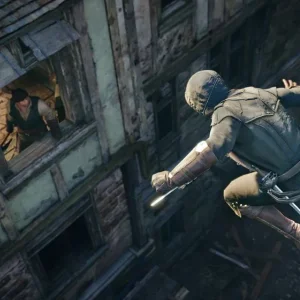
Manila Game Dev: Inertial Combat & Locomotion Tracking Pipeline
Design Inertial Motion Capture Technology to Help the Game Development and Production Planning, Solution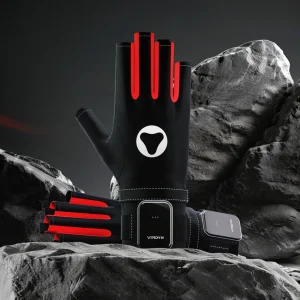
mHand Pro Data Gloves: Finger Articulation Tracking (Manila Lab)
Best Virdyn mHand Pro an Inertia Motion Capture Gloves for Virtual Reality Planning, Solution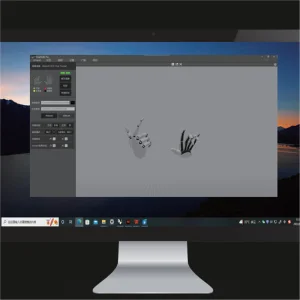
mHand Studio Software: High-Speed Hand Telemetry Calibration System
Best Virdyn mHand Studio Motion Capture Gloves Software System for mHand Pro Planning, Solution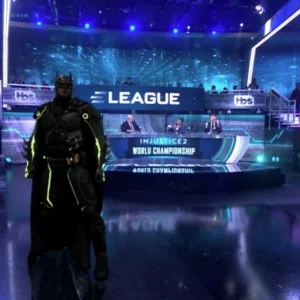
Virtual Film Production & On-Set Camera Tracking (Quezon City)
Design Motion Capture Provides Advanced Technology Tools for Virtual Film Production Planning, Solution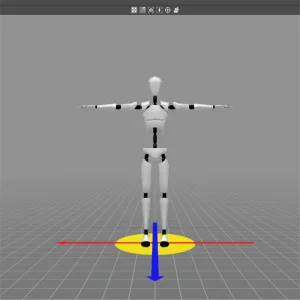
VDMocap Studio Plus: Enterprise Retargeting & SDK Engine
Design Virdyn VDMocap Studio Plus Motion Capture Software System for VDSuit Full Planning, Solution
Virtual Education & Interactive Gamified Learning: Manila Universities
Best Virtual Live Technology Empowerment Makes Online Education and Learning As Fun As Watching Cartoons Planning, Solution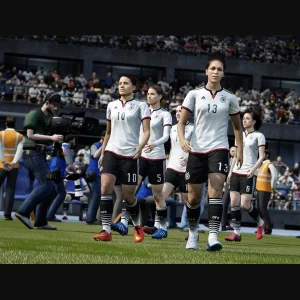
High-Impact Creative Advertising & VFX Commercials (Manila Agencies)
Design Motion Capture Technology to Help the Development of Creative Advertising with Realistic Effects Planning, Solution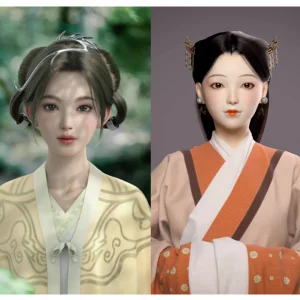
Virtual Brand Spokesperson & IP Activation Architecture: Manila Flagships
Best How Do Brands Use Virtual Spokesman to Tell Good Stories: Motion Capture Technology Empowers Brand Propagation Planning, SolutionArchitect Your Optical Mocap Facility in Manila
Collaborate directly with Virdyn’s senior system engineers to receive customized room acoustic/optical calculations, lens angle coverage simulations, and hardware bundle proposals tailored specifically to your facility’s layout and budget.