
Precision Tracking Ensembles for Belgian Production Facilities
Engineered for seamless cross-platform integration across Unreal Engine 5, Unity, Autodesk Maya, and live optical tracking calibration setups.

Design Virdyn VDSuit Full for Full Body Inertia Motion Capture Suit (Belgium Edition)
Explore System Solution
Best Motion Capture Technology Opens a New Era of Animation Development in Brussels & Ghent
Explore System Solution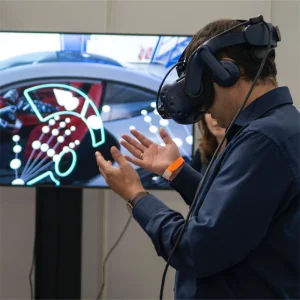
Design Book a Demo for VDSuit Full or mHand Pro (Serving Wallonia & Flanders Engineering)
Explore System Solution
Design Virtual Human Technology: Digital Human Brand Activation for Belgium Media Hubs
Explore System SolutionOptical Motion Capture in Belgium: Cross-Sector Industrial Transformation
Positioned at the logistical and geopolitical core of Western Europe, Belgium combines an avant-garde digital arts sector with hyper-advanced aerospace, automotive manufacturing, and biomedical clusters.
The Benelux Digital Entertainment Hub
Belgium houses globally acclaimed creative collectives, including pioneers in game development, VFX studios in Brussels, and elite animation schools in Kortrijk and Ghent (such as Digital Arts and Entertainment - DAE). Optical mocap systems provide the volumetric capture density needed for photorealistic character rigs and dynamic creature previsualization.
- Elimination of manual keyframing bottlenecks for AAA game production
- Real-time multi-actor interaction pipelines for broadcast studios
- Direct integration into Unreal Engine 5 Nanite/Lumen virtual production
Industry 4.0 & Cobotics in Wallonia & Flanders
The manufacturing corridors around Antwerp, Liège, and Charleroi require sub-millimeter dynamic validation for autonomous robotic arms, AGVs (Automated Guided Vehicles), and human-robot collaborative workstations. Our optical tracking arrays supply ground-truth spatial coordinates to validate inverse kinematics and trajectory planning algorithms.
- Ground-truth teleoperation validation for dexterous robotic hands
- Ergonomic musculoskeletal strain analysis in automotive assembly plants
- Real-time sub-millimeter trajectory verification for aerial drones
Academic Research & Clinical Biomechanics
Belgium’s premier university hospitals (UZ Leuven, UZ Gent, Cliniques Universitaires Saint-Luc) lead European clinical gait analysis, neuro-rehabilitation, and elite sports kinetics. Precision multi-camera retroreflective optical setups capture minute anatomical joint deflections to validate prosthetic designs and orthotic interventions.
- Multi-segment foot and spinal biomechanical modeling
- Force plate and EMG wireless synchronized data ingestion
- Kinematic validation for orthopedic post-surgical recovery tracking
Solving Occlusion and Drift: The Hybrid Optical-Inertial Fusion Model
Pure optical tracking suffers from line-of-sight occlusion in complex stage setups, while pure inertial tracking is vulnerable to cumulative positional drift. Our engineering architecture combines both into a synchronized biomechanical tracking matrix.
The Physics of Optical Marker Occlusion
In high-action capture environments—such as actors wrestling, entering vehicle cockpits, or handling complex weapon props—retroreflective markers are frequently obstructed from optical camera sightlines. Conventional optical solvers extrapolate missing markers using rigid-body assumptions, often resulting in visual jitter, phantom marker swapping, and catastrophic skeletal deformation.
Our hybrid methodology continuously feeds high-frequency (up to 1000Hz internal calculation) angular velocity and acceleration vectors from localized 9-axis IMU nodes directly into the optical cluster's kinematic solver. If an optical marker cluster drops below the mathematical threshold of 3 visible rays, the inertial subsystem maintains rigid orientation and angular continuity without frame dropout.
Ground-Truth Global Drift Elimination
While wearable inertial sensors excel at capturing rapid rotations, they rely on double-integration of acceleration vectors to calculate global 3D space translations. Over prolonged sessions, micro-biases within accelerometer calibration accumulate, causing character models to slide or float away from the floor plane.
By deploying external high-framerate optical tracking cameras around the capture volume, the optical array acts as an absolute spatial anchor. The system updates the world-root coordinate matrix at millimetric accuracy up to 240 times per second, resetting mathematical integration bias before drift manifests. The result: absolute positional fidelity with uninterrupted rotational fluidity.
| Tracking Parameter | Standard Optical System | Standalone Inertial System | Virdyn Hybrid Optical-Inertial Solution |
|---|---|---|---|
| Spatial Position Accuracy | Sub-millimeter (±0.1mm - 0.5mm) | Estimated via contact points (Drift prone) | Absolute Sub-Millimeter (±0.2mm verified) |
| Occlusion Vulnerability | High (Requires continuous line-of-sight) | Zero (Sensors enclosed on body) | Immune (Inertial node maintains track during optical drops) |
| Capture Space Rigidity | Strictly constrained to calibrated volume | Unconstrained (Indoor, outdoor, non-line-of-sight) | Dual-Mode: Volumetric optical zone + seamless inertial spillover |
| Setup & Calibration Overhead | High (Wand wave, multi-camera re-indexing) | Low (Rapid T-Pose / S-Pose calibration) | Accelerated auto-wand calibration with IMU self-alignment |
| Latency Profile | Low-Mid (Dependent on camera count and solve) | Ultra-Low (<12ms real-time transmission) | Optimized real-time streaming pipeline (<15ms to Engine) |
Direct-From-Factory Supply Chain: Agile Delivery to Flanders & Wallonia
Bridging Chinese precision hardware manufacturing ecosystems with Belgian technological deployment. How Virdyn delivers institutional-tier hardware with unmatched price-performance ratios.
Full Vertical Hardware Stack Control
Unlike Western equipment aggregators that outsource PCB production, optical casing, and algorithmic development to disjointed tiers of suppliers, Virdyn operates dedicated R&D and production lines in Guangzhou. From MEMS sensor encapsulation and custom high-speed lenses to real-time kinematic solver algorithms, vertical integration maintains quality control while stripping out intermediary markups.
Rapid Prototype to Deployment Cycles
Leveraging China's world-class component supply chains, design updates and custom hardware revisions transition from schematic concept to physical verification in days rather than quarters. For Belgian institutional projects requiring non-standard mounting, specialized cable harnesses, or custom glove configurations, our engineering factory delivers agile customization at speed.
Guaranteed Spare Parts Availability
Research labs and production studios cannot endure 12-week lead times for a single sensor replacement or cable module. Virdyn maintains dedicated reserve stock for European clients, ensuring express dispatch via air freight to Brussels Airport (BRU) or Liège Cargo Hub (LGG), paired with clear component-level repair protocols.
Belgian Regulatory Alignment & Enterprise Support Architecture
Enterprise hardware procurement across the European Union demands stringent regulatory conformance, data privacy safeguards, and responsive technical engineering support.
CE Mark, RED & Environmental Directives
All Virdyn wireless transmission modules, inertial nodes, and optical processing sync boxes are fully certified under the European Radio Equipment Directive (RED - 2014/53/EU). Our systems operate across clear 2.4GHz and 5.8GHz frequency ranges engineered to eliminate interference with enterprise Wi-Fi 6E/7 networks in dense studio facilities. Hardware structures adhere to RoHS and WEEE environmental sustainability directives.
GDPR-Compliant Biometric Data Ingestion
Motion capture inherently processes human skeletal, kinematic, and facial biometric coordinates. In full compliance with EU Regulation 2016/679 (GDPR), Virdyn’s local software suites (VDMocap Studio, mHand Studio) execute data processing entirely on-premise without mandatory cloud uplink. Studios, universities, and hospitals retain complete sovereign control over their raw tracking data.
Frequently Asked Questions: Optical & Inertial Motion Capture in Belgium
Direct technical answers addressing system architecture, engine retargeting, volume calibration, and enterprise procurement.
Can Virdyn motion capture solutions integrate into Unreal Engine 5 for real-time virtual production?
How does the system handle optical tracking calibration in compact studio spaces?
What makes the hybrid optical-inertial setup superior for robotics and embodied AI data collection?
What are the shipping lead times, customs procedures, and warranty terms for Belgian institutions?
Is remote technical training and pipeline integration support available for Belgian engineering teams?
End-to-End Motion Capture Hardware & Software Matrix
Explore our specialized performance capture solutions engineered for game development, virtual live broadcasting, film production, and commercial advertising across the Benelux region.
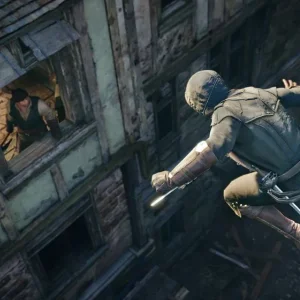
Design Inertial Motion Capture Technology for Game Development & AAA Production in Belgium
Explore System Solution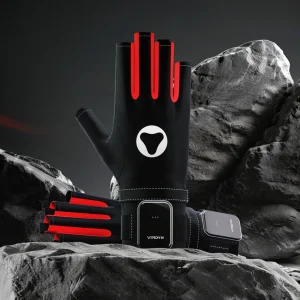
Best Virdyn mHand Pro Inertia Motion Capture Gloves for VR & Dexterous Teleoperation in Belgium
Explore System Solution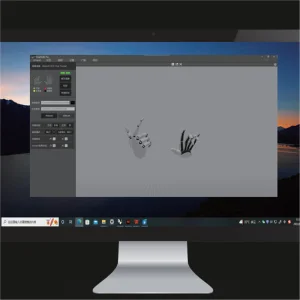
Best Virdyn mHand Studio Motion Capture Gloves Software System for Belgian Laboratories
Explore System Solution
Design Motion Capture for Advanced Virtual Film Production & ICVFX Stages in Wallonia & Brussels
Explore System Solution
Design Virdyn VDMocap Studio Plus Motion Capture Software System for Belgian Full-Body Suites
Explore System Solution
Best Virtual Live Technology Empowerment for Interactive Online Education Across Belgian Universities
Explore System Solution
Design Motion Capture Technology for Creative Advertising Agencies Across Brussels & Antwerp
Explore System Solution
Best How Brands Use Virtual Spokesmen: Motion Capture Empowers Belgian Corporate Propagation
Explore System SolutionDeploy Precision Motion Capture Infrastructure in Belgium
Whether configuring a 24-camera optical stage in Ghent, an ergonomic biomechanics research lab in Leuven, or a real-time virtual production studio in Brussels, our hardware architects are ready to assist with system planning and technical scoping.