
San Francisco Production & Studio Hardware Solutions
Turnkey optical-inertial motion capture hardware engineered for rapid deployment across San Francisco's interactive gaming, visual effects, and advanced robotics testing labs.
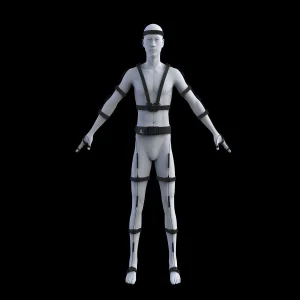
Design Virdyn VDSuit Full: Full Body Function Inertia Motion Capture Suit for SF Studios
Explore Architecture
Best Motion Capture Technology: Opening a New Era of Animation Development in San Francisco
Explore Architecture
Design & Book an Enterprise Demo: VDSuit Full & mHand Pro for Bay Area Engineering Teams
Explore Architecture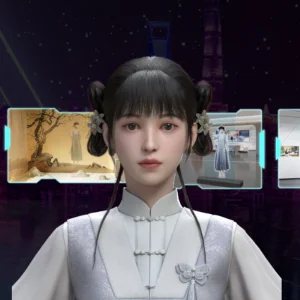
Virtual Human Technology: Digital Human Activation & Brand Marketing Solutions in SF
Explore ArchitectureThe San Francisco Bay Area: The Epicenter of Spatial Computing & Embodied AI
From South of Market (SoMa) game incubators to Silicon Valley autonomous robotics labs, optical motion capture serves as the foundational truth layer for high-precision cyber-physical systems.
Interactive Entertainment & VFX
San Francisco remains home to visionary gaming titans, indie developers, and cinematic post-production facilities clustered around Mission Bay and the Presidio. Today's studios require optical mocap setups capable of millisecond latency to drive virtual cameras and in-engine Unreal Engine 5.4 LiveLink retargeting.
Embodied AI & Humanoid Robotics
The Bay Area is pioneering the paradigm shift from digital LLMs to Embodied Artificial Intelligence. Humanoid robotics enterprises and university labs (Stanford, UC Berkeley) rely on optical ground-truth tracking systems to collect millions of multi-modal teleoperation trajectories for imitation learning.
Biomechanics & Ergonomic Health
Pioneering medical centers like UCSF and regional orthopedic research facilities mandate sub-millimeter kinematic telemetry. Precision optical tracking provides non-invasive spatial validation for surgical robotics calibration, prosthetic joint optimization, and high-performance athletic biomechanics.
Engineering Rigorous Optical Mocap Capture Volumes in Urban SF Facilities
Planning an enterprise optical capture volume in urban San Francisco presents unique physical constraints: HVAC vibration, tight square footage, dynamic electromagnetic fields, and strict structural weight codes.
| System Architecture Layer | Technical Specification & Design Criteria | San Francisco Facility Impact | Engineering Resolution Strategy |
|---|---|---|---|
| Optical Sensor Cluster | High-resolution NIR/IR CMOS sensors with onboard FPGA edge filtering (850nm / 940nm bandpass). | Mitigates harsh fluorescent and ambient skylight interference common in converted historic loft studios. | Deploy synchronous strobe timing with customized bandpass optical filters matching strobe emission spectra. |
| Volume Triangulation | Epipolar geometry spatial algorithms calibrated via active carbon-fiber dynamic wands (root-mean-square error <0.15mm). | Dense real estate footprints in SoMa demand compact 6m x 6m volumes with extreme corner fidelity. | High-angle wide FOV varifocal lenses calibrated with spherical aberration distortion mapping matrices. |
| Network Fabric | Dedicated 10GbE fiber or Cat6A copper infrastructure running Precision Time Protocol (IEEE 1588 PTP v2). | Prevents frame dropping during synchronized multi-actor capture with high-bandwidth SMPTE 2110 genlock. | Isolated Layer-3 Managed network switches prioritizing UDP streaming payloads direct to rendering clusters. |
| Structural Mounting Rig | Heavy-duty extruded aluminum box truss or isolated uni-strut ceiling grids with silicone dampers. | Dampens micro-vibrations from nearby Caltrain lines, street traffic, and urban central ventilation systems. | Tuned mass dampening brackets and dual-clamp ball-joint mounts calibrated against structural harmonic resonance. |
Direct-from-Source Precision Manufacturing: Uncompromising Cost-Efficiency
Why Tier-1 research labs and commercial enterprises in California choose our end-to-end hardware manufacturing ecosystem over inflated domestic legacy markup.
Vertically Integrated Photonic Fab
Every optical assembly, precision-ground low-dispersion optical element, and aluminum CNC chassis is manufactured inside our ISO 9001 certified Industry 4.0 production facility in China. Complete internal ownership of SMT lines, automated sensor calibration arrays, and cleanrooms eliminates multi-layer subcontractor margins.
Unmatched Supply Chain Agility
While traditional Western mocap vendors suffer 12-to-24 week delivery lead times due to component shortages, our centralized component warehousing and direct relationships with silicon fabricators ensure rapid fulfillment. Turnkey camera suites and replacement units ship to San Francisco within days.
40%–60% Capital Expenditure Reduction
Procuring optical capture hardware directly from the manufacturer unlocks significant enterprise cost savings without degrading tracking precision. Bay Area startups reinvest these substantial budgetary savings into creative talent, machine learning computational capacity, and expanded studio footprint.
The Hybrid Synthesis: Solving Marker Occlusion in Complex Urban Pipelines
Pure optical systems struggle when markers are occluded by complex props, vehicle mockups, or multiple tangled performers. Our hybrid architecture fuses optical millimeter accuracy with edge-computed inertial telemetry.
Zero-Occlusion Multi-Sensor Data Fusion
In high-density combat animations or tight robotic teleoperation cockpits, retroreflective markers inevitably become shielded from camera sightlines. By pairing the absolute 6DoF global spatial reference of our optical cameras with the ultra-responsive rotational vectors of the VDSuit Full wearable IMU sensors, your pipeline achieves bulletproof tracking continuity.
- Continuous Drift Correction: Optical cameras constantly rectify inertial integration drift with zero operator intervention.
- Instant Occlusion Recovery: When an optical marker disappears behind a surface, the 9-axis sensor node preserves kinematic trajectory flawlessly.
- Finger & Facial Co-Registration: Direct timecode-synchronized pairing with mHand Pro gloves and VDFace helmet rigs via VDMocap Studio Plus.
Supported Pipeline Protocols
Direct low-latency streaming to standard digital content creation (DCC) and enterprise robotics tools:
Turnkey Solutions: From Virtual Production to Robotics Teleoperation
Integrate dedicated software platforms, high-fidelity kinematic gloves, and specialized mocap rigs tailored for enterprise scalability in San Francisco and worldwide.
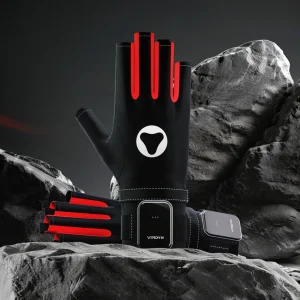
Best Virdyn mHand Pro: Inertia Motion Capture Gloves for Virtual Reality & Robotics
Explore Architecture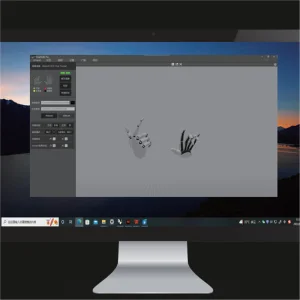
mHand Studio Software System: Multi-Node Dexterous Tracking Planning for Bay Area Labs
Explore Architecture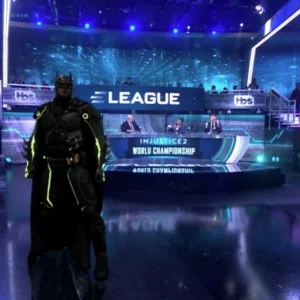
Motion Capture for Virtual Film Production: Advanced Tools for Modern Bay Area Cinema
Explore Architecture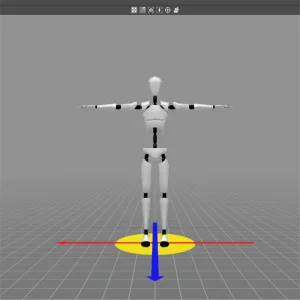



Complete Optical Stage Planning Blueprint for San Francisco Facilities
A structured, phased commissioning approach developed by our spatial engineering consultants to guarantee success from preliminary CAD drafting to final engine integration.
Volumetric Simulation
Perform 3D ray-tracing simulations based on the client's facility architectural drawings to determine camera positions, sightline overlaps, and dead-zone elimination.
Rig & Network Setup
Install vibration-isolated trussing grids, pull low-smoke zero-halogen 10GbE network runs, configure master PTP hardware genlock clocks, and balance clean phase power.
Calibration & Tuning
Execute sub-millimeter dynamic wanding routines, set floor zero-planes, and program multi-actor marker set definitions within VDMocap Studio Plus.
Live Pipeline Verification
Conduct zero-latency live retargeting tests directly inside Unreal Engine 5.4, validate FBX/BVH batch export consistency, and train local technical personnel.
Frequently Asked Technical Questions: Optical Mocap Solutions
Expert answers addressing the core architectural, budgetary, and operational inquiries of Bay Area technical directors and system integrators.