
Key Motion Capture Systems Configured for Mexico Hubs
Turnkey biomechanical and digital media tracking kits customized for rapid integration across CDMX, Guadalajara, and Monterrey studios.


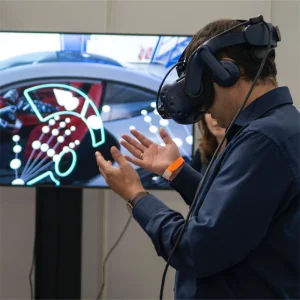

Optical Motion Capture Landscape in Mexico & Global Outlook
Analyzing technological decentralization, nearshoring industrial demands, and creative animation transformations.
The acceleration of spatial computing, robotics, and interactive entertainment has reshaped how enterprise networks deploy optical and hybrid motion capture architectures. Across the globe, optical motion capture (utilizing synchronized high-frame-rate infrared cameras alongside passive retro-reflective or active LED markers) has long stood as the gold standard for spatial trajectory accuracy. However, modern capture requirements demand more than traditional multi-camera volumes confined to soundstages. The international industrial landscape is witnessing an aggressive shift toward Hybrid Tracking Ecosystems—integrating camera-based multi-view stereo photogrammetry with real-time IMU (Inertial Measurement Unit) telemetry to achieve non-occluded spatial integrity in volatile environments.
In Mexico, this technological imperative is experiencing exponential growth, catalyzed by two major economic pillars: The Creative & Digital Media Revolution and Nearshoring Smart Manufacturing. Known as the creative digital engine of Latin America, metropolitan hubs such as Mexico City (CDMX) and Guadalajara (often dubbed the Mexican Silicon Valley) have become world-class destinations for animation pre-visualization, VFX, and international co-productions. Concurrently, regional initiatives in Querétaro, Monterrey, and Puebla have integrated ergonomic spatial tracking and humanoid robotics testing directly into aerospace and automotive assembly pipelines.
Historically, Mexican studios and academic labs faced high barrier-to-entry costs, tedious customs logistics, and a severe absence of localized engineering support for specialized optical calibration. Traditional optical marker arrays fail drastically when cameras are occluded by complex set props or factory machinery. By supplying scalable Optical and Inertial Multi-Sensor Fusion Frameworks, Virdyn provides Mexican enterprises with robust volumetric accuracy without the paralyzing infrastructure overhead typical of legacy camera arrays.
Engineered for Mexico’s Strategic Growth Sectors
Deploying adaptable capture topologies across regional universities, industrial cleanrooms, and virtual production stages.
Guadalajara Animation & Game Hubs
Enabling mid-to-large game studios in Jalisco to perform rapid character rigging, combat move sets, and cinematics directly streaming into Unreal Engine 5 and Unity with zero turnaround lag.
CDMX Film & Virtual Production
Delivering high-accuracy performer spatial tracking synced with real-time LED volume cameras, reducing post-production clean-up costs for streaming networks and advertising agencies in Mexico City.
Nearshoring Automotive Ergonomics
Tracking technician posture and robotic arm assembly trajectories in Bajío automotive corridors to evaluate biomechanical fatigue and optimize plant safety compliance according to international standards.
Biomechanical & Sports Science
Collaborating with national athletic institutions and university medical centers across Monterrey to analyze joint kinesthetics, gait rehab, and precision sports biomechanics with exportable multi-axis data.
Embodied AI & Robotics Teleoperation
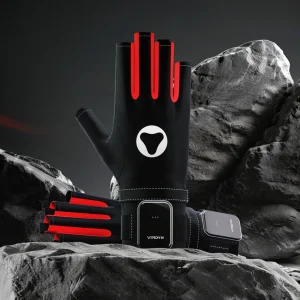
Supplying synchronized multi-finger data gloves and low-latency skeletal retargeting to train generative movement policies and autonomous manipulation models for Mexican research institutes.
Virtual VTubing & Brand Avatars
Turnkey virtual human streaming configurations for interactive commercial live-streaming, enabling Mexican consumer brands to run cost-effective digital influencer broadcasts with minimal overhead.
Macro-Level Optical Planning & Calibration Roadmap
A resilient, step-by-step engineering deployment protocol built for studio engineers and industrial research leads.
Phase 01: Volumetric & Optical Stage Survey
We evaluate physical acoustic/reflective interferences, room heights, focal length requirements, and electromagnetic environmental baseline metrics within your Mexican facility.
Phase 02: Multi-Modal Tracking Topology
Engineers design a hybrid architecture: combining ceiling-mounted or tripod optical setups with body-worn IMU sensor nodes to eradicate occlusion zones in dense operational setups.
Phase 03: Live Engine Pipe Sync & Low-Latency Ingestion
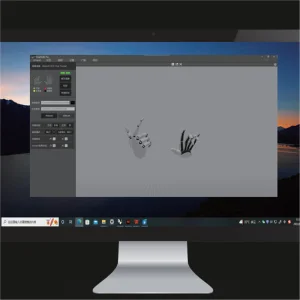
We establish native SDK data routes into Maya, 3ds Max, Blender, Unreal Engine, and Unity with zero-buffer network transport protocols (OSC/TCP/UDP) below 20ms total latency.
Comprehensive Ecosystem Solutions Serving Mexico
Explore specialized inertial suits, studio-grade capture gloves, and real-time animation retargeting software.

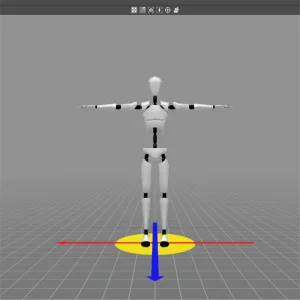



Optical & Hybrid Motion Capture Integration: Mexico Insights
Direct technical answers addressing hardware compatibility, regional shipping, calibration, and support.