
Flagship Spatial Capture Infrastructure
Engineered to integrate seamlessly with standard Melbourne virtual production stages, AAA game pipelines, and biomechanical telemetry stations.
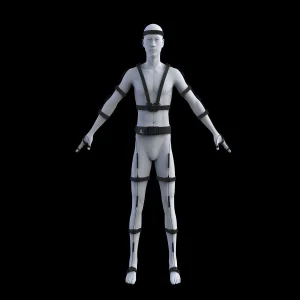
VDSuit Full: Inertial Motion Capture System (Melbourne Studio Grade)
Ruggedized full-body inertial kinematic tracking equipped with anti-magnetic distortion algorithms, engineered for flexible stages across Docklands and South Melbourne.

High-Precision Animation Development Pipeline Suite
Comprehensive optical-inertial synchronization pipeline built for Australian digital media production, slashing character rigging and clean-up overhead.
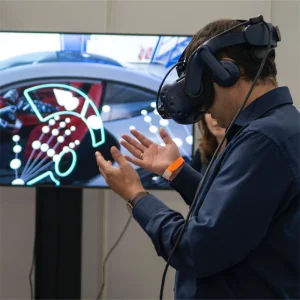
Interactive Hardware Evaluation & Live Proof-of-Concept
Schedule an on-site spatial capture benchmark or remote streaming proof-of-concept tailored to your Victorian laboratory or studio rig specifications.

Photoreal Digital Human Activation & Real-Time Broadcast
Turnkey real-time avatars driven by synchronized multi-sensor capture for interactive broadcast, experiential retail, and virtual brand ambassadors in Victoria.
Optical Motion Capture Architecture in the Melbourne Industrial Landscape
The Greater Melbourne metropolitan area—anchored by commercial creative clusters in South Melbourne, Docklands, Cremorne, and educational strongholds such as the University of Melbourne, Monash University, and RMIT—has transformed into Australia's leading nexus for real-time spatial computing, cinematic virtual production, and elite biomechanical analytics. Driven by Victoria’s progressive Victorian Screen Incentive and Federal Digital Games Tax Offset (DGTO), international VFX powerhouses and domestic indie game studios alike require motion capture systems capable of meeting uncompromising throughput, ultra-low latency, and repeatable sub-millimeter positional fidelity.
Docklands Virtual Production
Melbourne’s LED stage volumes and production studios demand genlock-synchronized optical arrays that eliminate electromagnetic interference while tracking camera frustums and actors concurrently with zero frame-dropping.
AFL & Olympic Biomechanics
From the Melbourne Sports and Aquatic Centre (MSAC) to high-performance labs in Bundoora, athletic motion telemetry demands 400+ FPS sampling rates to isolate cruciate ligament strain and high-velocity limb acceleration.
Embodied AI & Monash Robotics
Research hubs require synchronized multi-modal spatial input—pairing 6DoF optical marker ground truth with wearable gloves and inertial arrays to train humanoid autonomous navigation and dexterous robotic manipulators.
In high-density industrial deployments across Port Melbourne, spatial engineers are often confronted with spatial volume limits, acoustic baffling challenges, and electromagnetic ambient noise from studio lighting grids. Virdyn’s planning methodology for the Victorian territory solves this by offering tailored optical infrastructure: engineered rig trussing, precise lens selection to minimize epipolar distortion, and dynamic hybridization with high-rate inertial measurement units (IMUs) when occlusion occurs during complex multi-actor stunt sequences.
Technical Architecture: Multi-Camera Epipolar Triangulation & Hybrid Data Fusion
Optical motion capture achieves absolute positional reference by employing near-infrared (NIR) or visible strobe rings paired with high-speed CMOS sensors. These detect passive retro-reflective retro-spheres (14mm, 9.5mm, or 4mm facial markers). The core algorithmic pipeline relies on rigorous spatial calibration, epipolar geometry, and dynamic ray intersection to compute 3D Cartesian coordinates with sub-millimeter margins of error.
Solving Occlusion via Hybrid Inertial-Optical Fusion (HIOF)
A persistent vulnerability of legacy optical-only systems in confined Melbourne capture volumes is marker occlusion—caused by multi-performer grappling, furniture, props, or large virtual production cameras blocking camera sightlines. Virdyn resolves this architectural bottleneck through our proprietary Hybrid Inertial-Optical Fusion (HIOF) engine. While the optical cameras govern global spatial anchoring without cumulative positional drift, internal wearable IMU sensor nodes maintain joint angle integrity during transient line-of-sight dropouts.
| Capture Metric / Feature | Standard Passive Optical | Virdyn Hybrid Optical-Inertial (HIOF) | Markerless Computer Vision |
|---|---|---|---|
| Absolute Global Precision | Extreme (<0.1mm inside calibrated sweet spot) | Extreme (<0.15mm continuous drift-free) | Moderate (~5.0mm to 15.0mm variable) |
| Occlusion Vulnerability | High (Ghosting, swap errors, clean-up debt) | Immune (IMU orientation preserves pose) | High (Subject overlapping drops skeletal integrity) |
| Footprint & Setup Time | Rigid truss installation (4–8 hours calibration) | Rapid calibration (Under 20 minutes) | Minimal (Standard RGB/Depth cameras) |
| Real-Time Game Engine Pipeline | Requires heavy filtering software layers | Native zero-lag live-link streaming (UE5 / Unity) | Heavy GPU computation overhead |
| Melbourne Field Mobility | Fixed indoor stage volume only | Highly mobile (Indoors, outdoors, field sports) | Constrained by natural lighting variations |
Enterprise Sourcing Criteria & Australian Regulatory Compliance
Procuring institutional motion capture infrastructure across Australia demands stringent adherence to regulatory standards, data sovereignty guidelines, and lifecycle support metrics. When Tier-1 Victorian research institutions, defence simulation contractors, or commercial studios source high-value optical telemetry platforms, technical due diligence centers around three fundamental pillars:
ACMA & RCM Compliance
All Virdyn RF wireless transmitters, optical synchronization hubs, and charging stations conform rigorously to Australian Communications and Media Authority (ACMA) standards, carrying the mandatory Regulatory Compliance Mark (RCM).
Privacy Act 1988 Compliance
Biometric motion data gathered during health sciences or public research complies with the Australian Privacy Principles (APPs). Raw point clouds and skeletal hierarchies are secured on local air-gapped on-premise networks.
Dedicated APAC Onboarding
Our engineering support services deliver turnkey volume planning, precision structural trussing calculations, thermal calibration compensation, and direct field engineering response times for Melbourne clients.
Total Cost of Ownership (TCO) & Operational Efficiency
Traditional legacy optical volumes historically incur massive post-processing costs—frequently requiring 3 to 5 hours of manual marker-cleaning in software per 1 hour of captured data. By integrating Virdyn's unified solving tools (VDMocap Studio Plus) and native C++ SDK plugins, animation directors in Victoria can stream clean skeletal transforms directly into Unreal Engine's Control Rig or Autodesk Maya. This cuts post-production clean-up budgets by up to 65%, guaranteeing maximum return on investment under state and federal funding frameworks.
Specialized Mocap Hardware & Studio Toolkits
Discover specialized glove controllers, real-time tracking solvers, and virtual production toolchains serving Melbourne's digital pioneers.
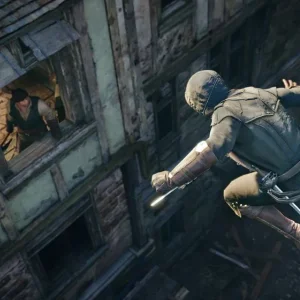
Inertial Capture for AAA Game Production (Victoria)
Engineered for agile combat prototyping, character locomotion sets, and immersive level cutscenes with zero camera bounds.
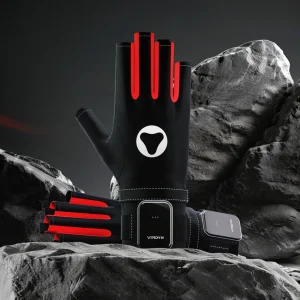
mHand Pro: High-Precision VR Data Gloves
Multi-node finger kinematics featuring sub-millimeter distal phalanx tracking for fine VR interaction and robotic teleoperation.
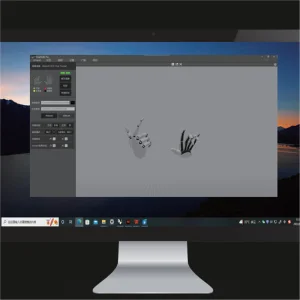
mHand Studio: Finger Solver & Calibration Hub
Advanced biomechanical calibration software designed to eliminate drift and map multi-finger articulation seamlessly to any character rig.
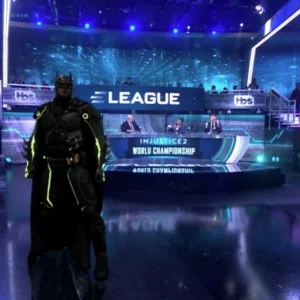
Virtual Film Production Optical-Inertial Tools
Designed for synchronous in-camera visual effects (ICVFX), LED volume background frustum tracking, and live stunt previz.
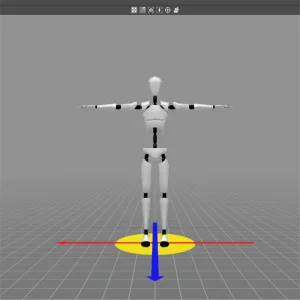
VDMocap Studio Plus: Enterprise Solving Engine
Ultra-low-latency tracking core supporting multi-actor live retargeting, FBX/BVH batch exports, and zero-drop real-time streaming.

Virtual Live Streaming & EdTech Production
Interactive digital character broadcast tools that enable educational institutions to engage remote learners with real-time animated instructors.

Creative Advertising & Experiential Visuals
Hyper-expressive motion tracking for Melbourne advertising agencies creating viral CGI commercials and commercial digital art installations.

Virtual Spokesman & Meta-Commerce Systems
Complete hardware-to-avatar pipeline enabling Melbourne enterprise brands to launch live autonomous or actor-driven meta-influencers.
Future Horizons: 3D Gaussian Splatting, NeRFs & Embodied Robotics
The boundaries of optical and spatial motion tracking are shifting rapidly. As Victorian research labs at Monash, Melbourne, and Swinburne invest heavily in generative AI and robotics, Virdyn’s R&D roadmap is focused on expanding beyond conventional skeletal rigs into dense volume neural representations and real-time robotic teleoperation.
Neural Radiance Tracking
Integrating real-time 3D Gaussian Splatting with optical marker points to reconstruct high-fidelity volumetric cloth dynamics and muscle deformation simultaneously on-stage.
Low-Latency Robot Teleoperation
Engineering sub-8ms deterministic ROS2 streaming bridges, allowing researchers to control bipedal humanoids and multi-finger robotic end-effectors with natural human demonstrations.
Self-Healing Auto-Calibration
Deploying continuous background AI calibration routines that dynamically adjust camera intrinsics and extrinsics when vibrations or thermal changes affect studio ceiling trusses.
Frequently Asked Questions: Optical Mocap Architecture
Common architectural and deployment queries from systems integrators, game directors, and researchers in Melbourne.
How does Virdyn optical planning handle infrared (IR) reflection issues on LED Virtual Production walls?
Modern LED panels emit significant electromagnetic and near-infrared spill that can blind conventional optical sensors. Virdyn uses optical bandpass filtering centered strictly at 850nm or 940nm, paired with synchronized strobe pulses that fire in harmony with the LED camera shutter, neutralizing visual artifacts.
Can the optical tracking system synchronize directly with Melbourne broadcast SMPTE timecode clocks?
Yes. Our sync hubs integrate natively with SMPTE LTC/VITC timecode generators and Genlock signals (Blackburst or Tri-Level Sync), guaranteeing sub-frame synchronization across virtual cameras, audio boards, and DCC recording packages.
What is the minimum ceiling height and volume requirement for a studio in Melbourne?
While full cinematic volumes benefit from 4.5m+ ceiling clearance, our wide-angle varifocal optical lenses accommodate boutique commercial studios with ceilings as low as 2.8m. We tailor camera placement to maximize working volume without sacrificing positional accuracy.
How does the system mitigate marker dropout when actors perform acrobatic stunt work?
By coupling our optical tracking system with our VDSuit Full IMU sensor nodes in a hybrid setup (HIOF), any momentary optical marker occlusion is instantaneously calculated by our real-time fusion engine, eliminating marker jumping and skeletal collapse.
Are live SDK streams compatible with custom robotics frameworks like ROS and ROS2?
Absolutely. We provide open C++, Python, and ROS2 wrappers that stream full 6DoF rigid body poses, per-joint kinematic transforms, and global velocity vectors over UDP/TCP at rates up to 480Hz, tailored for advanced AI research.
What on-site warranty and technical integration support is available in Victoria?
Virdyn provides dedicated technical onboarding, pre-shipment stage planning, structural truss simulation, and comprehensive multi-year hardware warranty coverage with rapid parts dispatch across Australia.
Ready to Design Your Motion Capture Stage in Melbourne?
Get in touch with our spatial capture architects to discuss stage dimensions, optical-inertial hybrid configurations, software integration, and formal institutional quotations.