
Core Motion Capture Systems Ready for Indian Enterprise Rollout
Pre-calibrated motion tracking hardware designed for quick commissioning, native Unreal Engine 5 live retargeting, and zero-drift long-range studio shooting.
-
 Flagship Full-Body SuitVirdyn VDSuit Full: Full-Body Inertia & Optical Hybrid Capture PlanningView Solution Architecture →
-
 Studio Animation EcosystemHigh-Throughput Motion Capture Technology for Next-Gen AnimationView Animation Pipeline →
-
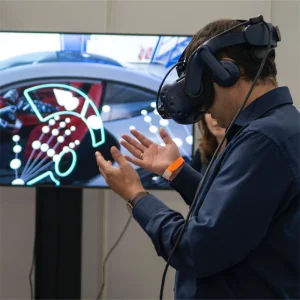 Live Engineering ValidationIndia Proof-of-Concept Demo: VDSuit Full & mHand Pro EvaluationBook On-Site / Remote Demo →
-
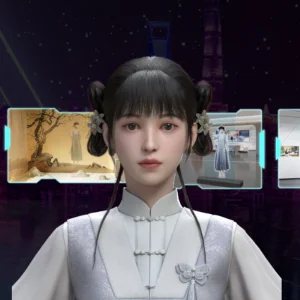 Interactive Metahuman AIReal-Time Digital Human Activation & Virtual Spokesperson PlanningExplore Digital Human Setup →
Optical Motion Capture Modernization in the Indian Subcontinent
A comprehensive assessment of infrastructure evolution, hardware-software localization, and cross-border engineering supply chains for high-frame-rate tracking.
1. The Industrial Landscape of Motion Capture in India: Media, Gaming, and Robotics Convergence
The Indian technological and entertainment ecosystem is undergoing an unprecedented digital media transformation. Historically centered around traditional post-production and offshore animation cleanup, domestic creative clusters across Mumbai (Bollywood), Hyderabad (Tollywood), Chennai (Kollywood), and Bengaluru (India's premier gaming and AI hub) are aggressively pivoting toward real-time virtual production, in-camera visual effects (ICVFX), and continuous high-fidelity motion capture stages. Concurrently, government-backed incentives under the Digital India mission, coupled with the burgeoning AVGC (Animation, Visual Effects, Gaming, and Comics) National Policy, have accelerated the demand for institutional-grade optical and hybrid capture volumes.
Beyond entertainment, India’s top academic and scientific research institutions—including the Indian Institute of Science (IISc Bengaluru), Indian Institutes of Technology (IIT Bombay, IIT Madras, IIT Delhi), and specialized orthopedic research centers—require sub-millimeter accurate biomechanical tracking systems. These facilities deploy multi-camera motion capture volumes for sports telemetry (specifically cricket bowling biomechanics and athletic gait optimization), rehabilitation robotics, and embodied artificial intelligence (Embodied AI). With Indian humanoid robotics startups emerging to automate high-density warehouse operations and light manufacturing, the requirement for high-frequency optical motion analysis and teleoperation data collection has reached an all-time high.
2. The Competitive Hegemony of Chinese Hardware Manufacturing: Vertical Integration & Cost-Performance
Deploying an optical or hybrid motion capture stage in India historically presented steep financial barriers due to reliance on Western legacy optical brands characterized by exorbitant per-camera licensing fees, proprietary cable harnesses, and prohibitive annual support contracts. Virdyn leverages China's world-class precision electronics supply chain in Guangzhou and Shenzhen to synthesize elite-grade spatial sensing hardware at an unmatched total cost of ownership (TCO).
Our manufacturing ecosystem integrates precision CMOS sensors, optical lenses with custom low-distortion chromatic coatings, customized high-power 850nm/940nm stroboscopic infrared LED rings, and in-house multi-sensor IMU fusion processors. By eliminating intermediary assembly layers and mastering embedded DSP firmware, Virdyn delivers:
- Direct Component Level Calibration: Factory-level telecentric calibration ensuring focal distortion parameters remain stable under varying studio temperatures typical in South Asian environments.
- Agile Customization (OEM/ODM): Rapid modification of camera rig mountings, truss clamps, synchro-box daisy-chains, and multi-actor RF receivers tailored to India's studio spatial limitations.
- Uncompromised Firmware Algorithms: Sensor-level data preprocessing executing zero-latency 2D blob extraction directly within the camera FPGA before streaming centroid data over Gigabit PoE networks to the host tracking server.
Zero Latency Real-Time Sync
Gigabit PoE multi-camera synchronization achieving hardware Genlock alignment within < 5 microseconds, preventing frame tear during high-intensity martial arts and cinematic stunt tracking.
Active Anti-Interference
Optical-inertial hybrid fusion suppresses magnetic environmental anomalies from LED studio video walls and metallic stage rigging prevalent across Indian film shooting sets.
Sub-Millimeter Triangulation
Continuous spatial ray intersection solving algorithms deliver 3D coordinate precision exceeding 0.1mm, ensuring flawless finger articulation and facial micro-expression capture.
3. Technological Paradigm: Optical Marker Tracking vs. Hybrid Inertial-Optical Telemetry
Selecting an optimal motion capture pipeline requires deep understanding of environmental trade-offs, spatial volume bounds, and occlusion behaviors. Indian production workflows typically encounter dense multi-actor combat choreography, heavy prop interactions, and complex costume requirements. Below is an engineering comparison matrix defining architectural characteristics:
| Evaluation Parameter | Optical Multi-Camera (Passive/Active) | Pure Inertial IMU (VDSuit Full) | Hybrid Optical-Inertial Pipeline |
|---|---|---|---|
| Global Positional Drift | Zero Drift (Absolute 6-DoF Calibration) | Managed through Biomechanical IK Fusion | Zero Drift (Optical Anchor Correction) |
| Occlusion Susceptibility | High (Requires continuous line-of-sight) | Completely Immune (Wearable on-body nodes) | Self-Healing (Inertial dead-reckoning bridge) |
| Capture Volume Flexibility | Confined to Pre-Calibrated Truss Volume | Unlimited (Indoor, Outdoor, Vehicle Cabins) | Scalable (Large truss + Wide-area roaming) |
| Setup & Calibration Time | 30 - 60 Mins (Wand calibration required) | 3 - 5 Mins (Fast T-Pose / A-Pose posture check) | 15 Mins (Integrated single-pass alignment) |
| Deployment Cost in India | Higher initial capital investment (Truss + Cameras) | Extremely cost-effective for indie & remote setups | Balanced institutional ROI for AAA workflows |
| Primary Target Application | VFX In-Camera Previs, Biomechanics Labs | VTubing, Mobile Games, Embodied AI Data | Film Production, Heavy Action Choreography |
4. Localized Engineering Scenarios Across India
To deliver true information gain for Indian enterprises, motion capture solutions must directly address regional studio constraints, power grid stability, optical reflective ambient light interference, and distributed rendering farms.
Scenario A: Hyderabad & Mumbai High-Intensity VFX Virtual Production
Indian blockbuster cinema relies on complex wire work, massive crowd sequences, and elaborate traditional costuming. Pure optical tracking often suffers severe marker occlusion when actors wear ornate fabrics or engage in multi-person combat scenes. Virdyn's hybrid pipeline employs VDSuit Full inertial body nodes to preserve skeletal bone trajectory during moments when optical markers are obstructed, seamlessly handing tracking confidence back to optical cameras when sightlines clear.
Scenario B: Bengaluru & Pune Video Game Animation Pipelines
Indian game development outsourcing leaders (handling AAA character animation for international publishers) face aggressive production sprints. The VDMocap Studio Plus software suite features one-click live streaming into Autodesk Maya, MotionBuilder, Blender, and Unreal Engine. Keyframe cleanup time is compressed from 4 days per minute of animation to less than 4 hours, maximizing studio pipeline throughput.
Scenario C: Embodied AI & Robotics Research (IISc, IITs, Private Tech Hubs)
Humanoid robotics laboratories in India require massive volumes of diverse human teleoperation datasets to train reinforcement learning policies for dual-arm manipulation and bipedal locomotion. Combining mHand Pro tactile-inertial data gloves with sub-millimeter optical hand-tracking markers allows robotics researchers to capture finger kinematics down to the distal phalangeal joints alongside precise tool-interaction trajectories.
Turnkey Optical Mocap Studio Architecture for India
Standard operating procedure for commissioning a multi-camera optical mocap stage from site survey to production streaming.
Spatial Survey & Truss CAD
Analysis of studio dimensions (e.g., 8m×8m×4m standard volume), ceiling load ratings, vibration isolation, and elimination of ambient IR leakage from windows or stage lights.
PoE Rigging & Daisy-Chain
Deployment of Cat6A shielded cabling connecting optical cameras to industrial PoE+ switches and master hardware synchronization boxes with sub-millisecond precision.
Dynamic Dynamic Calibration
Two-step calibration utilizing precision active T-wands and L-frames to establish the absolute origin plane, camera extrinsic positions, and intrinsic optical lens profiles.
Engine Live Link & Pilot
Zero-latency skeletal retargeting into Unreal Engine / Unity via UDP OSC protocol, followed by live actor rehearsal, latency validation, and Indian team onboarding.
Frequently Asked Questions: Optical Mocap Solutions Serving India
Comprehensive engineering, taxation, and logistics answers for enterprise CTOs, university procurement officers, and studio pipeline directors.
How does Virdyn assist Indian enterprises with custom customs clearance, EPCG scheme, and import duties?
Can the optical tracking stage function stably alongside LED virtual production volumes in Indian studios?
What are the minimum studio room dimensions required for a professional Indian optical mocap stage?
How does the system handle high-heat and humid operational conditions in southern and western India?
Is the software licensing perpetual, and does Virdyn provide local technical onboarding in India?
How does Virdyn support Embodied AI and Humanoid Robot teleoperation research at Indian universities?
Specialized Software, Data Gloves & Virtual Production Solutions
Integrate specialized finger telemetry, broadcast virtual engines, and educational capture ecosystems tailored for the Indian subcontinent market.
-
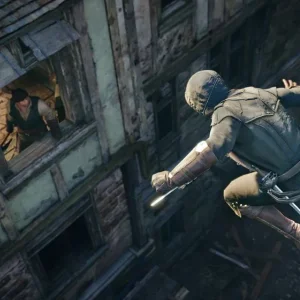 Game Dev AccelerationGame Studio Acceleration: Inertial Motion Capture IntegrationInspect Game Pipeline →
-
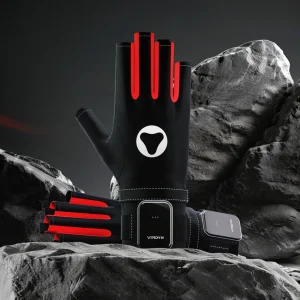 High-Dexterity GloveVirdyn mHand Pro: VR & Robotic Teleoperation Data GlovesView Glove Specifications →
-
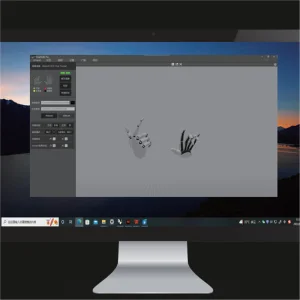 Dedicated Glove SoftwaremHand Studio Software System: Biomechanical Finger CalibrationSoftware Architecture →
-
-
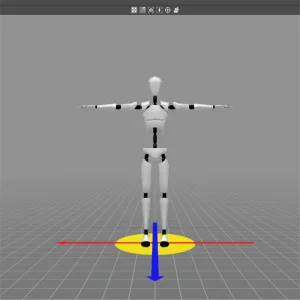 Enterprise Processing SuiteVDMocap Studio Plus: Real-Time Multi-Actor Engine StreamingExplore Engine Features →
-
 EdTech & E-LearningInteractive 3D Virtual Classroom & EdTech Live AnimationDiscover EdTech Pipeline →
-
 Commercial CGIHigh-Impact Brand Advertising & Photorealistic Commercial CGIView Commercial Cases →
-
 Virtual Brand IPVirtual Brand Spokesperson & Metaverse Broadcast ArchitectureView Brand IP System →