Precision Motion Capture Deployments for Uruguay
Turnkey optical-inertial hardware and software architectures designed for professional cinematic capture, high-fidelity character rigging, and low-latency interaction.



Uruguay: The Emerging Innovation Epicenter for Spatial Computing
How macroeconomic stability, tech-forward public policy, and top-tier talent create fertile ground for high-precision motion capture deployment.
Over the past decade, Uruguay has solidified its standing as Latin America’s highest per-capita software exporter and an agile testbed for transformative digital technologies. Anchored by the metropolitan innovation corridor of Montevideo, specialized free trade ecosystems such as Zonamerica and WTC Montevideo Free Zone, and bolstered by the National Agency for Research and Innovation (ANII), the country offers unique operational advantages for deploying cutting-edge optical and hybrid motion capture infrastructure.
The convergence of fiscal incentives—such as the Uruguay Audiovisual Program (PUA) offering attractive cash rebates for international co-productions—has accelerated the maturation of indigenous animation studios, commercial visual effects houses, and independent game developers under the umbrella of the Uruguayan Video Game Developers Association (CAVI). These creative organizations are increasingly graduating from standard desktop animation workflows to comprehensive, multi-camera optical volume tracking capable of handling multi-actor performance capture, stunt choreography, and real-time virtual production inside Unreal Engine 5 and Unity.
Beyond entertainment, Uruguay’s robust medical research institutions, public health organizations, and world-renowned sports institutions (notably within professional association football) are demanding deterministic, sub-millimeter human kinematics data. Clinical gait analysis, post-surgical athletic rehabilitation, and sports biomechanics laboratories require calibrated spatial volumes free from electromagnetic interference and latency drift.
By engineering turnkey Optical Motion Capture (Mocap) Planning and Solutions tailored to the Uruguayan regulatory and spatial landscape, enterprise clients unlock deterministic physical-to-digital mapping. Our turnkey framework integrates architectural acoustic/vibrational acoustic modeling, synchronized near-infrared (NIR) strobe camera arrays, retroreflective spherical marker telemetry, and low-latency network topologies.
Global Industrial Demands vs. Local Uruguayan Sourcing
Bridging international procurement standards with regional deployment realities across software development, digital twins, and biomedical engineering.
Virtual Film & In-Camera VFX (ICVFX)
Global film productions contracted under PUA require exact camera lens tracking, LED frustum spatial sync, and marker tracking with absolute 6-DoF positional certainty. Montevideo studios utilize these systems to eliminate parallax discrepancies between physical talent and LED volume backdrops.
Embodied AI & Robotics Teleoperation
As robotics automation moves into agritech and industrial logistics in the Southern Cone, research teams in Uruguay demand ground-truth 3D trajectory tracking to train humanoid neural models, validate bipedal locomotion, and execute dexterous teleoperation without drift.
Elite Sports Science & Biomechanics
High-performance sports organizations across South America necessitate zero-latency force-plate and EMG integrated optical tracking. Capturing joint angle kinetics, foot-strike mechanics, and skeletal deformation provides an empirical baseline for injury prevention.
Macro-Level Optical Architecture & Spatial Volume Engineering
Rigorous, physics-driven planning methodology ensuring sub-millimeter spatial fidelity, zero marker dropouts, and deterministic multi-actor solves.
Deploying a professional optical motion capture facility in Uruguay requires overcoming physical studio constraints, ambient light interference, and structural vibration common in repurposed historical buildings in Ciudad Vieja or modern open-truss warehouses along Route 101. An uncompromised optical installation operates on three core principles: Geometric Sightline Redundancy, Temporal Clock Synchronization, and Multi-Modal Data Fusion.
1. Spatial Triangulation and Camera Placement Optimization
Optical motion capture relies on stereoscopic epipolar geometry. To reconstruct a single retroreflective passive marker in 3D Euclidean space with sub-millimeter precision, a minimum of three synchronized camera sensors must register rays from that marker unobstructed. In our engineering blueprints, we employ Continuous Spherical Truss Topologies or Rigid Peripheral Box Trusses that eliminate thermal expansion shifts and decouple environmental HVAC oscillations from the sensor mounts.
2. Genlock, SMPTE Timecode & Sub-Millisecond Latency Pipelines
In virtual production stages where optical camera tracking interacts with LED walls and camera shutters, drift of even half a frame can induce severe tearing or motion blur artifacts. Our optical solutions incorporate dedicated Master Clock Generators transmitting blackburst or tri-level sync signals across high-bandwidth Ethernet (PTP / IEEE 1588) to guarantee that every optical strobe illuminates simultaneously with camera sensors down to microsecond thresholds.
| Tracking Architecture | Positional Accuracy | Capture Volume Scalability | Occlusion Resilience | Ideal Uruguayan Use Case |
|---|---|---|---|---|
| Passive Optical (Retroreflective) | < 0.15 mm – 0.30 mm | 5m × 5m up to 30m × 30m | Moderate (Mitigated via high camera count) | AAA Animation, Biomechanics Labs, CAVI Game Studios |
| Active Optical (Pulsed LED) | < 0.10 mm – 0.20 mm | Large studio stages (15m+) | High (Unique LED IDs eradicate marker swapping) | ICVFX Stages, Multi-Actor Stunt Choreography |
| Optical-Inertial Hybrid | < 0.50 mm (Fused) | Hybrid indoor/outdoor flexible | Very High (IMU fills blind spots instantaneously) | Turnkey Commercial Studios, Rapid Prototyping, Live VTubing |
| Markerless Neural Optical | 1.5 mm – 3.0 mm | Constrained camera field-of-view | High (AI solves biological joint topology) | Sports Screening, Interactive Exhibitions, Fast Previs |
Technological Roadmap & Future Horizons (2025–2030)
Anticipating next-generation spatial computing shifts to ensure procurement investments yield lasting technical advantages.
Neural Point Cloud Reconstruction
The integration of deep learning computer vision with infrared optical arrays is closing the gap between rigid markers and natural volumetric movement. Expect real-time cloth deformation and muscle bulging to be calculated concurrently with skeleton tracking without increasing manual cleanup overhead.
Autonomous Spatial Calibration
Traditional calibration wands are being augmented by continuous background dynamic auto-calibration routines. By continuously tracking static structural features within the Montevideo studio volume, sensor position shifts caused by thermal fluctuations are neutralized dynamically.
Embodied Human-to-Robot Transfer
Direct retargeting of dense skeletal telemetry into inverse kinematic (IK) controllers for dual-arm robotic manipulators. As industrial labs in Uruguay automate high-precision agricultural sorting and medical device packaging, mocap serves as the deterministic teleoperation bridge.
Localized Support & Mercosur Regulatory Safeguards
Seamless execution through Uruguay’s technical infrastructure, customs regimes, and telecommunications certifications.
URSEC & Telecommunication Compliance
All high-frequency wireless communication equipment (including our hybrid inertial-optical sync hubs and wireless timecode receivers) strictly complies with the regulatory standards established by the Unidad Reguladora de Servicios de Comunicaciones (URSEC) in Uruguay. Frequency allocations operating on 2.4 GHz and 5.8 GHz bands are certified against regional RF spectrum guidelines to avoid cross-talk with local wireless infrastructure.
Furthermore, hardware enclosures adhere to UNIT (Instituto Uruguayo de Normas Técnicas) electrical safety guidelines, ensuring transient voltage protection against regional electrical grid shifts.
Free Trade Zone Logistics & SLA Guarantees
Procuring high-value optical capture hardware through free trade zones like Zonamerica or Parque de las Ciencias demands specialized customs clearance procedures. Our turnkey solutions include end-to-end import documentation, Mercosur tariff optimization, and certified on-site assembly technicians based in the Montevideo metropolitan area.
Enterprise contracts benefit from guaranteed rapid-replacement SLAs on optical strobes, high-speed lenses, and marker bundles, backed by 24/7 direct remote engineering telemetry support.
Frequently Asked Questions on Optical Mocap Planning
Technical clarity for executive decision makers, pipeline engineers, and institutional researchers.
How does an optical mocap volume compare with inertial suits for gaming studios in Uruguay?
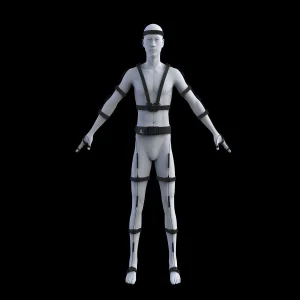
While inertial capture suits (like our VDSuit Full) provide unprecedented mobility, rapid setup, and immunity to visual occlusion without a dedicated camera stage, optical mocap provides absolute 6-DoF global positioning in Euclidean space with zero positional drift over extended takes. Studios producing fast combat maneuvers, ground interactions, and precise multi-actor interactions often deploy a hybrid model—using optical systems for absolute global spatial anchors and inertial sensors to handle high-frequency joint orientation during marker occlusions.
What ceiling height and room dimensions are required for an effective optical capture stage?
For standard entertainment and biomechanical workflows in Montevideo studios, we recommend a minimum ceiling clearance of 3.5 meters (ideally 4.5m to 5.0m) to allow cameras to look downward at a steep enough pitch (30° to 45°) to prevent horizon-line marker occlusions. A capture volume of 8m × 6m × 3.5m typically requires an array of 12 to 24 optical cameras depending on whether single-actor or multi-actor capture is prioritized.
Can the optical setup synchronize with professional motion picture cameras for ICVFX?
Yes. Our optical mocap planning integrates frame synchronization hardware capable of receiving external Genlock (blackburst or tri-level sync) from ARRI, RED, or Sony CineAlta cameras. Positional data of the tracked virtual camera is streamed directly via FreeD or LiveLink protocols into Unreal Engine, enabling real-time frustum updates with under 1 frame of total pipeline latency.
What post-installation training and commissioning services are offered in Uruguay?
Virdyn engineers provide end-to-end commissioning on-site in Montevideo, Canelones, or Maldonado. This encompasses optical camera focus calibration, lens distortion mapping, skeletal solving template configuration, network prioritization, and hands-on staff training covering marker placement protocols and pipeline integration into Maya, MotionBuilder, Blender, and game engines.
Integrated Mocap Ecosystem Components for Uruguay
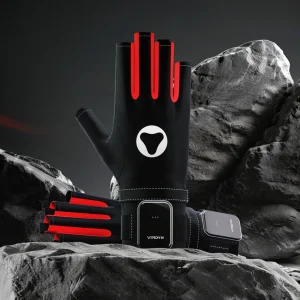
Explore our complete range of specialized motion capture gloves, capture software, and creative industry tools available for regional procurement.