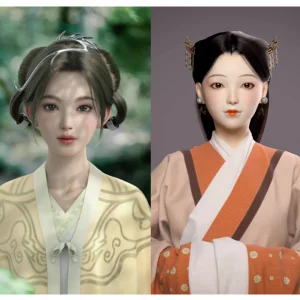
Core Capture Systems for the Central Asian Digital Ecosystem
Engineered to deliver millimeter-level kinematic data streaming natively into Unreal Engine 5, Unity, and MotionBuilder pipelines across educational, commercial, and studio deployments.

Design Virdyn VDSuit Full for Full Body Function Inertia Motion Capture Suit Planning, Solution
Explore Architecture
Best Motion Capture Technology Opens a New Era of Animation Development Planning, Solution
Explore Architecture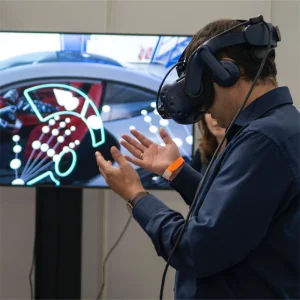
Design Book a Demo for VDSuit Full or mHand Pro Planning, Solution
Explore Architecture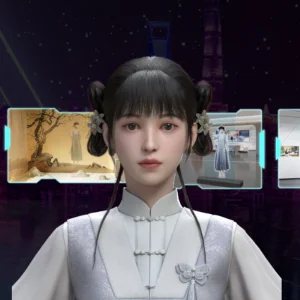
Design Virtual Human Technology: Digital Human Activation Brand Marketing New Path Planning, Solution
Explore ArchitectureIndustrial Landscape: The Uzbekistan Digital Transformation Horizon
The Republic of Uzbekistan is witnessing an unprecedented acceleration across its technological infrastructure, propelled by governmental mandates including the comprehensive "Digital Uzbekistan 2030" national strategy. Spearheaded by the tax exemptions and incubation ecosystems of IT Park Tashkent, the nation is rapidly diversifying its economy from traditional agronomy and heavy mineral extraction toward high-value software engineering, interactive game entertainment, cross-border digital VFX services, and advanced academic research.
Within this expanding creative and scientific ecosystem, the demand for Optical Motion Capture (Optical Mocap) infrastructure has shifted from an experimental luxury to an essential industrial asset. Leading academic hubs—such as the Turin Polytechnic University in Tashkent, Inha University in Tashkent, and the Tashkent University of Information Technologies (TUIT)—are constructing cutting-edge digital visualization and human-machine interaction laboratories. Simultaneously, commercial entities, including newly mobilized animation studios, independent game developers, and the modernized production facilities of Uzbekkino (Uzbekfilm Agency), require enterprise-grade spatial capture to deliver competitive digital assets for global distribution.
However, planning optical mocap volumes in Central Asia presents distinct operational variables: extreme continental temperature gradients demanding rigorous lens-thermal calibration stability, high-frequency electromagnetic interference in urban technical zones, and the logistical imperative for rapid regional supply chain support without months of customs latency.
Macro Solutions: Optical Marker-Based vs. Hybrid Sensor Fusion
Optical motion capture represents the gold standard of global position fidelity, skeletal accuracy, and multi-actor spatial positioning. Unlike inertial solutions that rely on relative vector calculations through gyroscopes and accelerometers, multi-camera optical architectures triangulate retroreflective markers within a metric-calibrated 3D Cartesian grid. To address Uzbekistan’s studio and lab requirements, we deploy a tiered volumetric strategy:
| Deployment Metric | High-Precision Optical Infrared Array | Hybrid Optical-Inertial Fusion (Virdyn Pipeline) | Markerless Machine Vision Capture |
|---|---|---|---|
| Target Accuracy | Sub-millimeter (< 0.5 mm true RMS) | Kinematic continuous (< 1.5 mm dynamic) | Visual approximation (3.0 – 8.0 mm) |
| Occlusion Handling | Requires sightline overlap (minimum 3 cameras) | Immune (IMU fills blind segments instantly) | Susceptible to overlapping human silhouettes |
| Capture Space Rigidity | Requires fixed calibrated truss or wall-mounts | Flexible; calibrated origin with wide traversal | Constrained to optimal field of illumination |
| Primary Application in UZ | Biomechanical rehabilitation & film stunt VFX | AAA game production & virtual stage broadcasting | Rapid interactive kiosks & classroom training |
For mid-sized production facilities in Tashkent, Samarkand, and Bukhara, an unaugmented optical volume often creates significant overhead in marker-label cleanup when complex multi-actor grappling or historical traditional dance (e.g., Lazgi, Khorezmian choreography) causes dense marker occlusion. Virdyn’s proprietary hybrid architecture bridges this structural vulnerability by integrating real-time IMU trajectory data with optical Cartesian origins, reducing post-processing cleanup times by up to 74%.
Strategic Implementations Across the Uzbekistan Market
From the digitization of UNESCO Silk Road historical assets to real-time industrial robotics teleoperation, our engineered solutions solve concrete commercial and technical challenges.
Silk Road Cultural Heritage Preservation
Digitizing Uzbekistan’s intangible cultural legacy requires unprecedented skeletal fidelity. We capture the master choreographies of Uzbek national dance, historical theatrical performances, and martial traditions with sub-millimeter tracking.
- Frame-accurate finger articulation for classical hand gestures
- Archival-grade BVH and FBX skeletal exports for museum exhibits
- Integration with Unreal Engine 5 historical virtual humans
Game Development Outsourcing at IT Park
Uzbekistan’s game development sector is growing exponentially under national tax breaks. Studios servicing regional and Western publishers can eliminate costly manual keyframing pipelines through high-throughput studio capture.
- Low-latency Live Link broadcasting directly to character rigs
- Simultaneous multi-actor combat capture with zero data loss
- Instant retargeting across custom humanoid bone hierarchies
Sports Biomechanics & Olympic Science
Supporting the Republic of Uzbekistan National Olympic and Paralympic training academies, our optical arrays analyze high-velocity athletic biomechanics in combat sports (Boxing, Judo, Taekwondo, and Wrestling).
- Kinematic joint load and rotational velocity computation
- Synchronized force-plate and EMG analog telemetry integration
- Injury rehabilitation monitoring with spatial micro-drift tracking
Global Technological Benchmarks & Engineering Paradigms
Worldwide, optical motion capture has transitioned from isolated tracking cleanrooms to fully connected virtual production ecosystems. Contemporary Tier-1 visual effects studios in Vancouver, London, and Seoul operate 24- to 72-camera optical volumes synchronizing infrared stroboscopic illumination (typically 850 nm to 940 nm wavelength) with multi-genlocked cine cameras (RED, ARRI, Sony Venice).
In accordance with IEEE and ISO biomechanics standards, our deployment blueprint incorporates hardware-level genlock synchronizers (SMPTE timecode compliance) that guarantee sub-microsecond synchronization between optical shutter exposures and auxiliary virtual studio monitors. Furthermore, through our active involvement in embodied artificial intelligence (Embodied AI) initiatives, the skeletal streams generated by our systems serve as high-purity behavioral demonstration datasets utilized for reinforcement learning in humanoid robotic systems globally.
By bringing this identical global architecture to Tashkent, local teams avoid technological obsolescence, ensuring immediate cross-compatibility with global pipelines including Autodesk Maya, 3ds Max, Blender, and specialized robotics platforms running ROS2 (Robot Operating System).
Localization, Electrical Compliance, and Central Asian Support Framework
Procuring precision electronic equipment in Uzbekistan requires rigorous adherence to local regulatory frameworks, climatic adaptations, and physical logistics. Our turn-key planning service addresses every regulatory and operational layer:
Regulatory & Customs Integration
Full compliance with Uzstandard (Agency for Technical Regulation of Uzbekistan) certification mandates. For enterprises registered within IT Park Tashkent, we provide compliant commercial invoicing and HS-code documentation to utilize statutory customs duty exemptions and simplified import procedures.
Power & Continental Climate Hardening
Systems operate natively on 220V (±10%) at 50Hz, with integrated surge filtration to guard against local grid voltage fluctuations. Camera optical housings feature passive heat sink dissipation certified to maintain thermal sensor calibration during extreme Tashkent summer ambient temperatures (+45°C).
Technical Roadmap: Spatial Computing & Embodied AI (2025–2030)
A strategic technological projection illustrating the evolution of optical spatial measurement into neural-accelerated perception networks across Uzbekistan's industrial landscape.
Phase 1: Multi-Modal Edge Acceleration
Real-time edge computation embedded directly within camera processors. Onboard neural networks extract spatial feature coordinates prior to network transmission, reducing Ethernet bandwidth utilization by 80% and allowing 32+ camera deployments on standard gigabit backbones.
Phase 2: Neural Markerless Integration
Seamless co-processing between marker-based retroreflective tracking and deep-learning markerless point-cloud reconstruction. Performers can move fluidly between precision stunt volumes and non-intrusive rehearsal stages without recalibrating optical lens geometries.
Phase 3: Humanoid Embodied Teleoperation
Full integration of human kinematics into bilateral robotic feedback loops. Motion data streams into teleoperation nodes for robotic manipulation in heavy industrial manufacturing, remote surgical assistance, and hazardous environment mitigation within Central Asia.
Frequently Asked Questions for Uzbekistan Procurement Teams
In-depth responses covering software compatibility, physical site requirements, calibration stability, and local implementation services.
Advanced Motion Hardware, Glove Telemetry & Studio Software Suites
Explore specialized spatial instrumentation engineered for full-body performance, fine dexterous finger tracking, and enterprise virtual broadcast workflows.
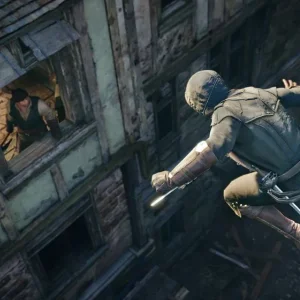
Design Inertial Motion Capture Technology to Help the Game Development and Production Planning, Solution
Explore Architecture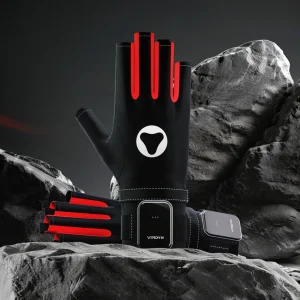
Best Virdyn mHand Pro an Inertia Motion Capture Gloves for Virtual Reality Planning, Solution
Explore Architecture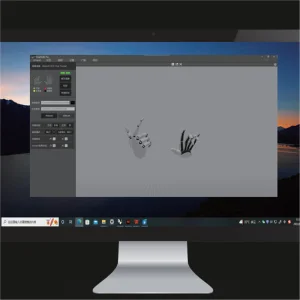
Best Virdyn mHand Studio Motion Capture Gloves Software System for mHand Pro Planning, Solution
Explore Architecture
Design Motion Capture Provides Advanced Technology Tools for Virtual Film Production Planning, Solution
Explore Architecture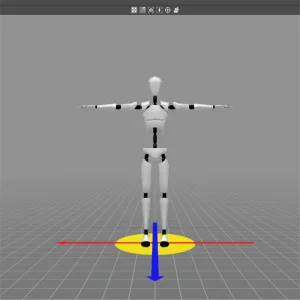
Design Virdyn VDMocap Studio Plus Motion Capture Software System for VDSuit Full Planning, Solution
Explore Architecture
Best Virtual Live Technology Empowerment Makes Online Education and Learning As Fun As Watching Cartoons Planning, Solution
Explore Architecture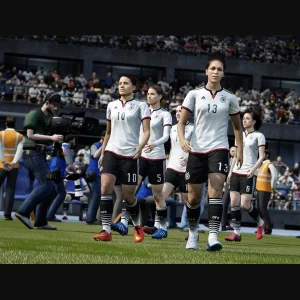
Design Motion Capture Technology to Help the Development of Creative Advertising with Realistic Effects Planning, Solution
Explore Architecture