
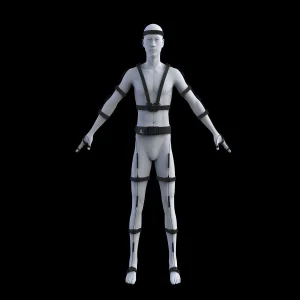
Primary Deployments for Portugal
Featured Motion Capture Architecture & Hardware Packages
Field-tested turnkey configurations tailored to Portuguese universities, creative studios, and embodied AI labs across Lisbon, Porto, and Coimbra.

Best Motion Capture Technology for Portugal Animation Development Planning & Solution
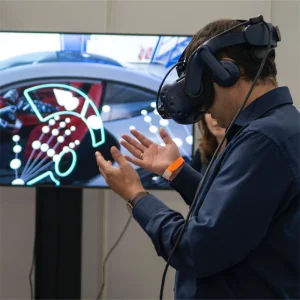
Book a Technical Demo for VDSuit Full or mHand Pro Portugal Planning & Solution

Virtual Human Technology: Digital Human Brand Activation for Portugal Market
Territorial Industrial Analysis
Optical & Hybrid Mocap Dynamics in the Portuguese Industrial Landscape
From the digital media clusters of Lisbon to the advanced robotics institutions of Porto and Minho, Portugal is experiencing an unprecedented convergence of high-tech manufacturing, film tax incentives, and academic research demanding sub-millimeter motion capture fidelity.
30%–35%
Portugal Cash Rebate (ICA) for Audiovisual & VFX
< 1.5ms
Ultra-Low Latency Teleoperation Threshold
480 FPS
Synchronized High-Speed Optical Capture
100%
EU GDPR Biometric Kinematic Compliance
Audiovisual, VFX & Virtual Production Hubs
Portugal has established itself as an attractive European destination for international film, episodic television, and commercial production, bolstered by the Instituto do Cinema e do Audiovisual (ICA) cash rebate program offering up to 30%–35% cash back. Studios in Lisbon, Cascais, and the Algarve are transitioning from legacy green screen soundstages to advanced LED volume virtual production facilities. These installations require optical camera tracking synchronized via SMPTE 2110 / Genlock protocols to ensure flawless camera frustum alignment and zero-jitter live-action compositing.
Robotics, Automation & Embodied AI
The Northern Portugal industrial corridor—anchored by INESC TEC in Porto, the University of Minho in Guimarães, and CEIIA in Matosinhos—is pioneering autonomous robotics, humanoid teleoperation, and industrial cobots. High-precision retroreflective optical motion capture systems serve as the ground-truth verification standard for autonomous mobile manipulators, aerospace component tracking, and tele-manipulation training datasets destined for reinforcement learning policies in embodied artificial intelligence.
Sports Science & Biomechanical Rehabilitation
With elite soccer academies (such as SL Benfica, Sporting CP, and FC Porto) and national sports infrastructure like the Cidade do Futebol in Oeiras, Portugal leads in athletic optimization and injury prevention. Research clinics affiliated with the Faculty of Human Kinetics (FMH) at Universidade de Lisboa and the University of Coimbra mandate multi-camera optical kinematic tracking combined with force plates and electromyography (EMG) systems to measure sub-millimeter joint kinematics, torque loads, and rehabilitation gait analysis.
Enterprise Procurement Engineering
Global Procurement Criteria for Optical Tracking Infrastructure
System integrators, game development technical directors, and institutional researchers must weigh critical quantitative performance parameters when deploying optical volumes versus hybrid inertial platforms.
| Evaluation Parameter | Passive Optical Tracking | Active Optical Tracking | Inertial (IMU) Sensor Fusion | Hybrid Optical-Inertial (Virdyn Stack) |
|---|---|---|---|---|
| Spatial Resolution & Precision | Sub-millimeter (0.1 mm – 0.3 mm) within calibrated volume | 0.05 mm – 0.15 mm; robust active LED IDs | Orientation accurate (±0.5°), position drift-estimated | 0.1 mm spatial anchor + uninterrupted IMU rotation |
| Latency (End-to-End) | 2.0 ms – 4.5 ms @ 240+ FPS | 2.5 ms – 5.0 ms | 12 ms – 18 ms wireless RF 2.4GHz | < 8 ms real-time streaming to Unreal/Unity |
| Occlusion Resistance | Poor; line-of-sight required for ≥2 cameras | Moderate; modulated frequency IDs reduce swaps | Absolute; immune to visual occlusion & shadows | Fault-tolerant: IMU fills frames during camera occlusions |
| Environmental Restrictions | Controlled lighting, zero IR reflections, fixed room | Controlled lighting, active tethered/battery LEDs | Any space, outdoor/indoor, zero optical limits | Adaptable to studio LED walls and live field tests |
| Total Cost of Ownership (TCO) | €40,000 – €250,000+ (Truss, cabling, cameras) | €55,000 – €300,000+ | €4,000 – €18,000 (Turnkey suite & software) | Scalable modular cost with reduced camera counts |
| Setup Time & Mobility | 4–8 hours calibration; permanent installation | 3–6 hours calibration; semi-permanent | 5–10 minutes suit up & single-pose calibration | 15 minutes rapid deployment for mixed environments |
SMPTE 2110 & Genlock Synchronization
When deploying optical cameras in Portuguese broadcast studios (RTP, SIC, TVI) and virtual production LED volumes (e.g., Plural Entertainment), optical systems must support tri-level sync and SMPTE timecode. Without frame-accurate synchronization between the digital camera sensors, optical infrared strobe emitters, and the rendering cluster's GPU clock (NVIDIA Quadro Sync II), visual artifacts such as phase drift, frame tearing, and spatial parallax jitter will render real-time in-camera visual effects (ICVFX) unusable.
Biomechanical Kinematic Precision (C3D / OpenSim)
Academic faculties such as the Instituto Superior Técnico (IST) and the Biomechanics Laboratory of Porto require deterministic ground-truth tracking exporting standard C3D coordinate matrices. Our planning workflows ensure that marker placement methodologies (Helen Hayes, CAST, or bespoke robotic rigid bodies) interface seamlessly with analytical solver platforms including MATLAB, Python NumPy pipelines, OpenSim, and AnyBody Modeling System without coordinate transposition errors.
Holistic Systems Architecture
Macro Industry Solutions: Engineering Turnkey Installations
Virdyn integrates hardware, algorithm solving layers, and middleware connectors to resolve the specific operational bottlenecks encountered in Portuguese enterprise workflows.
Virtual Production & ICVFX Stages
Modern film soundstages in Lisbon and the creative incubators of Porto require spatial tracking with zero visual occlusion across camera jibs, steadicams, and actors. We architect unified multi-camera setups where high-precision optical clusters track physical cinema cameras (Arri Alexa Mini LF, RED V-Raptor) within the LED perimeter, while actors wear the lightweight Virdyn VDSuit Full to relay skeletal performance data directly into Unreal Engine 5.4 LiveLink without marker dropouts caused by LED illumination washes.
Unreal Engine LiveLink
FreeD Protocol
Genlock Ready
Humanoid Teleoperation & Embodied AI Data
Portuguese robotics laboratories at INESC TEC and IST Lisbon are accelerating the training of multi-fingered dexterous end-effectors and bipedal humanoids. By integrating Virdyn mHand Pro high-density tactile gloves with egocentric VDEgo multi-spectral vision and sub-millimeter optical base stations, researchers collect paired kinematic-visual datasets. This data streams directly into ROS 2 (Robot Operating System) and Isaac Gym for massive reinforcement learning and imitation learning cycles.
ROS 2 Humble / Iron
MuJoCo / Isaac Sim
Dexterous IK
Interactive Digital Humans & Enterprise VTubing
With Web Summit Lisbon driving substantial investments in artificial intelligence and corporate virtual ambassadors, Portuguese telecommunications, banking (e.g., Caixa Geral, Millennium BCP), and retail brands are deploying digital humans for customer interaction. Our combined optical-facial capture rigs (AH-D dual-camera and VDFace systems) drive 52 ARKit blendshapes in real-time, allowing live streaming avatars and virtual brand spokespeople to interact with zero perceptible latency.
52 ARKit Blendshapes
Zero Calibration Drift
Warudo / VRChat
Future-Proofing Innovation
Technology Roadmap: The Convergence of Optical, AI & Inertial Systems
The future of motion capture in the Portuguese and broader European market does not belong to a single isolated modality, but rather to the seamless algorithmic synthesis of multiple sensor tiers.
Phase 1: Hybrid Extended Kalman Filter (EKF) Fusion
Traditional optical motion capture suffers catastrophically when reflective markers are occluded during close combat choreography, multi-actor embraces, or floor rolls. Virdyn's engineering pipeline integrates 9-axis MEMS inertial measurement nodes directly into the optical solving graph. When the multi-camera optical volume loses line-of-sight with a limb, the system automatically falls back on high-speed inertial angular rate integration, maintaining continuous skeletal solve integrity and eliminating post-production marker clean-up costs.
- Zero frame loss during high-density multi-performer occlusion
- Automatic drift re-centering the instant optical visibility is restored
- Elimination of manual marker trajectory gap-filling in MotionBuilder
Phase 2: Vision-Language-Action (VLA) Markerless Computer Vision
As demonstrated by Virdyn's YanDong optical platform, deep learning convolutional neural networks and spatial transformers are rapidly bridging the gap between marker-based millimeter precision and total hardware unobtrusiveness. By deploying synchronized multi-view RGB/NIR camera arrays, Portuguese research facilities can capture kinematic human locomotion in clinical settings or sports complexes without affixing a single physical marker or strapping on a body suit.
- Rapid patient onboarding in orthopedic medical assessments
- Natural, unencumbered athletic biomechanics tracking in live sports
- Direct training dataset formatting for robotic vision-language-action policies
Regulatory & Operational Governance
Localized Support, EU Compliance & Institutional Governance
Procurement teams within the European Union must navigate stringent statutory directives, data security frameworks, and after-sales support guarantees.
GDPR Article 9 Compliance (Biometrics)
Human kinematic and optical spatial trajectories constitute sensitive biometric data under EU Regulation 2016/679 (GDPR). Virdyn software suites (VDMocap Studio, mHand Studio, DreamsCap) are architected for enterprise data isolation. Skeletal data streams and mesh geometry are processed locally on-premise without forced cloud synchronization, ensuring that universities and hospital research clinics across Portugal maintain total legal data sovereignty.
CE, RED & RoHS Certifications
All hardware components supplied into the Portuguese territory carry full CE conformance, operating within compliant 2.4GHz ISM frequency bands under the Radio Equipment Directive (RED 2014/53/EU). Wearable textiles, IMU casings, and tactile gloves undergo RoHS validation, guaranteeing that equipment utilized in prolonged actor performances or clinical human trials is certified free of hazardous substances.
Erasmus+ & Horizon Europe Procurement
Virdyn provides transparent commercial bidding documentation, standardized single-source justifications, and technical compliance matrices formatted specifically for Portuguese public tender platforms (such as Vortal and ComprasPúblicas). We support research consortiums funded by the Fundação para a Ciência e a Tecnologia (FCT) and EU Horizon Europe grant programs with extended multi-year warranties and rapid component RMA swaps.
Comprehensive Hardware & Software Catalog
Specialized Enterprise Systems & Software Platforms
Explore the full spectrum of inertial mocap suits, multi-node finger tracking gloves, dedicated capture software, and virtual production tools available for the Portuguese market.
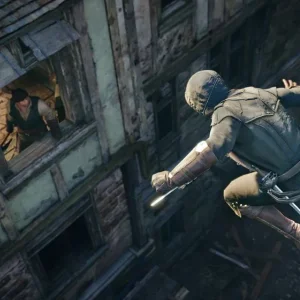
Inertial Motion Capture Technology for Portugal Game Development & Production
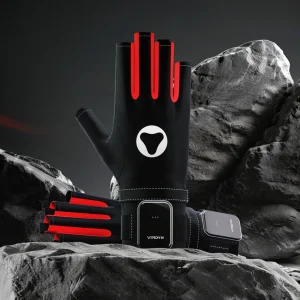
Best Virdyn mHand Pro Motion Capture Gloves for Portugal Virtual Reality & Robotics
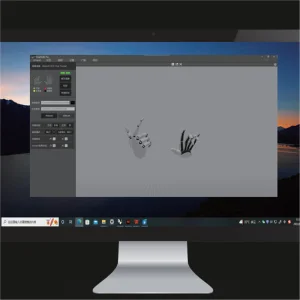
Best Virdyn mHand Studio Gloves Software System for Portugal mHand Pro Users

Advanced Motion Capture Tools for Portugal Virtual Film Production Planning & Solution
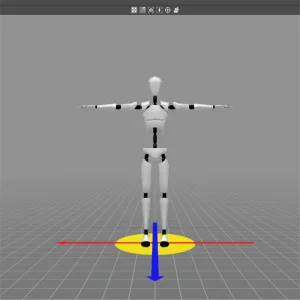
Design Virdyn VDMocap Studio Plus Motion Capture Software for Portugal Studios

Best Virtual Live Technology for Portugal Online Education & Interactive Learning

Design Motion Capture Technology for Portugal Creative Advertising & Commercials

Virtual Spokesman Brand Propagation: Motion Capture for Portuguese Brand Storytelling
Technical Clarifications
Frequently Asked Questions • Engineering & Procurement
Detailed technical answers addressing deployment constraints, calibration in historical architecture, engine synchronization, and procurement workflows in Portugal.
How does optical motion capture perform inside LED volume virtual production stages in Lisbon? +
Traditional passive optical tracking systems utilizing 850nm infrared strobe emitters can experience severe signal degradation inside LED volumes due to parasitic near-infrared emission generated by LED diodes and reflective bounce from glossy stage panels. In our planning for Portuguese studios, we deploy optical cameras with narrow bandpass optical filters (e.g., 940nm) paired with high-power active modulated LED markers, or we deploy hybrid setups pairing Virdyn inertial suits (VDSuit Full) with ceiling-mounted optical tracking dedicated strictly to the physical cinema camera. This completely insulates performer skeletal tracking from LED light interference while preserving sub-millimeter camera frustum tracking.
Can motion capture equipment be deployed inside historical buildings in Porto or Coimbra with magnetic interference? +
Many Portuguese academic departments and production studios reside in historic or retrofitted industrial buildings featuring heavy structural steel beams, subfloor rebar, and legacy electrical wiring that generate non-uniform magnetic distortions. Pure magnetometer-dependent IMU suits can exhibit orientation yaw drift in these spaces. Virdyn resolves this by implementing a dynamic multi-sensor fusion algorithm in VDMocap Studio Plus that automatically attenuates magnetometer weighting in favor of high-frequency gyroscope integration and biomechanical skeletal joint constraints whenever anomalous magnetic flux is detected. For mission-critical sub-millimeter work, combining this with a lightweight optical perimeter creates an immune capture environment.
What latency and data protocols are supported for real-time robotic teleoperation and ROS 2 in Portuguese labs? +
For robotics institutions such as INESC TEC and IST, latency is the defining parameter for stable closed-loop teleoperation. Virdyn hardware transmits kinematic pose data via low-latency 2.4GHz proprietary RF protocols with end-to-end sensor-to-software latency under 8 milliseconds. For developer integration, VDMocap Studio and mHand Studio broadcast real-time UDP streams formatted as raw quaternion joint transforms, BVH hierarchical frames, or OSC packets. Furthermore, we provide native C++ and Python SDK wrappers alongside ROS 2 (Humble/Iron) nodes that publish joint state trajectories (`sensor_msgs/JointState`) directly to robotic control topics at up to 120Hz.
How does Virdyn support EU public procurement and institutional tender compliance in Portugal? +
We provide comprehensive procurement packs designed for compliance with the Código dos Contratos Públicos (CCP) governing Portuguese public expenditures. Whether ordering through universities, polytechnic institutes, or municipal creative centers, we supply formal technical specification sheets, CE/RED conformity declarations, commercial invoices with European VAT handling, single-source exclusive technology justifications where required, and warranty declarations covering hardware repair and continuous firmware/software maintenance.
What are the lead times, customs clearance procedures, and after-sales service terms for Portugal? +
Standard hardware systems (VDSuit Full, mHand Pro, VDFace) ship via expedited international courier (DHL Express / FedEx) with delivery to Lisbon, Porto, or Faro typically accomplished within 5 to 7 business days following order dispatch. Shipments are accompanied by full commercial invoices and Harmonized System (HS) code documentation for seamless Autoridade Tributária e Aduaneira customs clearance. Every enterprise unit includes remote engineer-led calibration onboarding, software license activations, a 12-month standard hardware warranty, and dedicated technical support via direct video conference and enterprise messaging channels.