
High-Precision Solutions for Nagoya’s Industrial & Digital R&D
Combining sub-millimeter optical fiducial tracking with high-rate inertial sensor topologies to ensure stable data streams across electromagnetic-dense shop floors and high-fidelity CGI stages throughout the Chubu region.
-
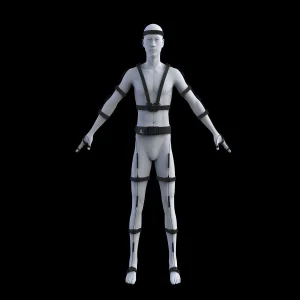
Design Virdyn VDSuit Full: Full Body Inertial Architecture for Nagoya Engineering Planning & Solutions
-

Next-Gen Hybrid Optical-Inertial Pipeline for Nagoya Game Studios & Animation Production
-

Book a Precision Proof of Concept: VDSuit Full & mHand Pro Validation for Nagoya Enterprises
-

Real-Time Digital Human Interaction & Commercial Avatar Infrastructure for Nagoya Broadcast
Nagoya Industrial Landscape: Where Monozukuri Meets Real-Time Spatial Kinematics
Aichi Prefecture is Japan’s undisputed manufacturing titan. The convergence of automotive prototyping, aerospace fabrication, advanced mechatronics, and humanoid robotics in Greater Nagoya demands capture precision that bridges computational biomechanics with factory floor reality.
Automotive Human Factors & Cockpit Ergonomics
Tier-1 automotive suppliers in Toyota City and Nagoya utilize our multi-camera optical setups combined with sub-millimeter retroreflective markers to evaluate driver posture, instrument cluster accessibility, and assembly line musculoskeletal strain with ISO-calibrated spatial repeatability.
Embodied AI & Humanoid Teleoperation
Nagoya’s robotics labs are accelerating imitation learning for bimanual manipulation. By pairing low-latency optical markers with multi-node inertial gloves, researchers extract ground-truth joint trajectory data that trains transformer-based neural network controllers without kinematic drift.
Chubu Digital Media & VTuber Studios
While Kanto leads in television broadcasting, Nagoya’s interactive content production is booming across Sakae and Meieki creative hubs. High-frame-rate optical infrastructure enables multi-actor, full-body live capture without occlusive dropout during dynamic virtual live streaming sessions.
Sub-Millimeter Optical Architecture: Solving Occlusion & High-Speed Transients
In tightly constrained physical setups—such as vehicle interior mockups or crowded robotics cells—traditional optical motion capture encounters marker occlusion. Our hybrid planning matrix unites synchronous optical spatial anchoring with continuous inertial solving.
| System Dimension | Legacy Optical Capture | Virdyn Advanced Optical Mocap | Hybrid Optical-Inertial (VDSuit Integration) |
|---|---|---|---|
| Spatial Resolution | 0.50 mm – 1.00 mm | < 0.15 mm Sub-Millimeter | Continuous sub-millimeter positional lock |
| Occlusion Handling | Dropout requires manual post-cleanup | Algorithmic point-cloud extrapolation | Instantaneous IMU predictive fill (Zero Frame Loss) |
| Electromagnetic Immunity | Immune (Pure Photogrammetry) | Immune (Infrared Strobe / NIR pass) | Dual-layer active magnetic auto-calibration |
| Stage Setup Footprint | Rigid, permanent truss calibration | Modular carbon-fiber multi-camera array | Deployable in vehicle cabs, labs, and dynamic sets |
| Data Streaming Protocol | Proprietary closed SDK | VRPN, OSC, FBX, BVH Live Stream | Native Unreal Engine 5 Live Link & ROS / ROS2 |
Phase 1: Real-Time Auto-Calibrating Spatial Volumes
Dynamic wanding elimination using static retroreflective active reference anchors across factory ceilings, enabling 3-minute recalibration during busy production cycles.
Phase 2: Neuromorphic Sensor Integration
Integrating event-based optical sensors capable of recording micro-vibrations and ballistic machine movements at over 2,000 Hz equivalent temporal resolution without motion blur.
Phase 3: Embodied AI Autonomous Teleoperation
Direct streaming into NVIDIA Isaac Sim and Gazebo environments for continuous RL (Reinforcement Learning) training of multi-finger dexterous robotic hands.
China Factory 4.0 Efficiency Meets Japanese Monozukuri Precision Standards
Global procurement teams demand both rapid hardware scalability and rigorous operational durability. Virdyn combines state-of-the-art Chinese agile manufacturing infrastructure with comprehensive Japanese industrial compliance.
JIS & MIC Radio Compliance
All RF communication modules conform strictly to Japan’s Telec (MIC) frequency allocation protocols (2.4 GHz ISM / Sub-GHz low latency), ensuring zero interference with automated guided vehicles (AGVs) on industrial floors.
Factory 4.0 Supply Chain Velocity
Manufactured in our ISO9001-certified facility in Guangzhou, our production architecture guarantees direct component sourcing, rigorous 72-hour thermal stress testing, and rapid 14-day turnaround times for specialized retrofits.
Bilingual Engineering SLA Support
Our solutions support clients with Japanese documentation, standard integration templates for automotive PLM software, and dedicated direct engineer-to-engineer remote diagnostic sessions within 24 hours.
Modular Optical Stage Customization
From 2m x 2m vehicle interior simulators to 15m x 15m industrial aerospace testbeds, our engineers calculate lens focal lengths, camera quantities, and ceiling load dynamics tailored specifically to Japanese building layouts.
How Japanese OEMs & International Studios Procure from Virdyn
A systematic, audit-ready framework designed to meet the strict quality assurance, NDA compliance, and international trade verification requirements of Japanese institutional buyers.
Spatial & Pipeline Audit
We analyze site architectural blueprints, optical occlusion hazards, ceiling structural capacity, and lighting conditions to produce an exhaustive optical camera layout schema.
Digital Proof-of-Concept
Enterprises provide sample avatars, CAD skeleton models, or target robotic kinematics. Virdyn performs live online capture tests, verifying precision and data integrity before purchase commitments.
Customized Fabrication & QA
Hardware is fabricated to precise order configurations, undergoing full 72-hour operational burn-in, multi-point optical lens calibration, and EMI shielding verification in Guangzhou.
Turnkey Setup & SDK Onboarding
Comprehensive deployment including system calibration, network streaming configuration, and engineering staff training for Unreal Live Link, Unity, ROS, and Maya environments.
Ready to Deploy Optical Precision in Your Nagoya Operation?
Consult with our motion tracking systems architects to engineer a custom optical or hybrid inertial mocap volume for your laboratory, studio, or manufacturing line.
Send Inquiry NowFrequently Asked Questions: Optical Mocap Systems in Nagoya
Authoritative technical answers to common questions raised by manufacturing procurement officers, game technical directors, and robotics researchers.
Why choose an optical-inertial hybrid system over pure optical mocap in an industrial plant?
Pure optical tracking requires continuous line-of-sight. In automotive mockups or industrial work cells, vehicle doors, pillars, and robotic equipment cause frequent marker occlusion. A hybrid system utilizes wearable IMUs (such as VDSuit Full) to preserve joint rotational data through occlusion while optical cameras eliminate inertial cumulative drift, guaranteeing seamless kinematic capture.
Does your system integrate directly into Japanese automotive CAD and simulation workflows?
Yes. Our software ecosystem exports high-precision spatial point clouds, rigid-body 6DoF transformations, and standard skeletal joint kinematics in FBX, BVH, CSV, and real-time VRPN formats, compatible with tools like CATIA, Siemens Jack, Unreal Engine, and MATLAB/Simulink.
How does Virdyn handle optical capture latency in robotics imitation learning?
Our optical tracking cameras process visual frames via FPGA hardware acceleration directly on-sensor, minimizing image preprocessing delays. Combined with gigabit Ethernet synchronization, end-to-end latency from infrared reflection to ROS2 robot node publication stays reliably below 12 ms.
What support SLAs are provided for institutional buyers located in Nagoya?
We provide rapid remote diagnostic support within 24 hours, express courier parts replacement under warranty, and step-by-step video-guided hardware recalibration support led directly by our core software engineers.
End-to-End Motion Capture Matrix for Nagoya Projects
Explore our comprehensive technology catalog—encompassing inertial suits, precision finger telemetry, dedicated capture platforms, and real-time virtual broadcasting tools.
-

Game Studio Acceleration: High-Throughput Inertial Integration for Nagoya Developers
-
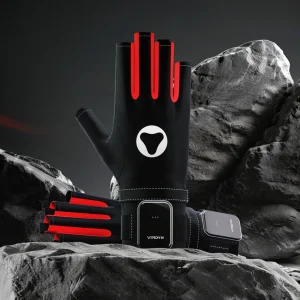
mHand Pro: Sub-Millimeter Dexterous Finger Articulation for Nagoya VR & Robotics
-
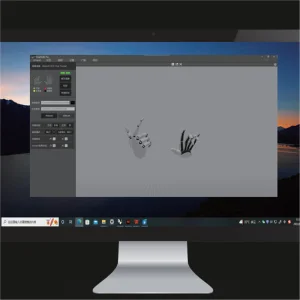
mHand Studio: Multi-Channel Hand Kinematics & Calibration Software System
-
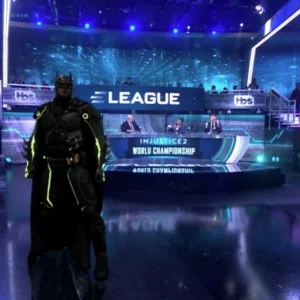
Advanced Virtual Film Production & Pre-Visualization Tooling for Nagoya Cine Studios
-
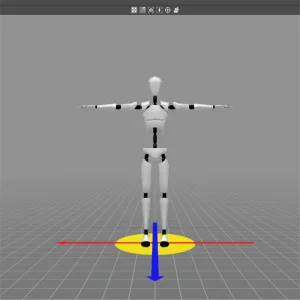
VDMocap Studio Plus: Biomechanical Real-Time Retargeting Engine for VDSuit Full
-

Interactive Virtual Education & Dynamic Avatar Broadcasting for Nagoya EdTech
-

Creative Advertising & Hyper-Realistic VFX Production Planning for Nagoya Agencies
-

Virtual Brand Spokesperson & IP Digital Identity Architecture for Japanese Brands