
High-Precision Motion Capture Units for Indonesian Pipelines
Enterprise-grade kinematic tracking suites designed for cross-discipline deployment in Southeast Asian film studios, game engines, and virtual production volumes.


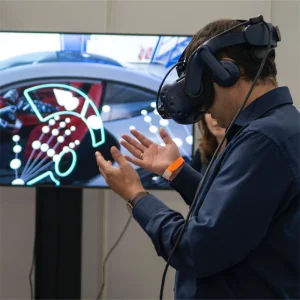

Indonesia's Digital Acceleration & Motion Capture Adoption
Analyzing the intersection of national digital transformation mandates, game development surges, and academic research investments across the archipelago.
The Commercial Landscape: From Creative Economy to Enterprise Meta-Pipelines
Indonesia stands at the precipice of an exponential digital transition. Propelled by presidential initiatives such as Making Indonesia 4.0 and supported by the Ministry of Tourism and Creative Economy (Kemenparekraf), Southeast Asia’s largest economy is actively pivoting toward digital creative content, virtual production, and interactive engineering. Creative hubs in Jakarta, the game-development epicenters of Bandung and Yogyakarta, and the expanding special economic zones such as Nongsa Digital Park in Batam require industrial-grade biomechanical and optical motion tracking systems to support indigenous intellectual property and offshore co-productions.
Historically, Indonesian animation houses relied heavily on manual keyframe rigging or imported, capital-intensive Western optical rigs characterized by prohibitive initial investments, complicated import logistics, and absent regional support. The contemporary market demand calls for robust, high-frequency optical and hybrid tracking frameworks that maintain millimetric positional accuracy while offering high operational agility and predictable total cost of ownership (TCO).
Animation & AAA Game Dev
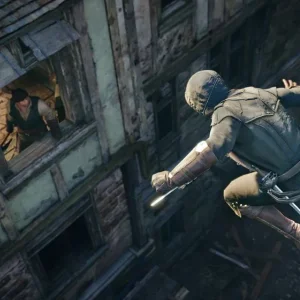
Indonesian game development studios (such as Agate and StoryTale Studios) are moving from mobile-centric pipelines to PC and console titles built in Unreal Engine 5. High-speed optical marker arrays resolve occlusion in dual-combat animations, high-velocity acrobatics, and nuanced human-object interaction with zero kinematic drift.
VTuber Agencies & Live E-Commerce
Jakarta has emerged as Southeast Asia’s capital for virtual streaming, VTubing agencies, and live virtual broadcast commerce. Multi-camera optical tracking volumes paired with synchronized facial helmets deliver real-time asset retargeting into Warudo, Unity, and OBS with sub-20ms broadcast latency.
Cultural Heritage Preservation
Preserving intangible cultural heritage—including the rapid spatial finger gestures of Tari Saman, the dynamic combat kinematics of Pencak Silat, and the micro-articulation of Wayang Kulit puppetry—demands high-density optical marker constellations that capture sub-millimeter historical accuracy for archival VR.
The Paradigm Shift: From Monolithic Optical to Hybrid Spatial AI
How the international motion capture ecosystem is redefining data collection, real-time spatial synthesis, and humanoid robotic teleoperation.
Global Dynamics: Sub-Millimeter Optical versus Agile Sensor Fusion
The global motion capture industry has evolved beyond the dichotomy of optical marker-based stages versus inertial suits. Modern AAA production pipelines in North America, Europe, and East Asia rely on hybrid tracking ecosystems. High-resolution infrared (IR) optical cameras provide absolute, drift-free global 6DoF spatial coordinates, while internal IMU sensor arrays resolve marker occlusion during complex actor intersections, tumbling, and vehicle interiors.
Simultaneously, the meteoric rise of Embodied Artificial Intelligence (Embodied AI) and humanoid robotics development has revolutionized global procurement motives. Tier-1 research labs and industrial robotics developers are no longer purchasing motion capture systems purely for entertainment CGI. Instead, they require ultra-dense human kinodynamic demonstration datasets to train foundational physical action models. High-framerate optical arrays (capturing at 120 FPS to 480 FPS) provide the ground-truth trajectory data necessary to train neural networks driving multi-fingered dexterous end-effectors and bipedal locomotion algorithms.
| Evaluation Parameter | Legacy Western Optical Stages | Virdyn Optical & Hybrid Planning Solution | Consumer-Grade Markerless Video |
|---|---|---|---|
| Spatial Positional Precision | Sub-millimeter (±0.1mm - 0.5mm) | Sub-millimeter (±0.2mm - 0.6mm absolute) | Coarse (±15mm - 50mm estimated) |
| Occlusion Handling | Fails during line-of-sight interruption | Self-healing via Hybrid IMU-Fusion Algorithms | Prone to limb flipping and depth hallucination |
| Calibration Overhead | Extensive wanding / high recalibration drift | Rapid wanding calibration with dynamic thermal lock | Minimal initial setup, high run-time uncertainty |
| Native Engine Streaming | Proprietary closed SDK, costly plugins | Native Zero-Lag SDK: UE5, Unity, Maya, Blender, ROS | Delayed Webhook or basic VMC protocol |
| Procurement TCO | Exorbitant ($100k - $500k+), expensive licensing | Optimized Direct-from-Factory ROI (1/3 Capex cost) | Low initial entry, zero enterprise reliability |
Plan Your Optical Mocap Stage in Indonesia
Connect directly with our senior optical systems architects to calculate room volumetric dimensions, camera coverage densities, genlock sync networks, and end-to-end engine integrations.
Send Inquiry NowPrecision Engineering, Rapid Turnaround, & Cost Superiority
Why international procurement directors and Southeast Asian institutions partner directly with our specialized hardware manufacturing base.
Direct OEM/ODM Sensor & Optical Rig Manufacturing
Our centralized manufacturing base in the Greater Bay Area leverages mature optoelectronic supply chains, precision CNC tooling, and state-of-the-art optical filter assembly, drastically reducing hardware cycle times.
Comprehensive In-House Algorithm & Firmware Stack
We own the complete intellectual pipeline: from low-level FPGA sensor synchronization and IMU Kalman filtering to real-time inverse kinematics (IK) solvers and Live Link Unreal Engine plugins.
Industrial Durability Tested for Tropical Climates
Engineered to withstand Southeast Asian operating environments, our hardware features high MTBF ratings, active thermal management, anti-humidity PCB conformal coatings, and anti-static shielding.
Agile Logistics & Direct ASEAN Shipping Corridors
Direct supply lines from Guangzhou/Shenzhen to Jakarta (Tanjung Priok / Soekarno-Hatta) facilitate seamless customs clearance, direct institutional documentation, and rapid spare-part fulfillment within 72 hours.
Institutional & Enterprise Procurement Checklist
When Indonesian universities (such as Institut Teknologi Bandung, Universitas Indonesia, and Telkom University) or enterprise digital studios issue tenders for motion capture systems, technical evaluators must focus on operational metrics beyond raw camera megapixels:
1. Volumetric Efficiency Ratio: What percentage of the physical room is converted into a functional, trackable volume? Our optimized wide-angle low-distortion optical lenses allow an 8m x 6m room to achieve a 7m x 5m effective capture stage.
2. Latency Budgeting & Genlock Synchronicity: The system must deliver external SMPTE timecode sync to broadcast switchers, audio decks, and virtual camera tracking rigs with under 15ms total system latency.
3. Biomechanical Data Integrity: Ensure direct export to native scientific formats (C3D, BVH, FBX) and deep ROS / ROS2 integration for robotics research, biomechanics analysis, and ergonomic design.
End-to-End Motion Tracking & Analysis Ecosystem
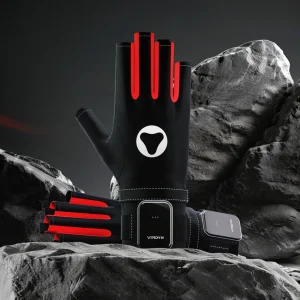
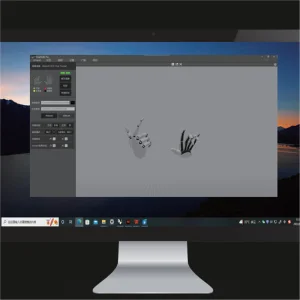
Deploy specialized capture systems tailored for game pipelines, virtual reality immersion, biomechanics, and automated teleoperation workflows.




Frequently Asked Technical & Procurement Questions
Authoritative insights for studio managers, technical directors, and institutional procurement teams in Indonesia.