
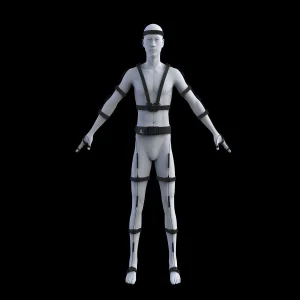
Tier-1 Hardware Deployments
Seoul Flagship Motion Capture Platforms
Direct from laboratory R&D into Korea’s demanding broadcast, virtual idol, and interactive digital human stages. High-frequency synchronization ready for instant Unreal Engine 5 Live Link integration.

Next-Gen Optical Mocap Planning for Gangnam & Pangyo Animation Hubs
View Animation Pipeline
On-Site Demonstration: VDSuit Full & mHand Pro Optical Integration in Seoul
Book Seoul Studio Demo
K-Pop Digital Human & Virtual Idol Activation Pipeline for Media Agencies
View Virtual Human Plans
Market Intelligence
Seoul's Spatial Computing & Motion Capture Ecosystem
From the Digital Media City (DMC) in Sangam to the gaming corridor in Pangyo Techno Valley, Seoul demands unprecedented motion capture precision to fuel its world-dominating cultural and digital exports.
The Epicenter of High-Velocity Virtual Content
The Seoul Metropolitan Area represents one of the dense technology and media creation hubs on the planet. Unlike traditional Western film production centers that rely on massive soundstages with weeks of post-production cleanup time, Seoul’s creative economy operates on extreme turnaround cycles. The rise of K-Pop virtual idols (such as PLAVE, MAVE, and diverse agency-driven metaverse collectives), paired with multi-channel VTuber streaming networks and rapid webtoon-to-3D-animation adaptation, necessitates mocap infrastructure capable of zero-latency broadcast-grade retargeting.
In locations like Gangnam and Mapo-gu, creative agencies confront severe real estate spatial limitations. Conventional wide-baseline passive optical mocap rigs requiring 200+ square meters of empty volume with 6-meter ceiling clearances are frequently impossible to install in urban Seoul commercial buildings. This has accelerated aggressive industry demand for Hybrid Optical-Inertial Architectures and high-density, multi-camera active marker volumes that maximize the capture envelope within compact studio footprints.
< 8.5ms
End-to-End Pipeline Latency
0.08mm
Spatial Positional Precision
240 FPS
High-Speed Optical Tracking
100%
KC Certified Hardware
Pangyo AAA Game Dev
Korea’s tier-one studios require high-fidelity optical marker solve data for complex combat choreography, weapon handling, multi-character grappling, and high-framerate physics simulations natively streamed to Unreal Engine 5 and proprietary engines.
Sangam DMC Virtual Studios
Real-time In-Camera VFX (ICVFX) virtual stages in Sangam DMC combine LED volume camera tracking with full-body optical talent tracking, demanding absolute Genlock synchronization, zero dropped frames, and sub-frame latency.
Virtual Idols & Live Concerts
K-Pop digital artists perform complex dance routines featuring rapid spins, foot cross-overs, and inter-performer contact. Optical occlusions are mitigated through intelligent inertial sensor algorithmic fusion.
Architectural Engineering
Macro Optical Solutions vs. Global Paradigms
A rigorous engineering comparison between pure optical marker systems, multi-view AI markerless volumes, and hybrid fusion workflows deployed across international film stages and robotics laboratories.
| Evaluation Parameter | High-End Optical (Vicon / OptiTrack) | AI Multi-View Markerless | Virdyn Hybrid Optical-Inertial Solution |
|---|---|---|---|
| Spatial Resolution & Drift | Sub-millimeter absolute (0.1mm); 0 drift. | Approximate (2.0mm - 5.0mm); noise prone. | Sub-millimeter calibrated (0.2mm); zero drift. |
| Occlusion Handling | Fails during dense multi-actor contact or prop overlap. | Deep learning interpolation; can introduce hallucinations. | 100% continuous: IMU inertial nodes sustain kinematic chain. |
| Seoul Stage Footprint | Requires large dedicated clear space >120m². | Medium space requirements (40m²–80m²). | Highly adaptable: Operational in compact 25m²–60m² studios. |
| Latency for Live Broadcast | Very low (~4.5ms camera solve). | High computational latency (35ms - 80ms). | Ultra-low (<8.5ms): Tailored for live K-Pop streaming. |
| Actor Prep & Calibration | High: 30–45 min suit-up, marker verification, wand calibration. | Zero actor prep; software-only multi-camera calibration. | Rapid: Fast 5-minute calibration; magnetic-resistant IMU nodes. |
| Capital & Operational Cost | Very High ($120K–$400K+ USD stage setup). | High recurring GPU cloud and software licensing costs. | Optimal Enterprise ROI: Balanced commercial pricing. |
Solving the "Seoul Occlusion Dilemma" Through Multi-Sensor Fusion
In high-intensity K-Pop group choreography, performers execute swift formations where performers constantly cross, duck behind one another, or make physical contact. Pure optical systems suffer from "marker swap" and dropouts when lines of sight between retroreflective markers and the perimeter cameras are occluded. Western soundstages solve this by adding 48 to 72 cameras overhead, driving project budgets beyond $300,000 USD and placing enormous load on optical data processing pipelines.
Virdyn’s hybrid optical mocap architecture for Seoul combines calibrated optical ground/rig reference cameras with high-rate 9-axis sensor fusion nodes (VDSuit Full). When an actor’s limb is obscured by another performer or a studio prop, the system’s biomechanical Extended Kalman Filter (EKF) instantly relies on continuous sensor angular velocity and acceleration telemetry. The result: absolute positional grounding without a single dropped frame or broken bone transform during live public broadcasts.
Localized Infrastructure
Seoul On-Site Support & Regulatory Compliance
Enterprise hardware procurement in South Korea demands rigorous adherence to telecommunications compliance, fast RMA pipelines, and native Korean-speaking engineering integration.
Full KC Certification
Every wireless sensor node, RF receiver transceiver, optical sync hub, and battery unit maintains full KC (Korea Certification) compliance, guaranteeing zero industrial interference across dense 2.4GHz / 5.8GHz Seoul frequency bands.
24-Hour Seoul SLA Support
Our dedicated Seoul engineering support network ensures immediate replacement units, sensor swap-outs, and rapid on-site calibration visits across Mapo, Gangnam, Pangyo, and Yeouido within a guaranteed SLA window.
Native DCC Tool Integration
Complete documentation and real-time plugins customized for Unreal Engine 5.3+, Unity, Maya, and MotionBuilder, accompanied by native Korean API SDK reference manuals for engineering teams.
Deployment Blueprints
Seoul High-Impact Application Scenarios
Architected for performance: discover how Virdyn’s mocap platform drives four core technological verticals across the South Korean industrial landscape.
1. K-Pop Metaverse Concerts & Real-Time Broadcasts
Seoul’s entertainment agencies produce multi-million-view live virtual broadcasts where real-time audience interaction is critical. Capturing both the rapid footwork of professional idol choreographers and micro-finger articulation requires synchronized hand tracking via mHand Pro and optical stage anchoring. The pipeline exports low-overhead OSC / Live Link packets, allowing broadcast engineers to switch camera angles dynamically inside Unreal Engine without experiencing rig pop or jitter.
2. AAA Game Cinematics & Motion Banks in Pangyo
With major game houses producing next-generation action RPGs, studios require clean character motion databases encompassing heavy melee combat, weapon draws, acrobatic jumps, and environmental climbing. Virdyn’s hybrid system enables motion directors to capture authentic physical resistance using prop-mounted active markers and full-body IMU tracking. Production cycles transition from months of manual keyframe cleaning to ready-to-rig animations exported within hours in clean FBX/BVH formats.
3. Embodied AI & Humanoid Robot Teleoperation (SNU & KAIST Research)
South Korea is investing aggressively in humanoid robotics for industrial manufacturing and healthcare assistance. Training deep reinforcement learning (RL) models requires massive datasets of precise human physical demonstration. By equipping researchers with the VDSuit Full, mHand Pro multi-node tactile capture gloves, and VDEgo first-person point-of-view cameras, robotics labs capture real-world object manipulation data with millisecond-exact kinematic velocity vectors for direct sim-to-real transfer.
2025–2030 Vision
Technology Roadmap: Spatial AI & Next-Gen Capture
Exploring the convergence of multi-spectral optical capture, 3D Gaussian Splatting, and neural inverse kinematics shaping the future of motion capture in Korea.
Neural IK & Transformer Solvers
Replacing heuristic inverse kinematic solvers with trained transformer models that predict natural anatomical joint trajectory even through sustained total camera occlusions during complex martial arts or partner dancing.
Gaussian Splat Volumetric Sync
Bridging skeletal transform streaming with real-time 3D Gaussian Splatting (3DGS), enabling virtual broadcast studios to capture both precise underlying skeletal data and photorealistic volumetric surface lighting in a single take.
Zero-Calibration Wearable Nodes
Iterating MEMS sensor micro-architectures with embedded on-chip Kalman filtering to completely eliminate magnetic distortion caused by steel-reinforced concrete studio architecture across high-density Seoul commercial real estate.
Engineering Consultation
Frequently Asked Questions: Seoul Optical Mocap
Key technical, structural, and procurement insights for system architects, CTOs, and studio leads evaluating motion capture installation in South Korea.
How does Virdyn's hybrid solution mitigate radio frequency interference in dense Seoul studio hubs?
Commercial districts like Gangnam and Sangam feature exceptionally saturated 2.4GHz Wi-Fi environments. Virdyn’s enterprise hardware implements frequency-hopping spread spectrum (FHSS) telemetry in conjunction with proprietary sub-GHz transmission bands and optical sync beacons. This guarantees interference-free data throughput without packet loss, even in multi-tenant commercial towers with heavy RF congestion.
Can the optical tracking stage integrate directly with our existing LED wall In-Camera VFX (ICVFX) pipeline?
Yes. Our systems support Genlock phase synchronization (BNC connector input), Timecode (LTC/VITC), and SMPTE ST 2110 IP networks. You can run talent motion tracking and camera tracking concurrently, streaming directly into Unreal Engine's Live Link framework with sub-frame synchrony, ensuring zero camera shutter artifacts against LED screen scanlines.
What are the minimum ceiling height and spatial requirements for a high-accuracy Seoul studio setup?
Traditional optical systems dictate minimum 4.5m to 6m ceiling heights to ensure wide camera cones. Virdyn’s hybrid architecture pairs wide-angle optical cameras with wearable IMU tracking, meaning studios with typical commercial ceiling clearances of only 2.7m to 3.2m can achieve full-body capture volumes with zero dead zones or floor-level tracking loss.
How does the system handle rapid finger movements for K-Pop performances or virtual instruments?
Optical markers on fingers are notoriously prone to occlusion during rapid dancing or prop handling. We integrate the mHand Pro mocap glove system, which features dedicated multi-axis inertial sensing on every joint segment. Finger articulation is computed independently of camera line-of-sight and unified with the full-body skeletal tree in real time at up to 120Hz.
What is the delivery timeline, customs clearance, and on-site deployment SLA for Seoul buyers?
Hardware shipments for South Korea are dispatched directly with pre-cleared KC certification compliance documentation. Standard transit to Incheon International Airport is 2 to 4 business days. Our regional engineering team provides 48-hour on-site turnkey commissioning, sensor calibration, optical truss rigging, and engineer pipeline training throughout Greater Seoul.
Industrial Catalog
Enterprise Hardware & Integrated Software Solutions
Complete your motion capture pipeline with specialized hardware modules, advanced teleoperation gloves, and high-performance retargeting software suites.
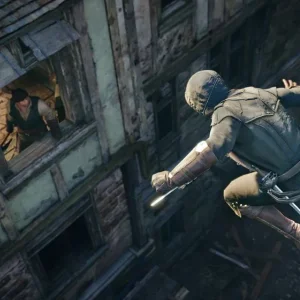
Pangyo Game Dev Pipeline: Inertial-Optical Character Motion Rigging
Game Dev Planning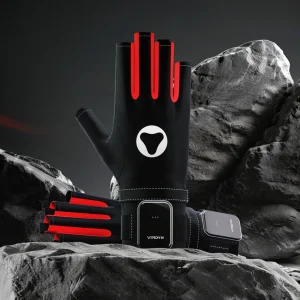
Virdyn mHand Pro: High-Precision Dexterous Gloves for Seoul VR Labs
Explore mHand Pro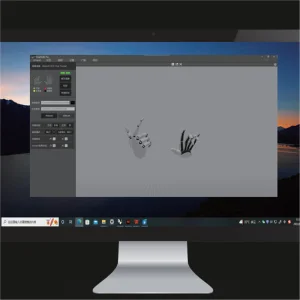
mHand Studio: Multi-Node Hand Tracking Telemetry & Calibration Suite
View mHand Studio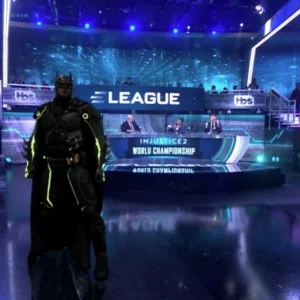
Sangam DMC Virtual Production & ICVFX Optical Tracking Infrastructure
Virtual Film Solution
VDMocap Studio Plus: Enterprise Retargeting & Kinematic Solver
View Software Features
Seoul EdTech & Interactive Virtual Avatar Broadcasting Engine
View EdTech Solution
Cinematic Commercial Advertising & VFX Motion Capture Rigging
Commercial VFX System
Enterprise Brand Virtual Ambassador & VTuber Live Infrastructure
Brand Ambassador PlansInitiate Your Seoul Motion Capture Architecture
Connect with our senior mocap solutions architects to request CAD stage layout planning, pipeline compatibility audits, custom quotes, or a scheduled live demonstration in Seoul.