
Precision Tracking Solutions Configured for Dutch Studios & Labs
Turnkey motion capture systems designed to integrate seamlessly into Hilversum virtual production workflows, university ergonomics studies, and high-precision game development suites.
-
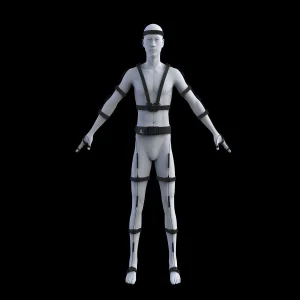
Virdyn VDSuit Full: Full-Body Biomechanical Motion Capture Suite for Dutch XR Laboratories
-

Next-Gen Optical Mocap Architecture for Netherlands Game & Digital Animation Pipelines
-
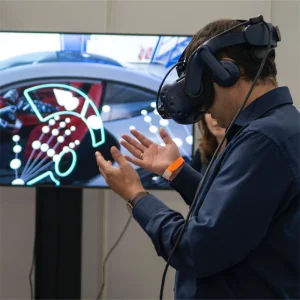
Live System Demonstration & Pipeline Audit: VDSuit Full & mHand Pro for Benelux Enterprise
-

Digital Human & Autonomous Virtual Avatar Activation for Amsterdam Media Agencies
The Netherlands: Northern Europe’s Engine for Advanced Spatial Computing & Biomechanics
The Dutch motion technology landscape is characterized by an intersection of world-class broadcast media in Hilversum, premier university biomechanical laboratories in Delft, Groningen, and Rotterdam, alongside an aggressive acceleration in Brainport Eindhoven’s robotics sector. Traditional optical motion capture configurations that rely solely on static retro-reflective marker arrays face unique space and operational challenges within urban Dutch enterprise architectures.
Commercial teams in Amsterdam's interactive media districts and industrial researchers across the Randstad metropolitan corridor demand systems that balance millimetric accuracy with low calibration latency, multi-protocol interoperability (OSC, VRPN, LiveLink), and complete spatial versatility.
Hilversum Media Park & Real-Time Broadcast
Dutch national broadcasters and commercial production spaces are transitioning toward high-density Unreal Engine virtual stages, demanding multi-camera low-latency optical tracker clustering with sub-10ms pipeline latency.
Brainport & TU Delft Embodied AI Robotics
Advanced mechatronics teams leverage 6DoF optical spatial markers coupled with inertial kinematic solvers to train humanoid manipulators and autonomous mobile robots (AMRs) with dense behavioral trajectories.
Global Enterprise Procurement Standards: Optical vs. Hybrid Tracking
Enterprise buyers across the EU and North America evaluating optical tracking systems require a clear trade-off analysis between pure optical camera clusters and synchronized optical-inertial hybrid topologies.
| Evaluation Parameter | Pure Retro-Reflective Optical | Virdyn Optical-Inertial Hybrid Architecture | Markerless Machine Vision Mocap |
|---|---|---|---|
| Spatial Position Accuracy | 0.1mm - 0.5mm (Within Calibrated Volume) | 0.3mm - 0.8mm (Continuous Global Metric) | 1.5mm - 5.0mm (Depth Inference Dependent) |
| Marker Occlusion Resilience | High vulnerability to limb cross-over or physical props | 99.8% Immunity via IMU 9-Axis continuous dead-reckoning | Moderate; subject to camera line-of-sight & lighting |
| Setup Time & Stage Footprint | 2 - 4 hours (Multi-camera rig, calibration wanding) | 8 - 15 minutes (Rapid zero-point alignment) | 10 - 20 minutes (Multi-angle RGB calibration) |
| Data Gloves & Micro-Articulation | Requires dense, fragile retro-reflective fingertip clusters | mHand Pro High-Density Sub-Node tracking | Limited fine-finger dexterity resolution |
| Engine Streaming Protocol | Proprietary network daemon to VRPN/LiveLink | Direct Native UDP/TCP LiveLink, ROS2, Unity, Maya | WebRTC / Python API into intermediate rig |
| Total Cost of Ownership (TCO) | €45,000 - €160,000+ (High hardware & maintenance costs) | €6,500 - €22,000 (Industrial-grade lifecycle efficiency) | €12,000 - €35,000 (GPU computation overhead) |
China Industry 4.0: Supply Chain Resilience & Precision Sensor Engineering
How Virdyn's centralized R&D and automated manufacturing facility in Guangzhou, China delivers high-precision motion tracking hardware at a fraction of legacy Western lead times and procurement capital.
Surface Mount Technology (SMT) Precision
Automated high-speed pick-and-place lines manufacture 9-axis IMU and optical marker control boards with 01005 passives at zero-defect tolerances, ensuring consistent inter-node communication and thermal stabilization.
Vertical Algorithm & Firmware Integration
By producing both physical sensor enclosures, low-noise analog front-ends, and proprietary sensor-fusion algorithms under one roof, Virdyn eliminates third-party licensing markups and guarantees long-term driver maintenance.
Rapid Delivery to Western Europe
Streamlined logistics hubs in Guangzhou and direct air cargo corridors to Amsterdam Schiphol Airport (AMS) guarantee hardware delivery, spare parts dispatch, and pilot evaluation unit arrivals within 5 to 7 business days.
Engineered for Demanding Benelux Industrial & Creative Scenarios
Explore real-world technical implementations of Virdyn’s tracking ecosystem across key Dutch economic clusters.
Rotterdam Maritime & Offshore Crew Simulation
Deploying wireless hybrid mocap rigs inside dynamic full-motion ship bridge simulators at the Port of Rotterdam, enabling human factors analysis under high vibration and electromagnetic interference.
Erasmus MC & Leiden Clinical Ergonomics
Non-invasive gait and kinematic tracking for rehabilitation research, allowing clinical specialists to assess musculoskeletal articulation at 120Hz without constricting patients inside rigid optical camera rings.
Utrecht & Breda Interactive Game Studios
Enabling mid-market game developers to execute rapid action-combat stunts and dialogue capture with direct FBX/BVH streaming into Maya, Blender, and Unreal Engine without dedicated mocap stage construction.
Frequently Asked Questions on Optical & Hybrid Mocap Deployments
Technical guidance for Dutch system integrators, studio engineers, and academic researchers.
How does an optical-inertial hybrid solution address magnetic distortion in Dutch historical brick or steel structures?
Traditional legacy buildings in Amsterdam or heavy industrial facilities in Rotterdam often contain high concentrations of steel reinforcement and magnetic anomalies that disturb consumer-grade IMUs. Virdyn’s hybrid architecture incorporates continuous optical global orientation anchoring alongside proprietary dynamic magnetometer-decoupled filtering algorithms. The system cross-references skeletal joint limits against optical position vectors to filter magnetic distortion in real-time, maintaining accurate skeletal coherence without rotational drift.
Can Virdyn motion capture stream real-time skeletal kinematics directly into ROS2 for robotics teleoperation?
Yes. In addition to commercial gaming plugins (Unreal Engine 5 LiveLink, Unity, Autodesk MotionBuilder), Virdyn provides open UDP, TCP, and C++/Python SDK interfaces compatible with Robot Operating System (ROS / ROS2). Research teams in Eindhoven and Delft can stream raw 6DoF joint matrices and finger articulation angles at up to 120Hz directly into custom control nodes for humanoid robot imitation learning and dexterous telemanipulation.
What is the typical customs clearance timeline and CE compliance certification for Dutch imports?
All Virdyn hardware carries full CE certification (EMC Directive 2014/30/EU, RoHS Directive 2011/65/EU, and RED 2014/53/EU for wireless telemetry). Standard shipping from our manufacturing base to Schiphol Airport (AMS) or Rotterdam takes 4 to 6 business days via DHL/FedEx Express with comprehensive HS-code documentation for smooth customs handling without regulatory delays.
How does Virdyn support multi-actor interactions on a shared virtual production stage?
Our VDMocap Studio Plus engine supports synchronized multi-actor pairing over dedicated 2.4GHz / 5.8GHz low-interference wireless channels. Up to 8 performers wearing VDSuit Full and mHand Pro systems can operate simultaneously within the same volume, while unified timecode synchronization (SMPTE/LTC) guarantees synchronization with studio cameras and LED wall volume render nodes.
Integrated Mocap Solutions for Virtual Production, AI & Enterprise XR
Comprehensive sensor hardware, specialized finger tracking gloves, and software environments deployed across leading global and Dutch technical facilities.
-
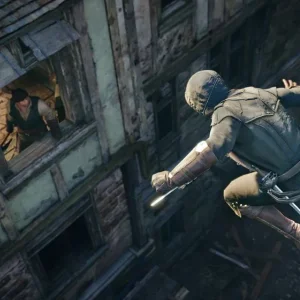
High-Efficiency Motion Capture Framework for Dutch Game Development Studios
-
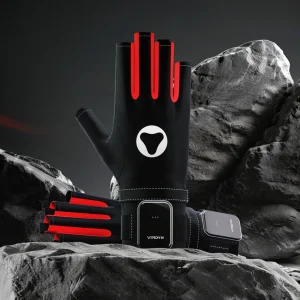
Virdyn mHand Pro: High-Fidelity Data Gloves for VR Interaction & Robot Dexterity
-
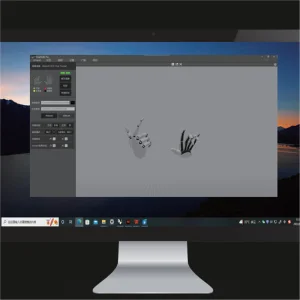
Virdyn mHand Studio: Multi-Channel Hand Calibration & Retargeting System
-
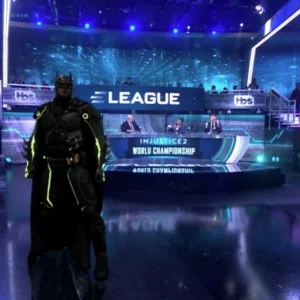
Advanced Motion Capture Toolset for Hilversum Virtual Film Production Stages
-
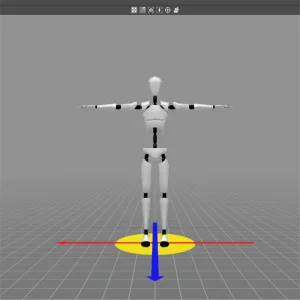
VDMocap Studio Plus: Real-Time Engine Integration & Multi-Actor Solver
-

Virtual Live Broadcasting Platform for Dutch Interactive Education & EdTech
-
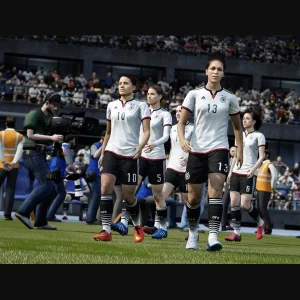
High-Realism Motion Capture for Dutch Creative Advertising & Commercial VFX
-

Virtual Spokesperson & Autonomous Brand Ambassador Pipeline for Benelux Enterprise
Plan Your Optical & Hybrid Mocap Stage in the Netherlands
Collaborate directly with Virdyn’s lead systems architects to customize capture volume dimensions, sensor latency budgets, and software plugin workflows tailored to your laboratory or production studio.