
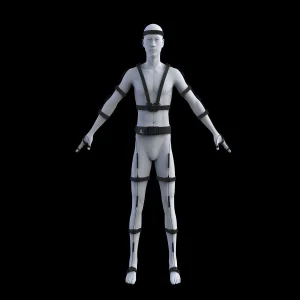
Featured Production Hardware
Core Systems for the London Creative & Engineering Pipeline
Deployable directly within Soho post houses, West London virtual production studios, and Queen Elizabeth Olympic Park robotics institutes.

Best Motion Capture Technology Opens a New Era of London Animation Development Planning, Solution
Explore Architecture
Design Book a Demo for London VDSuit Full or mHand Pro Planning, Solution
Explore Architecture
Design London Virtual Human Technology: Digital Human Activation Brand Marketing New Path Planning, Solution
Explore Architecture
Metropolitan Cluster Dynamics
The Greater London Optical Mocap Landscape: Spatial Constraints & Convergence
Analyzing procurement transformations across Soho, West London film stages, and Shoreditch immersive media clusters.
Soho & West End Virtual Production
London's post-production hub faces commercial real-estate premiums exceeding standard European averages. Tier-1 film VFX, boutique commercial agencies, and indie gaming studios demand optical mocap solutions that provide maximum effective capture volume inside compact Victorian brick architectures and modern soundstages without thermal distortion.
Academic & Biomechanical Corridors
Institutions like Imperial College London, UCL, and the National Film and Television School (NFTS) require multi-disciplinary capture stages. The procurement mandate shifts from proprietary, closed ecosystems to modular setups capable of bridging kinematic clinical gait analysis, embodied AI reinforcement training, and high-framerate actor capture.
The Emergence of Embodied AI Labs
The UK's AI corridor (Old Street to Cambridge) has pivoted toward hardware-in-the-loop validation for humanoid robotics. London robotics teams require ground-truth optical tracking stages to supervise continuous manipulation trajectories, validating end-effector positions down to fractional-millimeter margins against IMU teleoperation data.
Structural Feasibility
Macro-Industry Technical Matrix: Optical, Inertial & Hybrid Modalities
A rigorous specification framework for enterprise CTOs and pipeline directors deciding on capital equipment allocation.
| Evaluation Parameter | Passive Optical Infrastructure | Active Marker Optical Array | Inertial Fusion (VDSuit / mHand) | Hybrid Optical-Inertial Pipeline |
|---|---|---|---|---|
| Spatial Resolution & Drift | 0.1mm - 0.5mm; zero drift over time; sub-pixel centroid algorithms | 0.2mm - 0.8mm; active ID pulses eliminate marker swapping | Zero position drift locally; orientation exact; global positioning requires synthetic grounding | Sub-millimeter absolute precision anchored by non-drifting inertial kinematic joints |
| Latency Profile (Glass-to-Engine) | 3.0ms - 6.5ms via high-speed gigabit switch networks | 4.0ms - 8.0ms; multiplexed LED sequencing dependent | 12ms - 18ms via low-latency 2.4GHz / Wi-Fi 6 wireless transmission | <5ms optimized; local solver synchronizes asynchronous packet bursts |
| Occlusion Vulnerability | High: requires multi-angle camera overlap (minimum 3 cameras on marker) | Moderate: active pulsed signatures permit re-acquisition within 1 frame | Zero: unaffected by physical objects, sets, props, or actor crossover | Complete immunity: IMU solves posture when optical lines of sight collapse |
| Spatial Footprint & Setup Overhead | Fixed volume; requires rigid trussing, thermal settling, and daily wand calibration | Fixed volume; active battery maintenance on actor rig; specialized LEDs | Zero footprint; completely portable; instant calibration in any setting | Compact stage: reduces total camera count by 40% while preserving absolute spatial data |
| Production Scalability | Capital intensive: high camera density required for large stages | High: complex multi-actor tracking in controlled spaces | Linear cost: simply add suits without expanding physical volume infrastructure | Optimal ROI: enables enterprise-scale cinematic volumes without prohibitive costs |
Architecting an Optical or Hybrid Stage in London?
Consult with our lead hardware systems engineers on optical camera layout, truss isolation, network synchronizers, and pipeline retargeting.
Send Inquiry Now
Roadmap & Engineering Vectors
Macro Industry Solutions: Technical Roadmap (2025–2030)
Bridging traditional broadcast facilities to autonomous neural reconstruction pipelines.
Neural Markerless & Sparse Optical Ingestion
Traditional dense marker arrays are merging with deep-learning vision models. London commercial studios are increasingly adopting sparse optical rigs—supplemented by high-framerate machine vision cameras running transformer-based posture estimators—reducing actor dressing overhead by 80% while retaining structural joint integrity.
SMPTE 2110 & Genlock Optical Synchronization
Integration with London's LED volume virtual production facilities (e.g., Pinewood and Leavesden corridors) requires sub-microsecond optical camera synchronization. The transition from legacy blackburst to PTP (Precision Time Protocol) over IP enables optical mocap positional data to align with camera frustum rendering in Unreal Engine 5.5+.
Embodied AI: Synthetic Data & Teleoperation
Global multi-modal robotics labs are relying on synchronized mocap data to train vision-language-action (VLA) foundation models. By deploying high-density optical stages combined with dexterous mHand Pro gloves, labs generate thousands of verified trajectories daily for robotic grasping, fine tool usage, and dynamic locomotion.
Regulatory & Local Engineering
Localized Support, Safety Certifications & UK Compliance
Ensuring seamless commercial deployment across the United Kingdom and continental Europe.
UKCA & CE Electromagnetic Standards
All transceivers, active strobes, and optical sensors are verified under UKCA Radio Equipment Regulations and CE standards, preventing interference within high-density RF production stages and soundstages located adjacent to broadcast transmission facilities.
Local London Engineering SLA
We provide rapid spare-node replenishment, remote diagnostic calibration, and tailored on-site support packages across Greater London, the M25 tech corridor, and surrounding broadcast studio parks, ensuring zero downtime for mission-critical productions.
Academic & Enterprise Procurement Compliance
Full support for UK Research and Innovation (UKRI), Innovate UK grant structures, university tender frameworks, and enterprise purchasing systems, complete with formalized environmental, ethical, and hardware warranty commitments.
Complete System Catalog
Comprehensive Production & Research Solutions
Select your specialized motion capture architecture from our extended enterprise suite.
Design Inertial Motion Capture Technology to Help London Game Development and Production Planning, Solution
Explore Architecture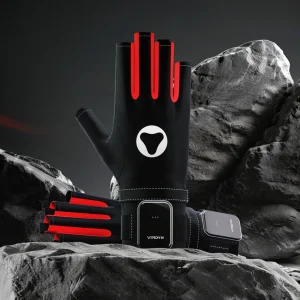
Best Virdyn mHand Pro London Inertia Motion Capture Gloves for Virtual Reality Planning, Solution
Explore Architecture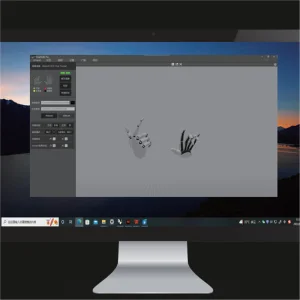
Best Virdyn mHand Studio London Motion Capture Gloves Software System for mHand Pro Planning, Solution
Explore Architecture
Design Motion Capture Provides Advanced Technology Tools for London Virtual Film Production Planning, Solution
Explore Architecture
Design Virdyn VDMocap Studio Plus Motion Capture Software System for London VDSuit Full Planning, Solution
Explore Architecture
Best Virtual Live Technology Empowerment Makes London Online Education and Learning Fun Planning, Solution
Explore Architecture
Design Motion Capture Technology to Help London Creative Advertising with Realistic Effects Planning, Solution
Explore Architecture
Best How Do London Brands Use Virtual Spokesman: Motion Capture Technology Empowers Brand Propagation Planning, Solution
Explore Architecture
Technical Clarifications
Frequently Addressed Engineering Questions
Direct answers for production supervisors, technical directors, and robotics researchers.
How does an optical-inertial hybrid stage alleviate London commercial real-estate constraints?
Traditional pure optical setups require wide camera sightlines (often demanding a dedicated 100m² clear stage with 4m ceiling clearance) to prevent marker occlusion. A hybrid pipeline combines lightweight optical anchoring with body-worn IMU sensor nodes (VDSuit Full). This reduces the camera ring requirements by up to 50%, enabling high-fidelity capture within existing central London boutique offices or constrained soundstages down to 35m² with standard 2.8m ceilings.
What genlock and frame-sync options exist for integrating with West London LED volumes?
Virdyn optical and multi-node setups integrate with SMPTE PTP (Precision Time Protocol) and Tri-Level sync genlock hardware. This ensures that camera tracking frames, actor skeletal data, and LED volume shutter cycles (Brompton/Megapixel processors) synchronize cleanly at 24.00, 29.97, 60.00, or 120.00 fps without temporal tearing, jitter, or frame dropouts in Unreal Engine LiveLink.
Can optical mocap setups be bridged with mHand Pro gloves for dexterous manipulation?
Yes. Tracking full individual finger articulation using purely passive optical markers frequently results in marker occlusion and identity swapping when fingers contact props. By fusing optical rigid-body hand anchors with mHand Pro IMU/strain multi-node data gloves, the system provides zero-occlusion finger tracking alongside millimeter-accurate wrist positioning in global space.
How does Virdyn support embodied AI data collection for UK university robotics labs?
We provide a dedicated robotic teleoperation stack (VDRobot Studio) alongside native ROS/ROS2 nodes. Academic researchers can capture demonstration trajectories from human operators wearing VDSuit and mHand Pro, correlate them with egocentric camera feeds (VDEgo), and stream normalized 6-DoF end-effector targets directly into Isaac Gym, MuJoCo, or physical humanoid controllers with sub-10ms latency.