
Enterprise Motion Capture Platforms Configured for Baku Studios
Deploying flagship multi-actor tracking suites, real-time spatial solvers, and ultra-responsive character animation hardware designed for seamless pipeline integration in the South Caucasus.
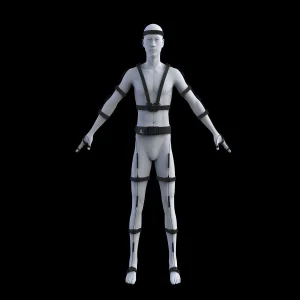
Design Virdyn VDSuit Full for Full Body Function Inertia Motion Capture Suit Planning, Solution
Best Motion Capture Technology Opens a New Era of Animation Development Planning, Solution

Design Book a Demo for VDSuit Full or mHand Pro Planning, Solution

Design Virtual Human Technology: Digital Human Activation Brand Marketing New Path Planning, Solution
Azerbaijan’s Digital Renaissance: Catalyzing Creative Tech & High-Fidelity Spatial Capture
The Republic of Azerbaijan is undergoing a systemic structural pivot under the "Azerbaijan 2030: National Priorities for Socio-Economic Development" directive. Driven by the Innovation and Digital Development Agency (IDDA) and the Ministry of Digital Development and Transport, the country is transitioning from hydrocarbon reliance toward an innovation-driven, knowledge-based economy centered in Baku.
Within this macroeconomic paradigm, high-end optical motion capture (Optical Mocap) and hybrid kinematic tracking systems represent a critical technological enabler. Azerbaijan’s burgeoning creative ecosystem—encompassing the revitalization of historical film production at Azerbaijanfilm Studio, the rise of game incubation clusters in the Baku White City district, and immersive preservation programs for UNESCO World Heritage sites like Gobustan and Icherisheher—demands industrial-grade spatial tracking infrastructure.
Deploying specialized optical capture pipelines within Azerbaijan eliminates historical bottlenecks caused by outsourced visual effects (VFX) workflows, positioning Baku as a pivotal post-production and virtual reality engineering nexus bridging Eastern Europe, Central Asia, and the Middle East.
Azerbaijan Technical Deployment KPIs
- Sub-Millimeter Marker Accuracy: Down to 0.15mm spatial deviation across high-ceiling volume configurations in Baku soundstages.
- Extreme Environmental Resilience: Dynamic recalibration countering Caspian thermal drift and marine-grade atmospheric humidity.
- Ultra-Low Latency Pipeline: Under 8ms real-time photon-to-engine streaming into Unreal Engine 5.4 LiveLink environments.
- Hybrid Integration: Flawless sensor fusion blending optical volume calibration with wearable 9-axis IMU tracking nodes.
Global Motion Capture Paradigm: Optical Supremacy, Sensor Fusion & Spatial AI
Optical motion capture remains the indisputable gold standard for mission-critical spatial analytics, volumetric live filmmaking, and high-degree-of-freedom robotic data training worldwide.
Near-Infrared Optical Precision
Global Tier-1 visual effects pipelines rely on arrays of high-speed infrared stroboscopic cameras (up to 480 FPS) emitting 850nm/940nm light. Retroreflective passive spherical markers bounce light back into synchronized optical sensors, generating absolute six-degrees-of-freedom (6DoF) spatial coordinates with zero cumulative positional drift.
In-Camera VFX (ICVFX) Synchronicity
In virtual production studios utilizing micro-pitch LED volumes, optical mocap systems provide camera-tracking genlock synchronization. By feeding sub-frame camera trajectory coordinates directly to Unreal Engine nDisplay nodes, background frustum parallax renders match real cinema lenses with zero perceptible judder.
Embodied AI & Humanoid Teleoperation
The global frontier of motion capture has expanded beyond entertainment into robotics data curation. High-density optical marker sets track human hand-eye manipulation and locomotion, generating millions of verified kinematic tokens to train Transformer-based end-to-end embodied neural network policies.
High-Yield Deployment Scenarios Across Azerbaijani Industries
From the soundstages of Absheron to the energy platforms of the Caspian Basin, optical tracking unlocks unmatched commercial efficiency and technological sovereignty.
1. Baku Cinematic Soundstages & Virtual Production LED Stages
National studios and independent media production companies in Baku face escalating competition from regional hubs in Istanbul and Tbilisi. Equipping local facilities with dedicated 16-to-32 camera optical motion capture rigs transforms conventional film production into modern In-Camera Virtual Production (ICVFX).
By capturing the physical movement of actors alongside optical camera crane tracking, production houses can film complex science fiction, historical epics, and commercial advertisements entirely indoors. Visual effects that previously required months of manual rotoscoping and post-render compositing are resolved immediately on-set, slashing production budgets by up to 45%.
Baku Production Pipeline Deliverables:
Direct synchronization with Sony Venice, ARRI Alexa, and RED cinema cameras; zero-jitter optical tracking of camera position, focal length, and lens distortion coefficients; native live-streaming of rigid body objects into Unreal Engine 5 CineCamera rigs.
2. Digital Twin Heritage: Gobustan & UNESCO Archival Digitization
Azerbaijan possesses extraordinary cultural treasures, ranging from the prehistoric petroglyphs of Gobustan National Park to the classical architecture of Baku’s Old City (Icherisheher) and Shusha. Optical capture systems facilitate high-accuracy spatial twinning of human performative heritage, including traditional folk dances (e.g., Yalli), national wrestling disciplines (Gulesh), and ritual theater.
By attaching lightweight retroreflective markers to traditional performers, ethnographers and computer scientists can digitize the exact biokinematic signatures of master artists. This preserves intangible national cultural assets as permanent, sub-millimeter 3D spatial archives accessible in interactive museum kiosks and global educational metaverses.
Heritage Preservation Standards:
Archival skeletal data formatted in open BVH and USD (Universal Scene Description) standards; biomechanical joint acceleration profiling; historical accuracy certified for international museum exhibitions and virtual interactive installations.
3. Offshore Energy Ergonomics & Deep-Sea Robotics Teleoperation
As the cornerstone of Azerbaijan’s industrial economy, the Caspian offshore energy sector operated by regional and global conglomerates requires stringent worker safety and rapid adoption of robotic inspection systems. Optical motion capture provides laboratory-grade biomechanical ergonomic analysis for platform personnel operating in high-risk offshore environments.
Furthermore, optical mocap volume tracking serves as the master command interface for dexterous robotic arm teleoperation. Engineers situated in onshore Baku control centers can wear optically tracked haptic rigs to guide remote robotic arms conducting subsea valve operations, pipeline inspections, and hazardous material remediation with millimeter-grade tactile accuracy.
Industrial Ergonomics & Safety Compliance:
Quantitative analysis of musculoskeletal loading (REBA/RULA compliance); tracking of repetitive strain indices during heavy platform valve assembly; synthetic training environments for hazardous gas exposure mitigation.
4. STEM University XR Labs & Olympic Athletic Performance Analysis
Leading academic institutions in Baku—such as ADA University, Azerbaijan State Oil and Industry University (ASOIU), and Baku Higher Oil School—are inaugurating specialized computer vision and spatial computing laboratories. Deploying modular optical mocap architectures provides students and researchers with hands-on infrastructure for artificial intelligence, computer graphics, and bio-mechatronics research.
In parallel, the National Olympic Committee and Azerbaijani sports federations can harness optical biokinematics to optimize the performance of elite athletes in rhythmic gymnastics, judo, and wrestling, detecting micro-deviations in joint rotation and ground reaction forces to maximize gold-medal potential while preventing injury.
Biomechanical Research Modules:
Integration with synchronized ground force plates (Kistler/AMTI); 16-channel surface electromyography (EMG) alignment; dynamic center-of-mass trajectory computation; high-framerate joint velocity vector analysis.
Architectural Comparison: Selecting the Optimal Mocap Topology
A rigorous comparative engineering evaluation guiding procurement committees across Azerbaijani commercial studios, academic institutions, and defense enterprises.
| Evaluation Parameter | Passive Optical (Retroreflective) | Active Optical (LED Modulated) | Hybrid Inertial-Optical | AI Markerless Computer Vision |
|---|---|---|---|---|
| Spatial Position Accuracy | ± 0.10 mm to 0.25 mm | ± 0.15 mm to 0.30 mm | ± 0.50 mm (Fused) | ± 5.0 mm to 15.0 mm |
| Rotational Drift Vulnerability | Zero Drift (Absolute 6DoF) | Zero Drift (Absolute 6DoF) | Zero Drift (Corrected by Optical) | Probabilistic Jitter (Filtered) |
| Occlusion Handling | Requires multi-camera sightlines | High resilience (Unique ID Pulse) | Complete Immunity (IMU Fills Gap) | Pose estimation inference |
| Capture Space Scalability | Defined volume (e.g., 6m × 6m to 20m × 20m) | Defined calibrated volume | Unbounded (Studio to Outdoor) | Camera view frustum bounds |
| Latency (Photon to Engine) | Ultra-Low (< 4.5 ms) | Ultra-Low (< 5.0 ms) | Low (< 8.0 ms) | Moderate (18 ms - 45 ms) |
| Best Azerbaijani Application | Film ICVFX & Biomechanics Labs | Crowd Tracking & Drone Swarms | Action Game Production & VR Hubs | Classroom Previs & Rapid VTubing |
Technological Roadmap & Regional Outlook: 2025–2030
Positioning your Azerbaijan studio investment at the apex of spatial computing and autonomous tracking evolution.
Neural Radiance & 4D Splatting
- Direct export of multi-view calibrated camera feeds into 3D Gaussian Splatting dynamic reconstructions.
- Elimination of manual skeletal rigging for background background actors in Baku advertising agencies.
- Full multi-actor markerless spatial solve in controlled lighting conditions.
Event-Based Neuromorphic Tracking
- Integration of asynchronous event-based silicon sensors providing over 10,000 equivalent FPS.
- Zero motion blur even during extreme ballistic martial arts and Azerbaijani folk dance acrobatics.
- Power consumption reduced by 60% across large-scale tracking arrays.
Embodied AI Tele-Autonomy
- Real-time bidirectional teleoperation of humanoid robots across Caspian offshore platforms.
- Direct neural synthesis converting human demonstration datasets into reinforcement learning policies.
- Sub-millimeter dexterous robotic hand manipulation tracking.
Ubiquitous Spatial AI Grids
- City-scale digital twin integration for Baku Smart City urban planning and mobility simulations.
- Seamless hybrid switching between satellite RTK-GNSS, indoor optical grids, and wearable inertial suits.
- Real-time photorealistic holographic telepresence streaming over 6G networks.
Engineered Mocap Ecosystem for Azerbaijan Enterprise Integration
Explore complete full-body suits, precision haptic gloves, real-time retargeting engines, and specialized production solutions configured for regional deployment.
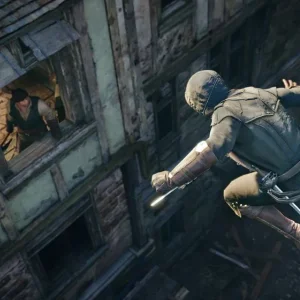
Design Inertial Motion Capture Technology to Help the Game Development and Production Planning, Solution
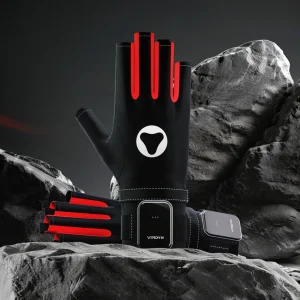
Best Virdyn mHand Pro an Inertia Motion Capture Gloves for Virtual Reality Planning, Solution
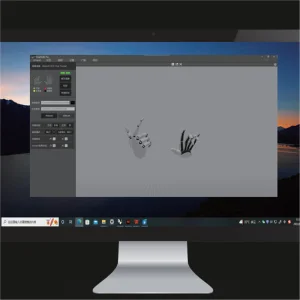
Best Virdyn mHand Studio Motion Capture Gloves Software System for mHand Pro Planning, Solution

Design Motion Capture Provides Advanced Technology Tools for Virtual Film Production Planning, Solution
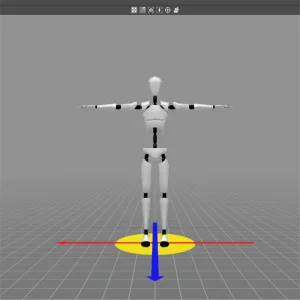
Design Virdyn VDMocap Studio Plus Motion Capture Software System for VDSuit Full Planning, Solution

Best Virtual Live Technology Empowerment Makes Online Education and Learning As Fun As Watching Cartoons Planning, Solution
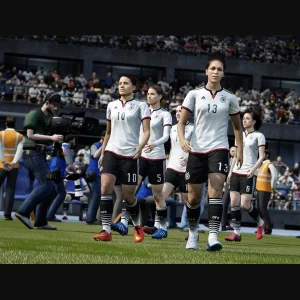
Design Motion Capture Technology to Help the Development of Creative Advertising with Realistic Effects Planning, Solution

Best How Do Brands Use Virtual Spokesman to Tell Good Stories: Motion Capture Technology Empowers Brand Propagation Planning, Solution
Frequently Asked Questions: Azerbaijan Optical Mocap Deployments
Comprehensive engineering, integration, and logistical clarity for institutional buyers, technical directors, and studio managers across Baku and the South Caucasus.
How does coastal Caspian humidity affect optical mocap calibration in Baku?
Baku’s coastal proximity to the Caspian Sea can cause micro-refraction and thermal lens drift in unconditioned studio volumes. Our optical engineering solution incorporates active thermal-stabilized camera housings, hydrophobic optical anti-reflective lens coatings, and algorithmic temperature compensation matrices that automatically recalculate intrinsic camera calibration when ambient temperatures fluctuate.
Can optical mocap be seamlessly integrated into LED Virtual Production stages?
Yes. Our systems are engineered specifically for LED volume ICVFX stages. We utilize narrow-band 850nm or 940nm bandpass optical filters paired with synchronized IR strobes. This prevents the high-intensity RGB emission from LED walls from blinding the optical sensors, ensuring continuous, zero-dropout tracking of physical cinema cameras and live actors within the volume.
What are the regulatory and customs clearances for hardware imported into Azerbaijan?
All Virdyn hardware complies with CE, FCC, and RoHS international certifications. When shipping into Baku, our logistics team coordinates with the State Customs Committee of the Republic of Azerbaijan, providing comprehensive HS Code documentation, equipment conformity declarations, and pre-cleared logistics routes to guarantee prompt on-site delivery without customs delays.
Why choose a Hybrid Inertial-Optical pipeline instead of pure optical tracking?
While pure optical systems offer unmatched absolute precision, they can suffer from marker occlusion during dense combat scenes, crowd sequences, or when props obstruct camera viewports. A hybrid setup combines the zero-drift positional anchoring of optical volumes with the occlusion-immune continuous angular data of 9-axis wearable IMU nodes, guaranteeing uninterrupted data streaming.
What native plugins and engine integrations are supported out-of-the-box?
Our spatial software ecosystem provides native zero-latency plugins for Unreal Engine 5 (via LiveLink), Unity 3D, Autodesk Maya, Autodesk MotionBuilder, 3ds Max, Blender, and iClone. We also support open OSC and VRPN communication protocols, allowing custom robotic controllers in ROS/ROS2 to ingest human joint teleoperation trajectories in real time.
What on-site training and SLA support packages are available for Baku institutions?
We provide comprehensive tier-1 turnkey services: initial acoustic and optical volume layout simulation, precision truss mounting, multi-camera Ethernet cabling topology deployment, software calibration, and a dedicated 5-day on-site training curriculum for local engineering and animation staff in Baku, backed by a 24-hour enterprise support SLA.
Ready to Engineer Your Premier Motion Capture Stage in Baku?
Consult with our lead optical engineers to architect a bespoke capture volume tailored to your studio footprint, academic curriculum, or industrial research facility in Azerbaijan.