
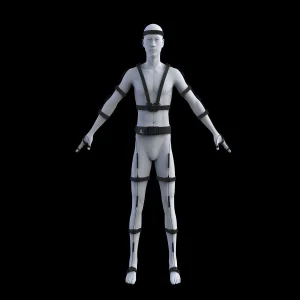
Phase I Systems · Core Capture Hardware
Enterprise Motion Capture Platforms for Colombo & Beyond
Turnkey optical-inertial hardware bundles designed for agile broadcast studios, game development incubators, and university biomechanics laboratories across the Western and Central Provinces.



Macro Commercial Analysis
Sri Lanka’s Expanding Spatial Tech & Creative Media Landscape
Positioned along strategic Indian Ocean trade routes, Sri Lanka is undergoing a structural digital transformation. From the Special Economic Zone of Port City Colombo to the thriving software exports of SLASSCOM members, spatial computing and optical motion capture represent pivotal leverage points.
Port City Colombo & IT Hubs
Sri Lanka's digital service economy targets over $3 billion in annual tech services export. High-performance optical mocap rigs enable Colombo-based VFX houses and game engineering studios to outsource triple-A character rigging, cutscene generation, and real-time interactive assets to European and East Asian publishers with zero geographic latency penalty.
- International offshore VFX & 3D character pipeline support
- Tax-incentivized tech infrastructure deployment in Port City
- Seamless integration with global revision workflows
Academic & Research Rigs
Premier tertiary institutes including the University of Moratuwa, University of Colombo School of Computing (UCSC), SLIIT, and Kelaniya are expanding postgraduate curricula into embodied artificial intelligence, humanoid kinematics, and computer vision. Optical motion stages supply deterministic baseline data for algorithmic research.
- Sub-millimeter biomechanical ground-truth verification
- Robotics locomotion and teleoperation data recording
- Multimodal AI training datasets for domestic engineers
Cinema & Virtual Production
Sinhala cinema and commercial advertising are modernizing rapidly from traditional green-screen workflows to LED volume in-camera visual effects (ICVFX). Optical tracking systems calculate camera frustum positioning with sub-millisecond sync, eliminating costly post-production rotoscoping for domestic studios.
- Zero-drift optical camera tracking for real-time LED walls
- Low capital threshold versus legacy Western camera hardware
- Direct LiveLink streaming into Unreal Engine 5.4+
< 0.15 mm
Optical Positional Accuracy
Up to 480 FPS
High-Speed IR Camera Sampling
< 8 ms
Glass-to-Engine Latency
100% Turnkey
Truss, Calib & SDK Delivery
Vertical Implementations
Localized High-Impact Use Cases Across Sri Lankan Sectors
Off-the-shelf mocap systems often fail to account for tropical climate conditions, specialized cultural heritage postures, or localized manufacturing ergonomics. Our solutions are mapped precisely to Sri Lanka's domestic priorities.
Traditional Arts: Kandyan & Sabaragamuwa Dance Digitization
Sri Lanka holds centuries of intricate traditional choreography, notably Up-Country (Uda Rata Natum) dance characterized by sharp percussive postures, micro-hand mudras, and swift acrobatic pirouettes. Traditional preservation relies on oral and 2D film recording, which lacks kinetic depth.
Deploying multi-camera optical setups combined with sub-millimeter retroreflective marker clusters on dancer joints unlocks volumetric 3D joint-angle trajectory extraction. This archives intangible cultural heritage for interactive museum exhibits, metaverse recreations, and digital pedagogical tools.
Cricket & Sports Biomechanics Analytics
Cricket is Sri Lanka's national passion, with elite development centers at R. Premadasa and SSC demanding empirical kinematic validation for bowling actions and batting response mechanics. Identifying illegal bowling arm flexions (exceeding the ICC 15-degree threshold) necessitates ultra-high-rate optical capture.
Our synchronized 240–480 FPS infrared camera rings isolate humeral axial rotation, elbow extension rates, and pelvic tilt angles in bright indoor training nets. Coaches access immediate 3D skeletal overlays to prevent lumbar stress fractures in fast bowlers and optimize stroke play efficiency.
Apparel Manufacturing Digital Twins & Ergonomics
As home to global apparel conglomerates such as MAS Holdings and Brandix, Sri Lanka is a world leader in high-tech garment and athleisure engineering. Transitioning to 3D virtual sampling (CLO3D, Browzwear) demands genuine dynamic stretch and skin-strain parameters derived from real human movement.
Optical marker arrays mapped across garment panels assess real-time fabric displacement, seam torque, and garment drape under high-intensity biomechanical stress, dramatically reducing physical prototyping cycles and international courier logistics.
Interactive Broadcast & VTubing in South Asia
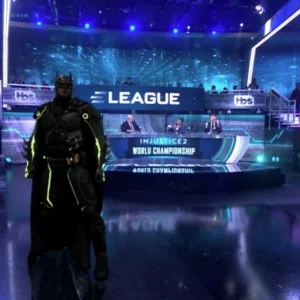
The South Asian live-streaming sector is experiencing double-digit growth. Traditional broadcast studios in Colombo are expanding into real-time interactive avatars, virtual game show hosts, and live corporate spokespersons.
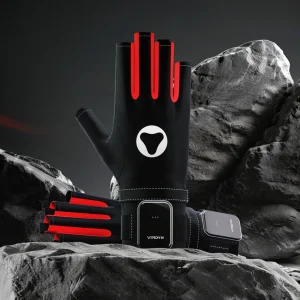
By pairing optical optical stage tracking with Virdyn’s hybrid inertial suit and mHand Pro gloves, broadcasters eliminate magnetic interference typical of high-density studio equipment while maintaining zero-occlusion tracking for rapid multi-hour daily broadcasts.
Global Engineering Standards
Global Technological Evolution: Optical vs. Inertial vs. Hybrid
Selecting the optimal motion capture topology requires balancing photogrammetric precision, environmental constraints, spatial volume, and capital allocation. Below is an engineering comparison matrix used by spatial system integrators worldwide.
| Evaluation Parameter | Passive Optical (IR Marker) | Markerless Optical (AI Vision) | Wearable Inertial (IMU) | Virdyn Hybrid Optical-IMU |
|---|---|---|---|---|
| Global Spatial Precision | Sub-millimeter (±0.1 mm) | Centimeter grade (±8–15 mm) | Relative tracking; drift accumulation | Sub-millimeter with absolute anchor |
| Line-of-Sight Dependency | High (prone to marker occlusion) | High (requires unblocked silhouettes) | Zero (immune to visual occlusion) | Zero fail-safe: IMU bridges occlusions |
| Deployment & Setup Space | Fixed truss ring; calibrated volume | Multi-camera array; studio required | Anywhere: indoor, outdoor, tight sets | Flexible: localized volume or roaming |
| Latency Performance | Ultra-low (< 5 ms at 240Hz) | Moderate (30–60 ms neural inference) | Ultra-low (< 15 ms via 2.4GHz/5.8GHz) | Low (< 12 ms end-to-end engine stream) |
| Maintenance & Calibration | Daily wand calibration required | Lighting & lens plane calibration | Simple 5-second body pose calibration | One-click hybrid calibration workflow |
| Optimal Deployment Target | VFX hero shots, sports biomechanics | Rapid previs, casual crowd capture | Game action, indie animation, VTubers | Enterprise virtual production & robotics |
Technical Deep-Dive
Optical Stage Engineering: Environmental Hardening for Sri Lanka
Operating sensitive optoelectronic instruments in tropical marine environments like Colombo, Galle, or Kandy requires dedicated structural, optical, and thermal safeguards to prevent lens fogging, structural truss sagging, and sensor drift.
Thermal & Relative Humidity Defenses
Sri Lanka's coastal ambient humidity routinely hits 85% to 90%, inducing condensation on optical glass elements and thermal throttling inside CMOS processing chips. Our camera housings incorporate IP54-rated sealed aluminum chassis with active thermoelectric convective dissipation and nitrogen-purged multi-coated optical lenses.
Aero-Grade Modular Truss Geometries
Optical triangulation errors compound if ceiling trusses experience micro-flexing due to coastal monsoons or building vibrations. We plan and supply high-torsion 290mm square aluminum spigot trusses configured in octagonal or perimeter rings, providing rigid vibration-isolated camera placement across capture volumes from 4x4m up to 15x15m.
Stroboscopic IR & Sunlight Rejection
Tropical sunlight contains potent near-infrared energy that blinds inferior optical mocap cameras. Virdyn optical sensors utilize narrow-bandpass 850nm / 940nm optical filters matched with high-power stroboscopic LED arrays, enabling accurate retroreflective marker tracking even in architectural facilities with ambient daylight bleeding.
Supply Chain Resilience
Why Direct Sourcing from China Delivers Decisive ROI in Sri Lanka
Procuring advanced spatial capture equipment directly from Guangzhou and Shenzhen manufacturing corridors provides Sri Lankan enterprise buyers with uncompromised component precision, direct firmware access, and significant cost savings over Western legacy resellers.
60% Capex Efficiency vs. Legacy Resellers
Traditional European and North American optical mocap vendors impose substantial markup premiums, mandatory annual software maintenance tolls, and expensive proprietary cables. Virdyn develops hardware, firmware, and solver algorithms internally in Guangzhou, delivering world-class sub-millimeter mocap at accessible budgets for South Asian studios.
Rapid Air & Maritime Freight to Colombo
Direct air freight from Guangzhou Baiyun (CAN) to Bandaranaike International Airport (CMB) takes just 3 to 5 business days, supplemented by direct maritime routes via the Maritime Silk Road into the Port of Colombo. Lead times for replacement sensor nodes, marker clusters, and calibration wands are cut by over 70% compared to transatlantic shipping.
Customized OEM/ODM Studio Tailoring
No two facilities in Colombo or Kandy share identical room volumes or ceiling truss elevations. Our in-house manufacturing lines offer tailored focal length lenses (from ultra-wide 4mm to telephoto 16mm), specialized POE network switches, and custom high-durability Lycra mocap suits tailored to South Asian demographic sizing charts.
Enterprise Assurance & Compliance
Regulatory Compliance, TRCSL Clearances & SLA Support
Importing advanced wireless sensors, optical tracking equipment, and high-frequency RF transceivers into Sri Lanka requires compliance with regional spectrum laws and electrical certifications.
TRCSL & Import Harmonization
Our wireless telemetry hardware operates strictly within license-free 2.4GHz ISM and 5.8GHz channels conforming to the specifications of the Telecommunications Regulatory Commission of Sri Lanka (TRCSL). All export documents include CE, FCC, RoHS certifications, and harmonized system (HS) customs documentation to ensure expedited clearance at Colombo customs ports.
Comprehensive Turnkey SLA & Remote Onboarding
Every industrial installation in Sri Lanka includes structured virtual or on-site commissioning. Our engineering team provides dedicated live calibration sessions, engine pipeline integration (Unreal Live Link, Unity, Maya, Blender), and a guaranteed 24-hour turnaround on technical queries during Colombo business hours (+5.5 GMT).
Technical Clarifications
Frequently Asked Questions on Optical Mocap Systems in Sri Lanka
Engineering responses to common queries regarding optical-inertial integration, studio volume calibration, spatial latency, and regional deployment in South Asia.
How many optical cameras are needed for a typical studio in Colombo?
For a standard 5m x 5m active capture area (suitable for single-actor acrobatic performance or dual-actor dialogue), a minimum of 8 to 12 synchronized optical cameras is recommended to maintain constant line-of-sight and prevent occlusion. For multi-actor volume setups or sports biomechanics (cricket bowling creases up to 10m x 4m), a 16 to 24 camera perimeter array is standard.
Can Virdyn systems stream directly into Unreal Engine 5.4 Live Link?
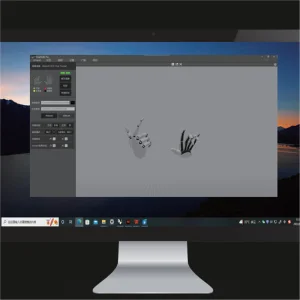
Yes. VDMocap Studio Plus and our optical tracking software output live skeletal and rigid-body data over UDP/TCP streams directly into Unreal Engine 5 via native Live Link plugins. Bone transforms, finger articulations from mHand Pro, and ARKit-compatible 52-blendshape facial coefficients are synchronized in a single frame tick with sub-15ms glass-to-screen latency.
How do you resolve magnetic interference in concrete/steel structures?
Modern commercial buildings in Colombo often contain heavy rebar and localized electromagnetic noise from generators and broadcast transmitters, which can induce drift in pure IMU sensors. Virdyn's patented multi-sensor fusion algorithms actively damp magnetic disturbances, while our optical-inertial hybrid rigs utilize camera-tracked optical clusters to instantly zero out orientation drift.
What maintenance is required for optical stages in high humidity environments?
In humid zones like coastal Sri Lanka, studios should run commercial dehumidifiers maintaining indoor relative humidity between 45% and 60%. Optical lenses should be wiped with optical microfiber cloths and isopropyl alcohol bi-weekly. Wand calibration should be performed before major shooting blocks to compensate for micro-expansion of building walls and truss mounts.
Can optical mocap be used for robotics and embodied AI research in universities?
Absolutely. Universities such as Moratuwa and SLIIT utilize our sub-millimeter optical rigs as a ground-truth measurement system to validate humanoid robot walking gaits, robotic arm end-effector trajectory tracking, and teleoperated dexterous hand manipulation through ROS/ROS2 nodes and C++ / Python SDK bridges.
What is the typical shipping and customs clearance turnaround to Sri Lanka?
Production and QA calibration at our Guangzhou facility takes 5 to 7 working days. Express air courier transit to Bandaranaike International Airport (CMB) takes 3 to 5 business days. We provide end-to-end commercial invoices, packing lists, and test reports to ensure rapid clearance through Sri Lanka Customs.
Phase II Systems · Full Motion Ecosystem
Integrated Software, Precision Gloves & Production Workflows
Complete your motion capture infrastructure with specialized finger tracking data gloves, real-time solver suites, and virtual production plugins configured for Sri Lankan studios.



Architect Your Sri Lanka Motion Capture Stage with Virdyn
Whether you require an 8-camera optical tracking volume for Colombo cinema production, an academic robotics ground-truth laboratory, or a wearable VDSuit Full for rapid animation export, our systems engineers will design your end-to-end BOM and layout within 24 hours.
Send Inquiry Now