
Primary Motion Capture Systems Engineered for Pakistan Studios
Explore our flagship spatial tracking nodes, designed for rigorous integration into regional game studios, broadcast stages, and biomechanics laboratories throughout Pakistan.


The Optical Mocap Landscape in Pakistan: Digital Leapfrogging & Infrastructure Dynamics
Emerging Growth Poles: Karachi, Lahore, and the Twin Cities
Pakistan's creative tech, animation, and software engineering sectors are experiencing an unprecedented transition. Driven by one of the world's youngest demographic profiles—where over 60% of the population is under 30—the domestic tech ecosystem is transforming rapidly from low-margin code maintenance into sophisticated 3D game development, AAA outsourcing, and high-fidelity CGI visual effects. Centers such as Lahore (frequently referred to as Pakistan's gaming capital), Karachi (the commercial media and broadcast hub), and Islamabad (the center for government-backed robotics, defense simulations, and academic research) are driving an acute demand for precision spatial measurement systems.
Historically, studios in Pakistan faced significant entry barriers when procuring multi-camera optical motion capture equipment. Legacy systems supplied by Western vendors routinely incurred prohibitive capital expenditures, complicated import logistics, and total operational stagnation whenever local hardware calibration drifted or replacement parts were required. Optical Mocap Planning now demands a shift from rigid legacy paradigms toward accessible, industrial-grade optical-inertial hybrid capture pipelines that deliver 0.1mm kinematic precision while maintaining operational resilience under volatile environmental and electrical conditions.
Power Grid & Thermal Resilience
Local studio architectures in Sindh and Punjab require hardware tolerant of ambient operating temperatures up to 45°C, supported by low-draw DC power adapters capable of sustaining continuous operational sync across backup UPS and solar inverters.
Modular Optical Volumes
From compact 4m x 4m game design studios in Arfa Software Technology Park (Lahore) to massive 15m x 12m sound stages in Karachi's media corridor, optical layout geometries must scale dynamically without exponential camera node costs.
Multi-Disciplinary Utilization
Solutions must bridge game design, cricket bowling biomechanics validation under ICC 15-degree rules, and defense flight simulator human factor benchmarking without requiring isolated hardware investments.
Technological Convergence: Optical Precision Meets Neural AI & Robotics
The Paradigm Shift: From Monolithic Optical Stages to Hybrid Sensor Fusion
Worldwide, the motion capture discipline is undergoing its most radical transformation in three decades. The historical dichotomy between pure optical systems (which suffer from optical line-of-sight occlusion, reflective marker dropout, and lengthy calibration procedures) and pure inertial systems (which encounter positional drift over sustained capture periods) has dissolved. Leading production houses across Hollywood, Tokyo, and London now rely heavily on sensor-fused architectures.
Our latest optical planning methodology implements high-speed Near-Infrared (NIR) optical cameras alongside localized IMU sensor data. When an actor or biomechanical subject rolls on the ground, enters an enclosed vehicle prop, or performs dense martial arts choreographies where retro-reflective markers are blocked from camera visibility, continuous 9-axis inertial tracking instantly fills the occlusion gap. When the actor re-emerges into the optical volume, global optical triangulation immediately clears any micro-drift. This provides Pakistani studios with an uncompromised capture stream, eliminating hundreds of manual post-processing clean-up hours in Autodesk MotionBuilder or Blender.
| Evaluation Parameter | Legacy Pure Optical Rig | Standard Pure Inertial Suit | Virdyn Hybrid Optical-Inertial Pipeline |
|---|---|---|---|
| Line-of-Sight Occlusion | Severe failure upon marker dropout | Fully immune (Zero camera reliance) | Autonomous failover via IMU drift compensation |
| Absolute Spatial Precision | 0.05mm - 0.1mm (Global calibration) | Estimated via kinematic algorithms | Sub-millimeter global accuracy maintained |
| Stage Setup & Calibration Time | 2.5 - 4 hours (Multi-camera wanding) | 5 - 10 minutes (Subject calibration) | Under 15 minutes with active auto-calibration |
| Prop & Multi-Actor Occlusion | Requires 24+ dense camera clusters | Excellent isolation per performer | Optimized 8-12 camera cluster with full IMU backup |
| Total Cost of Ownership (TCO) | Extremely high ($80,000 - $250,000+) | Accessible ($3,000 - $12,000) | High-ROI Studio Grade ($10,000 - $35,000) |
China Factory 4.0: Supply Chain Resilience, Precision R&D, and CPEC Synergies
Direct Engineering Agility vs. Middleman Markups
At our state-of-the-art facility in Guangzhou, China, hardware manufacturing and software engineering operate as a unified, continuous feedback loop. Industry 4.0 manufacturing is not simply about high-volume surface-mount assembly; it represents automated multi-axis robotic calibration, algorithmic error-mapping of every sensor diode, and optical lens grinding with strict sub-micron tolerances.
For Pakistani enterprises, universities, and commercial media firms, sourcing from Guangzhou offers transformative strategic advantages over Western supply pipelines:
- Direct CPEC Logistics Corridor: Bilateral trade frameworks and direct air/sea logistics ensure delivery times of days rather than months, backed by predictable customs handling and direct OEM warranty validation.
- Component-Level Supply Chain Elasticity: Because our core optical camera sensors, carbon-fiber structural rigs, NIR strobe arrays, and IMU data hubs are fabricated in-house, custom structural mounts and replacement units avoid the global supply-chain bottlenecks common to Western competitors.
- Continuous Embedded Firmware Updates: Hardware is not treated as a static black box. Direct client feedback from our international deployments feeds directly into weekly firmware revisions, optimizing sensor fusion filters, improving power consumption, and broadening native Unreal Engine 5.4 Live Link support.
Customized Application Scenarios for the Pakistani Market
Engineered specifically to solve high-value operational challenges across Pakistan's entertainment, athletic, industrial, and academic sectors.
Cricket Biomechanics & ICC Elbow Validation
Cricket is Pakistan's premier sport, and player performance optimization at institutions like the National High Performance Centre (Lahore) requires scientific precision. Our high-frame-rate optical cameras track fast-bowling kinematics at 240 FPS, capturing precise elbow hyperextension, shoulder rotational velocities, and ground-reaction force transfers to evaluate compliance with the ICC 15-degree bowling action threshold and minimize lumbar stress fractures.
AAA Game Development & VFX Pipelines
Game studios across Lahore and Islamabad can reduce character production timelines by up to 75%. Instead of manually animating locomotion loops, combat sequences, and complex cinematic cutscenes, studios can suit up performers and stream raw, production-ready FBX/BVH skeleton data directly into Unreal Engine, Maya, or Blender in real time.
Live Broadcast & Virtual Digital Humans
Karachi's premier television networks and advertising agencies are pioneering interactive virtual anchors and corporate mascots. Our optical-inertial systems drive photorealistic MetaHuman characters for live election coverage, corporate product reveals, and real-time social streaming with zero perceptual tracking jitter.
Robotics Teleoperation & Embodied AI
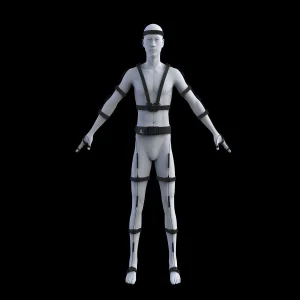
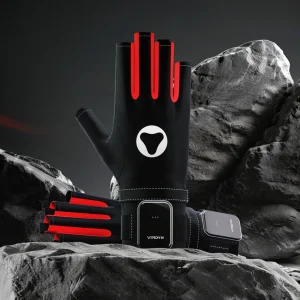
Premier academic institutions such as NUST (National University of Sciences and Technology), FAST, LUMS, and GIKI are advancing embodied artificial intelligence. Researchers use our full-body suits and mHand Pro multi-node gloves to capture fine human manipulation datasets, enabling teleoperated humanoid platforms to learn complex industrial and assembly tasks.
Medical Rehabilitation & Ergonomics
Tertiary healthcare centers in Rawalpindi and Karachi use our spatial tracking systems for stroke patient rehabilitation, pediatric gait analysis, and industrial workplace ergonomics, generating objective range-of-motion (ROM) reports with sub-millimeter precision.
Military & Aviation Simulators
Flight and combat vehicle crew training simulators require real-time tracking within confined, metallic cockpits. By fusing active optical markers with magnetic-drift-compensated IMU tracking, simulator engineers capture precise pilot hand-to-switch interactions without electromagnetic distortion.
Step-by-Step Optical Volume Dimensioning & Calibration Methodology
Designing the Physical Volume: Calculating Camera Cones and Focal Coverage
Setting up an optical or hybrid capture studio requires rigorous spatial mathematics. A common pitfall in regional studio design is simply mounting cameras around room perimeters without calculating lens focal lengths, optical drop angles, and overlapping sightline intersections.
Phase 1: Volume Dimensioning & Rigging Geometry
For a standard 8m x 6m x 3.5m studio space, a 12-camera optical ring should be suspended from a box truss decoupled from building floor vibrations. Peripheral cameras should use wide-angle 6mm focal lenses with 85-degree horizontal fields of view, angled downward between 30 and 42 degrees to prevent dead-zones below waist level, while high-mounted corner units provide overhead coverage during complex jumping maneuvers.
Phase 2: Synchronous Timing & PTP Master Clock Architecture
Every optical camera within the network receives power and control over high-bandwidth Gigabit PoE (Power over Ethernet) switches operating under IEEE 1588 Precision Time Protocol (PTP). Frame exposures must lock simultaneously across every sensor within a 10-microsecond window to prevent multi-camera triangulation smear when capturing high-velocity movements, such as a cricket bowl or martial arts kick.
Phase 3: Two-Tier Dynamic Wanding & Ground Plane Setting
Calibration takes minutes rather than hours. An active LED or precision retro-reflective calibration wand is swung throughout the volume to allow software to compute lens distortion coefficients and camera extrinsic positions. An L-shaped calibration frame is then placed flat on the floor to establish the global XYZ coordinate origin, perfectly aligning physical ground with digital floor planes in Unreal Engine or Unity.
Ready to Construct Your Motion Capture Stage in Pakistan?
Connect directly with our senior hardware engineers and optical pipeline specialists. We provide complimentary CAD spatial layout simulations, bill-of-materials optimization, and localized installation roadmaps.
Frequently Asked Questions: Optical Mocap Solutions in Pakistan
In-depth technical answers addressing procurement, environment compatibility, software integrations, and maintenance.
How does Virdyn's hybrid system handle magnetic interference in commercial buildings in Pakistan?
Commercial structures in urban hubs like Karachi or Lahore often feature dense steel reinforcement, nearby high-voltage lines, or fluctuating industrial machinery that can disrupt consumer-grade magnetometers. Virdyn's 9-axis sensor modules feature proprietary algorithmic magnetic rejection filters. By blending optical positional references with high-speed gyroscope/accelerometer integration, our systems maintain accurate skeletal orientations even in heavily reinforced concrete environments.
What are the primary logistical and customs advantages of sourcing directly from Guangzhou, China?
Under the ongoing China-Pakistan Economic Corridor (CPEC) bilateral frameworks, equipment transit routes between Guangzhou and Pakistan provide clear documentation pathways and reduced transit times compared to European or North American shipments. We supply comprehensive customs declarations, export testing certificates, and direct technical support to simplify clearance through air cargo hubs in Karachi, Lahore, or Islamabad.
Can the optical and inertial mocap pipelines run simultaneously within Unreal Engine 5.4+ Live Link?
Yes. Virdyn's VDMocap Studio Plus provides a dedicated, zero-latency Live Link plugin built for Unreal Engine 5. Skeletal translation and rotation data stream into the animation graph over UDP sockets. You can remap bones, preview dynamic lighting on digital MetaHumans, and record clean animation takes directly within Sequencer without manual data re-importing.
How suitable is this equipment for cricket fast-bowling biomechanics analysis?
Our optical capture systems operate at user-selectable frame rates up to 240 FPS (with high-speed variants scaling further). Fast-bowling arm releases, which occur in milliseconds, require high frame rates to avoid motion blur. When paired with passive retro-reflective markers placed on anatomical landmarks (acromion, medial/lateral epicondyles, radial styloid), researchers can measure elbow extension angles precisely according to the 15-degree tolerance defined by the International Cricket Council (ICC).
What computer hardware specifications are required to operate the studio system smoothly?
The capture host workstation should feature an Intel Core i7/i9 (13th or 14th Gen) or AMD Ryzen 9 processor, 32GB to 64GB DDR5 RAM, an NVIDIA GeForce RTX 4070 or higher GPU (especially if rendering real-time virtual avatars in Unreal Engine), and a dedicated PCIe Dual Gigabit NIC for camera PoE network switches, ensuring zero dropped frames during continuous live streaming sessions.
What warranty, technical onboarding, and spare parts support is available for Pakistani buyers?
All hardware shipments include a full manufacturer warranty. Our technical team conducts interactive remote video onboarding sessions covering spatial calibration, actor dressing, skeleton re-targeting, and DCC integrations. Replacement sensor modules, data cables, and reflective marker sets are readily stocked and dispatched via expedited air courier.
Comprehensive Hardware & Software Suite for Industrial Deployments
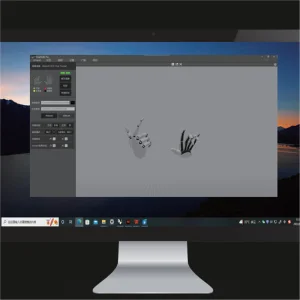
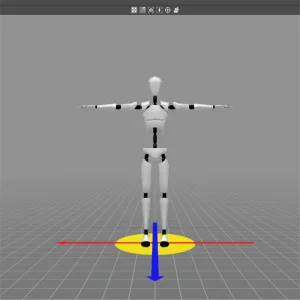
Expand your capture footprint with specialized finger-tracking gloves, broadcast-grade software engines, and turn-key digital human solutions tailored for high-volume Pakistani pipelines.




Initiate Your Studio Procurement & Calibration Plan
Direct manufacturer supply lines, custom engineering specifications, and full integration assistance for Pakistan's forward-looking studios and research labs.
Send Inquiry Now