
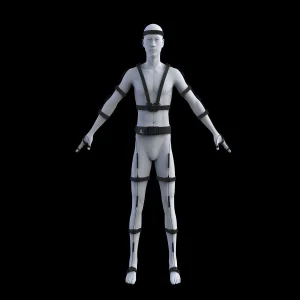
Design Virdyn VDSuit Full for Full Body Function Inertia Motion Capture Suit Planning & Deployment in Nigeria
Explore Nigerian Deployment
Turnkey optical stages, full-body inertial suits, and precision multi-point capture pipelines engineered for high-throughput Nollywood virtual stages and regional interactive design centers.



Analyzing the macroeconomic shift as Nigeria's multimedia, entertainment, and advanced robotics engineering sectors move from manual post-production to real-time optical kinematic capture.
The Nigerian film sector produces over 2,500 titles annually, generating upward of $600M to the national economy. With streaming platforms demanding high-fidelity VFX, local directors in Lagos, Abuja, and Enugu are ditching slow frame-by-frame rigging for real-time Optical Marker-Based Stages and LED volume camera tracking.
High-resolution retroreflective tracking combined with rigid-body camera frustum synchronizers allows Nigerian studios to cut visual effects turnaround cycles from months to days while retaining cultural storytelling nuances.
Yaba and Lekki have emerged as premier tech corridors driving West African gaming ecosystems. Nigerian game studios are developing sovereign IP celebrating regional mythologies, combat sports (e.g., Dambe), and Afrofuturistic environments.
Achieving realistic melee kinematics requires sub-millimeter precision. Optical multi-camera tracking grids capture high-velocity limb trajectories, martial-arts footwork, and authentic micro-interactions without baseline calibration drift.
Premier tertiary engineering programs, including the University of Lagos and Covenant University, are integrating optical biomechanics arrays to study occupational ergonomics, clinical gait rehab, and embodied artificial intelligence.
By collecting synchronized skeletal point clouds, local AI engineers are constructing teleoperation datasets to train humanoid models and collaborative industrial robotics designed for agricultural and automated distribution hubs.
Modern optical tracking has evolved from monolithic darkroom facilities into resilient, hybrid optical-inertial capture architectures tailored for variable local infrastructure.
Worldwide virtual production pipelines rely heavily on optical tracking systems to compute synchronized parallax between live cameras and Unreal Engine nDisplay volumes. This eliminates traditional post-filming green screen compositing.
Studios operating across Ikeja, Victoria Island, and Lekki balance complex spatial constraints and power continuity. Hybrid setups deploy optical perimeter cameras for absolute root positioning while offloading joint angles to IMU sensors.
From pan-African virtual music concerts to fintech digital avatars, local enterprises are deploying optical motion pipelines to accelerate interactive digital commerce and culturally tailored broadcast avatars.
Our four-phase systems engineering methodology ensures flawless optical capture integration tailored to Nigerian environmental factors, power configurations, and structural layouts.
Acoustic isolation, ceiling truss load calculations, camera FOV overlap modeling, and high-precision anti-vibration mounting for stable optical calibration.
Pure sine wave online UPS configurations, dedicated PoE+ network topologies, shielded CAT6a/e routing, and heat-dissipating server rack integrations.
Dynamic optical wand calibration, global ground plane alignment, zero-latency SMPTE timecode routing, and bi-directional Unreal Engine Live Link bindings.
Comprehensive training programs covering marker placement, real-time skeleton retargeting, data cleanup, and hardware maintenance for Nigerian technicians.
Speak with our senior motion-capture systems architects to receive a tailor-made stage layout, complete hardware bill of materials (BOM), and direct workflow integrations for your studio.
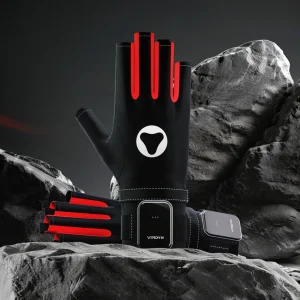
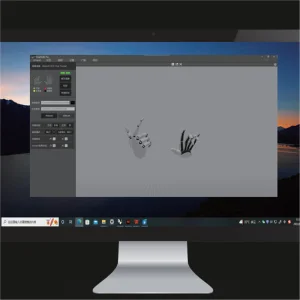
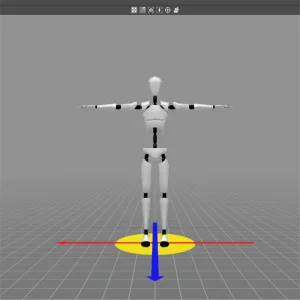
Send Inquiry NowExplore our complete hardware and software toolkits—from high-density data gloves to dedicated retargeting suites—integrated for studios across Nigeria and worldwide.





Common inquiries from studio engineers, academic procurement heads, and tech directors planning optical stages in West Africa.