
Production-Ready Capture Systems Engineered for Los Angeles Studios
Deploying hybrid spatial computing, full-body kinematics, and high-fidelity live tracking tailored for Hollywood soundstages, Culver City virtual production hubs, and interactive game studios.
The Los Angeles Optical Mocap Ecosystem: From Studio City to Silicon Beach
An authoritative analysis of Southern California's dense convergence of cinematic virtual production, AAA interactive development, and autonomous embodied AI robotics.
Hollywood & Virtual Production Demands
In traditional epicenters such as Burbank, Hollywood, and Culver City, the migration toward in-camera visual effects (ICVFX) has fundamentally transformed the requirements for optical motion capture. Film directors and camera operators require sub-millimeter positional tracking of physical cinema cameras across massive LED volumes (the "Volume"). Optical mocap is no longer restricted to performance capture (Pcap) suits; it serves as the ground-truth spatial anchor syncing real-world frustums directly with Unreal Engine 5 nDisplay nodes.
The imperative for zero occlusion, minimal latency, and zero marker jitter under high-intensity cinematic lighting rigs has prompted local soundstages to mandate hybrid setups that pair active/passive infrared cameras with zero-drift IMU sensor nodes.
Silicon Beach, Gaming & Embodied AI
From Santa Monica to Playa Vista and Irvine, Southern California represents one of the dense interactive entertainment and robotics clusters globally. AAA game publishers demand multi-actor capture capabilities that seamlessly stream combat locomotion and complex interactions into Maya and MotionBuilder without requiring labor-intensive frame-by-frame cleanup.
Simultaneously, the surge in Embodied AI and Humanoid Robotics laboratories across Pasadena and El Segundo has generated a new market requirement: harvesting billions of tokens of high-precision human demonstration data. High-frame-rate optical capture spaces provide the ground-truth kinematics necessary to train neural network policies and reinforce physical foundation models.
Optical vs. Inertial vs. Sensor-Fused Architectures
Selecting the optimal motion capture topology requires an objective evaluation of spatial geometry, actor occlusion tolerance, optical refraction, and production deployment overhead.
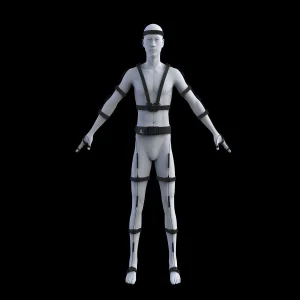
| Evaluation Parameter | High-Density Optical IR | Wearable Inertial (VDSuit) | Fused Hybrid Topology |
|---|---|---|---|
| Positional Accuracy | Sub-millimeter (±0.1 mm within calibrated volume) | Estimated relative position via kinematic model | Absolute 6-DOF ground truth anchor |
| Occlusion Vulnerability | High risk during physical combat, ground rolls, props | Zero occlusion — IMU internal calculation | Zero occlusion: IMU fills occluded optical frames |
| Setup & Space Footprint | Rigid truss installation, camera calibration grid required | Instant setup; zero fixed footprint; indoor/outdoor | Compact camera perimeter + wireless body suits |
| Magnetic Distortion Tolerance | Impervious to electromagnetic fields and rebar | Requires proprietary anti-interference algorithms | Self-healing magnetic correction matrix |
| Latency & Engine Streaming | < 5 ms at 240–480 Hz optical strobe rate | < 15 ms via 2.4GHz / Wi-Fi UDP streaming | < 8 ms real-time Live Link stream to Unreal Engine 5 |
| LA Stage Cost Efficiency | High capital expenditure ($100k - $500k+) | Extremely accessible for indies, VFX previs & labs | Optimal CapEx/OpEx ratio for mid-to-large facilities |
Strategic Motion Capture Applications Across the LA Creative Arc
Examining field-tested integrations across episodic television production, interactive AAA game mechanics, virtual brand ambassadors, and biomechanical human performance engineering.
Virtual Production & ICVFX
In Burbank and Sun Valley stages, our spatial pipeline maps active target markers to ARRI and RED digital cinema camera rigs, continuously feeding SMPTE-synchronized spatial coordinate vectors to Unreal Engine's nDisplay engine. This ensures absolute lens-distortion alignment and parallax fidelity between the physical actor on stage and the photorealistic LED background.
- Real-time inner frustum camera tracking
- Sub-frame genlock latency integration
- Unreal Engine 5 Live Link native support
Interactive AAA Gaming & VFX
Designed for major Santa Monica and Glendale game development studios, our high-throughput data pipelines resolve intricate dual-actor martial arts bouts, weapon disarms, and ground wrestling sequences. By eliminating marker occlusion through intelligent skeletal biomechanical constraints, post-capture cleanup cycles are reduced by upwards of 70%.
- Instant FBX / BVH hierarchical joint export
- Native multi-character retargeting rigs
- Simultaneous finger and facial articulation
Embodied AI & Humanoid Robotics
Academic institutions and robotics labs in Pasadena and Long Beach utilize our multi-sensor platforms for teleoperating bipedal humanoid robots and multi-finger robotic end effectors. Our high-frequency data streams capture subtle micro-movements, providing rich, continuous action tokens for generative physical intelligence models.
- High-frequency joint angular velocities
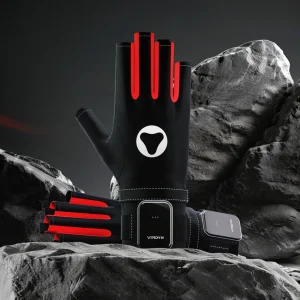
- Precise finger dexterity via mHand Pro gloves
- Extensive ROS / Python SDK bindings
Optical Mocap Engineering Roadmap & Turnkey Stage Solutions
Deploying end-to-end stage infrastructure requires careful orchestration of optical physics, high-bandwidth networking, structural truss stability, and algorithmic post-processing.
1. Calibration Precision & Environmental Engineering
Optical capture in Southern California presents unique thermal and structural challenges. Long warehouse runs and steel truss configurations undergo minute thermal expansion under intense production lighting. Our optical stage engineering methodology incorporates carbon-fiber calibration wands with certified thermal expansion coefficients (< 1.2 × 10⁻⁶/K) alongside continuous dynamic wanding algorithms.
Cameras dynamically recalibrate extrinsic matrices during production breaks without requiring complete stage shutdowns, safeguarding spatial coordinates across multi-day Hollywood shoots.
- Extrinsic wand calibration under dynamic stage lighting
- Sub-pixel point-spread function (PSF) clustering
- Automated camera vibration and drift compensation
2. Sensor Fusion & Latency Optimization
The roadmap toward 2030 centers on eliminating the hard boundary between optical marker tracking and inertial kinematic suits. By deploying Kalman filter arrays that fuse optical 3D point clouds with high-G IMU acceleration profiles, our architecture achieves instantaneous recovery when markers are temporarily occluded during vehicle stunts or complex multi-actor scuffles.
All data streams are routed across enterprise 10GbE fiber pipelines with zero-copy network buffers, guaranteeing sub-frame synchronization with SMPTE ST 2110 broadcast studio environments.
- Zero-copy UDP broadcast to Unreal Engine Live Link
- Ultra-low latency jitter-buffering algorithm
- SMPTE 2059 PTP (Precision Time Protocol) integration
Planning a Motion Capture Facility in the Greater Los Angeles Area?
Our senior spatial computing architects deliver comprehensive turnkey stage designs, acoustic truss considerations, camera placement heatmaps, and seamless real-time engine integrations tailored to your budget and pipeline requirements.
Send Inquiry NowComplete Motion Capture Hardware & Software Solutions for LA Production
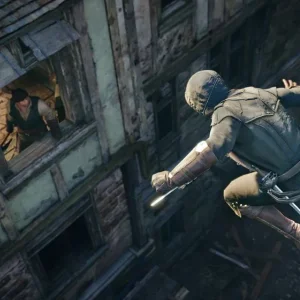
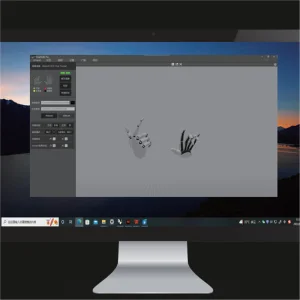
Browse our integrated suite of inertial suits, precision finger capture gloves, real-time animation retargeting suites, and turnkey virtual production software platforms.

Frequently Asked Questions: Optical Mocap Architecture in Los Angeles
Technical guidance covering stage sizing, camera density, environmental RF noise, genlock synchronization, and real-time gaming engine retargeting pipelines.
How many optical cameras are required to cover a standard Los Angeles virtual production stage?
How does optical tracking handle interference from high-brightness LED walls in ICVFX stages?
Can Virdyn inertial suits (VDSuit Full) integrate into an existing optical stage in Culver City or Burbank?
What is the real-time latency when streaming mocap data to Unreal Engine 5 or Maya?
How do we prevent wireless RF congestion on busy soundstages surrounded by film equipment?
Ready to Engineer Your Los Angeles Capture Stage?
Whether you need a full turnkey optical stage installation, a flexible hybrid inertial pipeline, or dexterous robotics data collection gloves, our engineering specialists will build a customized technical specification for your facility.