
Primary Motion Capture Systems Configured for Hamburg Projects
Pre-calibrated turnkey kits ready for immediate deployment across Hamburg-Finkenwerder aeronautic testing facilities, HafenCity virtual production studios, and regional VR game development hubs.

Hamburg Aviation VDSuit Full: Full-Body Biomechanical Mocap Planning
Ultra-resilient multi-sensor IMU and optical marker fusion harness engineered for constrained cockpit spaces, maintenance ergonomics, and aerospace simulator testing.
Configure VDSuit Solution →
Hamburg Next-Gen Optical Tracking for Animation & Gamecity Development
High-bandwidth multi-camera optical array solution supporting multi-actor real-time solving, zero marker dropout, and instant BVH/FBX export for Unreal Engine 5.
Explore Studio Packages →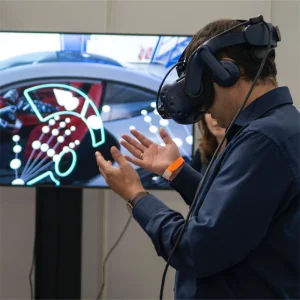
Hamburg Local Benchmark: Book a Live Demo for VDSuit Full or mHand Pro
Arrange a physical site trial in Hamburg or a verified low-latency cloud stream demo using your custom Metahuman, 3ds Max, or MotionBuilder skeleton rigs.
Book Hamburg Demo →
Hamburg Virtual Human & Live Digital Spokesperson Stage Integration
Synchronous optical skeletal and sub-millimeter facial capture pipelines delivering broadcast-grade digital human performance for North German media and exhibition venues.
Deploy Avatar Pipeline →High-Precision Optical Motion Capture Architecture for Hamburg's Industrial Ecosystem
As Europe's third-largest civil aviation hub and Northern Germany’s premier media metropolis, the Free and Hanseatic City of Hamburg presents a sophisticated spectrum of motion tracking requirements. From the high-bay testing facilities at the ZAL Center of Applied Aeronautical Research in Hamburg-Finkenwerder to the digital production stages springing up along the Elbe in HafenCity, standard commercial optical mocap solutions consistently fail when challenged by electromagnetic interference, physical occlusions in tight mockups, and stringent European data processing directives.
Industrial engineering in Hamburg requires millimeter-level geometric validation. When assessing pilot reach envelopes, baggage hold maintenance posture according to DIN EN ISO 7250, or maritime crane teleoperation interfaces along the Port of Hamburg, optical tracking setups must contend with metallic reflections, vibrating staging environments, and wide temperature differentials. Virdyn's turnkey optical mocap planning addresses these systemic bottlenecks by fusing infrared narrow-band retro-reflective tracking with decentralized spatial filtering algorithms.
Aeronautical & Ergonomic Validation Mandates (Hamburg-Finkenwerder Cluster)
In assembly ergonomic studies for commercial aircraft fuselage structures, marker occlusion represents over 42% of tracking failures in purely optical multi-camera systems. Our Hamburg-specific installations incorporate dual-redundancy active optical LED markers operating at 850nm synchronized with continuous 9-axis inertial orientation solvers, ensuring uninterrupted 6-DoF data capture even during full physical occlusion behind wing panels or cabin frames.
Global Enterprise Procurement Parameters & Kinematic Benchmarks
When multinational procurement divisions evaluate optical motion capture hardware, technical specifications cannot remain conceptual. Enterprise RFPs throughout Northern Germany demand rigid validation across five critical engineering criteria:
- Spatial Volumetric Repeatability: Root-Mean-Square (RMS) positional error below 0.1 mm across a minimum capture envelope of 10m × 10m × 4m under high-flux LED stage lighting.
- Temporal Synchronization & Genlock: Hardware-level sync inputs supporting SMPTE timecode, Blackmagic Genlock, and PTP (IEEE 1588) to align optical frame exposures precisely with ARRI, RED, and Sony Venice virtual production cine cameras.
- Latency Budgets for Teleoperation: Absolute photon-to-network latency ≤ 8.2 milliseconds, enabling closed-loop humanoid robot bilateral teleoperation via ROS 2 (Robot Operating System) DDS middleware.
- Robust Calibration Longevity: Thermal compensation algorithms within camera chassis to prevent thermal drift over an 8-hour continuous measurement shift in non-climate-controlled factory hangars.
- Software SDK Openness: Native zero-copy C++ APIs, Python bindings, and pre-compiled Live Link plugins for Unreal Engine 5.3/5.4, Unity 6, Autodesk MotionBuilder, and Siemens Jack biomechanical simulation packages.
Comparative Motion Tracking Paradigms for Enterprise Decision Makers
Selecting the optimal capture pipeline requires evaluating physics-based limitations across occlusion, infrastructure overhead, and latency dynamics.
| Evaluation Parameter | High-Density Optical Passive | Active Optical + Infrared | Virdyn Hybrid Optical-Inertial | Pure Markerless Vision AI |
|---|---|---|---|---|
| Volumetric Positional Accuracy | Sub-0.1 mm (Highest) | 0.1 mm – 0.2 mm | 0.2 mm – 0.4 mm | 8.0 mm – 25.0 mm (Variable) |
| Occlusion Vulnerability | High (Requires line-of-sight ≥3 cameras) | Moderate (Fiducial ID recovery) | Zero (IMU maintains continuity) | High (Subject overlap causes swap) |
| Setup Calibration Time | 45 – 90 minutes (Wand + L-frame) | 30 – 45 minutes | < 5 minutes (Plug-and-play) | 10 – 15 minutes (Camera alignment) |
| Processing Computational Load | High (Dense 2D-to-3D ray intersection) | Medium (Pre-tagged ID markers) | Low (Decentralized sensor fusion) | Extremely Heavy (Multi-GPU CUDA) |
| Environmental Sensitivity | Extreme (Sunlight, reflections fail) | Moderate (Filtered bandpass lenses) | Immune to optical distortions | Sensitive to lighting & apparel |
| Best Applications in Hamburg | UKE Biomechanics, Aerodynamic tunnels | Virtual Production stages, ICVFX | Cockpit ergonomics, Robot teleoperation | Interactive exhibitions, Previs |
Specialized Mocap Engineering for Hamburg’s Strategic Industries
Architected to integrate directly into existing IT topologies, game development pipelines, and heavy industrial automation frameworks.
Aerospace Ergonomics & Cockpit Simulation
Custom-planned optical rig trusses built around full-scale A320/A350 cabin mockups in Hamburg-Finkenwerder. By combining narrow-angle 850nm optical arrays with IMU data gloves, technicians record micro-manipulations of instrument panels, emergency egress actions, and tooling accessibility without line-of-sight obstruction.
Virtual Production & ICVFX Volume Stages
For Hamburg’s thriving commercial advertising agencies and film studios, our systems provide low-latency optical camera tracking synchronized with LED wall projection via Unreal Engine nDisplay. Sub-pixel spatial solving guarantees that the virtual frustum matches real-world anamorphic cinema lenses with zero visible jitter.
Embodied AI & Humanoid Robot Training
Deploying high-speed dual optical-inertial rigs to generate high-fidelity human kinematic datasets for Northern German robotics laboratories. Collect thousands of hours of dexterous manipulation and bipedal locomotive data, retargeted seamlessly via ROS 2 to train deep reinforcement learning neural network policies.
Clinical Biomechanics & Gait Diagnostics
Engineered specifically for clinical research institutes such as the University Medical Center Hamburg-Eppendorf (UKE). Real-time 3D joint angle calculation, ground reaction force synchronization via Bertec/Kistler plates, and automatic generation of clinical gait assessment reports conforming to international orthopedic protocols.
Gamecity Hamburg Indie & AA Dev Accelerators
Turnkey, compact stage architectures enabling indie studios and mid-tier game companies to achieve triple-A character fidelity within spaces as small as 4m × 4m. Real-time retargeting directly into Maya, Blender, and Unreal Engine eliminates tedious keyframing, slashing production schedules by up to 70%.
Live VTubing & Interactive Brand Marketing
Comprehensive streaming packages featuring real-time multi-node finger tracking, ultra-light facial helmets, and full-body skeletal tracking. Ideal for trade show activations, virtual livestreaming rooms, and interactive digital customer service ambassadors across German retail enterprises.
Next-Horizon Optical Motion Tracking: Neural Radiosity & Spatial Intelligence
The trajectory of optical motion capture is moving beyond simple retro-reflective marker clustering. Over the next 36 to 60 months, Virdyn’s R&D pipeline is converging towards decentralized edge-AI optical nodes that synthesize dense markerless volumetric point clouds with micro-inertial kinematic constraints.
In practical terms for our Hamburg industrial partners, this eliminates the historical barrier between rigid studio capture volumes and chaotic real-world factory floors. Future optical nodes will process raw multi-view video streams directly on camera-mounted NPU accelerators, outputting clean, rigged, bone-weighted skeletal meshes via Universal Scene Description (USD) pipelines in real time.
European Data Sovereignty & Biometric Security (GDPR / DSGVO)
In Germany, skeletal tracking data and facial micro-movement patterns are increasingly recognized as personally identifiable biometric markers under Article 9 of the EU General Data Protection Regulation (GDPR / DSGVO). Many American and non-European optical mocap systems rely on cloud-connected telemetry, exposing European enterprise operators to serious regulatory non-compliance liabilities.
Virdyn’s Hamburg planning architecture guarantees 100% On-Premise Air-Gapped Operation. All kinematic vector solving, skeletal identification, and video feeds are processed locally on physical workstation nodes inside your local network. No biometric point cloud telemetry leaves your firewall, ensuring complete data sovereignty for sensitive defense aerospace, maritime engineering, and confidential entertainment intellectual property.
Specialized Mocap Suites & Toolkits for Hamburg Engineering Teams
Full technical specifications, proprietary desktop retargeting suites, and specialized input peripherals available for immediate institutional procurement across Germany.
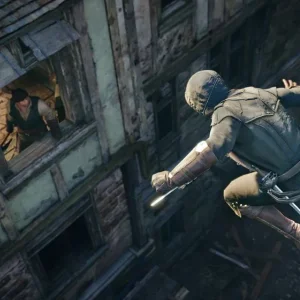
Hamburg Fast-Track Character Rigging & Motion Capture for Game Development
Accelerated asset pipeline delivering clean combat, acrobatic, and locomotion data sets ready for immediate Unity and Unreal engine integration.
Explore Game Dev Suite →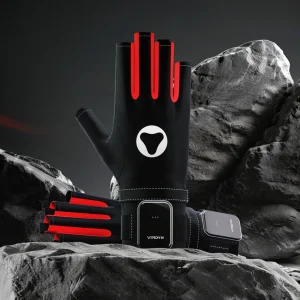
Hamburg mHand Pro: High-Density Dexterous VR & Robotic Control Gloves
Multi-node finger kinematics capturing intricate manual gestures for virtual cockpit training, assembly line simulation, and humanoid end-effector control.
Configure mHand Pro →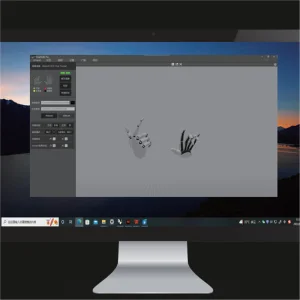
mHand Studio Software System: Hamburg Precision Biomechanical Engine
Proprietary real-time spatial solver calibrating raw flex sensor data, magnetic interference immunity, and continuous Euler angle calculation.
Discover mHand Studio →
Hamburg Virtual Film Production: High-Bandwidth ICVFX Studio Solutions
Complete camera tracking and actor capture architectures built for synchronous live rendering, virtual pre-visualization, and in-camera VFX volumes.
Plan Virtual Stage →
VDMocap Studio Plus: Hamburg Multi-Rig Synchronization Suite
Advanced desktop hub facilitating zero-latency multi-performer capture, bone retargeting, FBX cleaning, and direct network streaming to Unreal Live Link.
Download Suite Specs →
Hamburg Interactive Academic & Medical Training Avatar Suites
Immersive spatial capture systems empowering universities, medical schools, and technical colleges with lifelike animated avatars for remote education.
Explore Academic Kits →
Hamburg Agency Advertising VFX: Photorealistic CGI Motion Tracking
High-speed motion capture tools tailored for fast-paced commercial production houses creating hyper-realistic visual effects and digital hero assets.
View Advertising Specs →
Hamburg Virtual Brand Spokesperson: Live Omnichannel Mascot Solution
End-to-end interactive digital presenter setups designed for live commercial broadcasts, retail pop-ups, and corporate metaverse appearances.
Deploy Brand Persona →Frequently Asked Engineering & Procurement Questions
Comprehensive answers addressing calibration stability, environmental interference, latency overhead, and European standards compliance.
Industrial settings in Hamburg, like aircraft assembly hangars, exhibit strong parasitic infrared reflections from polished aluminum and composite surfaces. Virdyn optical cameras utilize custom narrow-band optical bandpass filters matched exactly to our 850nm or 940nm active strobes, paired with dynamic software intensity thresholding and algorithmic ray-rejection filters that discard static non-correlated specular flashes.
Yes. Standard passive retro-reflective setups struggle with sunlight saturation. For facilities featuring skylights or expansive windows along the Elbe River, we integrate modulated active LED markers or high-power 940nm wavelength strobe arrays paired with electronic global shutter exposure times down to 10 microseconds, effectively suppressing ambient sunlight while maintaining crisp marker isolation.
Under recommended gigabit PoE network architecture, the total latency from optical marker exposure to bone transform availability within Unreal Engine’s Live Link buffer is between 6.5 ms and 8.2 ms at 240 FPS. This fits well within the 16.6ms threshold required for standard 60Hz real-time broadcast and virtual production LED volume display.
Our systems process 3D spatial points directly on dedicated local edge servers. No raw biometric video streams or identifying photographic images are transferred outside your local area network (LAN). Skeletal hierarchy coordinate files (FBX/BVH) contain purely mathematical spatial vectors, which are stored and processed strictly within your on-premise, air-gapped infrastructure.
Absolutely. Our master sync hub accepts external TTL pulses, SMPTE LTC timecode, and PTP (Precision Time Protocol) clock signals. We natively interface with clinical gait analysis hardware including Kistler and Bertec force plates, Noraxon EMG telemetry systems, and common biomechanical analysis software such as OpenSim and Visual3D.
We provide structured enterprise SLA packages for German institutional buyers. This includes turnkey on-site structural installation, spatial calibration certification, staff training workshops conducted in English or German, guaranteed 24-hour engineering response windows, and rapid spare-unit hardware replacement dispatched within the European Union.
Plan Your Optical Mocap Facility with Virdyn Engineers
Whether commissioning a multi-camera virtual production volume in Altona, an aerospace human-factors testing laboratory in Finkenwerder, or a VR game capture studio in Barmbek, our systems engineers provide full volumetric simulation and technical CAD layouts tailored to your exact floorplan.