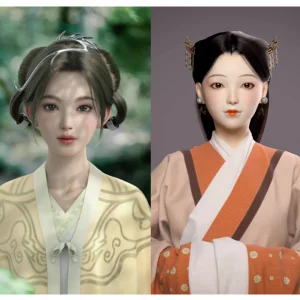
Flagship Motion Tracking Configurations for Korean Studios
Engineered for high-throughput broadcast, AAA game dev clusters in Pangyo, and K-Pop virtual concert productions requiring turnkey tracking stability.

Design Virdyn VDSuit Full for Korea Studio Full Body Inertia Motion Capture Suit Planning
Explore Suit Specifications
Best Motion Capture Technology Opens a New Era of Korean Animation & Webtoon Planning
Review Animation Pipeline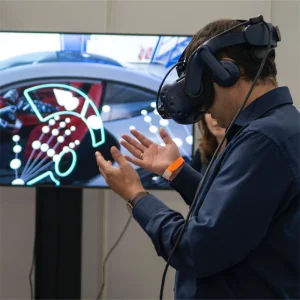
Design Book a Demo for VDSuit Full or mHand Pro Serving Korea Virtual Production
Schedule Technical Demo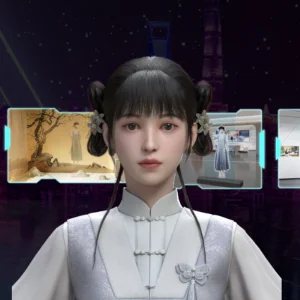
Design Virtual Human Technology: Korea Digital Idol & Brand Activation Path Planning
Analyze Virtual Idol SetupThe Precision Motion Capture Paradigm in South Korea and Global Markets
A rigorous examination of spatial computing demands, high-density optical volumes, and the intersection of embodied AI and media engineering.
South Korea's High-Velocity Media & Robotics Demand
The Republic of Korea stands as one of the most technologically concentrated entertainment and advanced robotics epicenters worldwide. Within the digital media corridors of Sangam-dong (DMC), the AAA game development powerhouses in Pangyo Techno Valley, and the burgeoning XR production clusters across Gangnam and Busan, production standards require unmatched precision. Virtual K-Pop idol groups such as PLAVE and MAVE have proven that consumer expectations in South Korea demand photorealistic biomechanics, sub-frame facial articulation, and rock-solid finger tracking during dynamic high-energy choreography.
Simultaneously, Korea's national investments in embodied artificial intelligence (Embodied AI) driven by institutes like KAIST, Seoul National University, and automotive/robotics giants have shifted mocap from an animation specialty into a foundational tool for synthetic dataset generation. Human demonstration data, collected through optical and hybrid sensor stages, is now the primary fuel for training teleoperated humanoid actuators and dexterous end-effectors.
Global Shift: Optical Rigidity Meets Hybrid Agility
Globally, legacy optical motion capture systems have historically imposed high barriers to entry: massive architectural overhead, vulnerability to reflective occlusion, sensitive optical calibration drift, and exorbitant maintenance contracts. As production timelines contract across North America, Japan, Europe, and Korea, enterprise studios are adopting modern optical mocap layouts that seamlessly merge passive retroreflective marker arrays with active multi-sensor inertial fusion.
This hybrid approach guarantees that should an optical marker suffer occlusion during intense stunt work, prop interactions, or dense multi-performer group staging, the inertial IMU data bridge maintains rotational continuity without skeletal pop or drift. For Korean game studios and VFX facilities operating on aggressive publishing cycles, this eliminates hundreds of manual clean-up hours in post-production.
Chinese Manufacturing Velocity & Hardware Engineering Synergies
Combining world-class optoelectronic fabrication with agile algorithmic iteration for Korean procurement teams.
Optoelectronic Precision Assembly
Our Guangzhou manufacturing center integrates surface-mount technology (SMT) with automated optical inspection (AOI), producing custom stroboscopic IR LED rings, gigabit Ethernet transceivers, and military-grade IMU sensor assemblies under ISO9001 controls.
Aggressive TCO & Component Availability
By controlling tooling, sensor calibration rigs, fabric weaving for sensor suits, and lens assembly in-house, Virdyn eliminates tiers of global re-distributor markups, passing 40%–60% total cost of ownership (TCO) savings directly to Korean enterprises.
Rapid Geographic Logistics (24–48h)
Proximity between our production bases and Incheon/Busan logistics ports ensures emergency hardware component turnaround, custom truss mounting replacements, and specialized marker kits arrive at Korean studios within 2 business days.
Engineered for Korea's Specialized Digital Workflows
From K-Pop stage tracking to advanced bio-mechanical robotics research.
-
Virtual Idol Staging & Live Concerts (VTubing 3.0): Korean broadcast networks and management agencies deploy our optical-inertial rigs for simultaneous 4-to-6 idol group choreography tracking, maintaining millimeter hand and hip separation during rapid complex dance routines.
-
Webtoon-to-3D Animation Pre-visualization: Seoul webtoon studios converting static manhwa intellectual property into 3D cinematic series utilize turnkey mocap stages to quickly record character blocking, stunt combat, and emotive gestures directly into Maya and Blender.
-
LED Volume Virtual Production (In-Camera VFX): Synchronized with camera tracking heads via SMPTE timecode genlock, our optical configurations track actors inside high-brightness LED stages in Sangam-dong without infrared feedback wash out or frame jitter.
-
Embodied AI & Humanoid Teleoperation: Supplying Korea's robotics laboratories with dexterous hand teleoperation data (via mHand Pro) and upper-body demonstration vectors to train neural reward policies for industrial automation and bipedal locomotion.
-
Sports Medicine & K-League Biomechanics: High-speed 240 FPS optical marker tracking deployed in clinical gait laboratories and elite athletic rehabilitation institutes throughout Seoul for kinematic angular acceleration and ground-force vector modeling.
-
Defense & Tactical Simulation: Full-scale virtual battlefield environments simulating joint-forces operations with sub-millimeter positional fidelity for defense contractors in Daejeon.
Enterprise Motion Capture Architectural Specification Matrix
A systematic breakdown for Chief Technology Officers, Technical Directors, and Procurement Officers.
| Evaluation Parameter | Virdyn Optical Solution | VDSuit Full Inertial | Hybrid Optical-Inertial Pipeline |
|---|---|---|---|
| Primary Tracking Mechanism | Multi-camera IR retroreflective stroboscopy | 9-Axis industrial IMU fusion arrays | Synchronized Optical Markers + IMU nodes |
| Spatial Positional Precision | Sub-millimeter (< 0.3mm global volume) | Algorithmic dead-reckoning + floor clamping | Absolute optical translation + IMU rotational lock |
| Setup Time & Footprint | Dedicated truss, calibrated volume required | 5-minute wearable deployment, any room | 15-minute stage calibration, small/medium volumes |
| Occlusion Vulnerability | Sensitive when line-of-sight is blocked | 100% immune to visual line-of-sight occlusion | Continuous tracking; IMU fills missing optical rays |
| Real-Time Pipeline Latency | < 5ms camera pipeline to network socket | < 15ms wireless 2.4G/5G transceiver latency | < 8.5ms unified fused telemetry buffer |
| Target Deployments in Korea | Broadcast VFX stages, biomechanics labs | Indie gaming studios, field VTubers, live roadshows | AAA Game studios, Virtual Idol concerts, Humanoid AI |
Frequently Asked Questions for Korean Engineering Teams
Direct technical answers addressing integration, latency, calibration, and cross-border commercial terms.
How does Virdyn support Unreal Engine 5 Live Link for Korean studios?
Virdyn maintains native plugins for UE 5.1 through 5.4+. Our SDK transmits bone transforms, rotational quaternions, and facial blendshapes via direct UDP sockets into Live Link, enabling zero-remapping live viewport playback for real-time virtual production.
Can the optical setup handle heavy multi-actor stage congestion?
Yes. By pairing our optical tracking algorithms with kinematic skeleton constraint solvers and optional IMU anchor tags, our system resolves marker swaps and actor crossovers even during complex stunt wrestling or multi-member K-Pop dances.
What is the delivery and on-site deployment timeline for Seoul or Busan?
Standard optical and inertial systems are dispatched from our factory within 5–7 business days, with air freight reaching Incheon within 48 hours. We offer on-site calibration assistance or full remote video-guided commissioning with dedicated engineering support.
Are C++ and Python SDKs accessible for Korean AI and robotics labs?
Yes. We provide complete, unrestricted SDK access with low-level C++ and Python wrappers, ROS/ROS2 bridge nodes, and raw orientation/quaternion/positional data streams specifically intended for embodied AI robotics teleoperation.
Enterprise Capture Systems, Software Suites & Digital Solutions
Complete your motion tracking production environment with specialized gloves, tracking software, and digital human integration suites.
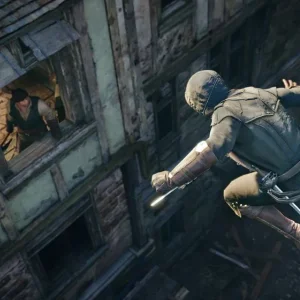
Design Inertial Motion Capture Technology to Accelerate Korea Game Development Pipelines
Inspect Game Dev Tool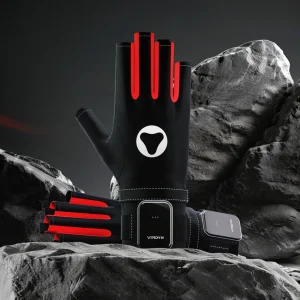
Best Virdyn mHand Pro Inertia Motion Capture Gloves for Korea VR & Robot Teleoperation
Inspect Glove Specs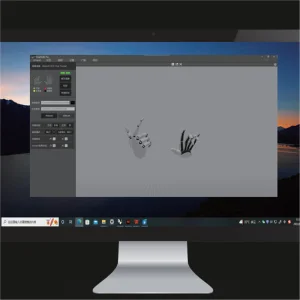
Best Virdyn mHand Studio Motion Capture Gloves Software System Serving Korean Labs
Review Studio Software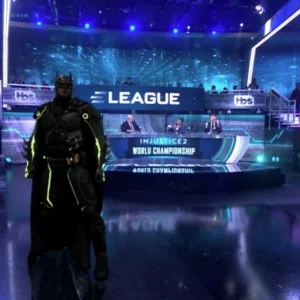
Design Motion Capture Advanced Tools for Korea Virtual Film & In-Camera VFX Production
Explore Film Pipeline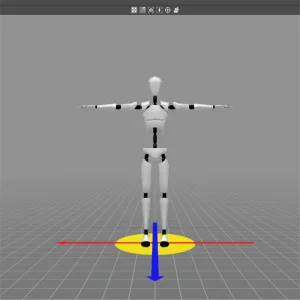
Design Virdyn VDMocap Studio Plus Capture Software System for Korea VDSuit Full Deployments
Analyze VDMocap Plus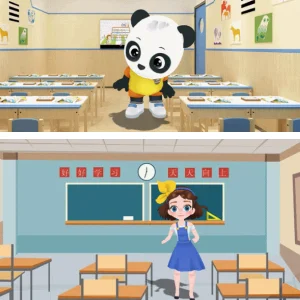
Best Virtual Live Technology Empowerment for Korea EdTech, Interactive Learning & VTubers
Inspect EdTech Solutions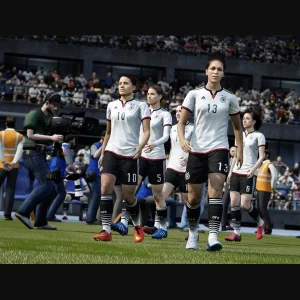
Design Motion Capture Technology for Korea High-Impact Creative Advertising & VFX
Review Advertising Specs