Featured Motion Capture Platforms for US Productions
Turnkey tracking suits, multi-camera arrays, and digital actor activation kits optimized for North American production schedules and real-time Unreal Engine pipelines.
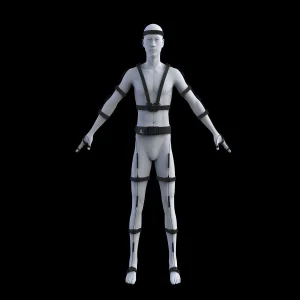
Design Virdyn VDSuit Full: Full Body Inertial Mocap Suit Architecture in United States
Explore VDSuit Full
Advanced Optical Mocap Technology for US Game Studio Animation Development
View Animation Solutions
Book an On-Site or Virtual Optical Mocap System Demo in North America
Schedule Live Demo
Photoreal Digital Human Activation & Brand Storytelling Solutions (US)
Discover Virtual HumanState of Optical Motion Capture in the United States
The North American spatial computing, entertainment, and advanced robotics sectors represent the world's most rigorous testing ground for optical tracking systems. High throughput, zero frame latency, and multi-protocol synchronization dictate production readiness.
Hollywood & Atlanta ICVFX Stages
Modern visual effects facilities in Southern California and Georgia rely heavily on rigid camera-tracking optical rings synchronized with LED volumes. Systems must deliver spatial accuracy down to sub-millimeter tolerances to eliminate parallax shearing in frustum rendering.
Silicon Valley, Seattle & Austin Game Dev
AAA game developers throughout Texas, Washington, and Northern California are moving toward automated batch-solving workflows. High-volume studios demand optical rigs capable of handling dual-performer combat, props, and facial telemetry simultaneously with zero marker swaps.
Embodied AI & Humanoid Robotics (Boston/SF)
The explosive growth of embodied artificial intelligence in Massachusetts and Silicon Valley requires precise ground-truth optical tracking to train neural teleoperation networks, calibrate robotic grasp tolerances, and validate dynamic bipedal locomotion.
Tracking Modalities Comparison: Optical vs. Hybrid Inertial
A clear technical assessment based on studio construction cost, deployment velocity, occlusion vulnerability, and production throughput across North America, Europe, and Asia-Pacific markets.
| Evaluation Parameter | High-Density Passive Optical | Active LED Optical Tracking | Virdyn Hybrid Optical-Inertial Solution |
|---|---|---|---|
| Spatial Position Accuracy | Extreme sub-millimeter (0.1mm - 0.3mm) | High precision (0.2mm - 0.5mm) | Industrial millimetric fused position |
| Occlusion Resilience | Vulnerable in dense ground fights / props | Moderate; ID blinking aids recovery | Immune (IMU nodes maintain continuous joint data) |
| Studio Construction & Rigging | Permanent truss, heavy cabling, rigid walls | Permanent truss, synchronized wiring | Minimal truss; adaptable to multi-use office stages |
| Performer Setup Time | 25–45 minutes (tight retro suit + markers) | 20–35 minutes (wired active nodes) | 5–10 minutes (strap-and-go calibration) |
| Capital Investment (US Market) | $120,000 – $450,000+ | $95,000 – $300,000 | $15,000 – $65,000 (Highest ROI for mid-tier studios) |
| Post-Processing Cleanup Time | Significant marker gap filling required | Moderate marker swap remediation | Near-zero cleanup via real-time algorithmic fusion |
Engineered Scenarios Tailored to United States Industry Demands
From defense biomechanics to live brand broadcasts, modern spatial studios require modularity, ruggedness, and complete integration with native US tech stacks.
Aerospace & Defense Virtual Proving Grounds
Contractors in Alabama, Texas, and Virginia implement optical capture grids for cockpit ergonomics evaluation, tactical ingress/egress validation, and dismounted warfighter VR simulation. Multi-actor tracking volumes simulate field conditions with extreme spatial fidelity.
Clinical Biomechanics & Sports Science
North Carolina and Colorado Olympic performance centers utilize high-frequency camera clusters to analyze MLB pitching kinetics and NFL ACL injury dynamics. High-speed synchronized force-plate data integrates with optical marker trajectories at up to 480 Hz.
Next-Gen Metaverse Live Broadcast & VTubing
Digital talent agencies in New York and Los Angeles conduct daily multi-hour live broadcasts with hyper-responsive avatars. Instant zero-drift hand articulation, facial blendshapes, and continuous skeletal tracking ensure frictionless broadcast streaming to YouTube, Twitch, and VRChat.
Technical Roadmap: Optical Tracking Evolution (2025–2030)
How emerging AI neural solvers, Gaussian Splatting, and sensor fusion are redefining capture pipelines across modern US studio installations.
Phase 1: AI-Enhanced Occlusion Solving
Deep learning transformer models embedded into tracking servers now predict obstructed markers instantaneously. Joint rotational trajectories are solved by cross-referencing anatomical constraint libraries, eliminating traditional frame dropping.
Phase 2: Hybrid Volumetric & Markerless Fusion
Studios are pairing optical tracking cameras with RGB neural depth fields. The fusion of skeletal point clouds with surface 3D Gaussian splatting delivers real-time actor mesh deformation without extensive post-production cloth simulation.
Phase 3: OpenUSD & Edge Cloud LiveLink
Legacy proprietary formats are being phased out. Modern pipelines stream live actor skeletons via WebRTC/OpenUSD protocols directly to remote rendering farms across North America, enabling distributed collaborative direction in real time.
Frequently Asked Questions: Optical Mocap Stage Planning
Direct answers to core architectural, optical calibration, budget, and software questions common among US technical directors and studio managers.
What room dimensions are required for a standard optical mocap volume in the US?
For single-actor full-body movements with dynamic jumps, a minimum volume of 20ft × 20ft × 10ft (6m × 6m × 3m) is recommended. Multi-actor stunt pipelines or ICVFX camera volumes require at least 40ft × 30ft × 16ft to ensure proper sightline triangulations and eliminate lens edge distortion.
How does ambient lighting and LED wall reflections impact optical IR systems?
High-brightness LED walls and tungsten stage fixtures emit near-infrared noise that can blind standard 850nm passive markers. In US Virtual Production volumes, engineers utilize narrow-band optical bandpass filters (e.g., 940nm) or active pulsing synchronized LEDs to isolate tracking markers completely from ambient stage wash.
Can Virdyn motion capture suits integrate directly with Unreal Engine 5.4+ LiveLink?
Yes. Virdyn hardware streams skeletal transformations directly via zero-latency UDP/TCP LiveLink plugins. You can map joint rotations instantly to MetaHuman rigs, retarget on the fly, and record animation data directly into the Unreal Engine Take Recorder alongside timecode metadata.
What is the typical deployment turnaround for a turnkey mocap stage in the USA?
A hybrid inertial-optical configuration can be operational within 1 to 2 business days of equipment delivery, as it avoids complex structural trussing. Full multi-camera passive optical stages typically require 3 to 6 weeks, covering electrical drop isolation, structural load engineering, and volumetric calibration.
Comprehensive Motion Capture Systems & Software Solutions
Precision data gloves, full-body kinematics suits, professional solve platforms, and live broadcast packages built for rapid integration into commercial production studios across the United States.
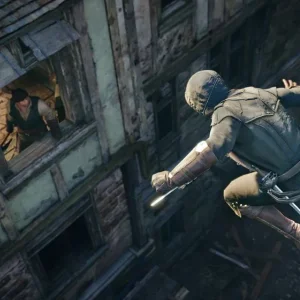
Game Dev & Cinematics Inertial Solution: Studio Planning (United States)
View Game Solutions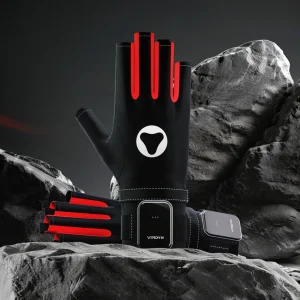
Best Virdyn mHand Pro: High-Precision Dexterous Gloves for VR & Robotics (US)
Explore mHand Pro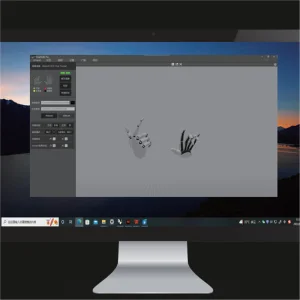
Virdyn mHand Studio: Articulated Finger Solver & Retargeting System
View mHand Studio
Virtual Film Production Mocap Tools: Hollywood & Indie Previs Planning
Film Production Tools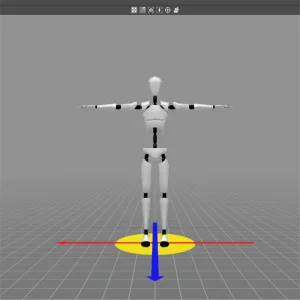
VDMocap Studio Plus: Real-Time Engine Streaming & Data Solve Platform
Discover Studio Plus
Virtual Interactive Education & Immersive EdTech Studio Architecture (US)
EdTech Solutions
Creative Advertising & Commercial VFX Motion Capture Planning (USA)
Advertising Solutions