
Core Mocap Engineering Deployment Units
Validated multi-sensor tracking modules configured for seamless integration into real-time pipeline nodes across Greater Sydney studio stages and biomechanics research corridors.
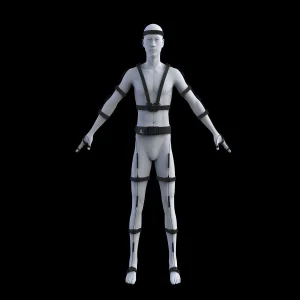



The Sydney Motion Capture Landscape: Demand Drivers Across NSW
Sydney stands as the creative, biomedical, and deep-tech epicentre of the Asia-Pacific territory. From the thriving film production hubs in Moore Park to the university-backed biomedical precincts in Camperdown and Randwick, the demand for optical tracking architecture is experiencing profound diversification.
Virtual Production & Moore Park Studios
New South Wales continues to attract international Tier-1 blockbuster film investments. Traditional green-screen post-production workflows have pivoted permanently toward in-camera visual effects (ICVFX) using massive LED volumes. Optical tracking camera arrays demand sub-millimeter frustum synchronisation, providing spatial camera poses and skeletal character inputs with less than 5ms latency to prevent parallax distortion.
Biomedical Analysis & Elite Sports Science
Clustered around the University of Sydney, UNSW, and the Australian Institute of Sport satellite clinics, sports science researchers require pristine kinematic data. Optical motion capture serves as the ground-truth standard for quantitative gait analysis, joint torque simulation, cruciate ligament rehabilitation analysis, and bespoke aerodynamic ergonomics for Olympic and Paralympic squads.
Defense & Mining Industrial Simulation
Sydney's proximity to major maritime defense infrastructure and multinational engineering consultancies fuels procurement of ruggedized spatial tracking systems. Applications encompass synthetic pilot training, hazardous subsea robotics teleoperation, and immersive digital twin simulations for heavy mining equipment operational drills.
Sydney Technical Infrastructure Challenge: Spatial Constraints & Calibration Drift
Commercial commercial rents across Sydney's Inner South (Alexandria, Waterloo, Surry Hills) limit studios from constructing 250m² unencumbered optical volumes. Consequently, our hybrid planning integrates active-marker optical clusters with IMU sensor networks to achieve uncompromised positional certainty in compact production stages.
Global Motion Tracking Trends & Institutional Procurement
Studio executives and institutional buyers are no longer looking at motion capture as an isolated craft tool; it is now viewed as an infrastructural compute pipeline feeding automated intelligence and digital content assets.
Convergence of Sensor Modalities
The historical divide between pure optical marker-based volume capture and wearable inertial sensors has dissolved. Enterprise pipelines employ hybrid sensor-fusion solvers to negate marker occlusion in complex multi-character close-quarters combat scenes.
Embodied AI & Humanoid Training
Advanced robotics teams are the newest power buyers of mocap. Humanoid teleoperation models require terabytes of high-density kinematic datasets to train reinforcement learning neural networks for bipedal balancing and dexterous manipulation.
Procurement CAPEX Rationalisation
Global economic pressures demand shorter ROI windows. Studios reject single-purpose, multi-million-dollar turn-key studio monopolies in favor of modular, open-architecture tracking units that can be redeployed across outdoor sets, mobile labs, and studio soundstages.
Open Protocol Standardisation
Modern enterprise stacks mandate direct live-streaming via standard OSC protocols, Live Link into Unreal Engine 5.4+, and native support for USD (Universal Scene Description) environments, eliminating vendor-locked file packaging.
China Factory 4.0: Supply Chain Agility & Hardware Resilience
Our Guangzhou precision manufacturing base operates under Industry 4.0 automation, fusing rapid electronic prototyping, localized micro-machining, and high-tolerance optoelectronic QA. This agile vertically-integrated model provides Australian enterprise clients with unmatched economic durability and speed-to-market.
End-to-End In-House R&D Loop
Unlike integrators who rebrand third-party OEM sensors, our Guangzhou facility engineers the circuit topologies, writes sensor fusion firmware, and compiles the real-time kinematic solver engine. This guarantees zero software-hardware finger-pointing when unexpected pipeline anomalies arise.
Component Level Supply Chain Resilience
Located in the heart of China’s high-tech manufacturing delta, our supply chains maintain triple-redundancy sourcing on high-precision 9-axis MEMS inertial measurement units, optical sensors, and FPGA image pre-processors, ensuring stable wholesale lead times under four weeks.
Precision Robotic Calibration Cells
Every IMU sensor module and optical tracking lens assembly undergoes automated multi-axis rotational temperature chamber testing. Sensors undergo thermal stabilization cycles from -10°C to +50°C, verifying magnetic immunity and reducing zero-g offset drift to negligible thresholds.
Comparative Engineering Analysis for Sydney Studios
A strategic capability breakdown assisting technical directors, lead animators, and biomechanics researchers in selecting the right tracking paradigm for their spatial environment.
| Evaluation Parameters | Pure Optical Marker Capture | Inertial Suit Capture (VDSuit) | Hybrid Optical-Inertial (Virdyn Solution) |
|---|---|---|---|
| Capture Volume Flexibility | Fixed structural truss required; strictly calibrated perimeter. | Infinitely mobile; works indoors, outdoors, confined cockpits. | Adaptive; optical zero-point reference + wearable IMU continuity. |
| Occlusion Vulnerability | High risk; props, character grappling cause marker dropouts. | Zero occlusion; internal algorithmic joint solving. | Mitigated; IMU instantly fills tracking data during camera occlusion. |
| Absolute World Coordinate Accuracy | Sub-millimeter baseline tracking precision. | Biomechanical relative precision; spatial drift over prolonged takes. | Sub-millimeter world anchors with drift-free spatial continuity. |
| Setup Time & Calibration Overhead | 45–90 mins (Wand waving, corner squaring, marker auditing). | Under 5 minutes (One-click T/A-pose neutral calibration). | 5–10 minutes total studio alignment procedure. |
| Deployment CAPEX in Sydney ($AUD) | $150,000 – $400,000+ (High camera count + spatial construction). | $10,000 – $25,000 (Low barrier, self-contained suite). | Optimized modular deployment saving 60% relative to pure optical stages. |
Sydney Production Case Scenarios: Delivering Information Gain
Actionable engineering solutions tailored specifically to overcome geographic, real-estate, and logistical limitations across the Sydney metropolitan sector.
Surry Hills Indie Game Development Hubs
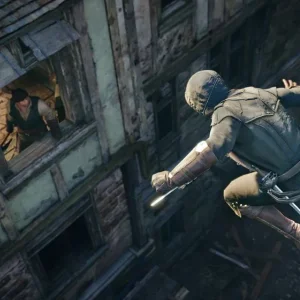
Sydney's gaming startups face tight space constraints. Our inertial-optical workflows allow developers to record full action combat packs, parkour stunts, and narrative cinematics directly inside open-plan co-working spaces without setting up heavy optical truss networks.
Pyrmont Corporate Live-Streaming & VTubing
Marketing and media agencies are pivoting toward automated digital avatars and real-time metaverse interaction. Our low-latency streaming stack enables instantaneous avatar driving into Unreal Engine and Unity, providing broadcast-grade social activations with zero post-processing delay.
Kensington Robotics Teleoperation & Haptics
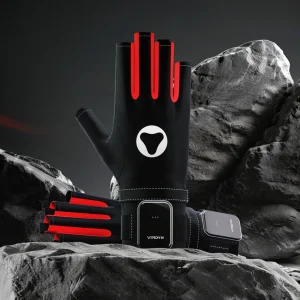
Robotics departments train autonomous manipulators using mHand Pro gloves and egocentric optical nodes. This captures delicate human finger dynamics, tactile feedback, and hand joint torques for robotic teleoperation and synthetic intelligence model ingestion.
Enterprise Optical & Inertial Hardware Ecosystem
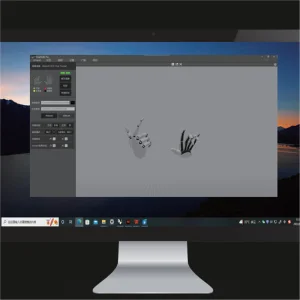
The complete hardware, software, and capture portfolio deployed by studios, research universities, and enterprise labs worldwide.


Frequently Asked Architectural Questions
Detailed technical responses resolving engineering, procurement, and environmental implementation queries in Sydney and regional Australia.
How does Virdyn tackle Sydney urban studio spatial limitations compared to pure optical rigs?
What protocols exist for Unreal Engine 5.4 Live Link and virtual production camera tracking?
How does electromagnetic interference (EMI) affect IMU tracking in concrete Sydney skyscrapers?
What are the lead times and warranty protocols for Australian institutional buyers?
Can Virdyn motion capture hardware teleoperate robotic hands and humanoid systems?
Design Your Sydney Motion Capture Stage Today
Consult with our technical engineers to plan an optical, inertial, or hybrid motion capture setup engineered specifically for your studio volume, software pipeline, and research parameters.