
Precision Motion Capture Solutions for Nordic Workflows
Enterprise-grade hardware kits optimized for immediate integration with Unreal Engine 5 Live Link, Unity, Autodesk MotionBuilder, and ROS2 industrial teleoperation stacks across Sweden.
-
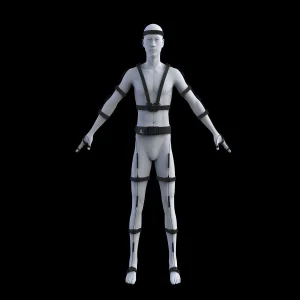
Design Virdyn VDSuit Full: Full Body Inertial Mocap Suit for Sweden Studio Pipelines
Explore Sweden Solution -

High-Precision Optical-Inertial Hybrid Architecture for Stockholm Animation Studios
Explore Sweden Solution -
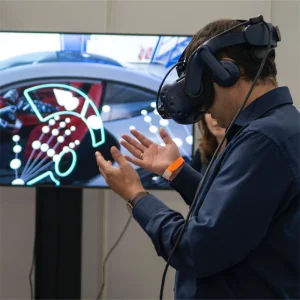
Book a Sweden Enterprise Demonstration: VDSuit Full & mHand Pro Calibration
Explore Sweden Solution -

Virtual Human & Autonomous Digital Twin Activation for Nordic Interactive Media
Explore Sweden Solution
Optical Motion Capture in the Swedish Industrial Ecosystem
Strategic deployment analysis across Sweden's unique industrial clusters: from world-class game development in Stockholm to heavy-vehicle human factor engineering in Gothenburg and clinical gait analytics in Skåne.
Stockholm AAA Interactive Cluster
Sweden punches vastly above its weight in global gaming. With luminaries like DICE, Avalanche Studios, Fatshark, and Embark Studios operating out of Stockholm and Uppsala, demand has shifted toward dense multicamera retro-reflective optical volumes capable of capturing high-velocity acrobatics, multi-actor combat routines, and simultaneous prop interaction with zero rotational latency.
Gothenburg Automotive Ergonomics
Driven by Volvo Group, Volvo Cars, Polestar, and the Lindholmen Science Park hub, Gothenburg is the Scandinavian center for automotive Human Factors & Ergonomics (HFE). Optical mocap is deployed directly into physical automotive mockups to track ingress/egress biomechanics, cockpit control reach envelopes, and assembly-line musculoskeletal stress using RAMSIS and digital human modeling software.
MedTech & Biomechanical Gait Analysis
Centering around Karolinska Institutet in Solna and Lund University in Skåne, clinical biomechanists require absolute spatial truth data down to <0.1mm. High-frame-rate infrared optical cameras (240 FPS to 500 FPS) synchronized with force plates and wireless EMG sensors form the backbone of cerebral palsy movement studies, elite winter sports optimization, and prosthetic design validation.
Macroeconomic Factors Shaping Nordic Optical Mocap Procurement
Swedish enterprises are subject to stringent collective labor safety frameworks (Arbetsmiljöverket) and demanding digital production timelines. Historically, legacy European and American optical installations required capex investments exceeding 300,000 EUR per volume, accompanied by restrictive annual software maintenance contracts. The contemporary Nordic procurement strategy prioritizes open SDK architectures, vendor-agnostic pipeline integration (supporting USD, FBX, BVH, and glTF), and hybrid capabilities that merge optical precision with the operational flexibility of inertial sensor fusion.
Optical vs. Inertial vs. Hybrid Tracking: Architecture Matrix
A comprehensive architectural breakdown designed for Chief Technology Officers and Lead Systems Engineers planning specialized mocap stages across Sweden and northern Europe.
| Evaluation Parameter | Passive Optical (Retro-Reflective) | Active Optical (Modulated NIR) | Inertial Multi-Node (IMU) | Hybrid Optical-Inertial (Virdyn) |
|---|---|---|---|---|
| Spatial Positional Truth | Sub-millimeter absolute (0.1–0.3 mm) | Sub-millimeter absolute (0.15–0.4 mm) | Kinematic dead-reckoning (Drift prone) | Absolute Anchor + Zero Drift |
| Severe Occlusion Immunity | Degrades if markers blocked | Software marker identification helps | 100% immune to visual occlusion | Continuous Joint Tracking |
| Calibrated Capture Volume | Rigidly restricted to camera cone | Rigidly restricted to camera cone | Unbounded (Indoor/Outdoor/Anywhere) | Dynamic handoff beyond camera volume |
| Set-up & Calibration Time | 60–90 min (Wand, L-frame, masking) | 45–60 min (Active ID sync) | 3–5 min (Suit donning + Neutral pose) | 10 min (Rapid unified frame sync) |
| Electromagnetic Resilience | Immune to ferrous metals / EMF | Immune to ferrous metals / EMF | Requires dynamic anti-drift fusion | Optical calibration resets IMU drift |
| Total Cost of Ownership (TCO) | Extreme Capex (150k€–400k€) | High Capex (120k€–300k€) | Ultra-Low Capex / Minimal overhead | Optimal Enterprise Value |
Overcoming Traditional Optical Marker Occlusion
The cardinal limitation of traditional optical capture systems in Swedish automotive prototyping and multi-character gaming combat is marker occlusion. When an actor sits inside a steel chassis or two performers grapple on the floor, line-of-sight between retro-reflective passive spheres and high-mount cameras is broken, causing catastrophic skeletal collapse or hours of manual post-capture cleaning.
Virdyn's optical planning methodologies solve this via Extended Kalman Filter (EKF) Multi-Sensor Fusion. When optical markers are occluded, our pipeline automatically switches joint degrees-of-freedom to 9-axis inertial orientation tracking nodes, maintaining smooth, biologically constrained movement until camera visibility is re-established.
Engineering Checklist for Swedish Stage Planners
- Strobe Synchronization: PTP (IEEE 1588) sub-microsecond synchronization to eliminate rolling-shutter artifacts.
- Acoustic & HVAC Isolation: Rigorous calibration volume temperature stabilization to counter Swedish winter thermal drift.
- Pipeline Protocol Support: Direct zero-copy VRPN, OSC, FBX streaming, and Live Link protocols into Unreal Engine 5.4+.
China Factory 4.0: Supply Chain Resilience & Efficiency
Bridging Scandinavian precision design requirements with the unmatched manufacturing velocity, vertical integration, and cost efficiencies of Guangzhou's high-tech industrial base.
High-Density Sensor SMT & Automated Multi-Axis Calibration
Every motion tracking system engineered by Virdyn is born from a Tier-1 Industry 4.0 fabrication pipeline in Guangzhou. Rather than outsourcing sensor assembly to disconnected third parties, our proprietary facility integrates surface-mount technology (SMT), clean-room lens alignment, and automated robotic goniometer calibration under one unified roof.
Each IMU node and optical tracking cluster undergoes a 72-hour burn-in thermal cycle, simulating temperature fluctuations from -10°C to +50°C. Multi-axis robotic arms subject every sensor to predictable angular velocity matrices, calibrating zero-bias drift, sensitivity scales, and non-orthogonalities directly into internal non-volatile EEPROM memory.
The Nordic Supply Advantage
Swedish technical buyers face high import friction and inflated distributor margins with legacy Western vendors. Virdyn delivers direct-from-factory agility: replacement parts, customized mounting brackets, and specialized marker configurations dispatched via express logistics to Arlanda or Landvetter within 48 to 72 hours.
60% Capex Optimization with Zero Precision Compromise
By controlling both optoelectronic component sourcing and algorithm development in-house, Virdyn decouples high-precision tracking from predatory enterprise pricing structures. Studios acquire complete, turnkey multi-camera optical setups or hybrid inertial systems at a fraction of legacy Western capex requirements.
Full Custom OEM/ODM Capabilities for Scandinavian Labs
From custom carbon-fiber mounting rigs tailored to Volvo vehicle frames to specialized miniature active optical markers for microsurgical robotic arm teleoperation, our rapid prototyping shop in China turns customized CAD specifications into functional CNC-milled hardware in less than 14 business days.
Tailored Application Architecture for Swedish Industry Verticals
Engineered technical solutions built to address the exacting operational requirements of Nordic engineering teams, game directors, and clinical researchers.
Stockholm Game Dev: Real-Time Combat & Cinematics
Deployment: 16-Camera Optical Array + mHand Pro Inertial Gloves + Unreal Engine 5.4 Live Link.
Outcome: Captures high-frequency weapon handling, martial arts tumbling, and nuanced finger articulation without line-of-sight dropouts. Generates production-ready FBX takes with clean solver graphs, eliminating up to 80% of secondary keyframe cleanup.
Gothenburg Automotive: Ergonomics & Ingress Testing
Deployment: Hybrid Active Marker Cage + VDSuit Full internal chassis tracking.
Outcome: Solves line-of-sight obstruction when the subject enters the vehicle cockpit. Precisely quantifies driver sightlines, lumbar deflection, reach envelopes, and steering wheel reachability in full conformity with Swedish ergonomic standards.
Nordic Embodied AI: Humanoid Teleoperation
Deployment: VDEgo Egocentric Vision + mHand Pro Haptic Teleoperation + VDRobot Studio.
Outcome: Captures high-frequency human manipulation demonstrations to train imitation learning neural networks (Diffusion Policy, ACT) for Swedish industrial automation and service robotics initiatives.
Frequently Asked Questions: Sweden Optical Mocap Deployments
Detailed technical, regulatory, and logistics answers compiled by our senior applications engineering team.
How does Virdyn resolve marker occlusion inside vehicle mockups in Swedish automotive tests?
Are Virdyn mocap products fully certified under European CE and Swedish EMC regulations?
How does cold and dry Scandinavian winter air affect optical mocap stage calibration?
Can Virdyn motion data stream directly into Unreal Engine 5 and Unity with zero retargeting delay?
What is the standard delivery timeline and support infrastructure for clients in Sweden?
Complete Motion Capture Hardware & Software Portfolio
Explore our comprehensive lineup of precision inertial mocap suits, multi-node gloves, specialized software suites, and virtual broadcast production tools customized for the Scandinavian market.
-
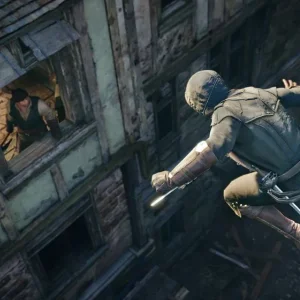
Design Inertial Mocap Systems for Swedish Game Studios & Indie Devs
Explore Sweden Solution -
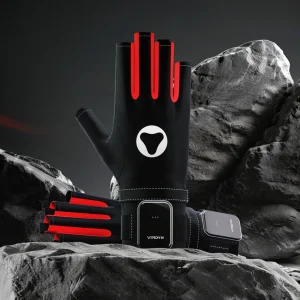
Best Virdyn mHand Pro: High-Fidelity Data Gloves for Nordic VR Research
Explore Sweden Solution -
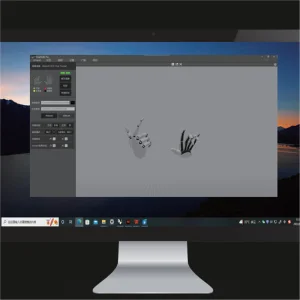
Best Virdyn mHand Studio: Multi-Node Teleoperation & SDK Architecture
Explore Sweden Solution -
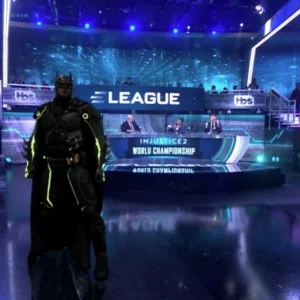
Virtual Production & Film VFX Mocap Stage Integration in Stockholm
Explore Sweden Solution -
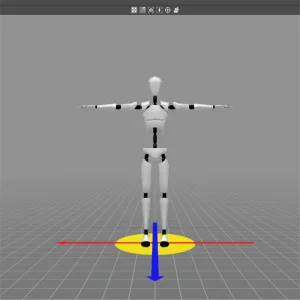
VDMocap Studio Plus: Real-Time Multi-Actor Processing & Solver Suite
Explore Sweden Solution -

Virtual Interactive Pedagogy & XR Live Streaming Solutions for Sweden
Explore Sweden Solution -

Creative Advertising & Hyper-Realistic Commercial Animation Mocap
Explore Sweden Solution -

Virtual Brand Ambassador & Metaverse IP Activation for Nordic Markets
Explore Sweden Solution
Architect Your Sweden Optical Mocap Stage Today
Connect with Virdyn's senior systems engineers to review volume floor plans, camera sightline simulations, and hybrid sensor calibration requirements tailored to your facility.
Send Inquiry Now