
Precision Motion Tracking Equipment for Osaka Enterprises
Engineered for seamless integration across game engineering pipelines, robotic tele-manipulation cells, and virtual production volume stages throughout Osaka, Kyoto, and Kobe.
-
 Explore Osaka Solution
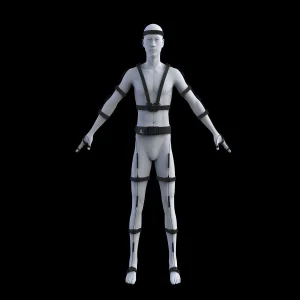
Osaka Precision Engineering: Virdyn VDSuit Full-Body Inertial Kinetic Architecture
-
 Explore Osaka Solution
Kansai Creative Studios: Next-Gen Optical & Inertial Animation Production Pipelines
-
 Book Osaka Demo
On-Site Osaka Lab Demo: VDSuit Full & mHand Pro Hardware Evaluation Request
-
 Explore Osaka Solution
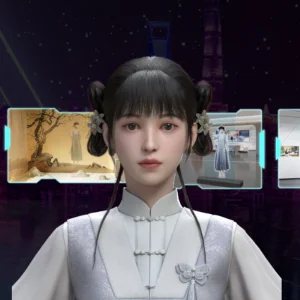
Expo 2025 Osaka Digital Human & Real-Time Interactive Avatar Spatial Deployment
The Osaka Dynamic: Kansai's Convergence of AAA Gaming & Robotic Intelligence
Osaka serves as the industrial engine and creative epicenter of Western Japan. From legendary game development headquarters to pioneering humanoid robotics laboratories at Osaka University, motion capture infrastructure is transitioning from a specialized film novelty to a critical operational asset.
The Umeda & Namba Creative Nexus
Osaka houses titan game studios such as Capcom, PlatinumGames, and SNK, alongside a dense network of Tier-1 digital art houses. Character rigging pipelines require absolute skeletal trajectory fidelity without drift to streamline Unreal Engine 5.4 Nanite and MetaHuman setups.
- High-density actor interaction capture for fighting games.
- Elimination of manual clean-up passes via automated occlusion solvers.
- Native export topologies for MotionBuilder, Maya, and custom engine formats.
Embodied AI & Robotics Teleoperation
Collaborating with academic research labs across Osaka University (Handai) and Keihanna Science City, optical mocap provides 6DoF sub-millimeter ground truth calibration for bipedal balancing algorithms and teleoperated robotic manipulation.
- Sub-millimeter tracking of end-effectors and multi-articulated grippers.
- Real-time ROS2 (Robot Operating System) zero-latency streaming.
- Bi-directional force-feedback synchronization with high-speed cameras.
Expo 2025 Osaka Metaverse Pavilion
The Yumeshima Expo development has accelerated demand for massive live virtual human activations. Large-scale multi-performer optical tracking enables synchronous real-time audience interaction across localized and cloud-streamed virtual venues.
- Simultaneous multi-actor tracking in 20m x 20m expansive stages.
- Hybrid integration with VTS and VTuber production broadcast stacks.
- Zero-latency LED-wall volume camera sync using Genlock protocols.
Technical Architecture: Hybrid Optical-Inertial Precision Matrices
Modern studio environments in Osaka cannot afford data dropped from optical occlusion or drift inherent to purely inertial systems. Our technical planning delivers a unified spatial matrix that combines retroreflective high-speed infrared optical cameras with 9-axis sensor fusion.
| Architecture Vector | Legacy Optical Systems | Pure Inertial Systems | Virdyn Hybrid Spatial Solution (Osaka Spec) |
|---|---|---|---|
| Positional Drift | 0% (Absolute Spatial Reference) | Accumulates over extended takes | Zero Drift via Active Optical Calibration |
| Occlusion Handling | Fails during physical contact/props | 100% Occlusion-Free Tracking | Continuous Inertial Bridging with AI Kinematics |
| Capture Volume | Fixed indoor calibrated zone | Infinite (Indoor/Outdoor) | Scalable 8m² to 400m² Optical Volume + Roaming |
| Latency | 6ms - 12ms | 15ms - 25ms | < 4.8ms Ultra-Low Latency Pipeline |
| Deployment Overhead | High (Rigid Trusses & Dark Rooms) | Ultra-Low (Wear-and-Go) | Modular Trusses with High-Efficiency IR Strobe |
Sub-Millimeter Optical Vision Pipeline
Our optical architecture deploys custom high-sensitivity CMOS sensors paired with narrow-band 850nm/940nm infrared strobe arrays. Operating at up to 480 FPS with onboard FPGA centroid extraction, each camera calculates 2D marker positions at the hardware edge before transmitting coordinate streams over 10GbE network fabrics.
This edge-computation model slashes workstation CPU overhead, ensuring that complex multi-performer rigging setups in Osaka studios stream directly into Unreal Engine without dropping frames or desynchronizing audio timecode.
AI-Enhanced Neural Marker Cleansing
Traditional optical mocap suffers when two performers grapple, execute martial arts stunts, or handle complex physical props. Our system integrates a biomechanical skeletal deep learning model trained on over 20,000 hours of movement data.
When line-of-sight occlusion occurs, the neural engine automatically reconstructs the missing skeletal joints based on temporal momentum, inverse kinematics constraints, and synchronized IMU acceleration vectors, eliminating manual post-capture marker reconstruction.
China Industry 4.0: Supply Chain Agility & Direct Factory Value
High-tier optical motion capture systems have historically imposed prohibitive procurement costs. By uniting our proprietary R&D in Guangzhou with automated precision electronics production, we deliver Japanese studio-grade mocap systems at unmatched capital efficiency.
Factory-Direct Optical Calibration
Every optical camera lens assembly undergoes automated collimation, distortion profiling, and sensor thermal stabilization in our ISO9001-certified cleanrooms. Complete calibration certificates and distortion maps accompany each unit shipped to Osaka clients.
Rapid Cross-Border Logistics to Kansai
Situated within the Greater Bay Area hardware cluster, our logistics network provides expedited air freight delivery to Kansai International Airport (KIX) within 48 to 72 hours, backed by localized inventory reserves for rapid parts replacement.
55% CAPEX Efficiency Realization
By eliminating multiple intermediary distributor tiers and proprietary software lock-in markups, Japanese studios secure Tier-1 optical capture installations at a fraction of legacy capital expenditure, without sacrificing build quality or precision.
Strict Japanese Regulatory Compliance & Bilingual Support SLA
Enterprise procurement in the Kansai region requires full conformity with Japanese technical, electromagnetic, and electrical regulations, coupled with enterprise warranty SLAs.
Japanese Certification Compliance (TELEC, VCCI, PSE)
All wireless synchronization transceivers, infrared strobes, and power delivery hardware comply fully with Japan’s Ministry of Internal Affairs and Communications (MIC) regulations:
- TELEC Radio Law Certification: Clean 2.4GHz / 5.8GHz low-latency wireless transmission approved for clean indoor operation.
- VCCI Class A/B Electromagnetic Compatibility: Certified zero interference with sensitive broadcast production and audio equipment.
- PSE Mark Power Delivery: High-efficiency power adapters conforming to METI electrical appliance safety standards.
Kansai Regional Engineering SLA & Support
We provide enterprise-grade bilingual technical support tailored specifically to production and research pipelines across the Osaka prefecture:
- 24-Hour Remote Diagnostic Response: Direct access to senior SDK and hardware integration engineers.
- On-Site Stage Planning & Calibration: Comprehensive spatial engineering consultation, lens selection, and truss load planning.
- Local Replacement Buffer: Emergency camera and sensor replacement units dispatched from domestic Japanese warehouse partners.
Frequently Asked Questions: Optical Mocap Solutions in Osaka
Technical clarity for technical directors, lead animators, and procurement teams evaluating system capabilities.
How does an optical mocap solution handle typical Osaka studio space limitations? +
Can the optical tracking system synchronize natively with Unreal Engine 5.4 Live Link and Maya? +
What is the difference between active and passive optical markers in our Osaka packages? +
How do we address magnetic interference in Osaka office buildings with heavy steel construction? +
What is the typical shipping lead time and customs clearance process for Osaka delivery? +
Comprehensive Spatial Capture Portfolio for Kansai Studios
Select tailored components from our complete ecosystem: precision motion capture suits, multi-articulation finger tracking gloves, virtual production rigs, and specialized analysis software.
-
 View Details
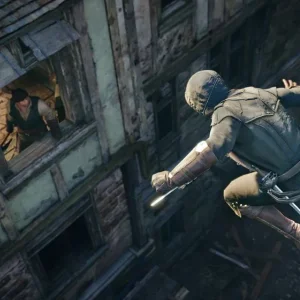
Osaka Game Dev Pipeline: Real-Time Inertial Skeletal Production Solution
-
 View Details
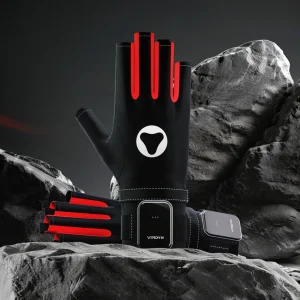
mHand Pro Kansai Edition: Precision Multi-Node Finger Articulation Gloves
-
 View Details
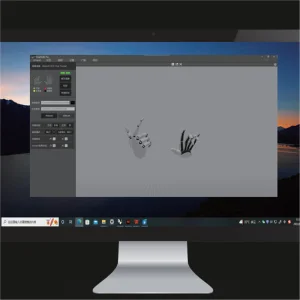
mHand Studio Control: Real-Time Dexterous Kinematic SDK for Osaka Labs
-
 View Details
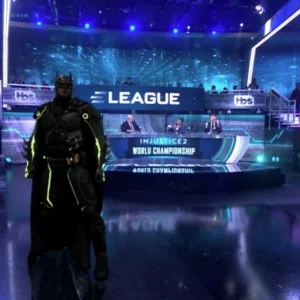
Virtual Film Production Volumes: In-Camera VFX & Camera Tracking for Kansai
-
 View Details
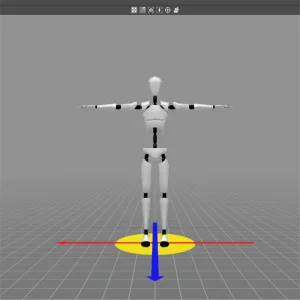
VDMocap Studio Plus: Enterprise Multi-Actor Biomechanical Solver
-
 View Details
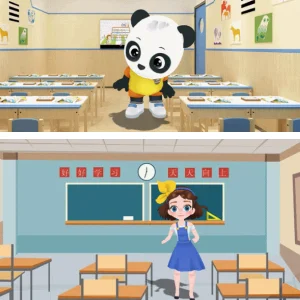
Interactive EdTech & Virtual VTuber Stage: Real-Time Broadcast Suite
-
 View Details
Kansai Creative Agency Mocap: High-Fidelity Commercial 3D Advertising
-
 View Details
Virtual Brand Ambassador System: Real-Time Character Activation for Osaka Brands