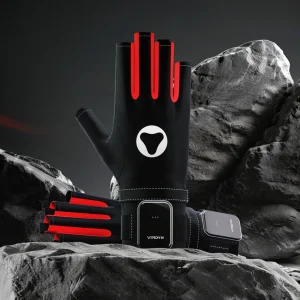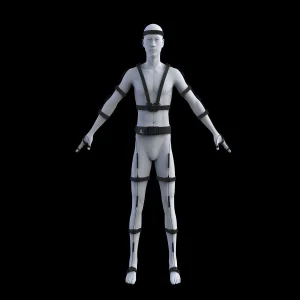
Design Virdyn VDSuit Full: Full Body Inertia Motion Capture Suit for Ethiopia Creative Studios
Explore Hardware Solution
Turnkey motion capture architectures pre-configured for academic research labs, media production suites, and digital human pipelines.



From the Addis Ababa ICT Park to elite sports physiology institutes in Sululta, high-resolution spatial tracking is transitioning from a luxury visual effect to critical infrastructure.
Under the national digitization roadmap, Addis Ababa is emerging as East Africa's core content development capital. Regional creative agencies, game startups, and architectural visualizers require spatial tracking systems that drastically compress asset turnarounds without demanding multi-million dollar studio budgets.
Ethiopia is home to world-renowned long-distance athletes training in Bekoji and Sululta. Academic institutions and international athletic associations are actively deploying sub-millimeter optical motion capture to study gait efficiency, joint angular acceleration, and musculoskeletal stress at high elevation.
With UNESCO sites including Lalibela and Axum, Ethiopian cultural institutions are partnering with international heritage foundations to digitally preserve historic religious liturgies, ceremonial dances, and artisanal craft movements via high-fidelity optical spatial recording.
Modern spatial tracking in dynamic African operating environments requires rigorous optical planning, resilient optical-inertial synchronization, and environmental noise rejection.
Traditional passive optical motion capture uses retroreflective retro-spheres illuminated by near-infrared (NIR) stroboscopic ring illuminators mounted around camera lenses. The cameras compute centroid 2D data, and spatial triangulation engines resolve absolute 3D Cartesian coordinates ($X, Y, Z$) based on epipolar geometry and bundle adjustments.
However, in multi-actor setups or environments with unpredictable ambient light—such as natural lighting variations in Addis Ababa production studios—active optical markers and hybrid IMU-optical fusion deliver decisive advantages. Active markers pulse at distinct pulse-width modulation frequencies, eliminating marker swapping, occlusion dropouts, and ghost markers during complex acrobatic captures or contact-heavy athletic assessments.
By coupling an optical multi-camera volume with high-rate 9-axis inertial measurement units (accelerometer, gyroscope, magnetometer), engineers achieve absolute zero-drift spatial calibration combined with high-frequency rotational kinematics that continue tracking flawlessly even during total visual occlusion.
Planning an optical stage in East Africa requires balancing physical room footprint, ceiling truss rigidity, and camera focal lengths. A standard 8m × 8m × 3.5m optical capture volume typically utilizes 12 to 24 high-speed cameras equipped with 6mm or 8.5mm wide-angle, low-distortion lenses.
The Direct Linear Transformation (DLT) calibration process calculates intrinsic parameters (focal length, principal point, radial lens distortion) and extrinsic parameters (camera position and spatial rotation vectors relative to the world coordinate origin). Precision carbon-fiber calibration wands with known micrometer-level marker distances are swept through the capture volume, generating thousands of point clouds to compute reprojection errors below 0.15mm.
Real-time data packets are routed over low-latency Gigabit Ethernet (GigE) with Precision Time Protocol (IEEE 1588 PTP), assuring temporal synchronization down to microseconds across all camera sensors and auxiliary biometric devices (EMG sensors, force plates, and wireless audio timecode).
| Capture Metric / Feature | Optical Passive NIR System | Optical Active Marker Stage | Inertial Suit (VDSuit Full) | Hybrid Optical-Inertial Fusion |
|---|---|---|---|---|
| Absolute Spatial Precision | Sub-millimeter (±0.1 mm) | Sub-millimeter (±0.08 mm) | Estimated relative translation | Absolute ±0.1 mm + Zero Drift |
| Occlusion Vulnerability | High (requires line-of-sight) | Low (ID pulsing reduces drop) | Zero (Immune to visual blocks) | Zero (IMU bridges optical gap) |
| Environmental Restrictions | Controlled darkness / No reflections | Tolerant to ambient light | Magnetic interference mitigation | Robust in open studio layouts |
| Deployment Agility | Fixed studio truss setup | Fixed stage calibration | Ultra-portable (Field ready) | Semi-permanent studio rig |
| Ethiopian Market Suitability | National research laboratories | Virtual production stages | Indie studios & outdoor capture | Enterprise multi-purpose hubs |
Democratizing optical precision through world-class precision engineering, vertically integrated supply chains, and rapid overseas deployment frameworks.
From custom CMOS sensor wafer packaging and bandpass filter coating to high-speed FPGA image-processing board assembly in Guangzhou and Shenzhen, direct factory integration eliminates distributor markups and guarantees sub-millisecond on-camera 2D centroid calculation.
Every optical camera unit and inertial sensor node undergoes continuous thermal cycling (-10°C to +50°C), multi-axis mechanical vibration endurance, and electromagnetic compatibility (EMC) testing. Systems withstand variable power grids and dry dust conditions common across the East African plateau.
Leveraging direct air corridors from Guangzhou to Addis Ababa Bole International Airport via Ethiopian Airlines Cargo, end-to-end hardware delivery, customs documentation, and remote onboarding occur within days rather than months, backed by comprehensive engineering warranties.
Deploying cutting-edge motion tracking across higher education, athletics, broadcast television, and industrial ergonomics.
Ethiopian athletics training complexes in Oromia and high-altitude conditioning centers utilize optical camera grids integrated with synchronized force plates. Trainers and sports physiologists analyze ground reaction forces, knee flexion angles, and pelvic rotation in sub-millimeter detail, optimizing stride efficiency for marathon runners while diagnosing micro-injuries before chronic pathologies occur.
Addis Ababa’s emerging film production houses are adopting in-camera visual effects (ICVFX) using LED walls and optical camera tracking. By tracking physical cinema cameras equipped with optical tracking clusters, real-time parallax backgrounds rendered in Unreal Engine 5 stay synchronized with live actors, slashing on-location travel costs across historical regions.
Ethiopia's telecom modernization, led by Ethio Telecom and Safaricom Ethiopia, is driving digital adoption among youth. Brands deploy virtual spokespersons powered by the VDSuit Full and optical facial helmets for real-time TikTok, YouTube, and broadcast activations, creating photorealistic engagement for banking, fashion, and telecommunication brands.
As the Hawassa and Bole Lemi Industrial Parks expand textile, footwear, and consumer goods assembly lines, mocap systems map worker biomechanics. Capturing ergonomic strain data guides workstation layout optimization, preventing repetitive strain injuries and training collaborative humanoid robot manipulators via demonstration learning.
Expert answers addressing electrical stability, calibration routines, multi-actor handling, and software compatibility.
Equip your Ethiopian game studio, university biomechanics facility, or broadcast center with world-class spatial engineering tools.