
Bangkok Flagship Motion Tracking Deployments
Engineered to meet the exact spatial fidelity, tropical environmental resilience, and dynamic tracking demands of Southeast Asia's premier digital media production facilities.
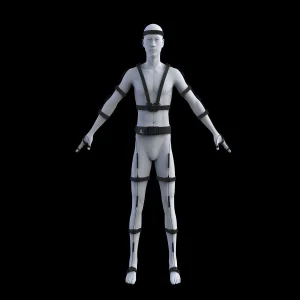
Bangkok VDSuit Full: Full Body Function Inertia & Optical Fusion Planning
Explore Blueprint →
Bangkok Motion Capture Tech: Next-Gen Animation Studio Engineering Solutions
Explore Blueprint →
Bangkok On-Site Demo Booking: VDSuit Full & mHand Pro Integration Rig
Explore Blueprint →
Bangkok Virtual Human Tech: Real-Time Digital Persona Activation Systems
Explore Blueprint →Bangkok's Strategic Leap into Spatial Computing & Motion Science
Examining the intersection of Thailand's creative economy initiatives, infrastructure real estate challenges, and the rapid adoption of enterprise spatial tracking systems.
The Greater Bangkok metropolitan region has swiftly transformed from an outsourced digital arts service base into Southeast Asia's primary epicenter for digital content engineering, interactive virtual production, and biomechanical robotics research. Anchored by proactive policy initiatives like the Thailand Creative Culture Agency (THACCA) and supported by competitive production tax incentives, local creative hubs spanning Sukhumvit, Rama IX, Lat Phrao, and the Bang Sue Grand Station creative district are fundamentally rebuilding their physical infrastructure around motion capture pipelines.
However, planning and commissioning a sub-millimeter optical motion capture stage in Bangkok introduces unique engineering and environmental variables rarely encountered in temperate western studios. High ambient relative humidity (consistently exceeding 75–85%), elevated urban thermal profiles, and heavy electromagnetic and radio-frequency noise from dense metropolitan cellular arrays pose significant operational obstacles to sensitive optoelectronic equipment. Precision calibration grids, multi-camera synchronization clocks, and retroreflective spherical markers require rigid environmental controls and high-durability thermal dissipation designs to avoid spatial drift and optical distortion over long-duration capture sessions.
Furthermore, Thai academic and industrial research complexes—including premier engineering faculties at Chulalongkorn University, King Mongkut’s University of Technology Thonburi (KMUTT), and research parks along the Eastern Economic Corridor (EEC)—are expanding procurement beyond basic entertainment capture. Today's commercial requirements demand hybrid multi-modal capture environments capable of serving autonomous humanoid robotics training, physical rehabilitation kinematics, ergonomics testing for automotive assembly, and AAA video game character generation simultaneously.
Macro Trends: The Convergence of Hybrid Spatial Tracking & Embodied AI
Moving past obsolete single-modality tracking systems toward high-fidelity fusion arrays, algorithmic occluding solvers, and edge-calculated kinetic data.
Hybrid Optical-Inertial Fusion
Combines optical absolute zero-drift spatial referencing with 9-axis wearable IMU rotational kinematics to eliminate line-of-sight occlusion artifacts during intricate multi-actor interactions.
Embodied AI Training Datasets
Feeds raw high-precision human biomechanical demonstration data directly into reinforcement learning architectures to accelerate bipedal and humanoid dexterous teleoperation.
Unreal Engine 5.4+ Live Link
Native zero-latency streaming pipelines directly into Lumen, Nanite, and MetaHuman frameworks, bypassing intermediate post-processing for real-time broadcast and virtual camera ops.
Micro-Calibration & AI Denoising
Continuous dynamic edge calibration routines with automated spatial bundle adjustment, ensuring millimeter integrity even during structural temperature swings in large warehouse volumes.
| Evaluation Parameter | Legacy Optical Mocap | Standalone Inertial (IMU) | Virdyn Hybrid-Synchronized Architecture |
|---|---|---|---|
| Spatial Position Accuracy | Sub-millimeter (±0.15mm) | Relative estimated; prone to magnetic drift | Absolute global position (±0.08mm) via optical anchor |
| Occlusion Vulnerability | High (fails during ground/object contact) | Zero (immune to line-of-sight visual blocks) | Zero (optical tracks rig, IMU fills joint rotational gaps) |
| Deployment Footprint | Fixed truss, rigorous calibration box | Unrestricted indoor/outdoor portability | Scalable volume: 4x4m studio to 30x30m virtual stage |
| Throughput Latency | 15–30ms via processing server | <12ms direct RF stream | <8ms end-to-end edge-solved UDP data stream |
| TCO & Maintenance | Extremely high hardware & license fees | Low-to-moderate operating costs | Optimized factory-direct tiering with zero per-seat tax |
China Industry 4.0: Supply Chain Agility & Factory Direct Precision
How deep component-level integration, automated SMT fabrication lines, and direct R&D-to-deployment logistics dismantle historic cost barriers for enterprise buyers.
For decades, enterprise optical motion capture procurement has been dominated by a handful of legacy western manufacturers whose monopolistic pricing structures, high recurring software maintenance licensing, and exorbitant spare parts markups placed modern spatial tracking out of reach for fast-growing mid-market animation and game studios in Southeast Asia. Virdyn dismantles this obsolete economic framework by leveraging China's Industry 4.0 advanced manufacturing ecosystem based in the Greater Bay Area.
By unifying precision optoelectronic sensor packaging, high-speed infrared strobe manufacturing, specialized ultra-low distortion optical lenses, and high-frequency IMU sensor fusion into a single synchronized manufacturing matrix, Virdyn delivers institutional-grade tracking fidelity at a drastically lower total cost of ownership (TCO). Every sub-assembly—from the aircraft-grade aluminum alloy camera chassis with passive heat dissipation fins to the FPGA-accelerated edge computer vision boards—undergoes rigorous automated surface mount (SMT) fabrication, 72-hour environmental burn-in stress testing, and micrometer optical bench calibration before shipping.
This industrial density provides Thai enterprises with unparalleled supply chain resilience: direct air-freight logistics between Guangzhou/Shenzhen hubs and Bangkok Suvarnabhumi Airport (BKK) ensure mission-critical spare modules, custom mounting brackets, and specialized lens upgrades arrive on studio sets in under 48 hours. Enterprise procurement teams bypass third-party trading middle layers, securing direct access to our core firmware and hardware engineering divisions for custom protocol authoring, SDK extensions, and specialized robotics teleoperation drivers.
Turnkey Optical Mocap Stage Design & Blueprinting in Bangkok
A rigorous, systematic engineering roadmap built to guarantee sub-millimeter tracking accuracy across high-volume commercial production volumes.
Volumetric Acoustic & Spatial Survey
Structural calculation of ceiling load capacities, floor vibration damping (mitigating Bangkok Skytrain/traffic seismic low-frequency noise), and room acoustic dampening for simultaneous clean audio capture.
Rigid Truss & Optoelectronic Array
Box-truss calculation with customized anti-torsion drop arms. Precision camera placement calculating intersecting optical sight cones to ensure minimum 4-camera line-of-sight redundancy at stage corners.
Thermal & Isolated Power Topology
Zoned HVAC ducting maintaining 21°C ±1°C across camera envelopes without draft-induced marker flutter. Pure-sine wave online UPS units isolating sensitive tracking optics from Bangkok grid surges.
Engine Rigging & DCC Pipeline Commissioning
Zero-latency optical master calibration, global reference origin zeroing, and automated network streaming setup with Autodesk Maya, MotionBuilder, Unreal Engine Live Link, and ROS2 humanoid controllers.
High-Impact Motion Capture Applications in the Thai Market
Delivering measurable production efficiency across film, interactive entertainment, virtual commerce, and academic robotics labs.
1. Tier-1 Commercial Film & Virtual Production (Lat Phrao / Bang Sue Stages)
Top Bangkok production studios utilize hybrid optical-inertial mocap stages equipped with active LED wall tracking. By affixing micro-optical tracking clusters to physical broadcast cinema cameras while simultaneously tracking live actors on the physical floor, directors achieve zero-jitter virtual camera tracking that syncs natively with Unreal Engine 5 nDisplay systems, eliminating camera tracking drift and enabling live in-camera visual effects (ICVFX).
2. Next-Gen Gaming & Anime Production (Sukhumvit / Silom Creative Corridors)
Game development companies producing cross-platform action RPGs record complex martial arts choreography (Muay Thai locomotion, weapon handling, acrobatic stunts) with rapid turnaround. Virdyn's combined VDSuit Full and optical marker stages resolve floor interaction dynamics with sub-millimeter precision, entirely eliminating post-capture manual foot-skate cleanup and cutting character animation delivery timelines by up to 70%.
3. Real-Time Virtual Influencer & E-Commerce Live Broadcasts (Siam & Chatuchak Digital Hubs)
Thai retail giants, VTuber agencies, and digital marketing powerhouses leverage full-body capture paired with mHand Pro gloves and ultra-low latency facial helmets to stream interactive digital brand ambassadors live across TikTok, YouTube, and Shopee Live. The live retargeting engine delivers fluid 60FPS human interaction with live viewers with zero technical hitching.
4. Embodied AI & Humanoid Robotics Kinematics (Eastern Economic Corridor / EEC)
Robotics development laboratories and advanced engineering departments collect gigabytes of continuous teleoperation training data. Human operators performing high-dexterity assembly, tool manipulation, and bipedal balance maneuvers wear multi-node tracking apparatuses, generating clean spatial-temporal vector datasets to train deep neural policies for next-generation automated assembly robots.
Frequently Asked Questions on Optical Mocap Deployment in Bangkok
In-depth engineering answers addressing spatial planning, tropical climate management, software synchronization, and international support SLAs.
How does Bangkok's tropical climate affect high-precision optical motion capture systems?
High ambient humidity and temperature fluctuations degrade optical capture precision in two major ways: thermal expansion of metal mounting trusses causing micro-deflection of calibrated camera angles, and condensation/humidity haze on optical filter lenses. Virdyn mitigates this through custom thermal-isolated mounting brackets, specialized anti-reflective, hydrophobic IR lens coatings, and strict HVAC stage airflow specifications that maintain structural truss equilibrium (±1°C) during full-load operations.
What are the primary advantages of combining optical and inertial tracking in a single Bangkok studio?
Pure optical tracking suffers from occlusion when performers engage in ground stunts, combat wrestling, or interact with dense physical props. Standalone inertial suits, while occlusion-free, lack absolute spatial world coordinates and accumulate positional drift over extended takes. Our hybrid optical-inertial planning uses sub-millimeter optical markers as an absolute spatial anchor while utilizing wearable 9-axis IMU nodes to maintain continuous skeletal orientation across occluded joints, yielding 100% clean data with zero manual clean-up.
Can Virdyn systems stream motion data simultaneously into Unreal Engine and Unity in real time?
Yes. Virdyn's VDMocap Studio Plus software suite features a native zero-latency UDP/TCP multi-cast architecture. Using our dedicated Unreal Engine Live Link and Unity plugins, skeletal transforms, per-finger articulation data from mHand Pro gloves, and 52 facial blendshapes from our VDFace capture helmets can be broadcast in real-time to multiple target machines simultaneously with under 15ms total latency.
How does Virdyn provide technical after-sales support and calibration warranty across Thailand?
We provide localized enterprise onboarding, including comprehensive on-site installation, structural truss calibration, software optimization, and operator training conducted in English. With our manufacturing and engineering headquarters situated directly in Guangzhou, replacement modules and expansion components are shipped directly to Bangkok via dedicated air freight with customs clearance support, typically arriving on-site within 48 to 72 hours.
What minimum room dimensions are required to install an enterprise optical mocap stage?
A professional 8 to 12 camera optical stage for single-actor acrobatic capture requires an active volume of at least 5m × 5m × 3m clear ceiling height. For multi-actor fighting game choreography, vehicle staging, or virtual production camera tracking, we recommend a minimum footprint of 10m × 8m × 4.5m height to allow optimal camera cone intersection and eliminate optical blind spots near perimeter boundaries.
Is the motion capture data format directly compatible with robotics operating systems (ROS/ROS2)?
Yes. Virdyn provides low-level C++ and Python SDKs alongside dedicated ROS/ROS2 bridge nodes. Teleoperation researchers at university labs and EEC advanced robotics hubs can ingest streaming joint angles, end-effector positions, and Cartesian coordinates directly into robot kinematic models for bipedal walking stabilization, robotic arm mimicry, and dexterous hand manipulation.
Bangkok Enterprise Motion Capture Hardware & Software Suites
Explore our specialized portfolio of wearable sensors, multi-node finger capture gloves, real-time animation tools, and virtual advertising production stacks.
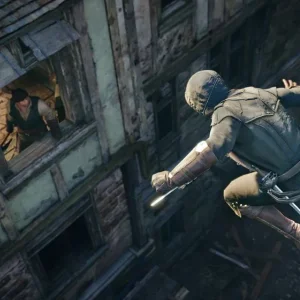
Bangkok Inertial Mocap: Accelerating 3D Game Development Pipelines
Explore Blueprint →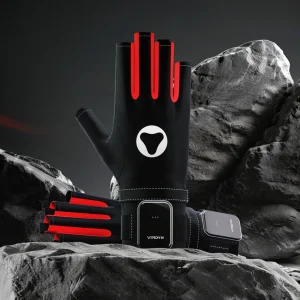
Bangkok mHand Pro: High-Precision Inertia Mocap Gloves for VR & Robotics
Explore Blueprint →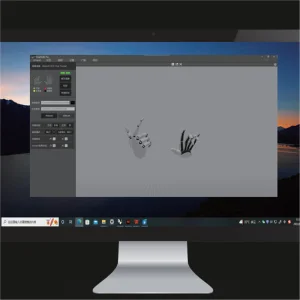
Bangkok mHand Studio: Real-Time Dexterous Finger Articulation Engine
Explore Blueprint →
Bangkok Virtual Production: Advanced Film & Cinematography Motion Systems
Explore Blueprint →
Bangkok VDMocap Studio Plus: Flagship Multi-Node Data Solving Software
Explore Blueprint →
Bangkok Virtual Live Education: Interactive Gamified Learning Deployment
Explore Blueprint →
Bangkok Creative Advertising: Photorealistic CGI Motion Capture Workflows
Explore Blueprint →
Bangkok Virtual Spokesman: Real-Time Brand Avatar Propagation Tech
Explore Blueprint →Ready to Engineer Your Motion Capture Infrastructure?
Connect directly with our senior optical systems architects and regional deployment engineers. We provide comprehensive CAD truss blueprints, optical camera cone simulations, hardware bills of materials (BOM), and direct factory quotation packages customized to your studio facility.