Swiss Industrial & Spatial Computing Benchmark

Best Optical Mocap Planning & Solution in the Switzerland Market

Empowering ETH Zürich roboticists, Lausanne life-science laboratories, Geneva luxury horology studios, and European digital human innovators with millimeter-grade multi-sensor optical and inertial tracking pipelines.

Send Inquiry Now & Schedule Swiss Stage Audit

Flagship Motion Capture Architecture for Swiss Engineering

Enterprise tracking ecosystems validated for precision-critical Swiss deployments—from biomechanical gait validation in Zurich to high-fidelity virtual character production in Valais.

Switzerland & Global Industrial Landscape: The Spatial Computing Paradigm

Strategic analysis of optical motion capture, spatial robotics, and micro-precision measurement across Swiss cantons and global manufacturing clusters.

0.15mm
Global Spatial Positional Tolerance

Meets stringent Swiss micro-assembly and orthopedics validation standards.

< 12ms
End-to-End Latency Profile

High-frequency telemetry critical for humanoid teleoperation and closed-loop sim-to-real training.

100%
Occlusion Resilience

Synchronized hybrid sensor fusion overcoming optical line-of-sight limitations.

The Switzerland Industrial & Research Ecosystem

Switzerland represents an exceptionally demanding technological testbed. Renowned for its world-class academic institutions (ETH Zürich, EPFL) and precision engineering corridors spanning Basel, Zürich, and Lake Geneva, the local demand for optical tracking has shifted beyond legacy entertainment.

Today, Swiss MedTech clusters deploy mocap volumes for dynamic surgical instrument localization and non-invasive biomechanical gait diagnostics. Simultaneously, the Swiss Robotics Association and canton-backed automation initiatives demand low-latency human telemetry data to feed embodied AI models and bilateral teleoperation systems for high-consequence environments.

  • Precision Micromechanics: Micron-level trajectory recording for luxury watch assembly verification.
  • Alpine Sports Biomechanics: Field tracking under extreme light refraction in St. Moritz and Zermatt.
  • Swiss MedTech Compliance: Traceable sensor outputs conforming to ISO 13485 spatial reporting protocols.

Global Motion Capture Industry Evolution

Globally, the optical mocap sector is transitioning from mono-modality camera cages to versatile Multi-Modal Spatial Telemetry. Legacy high-cost installations that required weeks of manual calibration are yielding to flexible, sensor-fused solutions.

With the rapid proliferation of generative spatial video, photorealistic neural rendering (NeRF / 3D Gaussian Splatting), and physical AI training sets, capture systems must now provide synchronized skeletal, hand, facial, and egocentric depth arrays. Virdyn bridges this continuum by coupling high-density IMU telemetry with optical volumetric consistency, drastically reducing total cost of ownership (TCO).

  • Embodied AI Acceleration: Ingestion of raw human kinematic datasets to train humanoid foundational models.
  • Virtual Production Efficiency: Native LED-wall synchronization via Genlock and SMPTE timecodes.
  • Democratized Deployment: Modular rigs operational in standard office footprints without dedicated trusses.

Enterprise Solution Engineering: Swiss Market Architectures

Holistic hardware-to-software pipelines customized for Switzerland's flagship industrial sectors.

1. Embodied AI & Humanoid Teleoperation

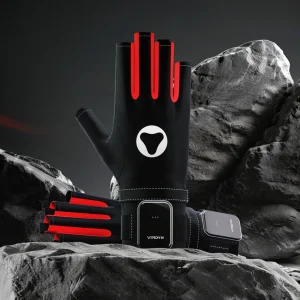
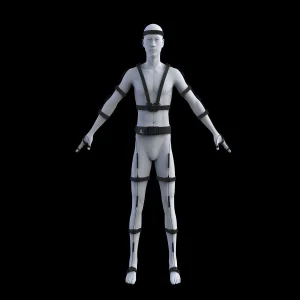
Engineered for Swiss robotics laboratories. By integrating mHand Pro dexterous gloves with VDSuit Full and optical reference nodes, researchers capture whole-body multi-contact teleoperation datasets. These high-frequency kinematic trajectories directly train neural policy architectures for complex manipulation and bipedal stabilization.

View Robotics Teleoperation Setup →

2. Swiss Ergonomics & Clinical Gait Analysis

Designed for rehabilitation centers in Zurich and Geneva. Our marker-optical and IMU fusion eliminates marker dropouts caused by medical crutches, braces, or parallel bars. Provides certified clinicians with angular joint velocities, dynamic center-of-mass displacement, and comprehensive musculoskeletal strain reporting.

Consult Clinical Mocap Specifications →

3. Broadcast & Luxury Brand Virtual Production

Bespoke pipelines for Swiss advertising agencies, banking forums, and luxury horology houses. Real-time retargeting drives ultra-realistic digital avatars for live broadcasts, interactive customer service kiosks, and cinematic VFX, complete with synchronous multi-finger articulation and sub-surface facial fidelity.

Explore Virtual Stage Blueprints →

Kinematic Capture Architecture Evaluation for Swiss Procurement

Evaluation Parameter Traditional Optical Cage Virdyn Sensor-Fused Hybrid Pipeline Pure Markerless Vision Setup
Deployment Space Requirement Fixed dedicated stage (min 50m² truss) Completely flexible (Works in office/lab or field) Constrained to camera field-of-view
Occlusion Vulnerability High (loss of line-of-sight drops marker data) Zero (inertial core sustains tracking during occlusion) Severe (interlocking limbs cause jitter)
Setup & Calibration Time 45 to 90 minutes per session Under 5 minutes (rapid auto-calibration) Instantaneous to 10 minutes
Spatial Precision (Positional) Sub-millimeter (< 0.1mm) Millimeter-grade fused trajectory Estimated / Approximate (5-15mm)
Total Cost of Ownership (TCO) High capital outlay (€80k - €250k+) Optimal Enterprise ROI (€5k - €25k) Moderate (€10k - €30k)

Virdyn Technical Roadmap & Spatial Horizons (2025–2028)

Anticipating next-generation spatial telemetry standards through persistent algorithmic innovation.

PHASE 01: IMMEDIATE HORIZON

Neuromorphic Sensor Integration

Deploying event-based vision cameras paired with high-rate 1000Hz IMU sub-nodes to eliminate motion blur during high-velocity Swiss alpine sports tracking and rapid robotic manipulator actions.

PHASE 02: MID-TERM INTEGRATION

Edge-Native Biomechanical Solvers

Embedding ultra-low-power neural inference chips directly onto the VDSuit hub, enabling real-time on-body inverse kinematics (IK) computation without dependency on host computer GPU overhead.

PHASE 03: LONG-TERM HORIZON

Unified Spatial Physics Emulation

Bridging real-world tactile resistance, full-body kinematics, and volumetric NeRF environments into a unified simulation loop designed for closed-loop Swiss robotic manufacturing qualification.

Accelerate Your Motion Pipeline in Switzerland

Direct technical consultation with our senior systems architects. Tailored quotes, academic volume discounts, and custom API integration blueprints available.

Frequently Asked Questions: Swiss Mocap Planning & Operations

In-depth answers addressing procurement criteria, magnetic interference, software compatibility, and local support.

Why choose a hybrid optical-inertial mocap system over traditional optical cages in Switzerland?
Traditional optical systems require permanent, highly calibrated indoor stages with dedicated ceiling trusses—often cost-prohibitive given Swiss real estate constraints. Furthermore, optical tracking suffers from marker occlusion during multi-actor interactions or close proximity to machinery. Virdyn's hybrid approach combines absolute optical reference calibration with wear-and-go inertial resilience, ensuring reliable data acquisition indoors, in crowded engineering workshops, or directly on outdoor Swiss alpine slopes.
How does Virdyn resolve electromagnetic interference (EMI) in Swiss industrial facilities?
Modern manufacturing plants contain substantial ferromagnetic mass and EMI radiation from electrical drives and heavy tooling. Virdyn’s proprietary multi-sensor fusion algorithms dynamically cross-reference magnetometer data against high-frequency gyroscopic velocity and accelerometer vectors. When magnetic anomalies exceed safety thresholds, the software transiently de-weights the magnetometer input, preserving skeletal integrity and preventing joint distortion.
Can Virdyn motion capture systems integrate directly with Unreal Engine 5 and ROS 2?
Yes. Virdyn delivers low-latency native plugins for Unreal Engine 5 (via Live Link), Unity, Autodesk Maya, Blender, and MotionBuilder. For Swiss academic and robotics research groups, we provide a robust C++/Python SDK and ROS / ROS 2 wrappers, enabling real-time skeletal orientation and hand joint telemetry streaming straight into robotic controller pipelines at frequencies up to 120Hz.
What is the typical shipping lead time and customs process for delivery across Switzerland?
Standard hardware orders ship with full customs declaration under Swiss Federal Customs Administration guidelines. Typical transit time to major Swiss economic centers (Zurich, Geneva, Basel, Bern, Lausanne) is 3 to 5 business days via express courier. Complete technical onboarding, remote engineer pairing, and English/German documentation are provided immediately upon dispatch.
Does Virdyn offer technical support and warranty services for Swiss educational and enterprise institutions?
Every professional system includes comprehensive hardware warranty coverage, lifetime firmware access, and direct Tier-3 engineering support. Our support desk operates with rapid 24-hour response SLAs, catering to Central European Time (CET) requirements for universities, animation houses, and industrial facilities.

Specialized Hardware & Integrated Software Solutions

Complete your production ecosystem with precision tracking gloves, dedicated capture suites, and specialized simulation modules.