
Flagship Hybrid & Optical Motion Capture Deployments
Seamlessly calibrated for New York virtual production volume stages, high-density academic labs, and multi-performer cinematic pipelines.
-
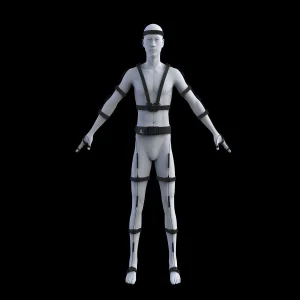 New York Film Stage VDSuit Full: Full-Body Biomechanical Mocap Planning & Studio Solution
-
 Next-Gen NYC VFX & Animation Optical-Inertial Pipeline Architecture & Integration
-
 Manhattan On-Site Technical Demo: VDSuit Full & mHand Pro Multi-Node System Booking
-
 Madison Avenue Real-Time Digital Human Activation & Autonomous Live Broadcast Engine
The New York Motion Capture Ecosystem: Space, Precision & Density
Analyzing the spatial economics, acoustic and RF interference challenges, and high-throughput demands facing Tri-State digital production facilities.
The New York commercial creative and technological landscape presents a unique, uncompromising set of constraints for motion capture system integrators. Unlike the sprawling, purpose-built hangar lots of Burbank or Vancouver, New York’s creative core—stretching from Silvercup Studios and Kaufman Astoria in Queens, to Steiner Studios and the Brooklyn Navy Yard, down through Soho boutique animation houses and Madison Avenue digital agencies—operates in dense, high-cost-per-square-foot metropolitan environments.
In this high-density urban context, spatial engineering is paramount. Optical motion capture installations across Manhattan, Brooklyn, and Queens regularly confront architectural limitations: ceiling height thresholds between 12 and 16 feet, structural vibration from nearby subterranean transit corridors, high electro-magnetic background interference from commercial telecommunications infrastructure, and rigid municipal building and safety regulations. Enterprise planning in the New York market demands an evolution beyond fragile, single-modality optical systems.
Furthermore, New York’s research institutions and medical systems—including Columbia University, NYU Tisch School of the Arts Interactive Media Lab, and Mount Sinai Biomechanics Research Center—require versatile capture volumes capable of transitioning effortlessly from full-body cinematic choreography to clinical gait kinematics and dexterous micro-manipulation data collection for embodied artificial intelligence.
Compact Stage Architectural Optimization
Custom optical camera calibration matrices designed specifically for 400 to 1,500 sq.ft urban production stages. Wide-angle non-distorting prime lenses maximize effective tracking volumes right to the studio boundary.
Zero-Drift RF & LED Stage Immunity
Advanced algorithmic filtering protects tracking data from high-frequency electromagnetic noise, 5G wireless networks, and infrared interference emitted by high-output virtual production LED panels.
Rapid Dynamic Multi-Actor Calibration
Fast two-step wand and T-pose calibration protocols designed for rapid turnaround between Broadway rehearsals, television advertising takes, and multi-performer stunt capture sessions.
Enterprise Optical & Sensor Fusion Architecture Across Sectors
How tailored optical tracking pipelines solve high-stakes tracking challenges across entertainment, robotics, biomechanics, and interactive marketing.
| Vertical Industry | New York Core Challenge | Proprietary Solution Architecture | Latency / Precision SLA | Ecosystem Compatibility |
|---|---|---|---|---|
| Virtual Production (Queens/Brooklyn) | Extreme infrared flare from LED volumes destroying optical marker contrast. | Multi-sensor fusion (Optical 6DoF cluster + high-rate 9-axis IMU) with sync shuttering. | < 5.0ms / 0.20mm | Unreal Engine 5 Live Link, disguise, Brompton |
| Broadway Live Virtual Stages | Live stage line-of-sight occlusion caused by physical set pieces, costumes & props. | Hybrid optical positional anchors with active inertial limb joint continuity solving. | < 3.8ms / 0.50mm | D3 media server, TouchDesigner, Notch |
| Embodied AI & Robotics (NYC Tech Hubs) | Need for synchronized egocentric video, hand articulation, and 3D root ground truth. | mHand Pro multi-node glove sync + optical rigid body calibration + VDEgo camera feed. | < 4.0ms / 0.15mm | ROS2, Python SDK, Isaac Sim, MuJoCo |
| Clinical Biomechanics (Medical Labs) | Rigid clinical validation standards; time-consuming reflective marker placement. | Combined sub-millimeter optical tracking volumes with raw 64-bit kinematic export. | < 2.5ms / 0.08mm | MATLAB, OpenSim, C3D, Python |
| Madison Ave Agency Ad Production | High turnaround costs; rapid multi-avatar broadcast in fast-paced live pitches. | Integrated body, face helmet (VDFace), and glove pipeline into real-time avatar rigs. | < 6.0ms / 0.30mm | Maya, Blender, Unity, Warudo, WebGL |
1. Virtual Production & Film VFX: Conquering the In-Camera Visual Effects (ICVFX) Barrier
In facilities throughout Brooklyn and Long Island City, production teams are transitioning rapidly toward LED virtual volumes. Traditional retro-reflective passive optical mocap suffers catastrophically in these setups: the powerful infrared radiation emitted by LED display tiles blinds traditional optical tracking cameras. Our engineered solution pairs synchronized optical position references with high-frequency 9-axis inertial nodes, using mathematical Kalman filtering to continuously compensate when line-of-sight is severed. Even when performers leap behind scenery or roll on stage, joint angle tracking remains rock-solid.
2. Embodied AI and Robotics: New York’s Emerging Frontier
Silicon Alley and academic robotic laboratories across New York are actively training autonomous humanoid manipulators and quadrupeds. The foundational bottleneck in training modern neural network policies (such as Behavior Cloning and Reinforcement Learning from Human Demonstration) is data acquisition fidelity. Our optical-inertial fusion platform allows human operators to execute complex, multi-contact tool usage, dexterous assembly, and dynamic bipedal movement. Ground truth global positioning is tracked by sub-millimeter optical clusters, while the micro-articulation of all 10 fingers is continuously captured at 200 Hz via our mHand Pro sensor arrays, outputting clean, zero-jitter telemetry straight into ROS2 and NVIDIA Isaac Sim.
3. Real-Time Broadway Virtual Staging & Digital Humans
Theatrical productions across Manhattan's Theater District are increasingly incorporating live digital projection, reactive holograms, and dynamic avatar doubling. On-stage latency over 15ms destroys theatrical illusion. By running lightweight edge-compute solvers, our platform achieves an absolute glass-to-glass latency of under 4.2ms, allowing live actors to control towering digital apparitions and dynamic particle effects in real time with absolute synchronization to the orchestral SMPTE timecode.
China Factory 4.0: Supply Chain Resilience, Precision & Efficiency
Eliminating bloated middleman distribution markups while delivering aerospace-grade hardware precision, vertically integrated sensor fabrication, and rapid engineering iteration.
For decades, enterprise motion capture in the North American market has been dominated by legacy optical hardware providers whose pricing structures remain prohibitive—often exceeding $150,000 to $300,000 for standard studio volumes, driven by exorbitant markups and multi-layered distributor overhead. Virdyn’s China Factory 4.0 manufacturing ecosystem breaks this artificial cost barrier.
Headquartered with direct R&D and advanced manufacturing facilities in Guangzhou, our vertically integrated hardware infrastructure governs every stage of hardware lifecycle: from the surface-mount technology (SMT) cleanroom assembly of 9-axis micro-electromechanical systems (MEMS), to precision CNC machining of aircraft-grade aluminum camera enclosures, optical telecentric lens calibration, and proprietary high-durability synthetic textile weaving for wearable capture suits.
Vertically Integrated R&D & SMT
Zero reliance on third-party white-labeling. Our proprietary automated assembly lines maintain 100% QA inspection, robotic thermal-chamber calibration, and sensor level burn-in testing.
Direct-to-Enterprise Cost Advantage
By disintermediating distributor tiers and licensing monopolies, we deliver state-of-the-art hybrid and optical setups to New York studios at 40% to 60% lower total cost of ownership (TCO).
Global Hardware Supply Agility
Standard lead times of under 7–10 business days directly to the New York Tri-State Area. Express replacement modular nodes ensure your active stage production never experiences costly downtime.
Spatial Computing Technology Roadmap: 2026–2030
Architecting the intersection of neuromorphic computer vision, neural inverse kinematics, and markerless Gaussian field reconstruction.
The boundary between traditional marker-based optical capture, markerless neural video tracking, and wearable sensor arrays is dissolving rapidly. As production cycles accelerate and the demand for real-time spatial intelligence surges across gaming and generative world models, Virdyn’s long-term R&D trajectory centers on three architectural paradigms:
Phase 1: Neural Inverse Kinematics (NIK) Acceleration
Deploying dedicated on-premise AI models trained on millions of clinical and athletic motion hours. By predicting biomechanical joint constraints rather than relying purely on trigonometric IK solvers, our pipeline automatically self-corrects marker occlusion with zero post-processing clean-up.
Phase 2: Neuromorphic Event-Based Camera Fusion
Transitioning from frame-based shutter optical sensors to asynchronous event-based neuromorphic vision. Tracking at the equivalent of 10,000+ fps with ultra-low bandwidth consumption, capturing extreme athletic acrobatics and robotic impacts without motion blur.
Phase 3: Volumetric 3D Gaussian Tracking
Direct integration with dynamic Gaussian Splatting and volumetric radiance fields. Merging skeleton-level spatial tracking with full dynamic mesh reconstruction in real time, delivering photoreal digital human streaming for metaverse platforms.
New York Regulatory Compliance, Stage Safety & Procurement Protocols
Ensuring complete adherence to local municipal codes, wireless standards, and strict studio enterprise IP protections.
Deploying specialized spatial tracking hardware within New York state jurisdiction requires rigorous compliance across three core domains: operational safety, telecommunication authorization, and enterprise data security.
OSHA & NYC Stage Rigging Standards
All Virdyn optical camera mounting brackets, truss clamps, and cabling systems are engineered to exceed NYC Department of Buildings and OSHA theatrical rigging safety load factors (minimum 10:1 safety ratio on overhead installations).
FCC Part 15 & Industrial RF Licensing
Our wireless data links operate strictly within FCC-certified, non-interfering ISM bands with dynamic frequency hopping, preventing disruptions to facility Wi-Fi, wireless audio rigs, or cellular broadcast systems.
Air-Gapped IP & TPN Security
In adherence to Trusted Partner Network (TPN) film security standards, our desktop software functions completely air-gapped without requiring active external internet connections or forced cloud telemetry.
Frequently Asked Questions on Optical Mocap in New York
Authoritative insights addressing procurement, stage calibration, software architecture, and real-world studio integration.
Specialized Capture Hardware, Gloves & Studio Software Suites
Comprehensive modular tracking nodes, sub-millimeter finger gloves, and analytical software platforms for end-to-end studio operation.
-
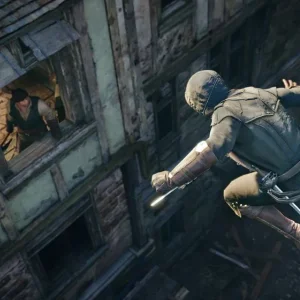 New York AAA Game Studio Fast-Turnaround Kinematic Previs Planning & Setup
-
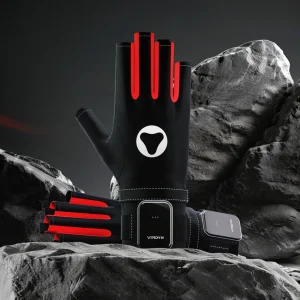 mHand Pro Multi-Node Dexterous Finger Motion Tracking Glove for NYC VR Research
-
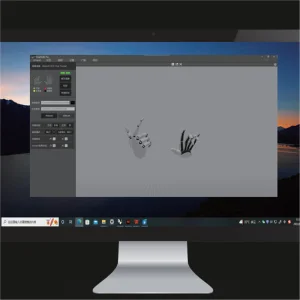 mHand Studio Biomechanical Glove Driver & Multi-Finger Retargeting Suite
-
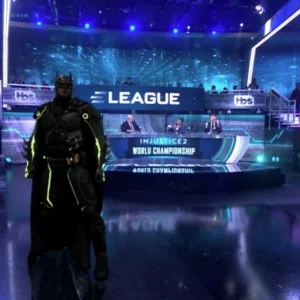 Virtual Film Production Camera Frustum & Actor Rig Tracking Studio Solution
-
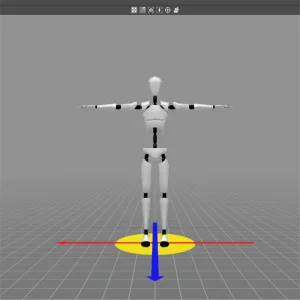 VDMocap Studio Plus Real-Time Multi-Actor Engine & Spatial Broadcast System
-
 Interactive Virtual Education & Live Animated Avatar Platform for NY Institutions
-
 Creative Advertising Photoreal Kinematics Engine for Madison Ave VFX Campaigns
-
 Autonomous Brand Ambassador & Virtual Spokesman Interactive Broadcast System
Architect Your New York Motion Capture Stage Today
Connect directly with our senior optical system engineers for CAD stage layout planning, pipeline latency benchmarking, or scheduling a comprehensive Manhattan on-site hardware trial.