
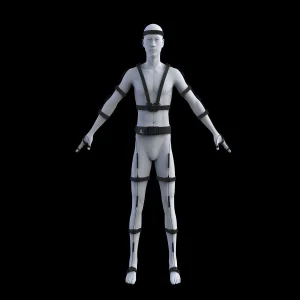
Doha Flagship Deployments
Advanced Kinetic Systems Engineered for Doha Production Stages
Combining absolute optical global reference coordinates with responsive multi-node biomechanical capture for broadcast studios, Aspire research labs, and Lusail virtual production facilities.



Industry Intelligence · Doha Spatial Computing Ecosystem
The Commercial and Industrial Motion Capture Landscape in Doha, Qatar
The State of Qatar is undergoing an unprecedented digital infrastructure revolution fueled by the ambitious mandates of the Qatar National Vision 2030 (QNV 2030). Within the capital municipality of Doha, strategic investments across Media City Qatar, Aspire Zone, Lusail Smart City, and Qatar Science & Technology Park (QSTP) have transformed spatial tracking and optical motion capture (mocap) from niche visual effects gimmicks into mission-critical digital infrastructure.
Traditional motion capture deployments in the GCC region were historically plagued by exorbitant installation footprints, complicated foreign vendor support chains, and extreme vulnerability to high ambient electromagnetic environments and localized thermal variables. In today's Doha market, enterprise purchasers demand hybrid sub-millimeter precision, uncompressed multi-actor low latency, and fluid real-time streaming directly into next-generation visual graphics engines like Unreal Engine 5.4+ and Unity 6.
< 8ms
Pipeline Latency
0.1 mm
Spatial Accuracy
50°C
Thermal Endurance
100%
CRA Compliant
Key Growth Verticals Driving Optical Spatial Tracking in Qatar
Optical spatial tracking in Doha is driven by four distinctly mature sectors that require exacting technical validation prior to procurement:
1. Broadcast XR & Virtual Production
From Al Jazeera Media Network's real-time volumetric studios to beIN Sports' dynamic augmented tactical overlays, high-frame-rate (240 FPS+) optical tracking systems provide zero-drift camera and talent tracking under heavy broadcast luminaire rigs.
2. Elite Sports Biomechanics
Aspire Academy and Aspetar Orthopaedic and Sports Medicine Hospital represent global gold standards in athletic kinematic diagnosis. Optical mocap volumes capture 3D joint kinetics, high-speed impact vectors, and gait rehabilitation metrics with calibrated spatial fidelity.
3. Energy & Defense Simulation
Ras Laffan industrial hubs, QatarEnergy facilities, and national security institutes utilize optical rigid body and full-skeleton tracking inside synthetic environments to conduct hazardous operations training, flight teleoperation, and tactical scenario drills.
Architectural Engineering · Doha Turnkey Rigging
Technical Roadmap: Designing High-Tolerance Optical Stages in GCC Environments
Planning an enterprise optical mocap stage within Doha requires comprehensive environmental mitigation. The unique architectural acoustics of Gulf commercial properties, paired with aggressive central cooling cycles (HVAC airflow vibration) and ambient infrared interference, demand an uncompromising technical framework.
1. The Multi-Camera Optoelectronic Array
High-resolution CMOS sensors equipped with high-efficiency near-infrared (NIR: 850nm) or ultra-narrow bandpass strobe emitters (940nm) ensure that high-lux broadcast studio lighting or ambient sunlight penetrating expansive glass atriums (common in West Bay and Lusail architecture) does not blind marker centroids. System configurations typically range from 12 to 48 synchronized cameras interconnected via redundant IEEE 802.3bt Power-over-Ethernet (PoE++) switches to ensure nanosecond frame synchronization across active volumes exceeding 20m × 20m × 6m.
2. Hybrid Sensor Data Fusion: Solving Optical Occlusion in Group Actions
A fatal limitation of pure optical tracking is marker occlusion during complex actor interactions, floor choreography, or tactical vehicle ingress/egress. Our Doha turnkey engineering solution utilizes a Multi-Modal Data Fusion Protocol:
- Global Optical Ground-Truth: Optoelectronic cameras establish absolute, sub-millimeter positional root coordinates within the studio frame without accumulative spatial drift.
- Wearable Inertial Core: Wearable 9-axis micro-electro-mechanical system (MEMS) sensor nodes (combining accelerometer, high-bandwidth rate gyroscope, and hardened magnetic compass filters) instantly take over joint angle recalculations whenever optical markers are hidden behind props, scenery, or another performer.
- Real-Time Kalman Kinematics: Proprietary multi-threaded IK (Inverse Kinematics) solvers eliminate jitter, pops, and floating feet, delivering ready-to-air animation data to virtual engine viewports in under 8 milliseconds.
| Kinematic Parameter | Standard Legacy Optical | Pure Inertial IMU Suit | Our Doha Hybrid Optical-Inertial Solution |
|---|---|---|---|
| Positional Drift Over 60 Mins | Zero Drift (Subject to Volume) | Cumulative 1.2% - 3.5% Drift | Absolute Zero Drift (Continuous Optical Correction) |
| Occlusion Vulnerability | High (Ghost markers, dropout) | Immune (Wearable self-contained) | Immune (Instantaneous IMU predictive fill) |
| Outdoor & Set Portability | Restricted to Calibrated Truss | Extremely High (Pack-and-go) | High (Modular optical pods + standalone IMU mode) |
| GCC Thermal Durability (45°C+) | Overheating of strobe LEDs | Battery thermal throttling | Aviation-Grade Anodized Alloy passive heatsinks |
| Direct Engine Integration | Custom SDK or FBX delay | LiveLink Plugin | Native UE5.4 LiveLink, Unity, Maya & Blender OSC |
Manufacturing Precision · Industry 4.0
China Factory 4.0: Direct Supply Chain Resilience for Doha Enterprise Clients
Sourcing advanced optoelectronic systems for high-profile governmental and commercial tenders in Doha often involves painful lead times and massive intermediary markups from European or North American middle-tier integrators. By partnering directly with our direct-from-manufacturer Industry 4.0 production cluster in Guangzhou, China, Qatari enterprises unlock unprecedented strategic advantages:
Automated Robotic Calibration
Every single optical camera lens, strobe array, and inertial sensor node undergoes automated robotic 6-axis turntable calibration and thermal chamber burn-in testing, assuring baseline variance under 0.02% across production batches.
40% Direct Capex Reduction
By eliminating 3rd-party distribution markups and localized agent margins, Doha studios receive institutional-grade hardware, continuous firmware enhancements, and open SDK access at 35% to 50% below historical market averages.
72-Hour Rapid GCC Air Logistics
Direct air freight channels through Guangzhou Baiyun (CAN) to Hamad International Airport (DOH) ensure replacement nodes, spare camera optics, and specialty markers clear customs and arrive on stage within 72 business hours.
Sovereign Security & Compliance
Localized Support, SLA Guarantees & Qatari Regulatory Compliance
Enterprise procurement in Qatar is subject to rigorous technical due diligence, intellectual property confidentiality, and wireless spectrum certification. Our turnkey solutions in Doha are purposefully tailored to satisfy regional legal and logistical mandates:
Communications Regulatory Authority (CRA) Wireless Approval
All wireless RF transmission protocols operating alongside our optical stages (including ultra-low latency 2.4GHz proprietary multi-channel hops and 5.8GHz data streaming transmitters) are fully engineered to comply with Qatar CRA spectrum ceilings, preventing cross-frequency interference with internal enterprise Wi-Fi 6E/7 networks and emergency communication channels.
Arabic Gesture Recognition & Biomechanical Calibration
Human kinetics and cultural performance nuances vary across geographical demographics. Our Doha solutions integrate specialized retargeting libraries built to accurately capture traditional Qatari Ardha dance routines, authentic falconry arm articulation, and bespoke regional theatrical movements without unnatural joint flipping or algorithmic limb collapse.
Air-Gapped Studio Data Sovereignty
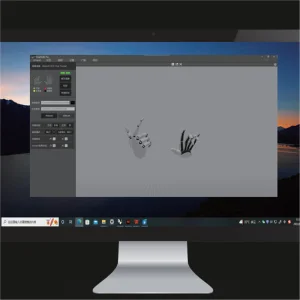
Recognizing the confidential nature of state projects, national media archives, and competitive sports science datasets, our proprietary desktop systems (VDMocap Studio Plus, mHand Studio) operate with 100% offline local licensing capabilities. No motion capture data is ever forced through remote cloud relays, guaranteeing complete data sovereignty within your Doha physical facility.
Comprehensive Catalog
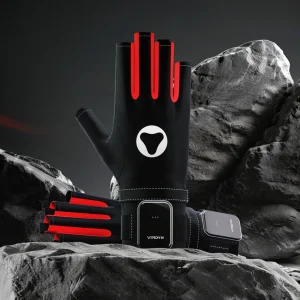
Complete Motion Capture Hardware & Software Systems for Qatar
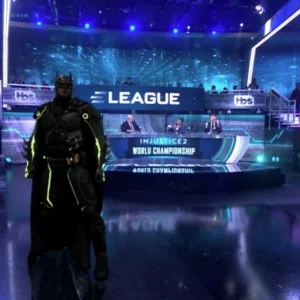
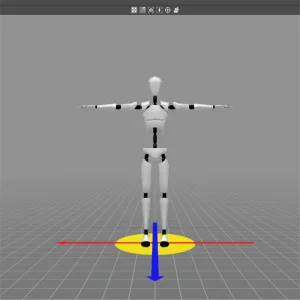
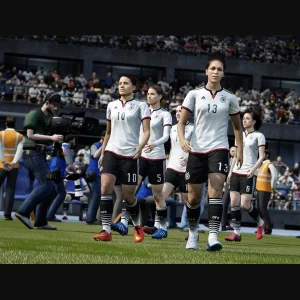
Deploy integrated body, dexterous hand, facial, and virtual broadcasting solutions designed to interface smoothly with leading real-time game engines and 3D visual suites.


Procurement Advisory · TCO & Tender Vetting
Enterprise Tender Guidelines: Formulating an Optical Mocap RFP in Doha
Procuring a multi-camera optical capture volume represents a capital investment designed to deliver operational value over a 5 to 10 year horizon. When preparing technical tender requirements for Qatar government tenders, educational labs, or broadcast acquisitions, enterprise steering committees should insist on the following core evaluation criteria:
Optical Wand Calibration Residuals
Ensure suppliers guarantee an average 3D wand calibration residual error of less than 0.25mm across the entire effective volume, supported by automated wanding software diagnostics.
Round-Trip Engine Latency SLA
Total latency measured from physical photon emission to bone solve packet ingestion inside the target DCC (e.g. Unreal Engine LiveLink) must not exceed 10ms at 120 FPS or 6ms at 240 FPS.
Perpetual Architecture vs Saas Lock-in
Insist on perpetual studio software licensing terms. Beware of Western legacy providers who enforce punitive recurring seat subscriptions and mandatory cloud dependencies for raw tracking solves.
Technical Clarifications
Frequently Asked Questions: Optical Mocap Planning in Doha
In-depth engineering answers addressing installation, calibration, environment control, and software interoperability for GCC deployment teams.
How does ambient desert heat and aggressive HVAC cooling in Doha affect optical mocap accuracy?
High thermal gradients between Doha's extreme outdoor temperatures (often exceeding 45°C) and heavy commercial indoor air conditioning create micro-expansion in aluminum stage trusses and optical lens barrel glass. If unmitigated, this causes progressive calibration drift. Our Doha installation specifications require rigid carbon-reinforced truss dampeners, temperature-compensated camera mounts, and a brief 15-minute thermal normalization cycle prior to daily wand calibration, maintaining consistent sub-millimeter positional stability throughout extended production runs.
What are the space and ceiling height requirements for an enterprise optical stage in Doha?
For professional broadcast and athletic capture volumes, we recommend a minimum clear ceiling height of 3.8 to 4.5 meters to ensure cameras look downward at steep angles (typically 35° to 50°), effectively mitigating floor reflections and occlusion during jumps or tumbling. For a standard 8m × 8m active capture footprint, a total physical room dimensions of 10m × 10m is standard, accommodating peripheral camera throw distance and perimeter technician workstations.
Can your optical mocap systems synchronize seamlessly with professional broadcast LED walls in Lusail and Media City?
Yes. Our optoelectronic sync hubs support standard professional Genlock (SMPTE tri-level sync and black burst) alongside VESA timecode distribution. This enables optical spatial tracking cameras to lock frame-accurately with the refresh rate of high-pitch LED volumes (e.g. Brompton, Megapixel VR processors) and broadcast camera shutters, avoiding scan lines, ghosting, or frame dropouts during mixed-reality production.
How does the hybrid optical-inertial pipeline handle finger dexterity and micro-facial capture?
While high-mounted optical cameras track gross body skeleton and head root coordinates, subtle finger movements and facial expressions are handled by dedicated peripheral nodes: the mHand Pro gloves (utilizing independent 16-node finger IMU arrays and flex sensors) and the VDFace Pro lightweight headcam rig. These sub-streams feed concurrently into our VDMocap Studio Plus software, fusing body, fingers, and 52 standard Apple ARKit blendshapes into a singular, synchronized FBX or real-time LiveLink datastream.
What lead time can enterprise clients in Qatar expect for hardware delivery and on-site deployment?
Standard turnkey orders (consisting of 12-24 camera optical rigs, hybrid suits, and glove hardware) typically complete factory manufacturing, automated calibration, and QC burn-in within 10 to 14 business days. Air express logistics to Doha takes 3 to 5 business days. Our field application engineers are available for immediate on-site deployment across Doha for mechanical truss mounting, PoE network cabling, system calibration, and local team workflow training.
Initiate Your Doha Motion Capture Stage Blueprint Today
Connect directly with our senior spatial kinematic architects to review your facility floor plans, evaluate camera distribution layouts, or obtain customized tender specifications tailored to the Qatar market.