
Featured Precision Capture Systems for Australian Studios
Designed to integrate seamlessly into active virtual production volumes and academic research spaces with zero RF friction.
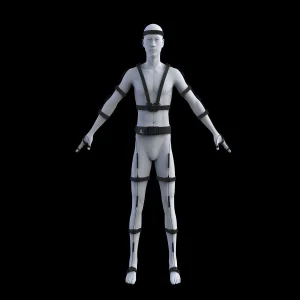



The Australian Optical Motion Capture Landscape: 2026 Transformation
Australia has transformed into one of the Southern Hemisphere’s leading epicenters for high-end digital spatial production, visual computing, and precision robotics. Driven by federal tax offsets, cutting-edge creative clusters in Victoria, New South Wales, and Queensland, as well as significant university-led biomechanics grants, the procurement of optical motion capture equipment has moved beyond experimental curiosity into institutional mission-critical infrastructure.
VFX & Digital Games Tax Offset (DGTO)
Australia’s competitive 30% refundable tax offset has led to a boom in Sydney, Melbourne, and Brisbane studios expanding virtual production LED volumes. Optical tracking workflows require multi-actor occlusion immunity and low-latency Unreal Engine LiveLink integration to avoid costly stage delays.
Human Biomechanics & Sports Institutes
From the Australian Institute of Sport (AIS) to collegiate research clinics in Melbourne, gold-standard marker-based optical setups are deployed alongside high-density force plates to evaluate elite athlete kinematics, musculoskeletal stress, and injury rehabilitation kinetics.
Mining Automation & Humanoid AI
Resource titans operating across Western Australia deploy teleoperation corridors. Collecting massive human action datasets using optical and hybrid tracking allows tele-robotic actuators and autonomous machinery to safely mirror human dexterity in harsh extraction environments.
Solving the Optical Mocap Bottlenecks: A Hybrid Approach
While pure optical mocap provides pristine absolute root positioning, traditional camera-only arrays suffer when multi-actor interactions introduce severe marker occlusion, or when large stages require millions of dollars in infrastructure. Our architecture solves this through engineered sensor fusion.
1. Optical Occlusion Shielding
By blending high-frame-rate active/passive optical tracking markers with onboard 9-axis inertial measurement units (IMUs), our system continues estimating 6DoF skeletal kinematics precisely even when performers grapple, roll, or hide markers behind physical props.
2. Genlock & SMPTE Timecode Synchronization
Essential for broadcast and virtual stages across Melbourne and Sydney. Hardware-level Genlock pulses eliminate sub-frame phase drift between cinema camera shutters, LED wall display refresh cycles, and optical position data streams.
3. Native Engine Zero-Latency Retargeting
Ditch legacy, slow post-processing pipelines. Direct UDP/TCP broadcasting streams solved skeletal joints directly into Unreal Engine 5.4+ Control Rig, Unity 6, Autodesk Maya, and MotionBuilder with less than 15ms total end-to-end latency.
Localized Australian Support, RF Compliance & Engineering SLA
Deploying high-capital optical and hybrid mocap hardware into Australia necessitates strict regulatory adherence and zero downtime risk for high-budget productions.
ACMA RCM Compliance
All wireless tracking nodes, sync transceivers, and optical hub controllers are certified under Australian Communications and Media Authority (ACMA) regulations, guaranteeing non-interference with local 2.4GHz / 5.8GHz telecommunications bands.
Sub-48H Spare Parts Dispatch
We maintain regional spare node inventories and calibration accessories to service clients across Sydney, Melbourne, Brisbane, Adelaide, and Perth, mitigating international shipping delays during live shoot cycles.
Bespoke Stage Spatial Design
Our dedicated spatial planning team works with your stage rigging specifications, analyzing Truss dimensions, reflective interference, camera occlusion volumes, and acoustic dampening to craft an optimal turn-key setup.
Strategic Technology Roadmap: 2026 to 2028
The boundaries between marker-based optical, markerless computer vision, and wearable telemetry are collapsing. Here is how our hardware plans protect institutional investments for the next decade.
Neuromorphic Camera Sync
Integrating event-based sensors alongside traditional optical CMOS sensors to enable motion capture up to 10,000 equivalent FPS with virtually zero motion blur on high-speed acrobatic stunts.
AI-Accelerated Real-Time Inpainting
Deep-learning kinematic solvers operating at the edge to instantly repair and inpaint occluded marker clusters directly on the network switch, reducing post-cleanup cleanup overhead by 85%.
Zero-Rig Biomechanical Retargeting
Automated cloud-to-local neural networks that translate optical marker arrays into physically correct muscle activations and torque loads for embodied humanoid robotics training.
Frequently Asked Questions for Australian Engineers & Producers
Get clear answers regarding infrastructure demands, optical vs. inertial trade-offs, and procurement processes.
How does an optical mocap system compare with an inertial suit for an Australian studio?
What are the ceiling height and spatial requirements for a high-performance optical mocap volume?
How do Virdyn systems integrate with Unreal Engine 5.4+ LiveLink in virtual production?
Can your hardware capture both delicate finger movements and facial performance simultaneously?
What is the procurement timeline, shipping, and warranty for Australian institutional clients?
Complete Motion Capture Hardware & Software Solutions
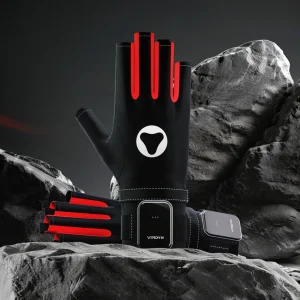
Review our end-to-end lineup of wearable tracking systems, precision finger gloves, and real-time retargeting engines.


Deploy Australia's Leading Motion Capture Pipeline
Talk with our senior tracking engineers to receive custom spatial layouts, hardware integration quotes, and real-time remote pipeline demonstrations.
Send Inquiry Now