
Enterprise Mocap Flagships for Austrian Industry & Creative Studios
Pre-calibrated hardware and software arrays deployed across Vienna's virtual film soundstages, Graz automotive ergonomics labs, and Linz experimental digital interactive hubs.

Design Virdyn VDSuit Full for Full Body Function Inertia Motion Capture Suit Planning, Solution (Austria Edition)

Best Motion Capture Technology Opens a New Era of Animation Development Planning, Solution
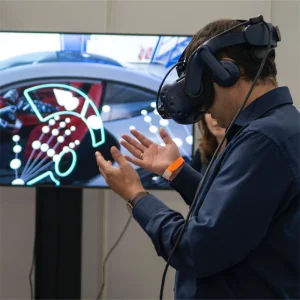
Design Book a Demo for VDSuit Full or mHand Pro Planning, Solution

Design Virtual Human Technology: Digital Human Activation Brand Marketing New Path Planning, Solution
Austria’s Precision Engineering, Virtual Production & Alpine Biomechanics Ecosystem
Austria presents a uniquely demanding market for optical and hybrid motion capture systems, balancing rigorous engineering standards with world-class artistic innovation.
Vienna Creative & VFX Cluster
Vienna is emerging as a Central European heavyweight in virtual film production, real-time animation, and indie game engineering. Studios working with Unreal Engine 5.4+ require robust multi-actor optical marker volumes integrated with zero-latency LED soundstages, eliminating traditional rotoscoping bottlenecks.
Graz Automotive & Ergonomics Hub
The Styrian automotive cluster surrounding Graz demands sub-millimeter kinematics tracking for vehicular cockpit ergonomics, assembly-line worker fatigue modeling, and human-in-the-loop robotic teleoperation. Optical setups must interface directly with industrial Siemens and ROS architectures.
Tyrol & Salzburg Alpine Sports Science
From Olympic winter sports training in Innsbruck to orthopedic gait rehabilitation centers across Salzburg, capturing extreme athlete dynamics under harsh ambient conditions mandates hybrid setups where optical high-speed spatial accuracy resolves rapid joint twists without drift.
Optical vs. Inertial vs. Hybrid Systems: Engineering Decision Matrix
A rigorous breakdown designed for Austrian CTOs, studio technical directors, and university lab researchers evaluating total cost of ownership, operational tolerances, and algorithmic constraints.
| Evaluation Parameter | Optical Marker-Based (Retro-Reflective) | Inertial Multi-Node (VDSuit IMU) | Hybrid Optical-Inertial (Virdyn Integrated Pipeline) |
|---|---|---|---|
| Spatial Resolution & Precision | Sub-millimeter (±0.1mm to 0.3mm in calibrated cube) | Angular accuracy (±0.5°); estimated global coordinates | Sub-millimeter absolute position with real-time rotational verification |
| Occlusion Vulnerability | High vulnerability; requires redundant multi-camera lines of sight | Zero occlusion; internal mathematical IMU fusion calculates joints | Self-healing; IMU maintains kinetic trajectory during transient optical blind spots |
| Site Setup & Calibration Overhead | High; rigid truss mounting, optical wanding, ambient light baffling | Ultra-fast (3-5 minutes); portable, indoor/outdoor without cameras | Medium; simplified optical camera layout assisted by autonomous drift anchors |
| Latency & Engine LiveLink | Extremely low (4ms - 10ms hardware solve) | Ultra-low wireless transfer (< 15ms end-to-end to UE/Unity) | Low (< 12ms unified data stream via unified SDK) |
| Finger & Facial Articulation | Requires dense, fragile retro-reflective micro-marker clusters | Seamlessly expanded with mHand Pro gloves & VDFace helmets | Full-stack multi-modal data fusion with native synchronization |
| Total CAPEX & Scalability | €40,000 – €180,000+ for large European studio volumes | €4,000 – €15,000; highly cost-effective and portable | Optimized budget: 50%–65% reduction versus legacy European providers |
Why Austrian Enterprises Partner with Guangzhou Virdyn Technology
Combining world-class sensor fusion algorithms with agile direct-from-factory manufacturing delivers unmatched pricing, rapid customization, and technical transparency.
Unrivaled Cost-to-Performance Ratio
By eliminating multiple tiers of European trading intermediaries and distributor markups, Virdyn provides Austrian production teams access to industrial-tier mocap hardware at 40% to 60% lower capital expense, preserving vital project budget for creative assets and talent.
Full-Stack R&D & Rapid SDK Iteration
Unlike repackagers, Virdyn controls the full intellectual stack: MEMS IMU calibration rigs, high-frequency RF transmission protocols, real-time spatial fusion algorithms, and native Unreal Engine / Unity / Blender / Maya LiveLink plugins, providing custom SDK hooks on request.
Guaranteed Production Lead Times
Leveraging the Greater Bay Area’s world-leading precision electronics manufacturing infrastructure, Virdyn ships fully calibrated systems, replacement sensor modules, and custom camera arrays to Austria within 5 to 7 business days via reliable express air logistics.
Engineered for Austria’s High-Growth Technological Niches
Real-world integration workflows designed to satisfy the rigorous technical specifications of Austrian industrial conglomerates, academic faculties, and digital broadcast studios.
Virtual Production & LED Stage Filming in Vienna
Traditional optical systems suffer when deployed inside tight LED wall volumes due to intense IR reflections from high-density LED diodes. Virdyn's hybrid setup blends inertial body and finger tracking with external optical camera tracking for the primary camera crane, eliminating tracking loss while delivering photorealistic human performances inside Unreal Engine 5 nDisplay setups.
Automotive Assembly Ergonomics & Digital Twin Validation (Graz)
In cooperation with automotive engineering programs across Styria, VDSuit Full and mHand Pro provide ergonomic validation for vehicle assembly workers. The system tracks lumbar spine curvature, repetitive strain risks (RULA/REBA ergonomics indices), and fine motor control during dashboard wire routing, exporting clean BVH and CSV kinematics arrays.
Innsbruck Winter Sports Telemetry & Orthopedic Rehabilitation
Austrian ski performance institutes require motion tracking outside controlled indoor laboratories. Virdyn's inertial systems operate down to -10°C, recording dynamic alpine downhill crouches, carving angular velocity, and knee joint stress on actual ski slopes without requiring fixed camera mounts, feeding real-time biomechanical analysis into Valyze software.
Embodied AI & Humanoid Robotics Teleoperation for Austrian Tech Labs
Training multi-finger dexterous robot hands and bipedal humanoid robots requires continuous, noise-free human demonstration datasets. Virdyn’s VDSuitMini paired with mHand Pro gloves delivers 60Hz-120Hz joint retargeting directly into Isaac Sim, Mujoco, and ROS nodes, enabling Austrian robotics researchers to collect thousands of teleoperated manipulation hours.
Enterprise Procurement Criteria for Austrian Technical Directors
Deploying optical and inertial capture systems within Austrian academic and industrial institutions demands strict compliance with European directives and uncompromising software stability.
CE, RoHS & RED Radio Compliance
All Virdyn hardware exported to Austria strictly complies with the European Union Radio Equipment Directive (RED 2014/53/EU), RoHS environmental restrictions, and CE electromagnetic compatibility guidelines, ensuring safe transmission across the 2.4GHz ISM band in European office and campus environments.
GDPR-Safe Offline Architecture
Unlike cloud-dependent tracking solutions, Virdyn desktop applications (VDMocap Studio Plus, mHand Studio) operate 100% locally on your internal workstation. No biometric skeleton coordinates, facial mesh data, or actor recordings are uploaded to external cloud endpoints, safeguarding Austrian enterprise intellectual property.
Bilingual Engineering Support
Procurement contracts include dedicated technical support, live video remote calibration sessions tailored to Central European Time (CET/CEST), comprehensive English documentation, pre-configured Unreal/Unity project templates, and a 12-month hardware warranty with rapid module replacement.
Specialized Mocap Systems for Commercial, Entertainment & Research Pipelines
Explore our complete ecosystem of finger articulation gloves, real-time capture engines, virtual live broadcasting systems, and advanced digital human toolsets.
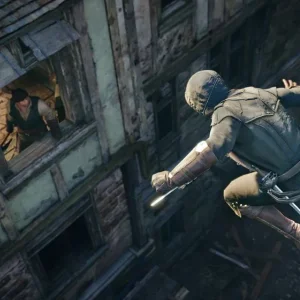
Design Inertial Motion Capture Technology to Help Game Development in Austria
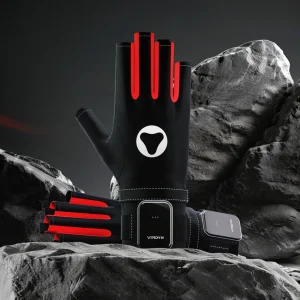
Best Virdyn mHand Pro Inertia Motion Capture Gloves for VR Simulation in Austria
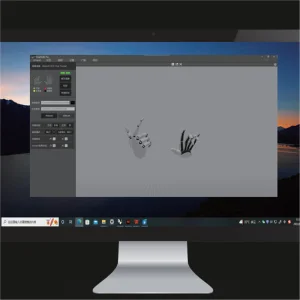
Best Virdyn mHand Studio Motion Capture Gloves Software System for Austria Engineering

Design Motion Capture Tools for Vienna Virtual Film Production Planning & Solution
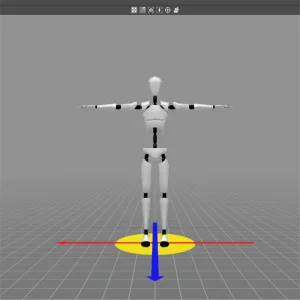
Design Virdyn VDMocap Studio Plus Software System for VDSuit Full Planning, Solution

Best Virtual Live Technology for Austrian EdTech & Interactive Studios Planning, Solution

Design Motion Capture for Austrian Creative Advertising & Commercials Planning, Solution

Best Virtual Spokesman Strategy: Motion Capture Empowers Austrian Brand Marketing
Frequently Asked Questions on Optical & Inertial Mocap Deployments in Austria
Detailed technical answers for hardware procurement officers, biomechanics researchers, and virtual production leads.
How does Virdyn solve optical marker occlusion in virtual production soundstages?
Can Virdyn mocap suits operate reliably in historic Austrian architecture with reinforced steel structures?
What is the exact streaming latency when feeding data into Unreal Engine 5.4 LiveLink in Vienna?
How do Austrian universities and sports clinics utilize Virdyn for biomechanical analysis?
What are the import procedures, tariffs, and lead times when shipping from China to Austria?
Does Virdyn provide SDK access for ROS2 and Python to support Austrian robotics labs?
Plan Your Austrian Motion Capture Stage Today
Whether you are designing a high-throughput virtual production facility in Vienna, setting up an alpine sports biomechanics lab in Tyrol, or prototyping humanoid robot teleoperation in Graz, Virdyn's engineering team provides tailored optical and hybrid mocap blueprints with direct factory support.