
Featured Mocap Hardware & Strategic Solution Packages for Luxembourg
Engineered to integrate seamlessly with European standard virtual production stages, university research clusters, and high-fidelity real-time rendering environments.
-
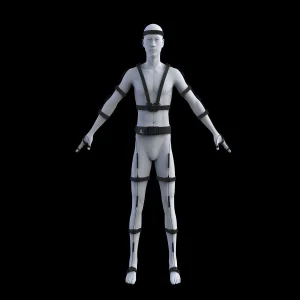 Design Virdyn VDSuit Full for Full Body Function Inertia Motion Capture Suit Planning, Solution
-
 Best Motion Capture Technology Opens a New Era of Animation Development Planning, Solution
-
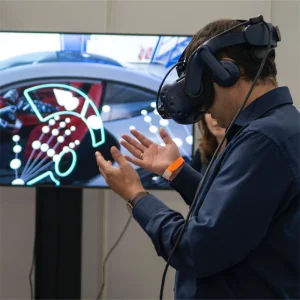 Design Book a Demo for VDSuit Full or mHand Pro Planning, Solution
-
 Design Virtual Human Technology: Digital Human Activation Brand Marketing New Path Planning, Solution
Optical Motion Capture in Luxembourg: High-Tech Convergence & Market Dynamics
As the Grand Duchy transitions into Europe’s premier hub for advanced digital technologies, space innovation, and cross-border creative media, motion capture has evolved beyond entertainment into an essential instrumentation stack.
Belval & University Research Clusters
Institutes like the Interdisciplinary Centre for Security, Reliability and Trust (SnT) and the Luxembourg Institute of Science and Technology (LIST) demand sub-millimeter precision tracking for autonomous space robotics, cobot teleoperation, and immersive digital twin verification under stringent scientific protocols.
Film Fund Luxembourg & Virtual Stages
Backed by substantial public-private funding initiatives, Luxembourg’s cinematographic and animation houses require turn-key optical tracking volumes that synchronize directly with LED volumes, Unreal Engine 5 nDisplay clusters, and active SMPTE timecode pipelines.
Ergonomics & HealthTech at LIH
Collaborative medical biomechanics initiatives, sports science facilities, and advanced clinical gait rehabilitation units at the Luxembourg Institute of Health (LIH) rely on high-frame-rate infrared spatial calibration to monitor multi-axis joint dynamics and post-trauma recovery.
Engineering Taxonomy: Evaluating Optical vs. Inertial vs. Hybrid Systems
Procurement decisions for Luxembourg enterprises necessitate a clear assessment of capture volumes, spatial occlusion resistance, dynamic bandwidth, and infrastructure overhead.
| Evaluation Parameter | Passive Optical Marker (YanDong Architecture) | Active Optical Marker Systems | Wearable IMU Inertial (VDSuit Ecosystem) | Multi-Sensor Hybrid (Optical + IMU) |
|---|---|---|---|---|
| Spatial Resolution & Precision | Sub-millimeter (±0.12 mm relative accuracy) | Sub-millimeter (±0.20 mm), ID multiplexed | Angular accuracy (0.5°), drift-mitigated | Absolute position ±0.10 mm with zero drift |
| Environmental Constraints | Controlled volume; calibrated focal zones | Indoor calibrated rigs; sensitive to direct sunlight | Zero volume bounds; operates outdoors & metals | Flexible; optical boundary with IMU continuity |
| Occlusion Vulnerability | Requires multi-camera line-of-sight redundancy | Reduced by temporal pulsing algorithms | Zero occlusion; fully body-conformal | IMU dead-reckoning during optical blindspots |
| Rig Setup & Deployment Overhead | Fixed truss, multi-strobe network, daily wand calibration | Medium; active battery transceivers on actor | Instantaneous; suit calibration in < 2 minutes | Unified calibration: optical zero aligned to IMU origin |
| Native Engine & DCC Latency | 2.2 ms via TCP/UDP high-speed streaming | 3.5 ms multiplexed ID decoding | < 5.0 ms low-power 2.4GHz proprietary RF | < 4.0 ms multi-threaded Kalman fused output |
| Recommended Luxembourg Deployment | Belval film VFX, Virtual Production, Biomechanics | High-density crowd tracking & prop interaction | FinTech live VTubing, mobile VR, on-site industrial testing | Autonomous humanoid robotics & aerospace simulation |
Macro-Industry Solutions for Luxembourgish Organizations
Our modular architecture adapts to the strict technical and regulatory frameworks of the Grand Duchy, addressing four high-impact commercial and research verticals.
1. Next-Generation Virtual Production (VP) & VFX
For modern production stages in Contern, Kehlen, and Esch-sur-Alzette, we deploy multi-camera optical setups engineered to track camera lenses and physical props with sub-frame SMPTE Genlock synchronization. Coupled with zero-latency LiveLink streaming into Unreal Engine, cinematographers experience artifact-free real-time parallax backgrounds on ultra-high-pitch microLED screens.
2. Humanoid Robotics & Embodied AI Training Data
Collaborating with robotics laboratories across the Greater Region, our optical-inertial arrays capture nuanced bilateral human manipulation. Utilizing VDEgo egocentric visual data and mHand Pro multi-node teleoperation gloves, researchers compile rich datasets of multimodal trajectories, accelerating end-to-end reinforcement learning for dexterous humanoid manipulators.
3. Interactive FinTech & Enterprise Digital Ambassadors
As Luxembourg solidifies its leadership in global banking and institutional investment, financial institutions deploy real-time digital representatives for cross-border investor communication. Our optical facial capture rigs combined with full-body sensor suits provide photorealistic, real-time avatar animation for secure, high-engagement private wealth summits.
4. Clinical Ergonomics, Sports Science & Rehabilitation
Luxembourgish clinical research centres leverage high-frequency infrared optical grids paired with biomechanical force plates to calculate exact joint torque, center-of-mass shifts, and rotational momentum. Validated against gold-standard protocols, our software delivers instant BVH and C3D data exports for scientific gait diagnostics.
Technology Roadmap: Next-Gen Optical Tracking (2025–2028)
Our Guangzhou and European research units are advancing motion intelligence through markerless neural radiance reconstruction, edge-accelerated compute nodes, and distributed spatial computing.
Camera-Level Vision Processing
Integration of dedicated NPU compute modules inside optical sensor bodies, processing 2D centroid extraction on-chip and dropping raw network bandwidth loads by over 80% per stage.
AI Markerless & Marker Fusion
Unified pipeline where high-resolution markerless volumetric meshes automatically solve marker drop-outs in complex multi-actor occlusion scenarios, eliminating cleanup post-production.
Continuous Dynamic Auto-Wand
Self-healing optical stage geometry using ambient spatial reference nodes, keeping capture volumes calibrated despite temperature shifts or structural studio vibration.
Cross-Platform Robot ROS 2 Stack
Zero-latency native bridges translating spatial skeletal joint coordinates into continuous torque and joint position commands for commercial humanoid robots operating in smart factories.
China Factory 4.0: Supply Chain Resilience, Scalability & Cost Precision
Direct access to Guangzhou’s world-leading precision optical manufacturing and sensor electronics corridor empowers Luxembourgish buyers with rapid lead times, direct engineering support, and an exceptional price-to-performance ratio.
Vertically Integrated SMT & Optics Assembly
Every sensor node, infrared strobe PCB, and multi-element optical lens is calibrated on automated test benches in our Guangzhou facility, ensuring tight inter-sensor tolerance, zero electromagnetic crosstalk, and minimal thermal variance.
Agile Prototype-to-Production Cycles
Unlike traditional Western optical incumbents with multi-month lead cycles, our integrated supply chain enables custom structural mounts, specialized multi-camera cabling topologies, and localized firmware configurations delivered in weeks.
Democratizing Enterprise CAPEX
By eliminating excessive middle-tier distributor markups, Luxembourg research institutions and studios achieve studio-wide optical and inertial coverage at an investment level that preserves operational budget for talent and creative execution.
European Compliance, GDPR Sovereignty & Local Luxembourgish Support
Operating within the heart of the European Union requires comprehensive alignment with biometric governance, local electrical standards, and dependable on-site maintenance.
Biometric Data Sovereignty under GDPR (Article 9)
Our desktop tracking suites (VDMocap Studio, mHand Studio, and DreamsCap) operate in strictly air-gapped network environments without mandatory cloud dependencies. All kinematic joint coordinates, optical spatial vectors, and actor profiles remain 100% on local enterprise storage, ensuring compliance with Luxembourg's CNPD (Commission Nationale pour la Protection des Données).
CE, RED & RoHS Certifications
Every optical camera unit, wireless transmitter, and rechargeable lithium polymer cell adheres rigorously to the European Radio Equipment Directive (RED) and CE emission safety boundaries. Low RF power profiles ensure clean operation alongside sensitive medical and aerospace telemetry arrays.
Cross-Border Logistics & Fast-Track Spares
Leveraging direct air-freight corridors between Guangzhou, Frankfurt (FRA), and Luxembourg Findel Airport (LUX), spare optical lenses, reflective markers, replacement IMU sensor nodes, and suit harnesses reach local facilities within 48 to 72 hours, minimizing studio downtime.
Multilingual Remote Diagnostics & Engineering SLA
Our dedicated European technical operations division provides direct English, French, and German remote diagnostics, assisting Luxembourgish engineering teams with camera network routing, switch prioritization, and engine retargeting pipelines.
Enterprise Procurement & Optical Stage Dimensioning Guide
Key technical considerations for Luxembourg project managers and technical directors planning an optical motion capture facility.
1. Volume Sizing & FOV Overlap
A standard 8m × 8m × 3.5m tracking space requires an array of 12 to 16 optical cameras with wide-angle (70°–85° horizontal FOV) varifocal lenses. Ensuring that every point within the active volume is simultaneously observed by at least 3 to 4 cameras maintains continuous sub-millimeter centroid calculation.
2. Lighting & Thermal Control
Optical systems utilize 850nm or 940nm near-infrared (NIR) strobes. In spaces with exterior windows or high-powered theatrical LED lighting, bandpass optical filters (850nm ± 10nm) and electronic strobe synchronization are critical to filter ambient photometric interference.
3. Switch & Network Infrastructure
High-frame-rate optical cameras output synchronous high-throughput UDP packet streams. We specify managed Gigabit PoE+ switches supporting IGMP Snooping, Jumbo Frames (9KB MTU), and IEEE 1588 Precision Time Protocol (PTPv2) to prevent frame drops under heavy multi-actor scenarios.
Frequently Asked Questions for the Luxembourgish Market
Answers to common planning, hardware selection, and pipeline integration inquiries from regional studios and institutions.
End-to-End Motion Capture Hardware & Software Solutions
Explore our full line of wearable inertial capture suits, precision finger tracking gloves, software suites, and specialized media production workflows available for deployment across Luxembourg.
-
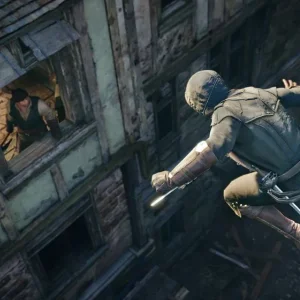 Design Inertial Motion Capture Technology to Help the Game Development and Production Planning, Solution
-
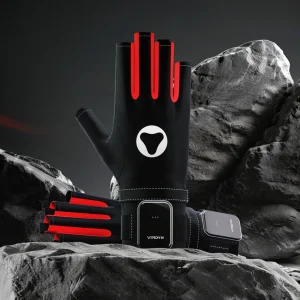 Best Virdyn mHand Pro an Inertia Motion Capture Gloves for Virtual Reality Planning, Solution
-
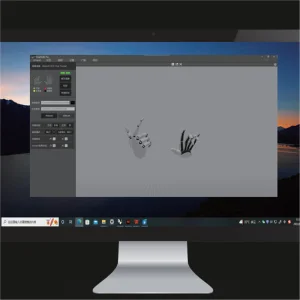 Best Virdyn mHand Studio Motion Capture Gloves Software System for mHand Pro Planning, Solution
-
 Design Motion Capture Provides Advanced Technology Tools for Virtual Film Production Planning, Solution
-
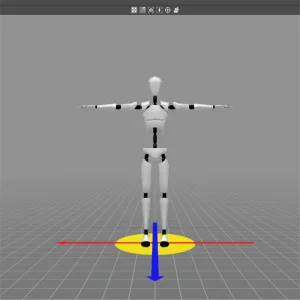 Design Virdyn VDMocap Studio Plus Motion Capture Software System for VDSuit Full Planning, Solution
-
 Best Virtual Live Technology Empowerment Makes Online Education and Learning As Fun As Watching Cartoons Planning, Solution
-
 Design Motion Capture Technology to Help the Development of Creative Advertising with Realistic Effects Planning, Solution
-
 Best How Do Brands Use Virtual Spokesman to Tell Good Stories: Motion Capture Technology Empowers Brand Propagation Planning, Solution
Plan Your Motion Capture Installation with Engineering Certainty
Consult with our motion tracking specialists on optical camera layouts, hybrid sensor synchronization, and budget optimization tailored for your facility in Luxembourg.