
Enterprise Motion Capture Deployments in Kenya
Turnkey optical-inertial setups engineered for extreme environmental tolerance, low power overhead, and multi-platform engine compatibility across East African institutions.

Design Virdyn VDSuit Full for Kenya Full Body Motion Capture Planning & Solution
Explore Kenya Solution
Best Motion Capture Technology Opens a New Era of Kenya Animation Development Planning, Solution
Explore Kenya Solution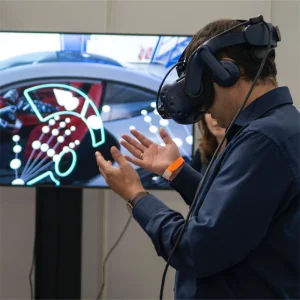
Design Book a Demo for VDSuit Full or mHand Pro Kenya Planning, Solution
Book Kenya Demo
Design Virtual Human Technology: Digital Human Activation Kenya Brand Marketing New Path Planning, Solution
Explore Kenya SolutionThe State of Optical Motion Capture: Kenya & Global Frontiers
Examining how high-fidelity spatial telemetry transforms East African digital production, athletics science, and autonomous systems.
1. Kenya’s Technological & Industrial Macro-Environment
Kenya stands at the inflection point of the fourth industrial revolution in Sub-Saharan Africa. Widely acknowledged as the "Silicon Savannah," the nation anchored by Nairobi and the emerging smart city Konza Technopolis has developed a world-class digital services ecosystem. Over the past decade, this infrastructure was primarily dominated by fintech, agritech, and mobile telecoms. However, the National Digital Master Plan (2022–2032) and the aggressive monetization of creative arts have prompted rapid modernization across higher-order computational domains: digital twin architecture, visual effects (VFX), interactive media, and sports analytics.
Historically, commercial game developers and animation studios across Nairobi (such as those clustered around Kilimani, Westlands, and media schools like the Africa Digital Media Institute) relied heavily on manually keyframed workflows. This approach introduced exorbitant delivery delays, leaving local production teams disadvantaged against international outsourcing vendors. Optical motion capture (Optical Mocap)—employing passive retroreflective or active near-infrared (NIR) marker tracking via synchronized multi-camera matrices—provides an empirical leap forward. By delivering real-time skeletal 6DoF (Six Degrees of Freedom) precision with sub-millimeter positional fidelity, optical motion planning eliminates thousands of manual labor hours while bridging local storytelling with Hollywood-tier pipeline parity.
2. Global Motion Capture Macro Trends vs. Emerging Market Realities
Globally, optical motion capture has evolved past the constraints of dedicated, million-dollar acoustically isolated capture volumes. State-of-the-art optical systems leverage high-resolution CMOS global shutter sensors, edge-computed spatial coordinate solving, and automated marker de-swapping powered by deep reinforcement learning. In advanced markets across North America, Europe, and East Asia, optical rigs integrate seamlessly with Unreal Engine's Live Link, SMPTE 2110 timecode networks, and automated biomechanical reporting systems.
When adapting these solutions for Kenya and broader Sub-Saharan Africa, distinctive structural and operational variables emerge:
- Thermal and Ambient Lighting Resilience: Equatorial solar radiance produces intense infrared ambient noise. Facilities in Nairobi, Mombasa, and Kisumu require optical filtration tuned strictly to 850nm or 940nm stroboscopic wavelengths, paired with high-efficiency daylight rejection optical bandpass filters.
- Electrical Grid Stability and Power Cleanliness: Intermittent voltage fluctuations demand specialized uninterruptible power supplies (UPS) and isolated Power-over-Ethernet (PoE+) topologies to protect delicate high-speed FPGA camera boards from harmonic distortions.
- Hybrid Deployment Flexibility: Unlike monolithic Western visual effects facilities, Kenyan studios require multi-modal flexibility: systems that can function indoors within an optical grid for maximum precision, or pivot quickly to inertial hybrid tracking (IMU) for open-air, run-and-gun documentary and athletic field work.
Localized Application Scenarios Across Kenyan Industries
Deploying specialized optical telemetry frameworks where regional competitive advantages yield maximum return on investment.
Elite Athletic Biomechanics (Eldoret & Iten)
Kenya's North Rift Valley produces the world's most dominant long-distance runners. Installing high-speed optical capture volumes (300+ FPS) in Eldoret and high-altitude research camps enables non-invasive musculoskeletal kinetic modeling. Researchers track foot strike angle, joint moment forces, pronation deviations, and stride energy conservation at sub-millimeter accuracy, converting empirical physiological telemetry into reduced injury rates and optimized training regimes.
The New "Riverwood" Virtual Film Production
Kenya's local film production scene (historically termed Riverwood) is evolving rapidly into cinematic-grade streaming content for international distribution (Netflix, Showmax). By deploying an optical volume synced with LED backdrops or green-screen frustum camera tracking, local directors can shoot photorealistic sci-fi and historical African mythological narratives directly in Nairobi without massive physical location overhead.
Pan-African Gaming & Virtual Live Streamers
Driven by Kenya's youthful demographic (over 70% under 35), indigenous game development studios and virtual influencer (VTuber) agencies are booming. Optical systems provide real-time facial fidelity and finger-tracking synchronicity via ultra-low latency pipelines, empowering creators to monetize interactive virtual brand ambassadors across TikTok, YouTube, and Twitch.
Comparative Technical Architecture: Optical vs. Inertial vs. Hybrid in Kenya
Choosing the correct tracking architecture depends on environmental conditions, ceiling height, capture volume dimensions, and required degrees of freedom. The table below represents our engineering recommendations for Kenyan enterprises:
| Evaluation Parameter | Optical Marker System (Retroreflective) | Inertial IMU Array (e.g., VDSuit Full) | Optical-Inertial Hybrid Architecture |
|---|---|---|---|
| Spatial Positional Precision | Sub-millimeter (±0.1mm absolute) | Estimated position; minor directional drift over time | Absolute global optical anchor + drift-free IMU |
| Infrastructure Requirement | Rigid trussing, network switch rack, calibration wand | Zero external infrastructure (wear & capture) | Lightweight 4-8 camera perimeter + wearable suit |
| Ambient Lighting Tolerance | Requires IR strobe tuning & daylight shading | 100% immune to all light conditions | Software switches gracefully if optical line is blocked |
| Magnetic Interference | 100% unaffected by structural rebar / steel beams | Requires auto-correction algorithms near steel structures | Optical tracking instantaneously corrects IMU magnetic drift |
| Setup & Calibration Time | 15–30 minutes (Wand waving, ground plane setting) | 2–3 minutes (Simple A/T-pose calibration) | 8–12 minutes total system calibration |
| Best Suited Kenyan Applications | Clinical gait labs (Nairobi Hospital), Biomechanics, VFX | Mobile video shoots, outdoor athletics, indie gaming | Commercial virtual production, high-throughput mocap studios |
Engineering an Optical Mocap Facility in Kenya: Step-by-Step
A rigorous implementation methodology tailored for tropical high-altitude environments and modern studio requirements.
Step 1: Volumetric Dimensioning & Rigging Geometry
A high-performance optical tracking stage requires careful geometric planning. For a standard 8m × 8m × 4m working volume in Nairobi, a minimum array of 12 to 16 synchronized optical cameras is recommended. Cameras should be mounted to an isolated 50mm structural aluminum truss system decoupled from building roof vibrations. In urban Kenyan industrial zones (e.g., Industrial Area or Baba Dogo), heavy transport vehicle ground vibrations can induce high-frequency jitter in optical brackets; utilizing heavy-duty dampers and cross-braced ceiling anchors is paramount.
Step 2: Stroboscopic IR Spectrum Selection & Optical Hygiene
Due to high UV/IR solar penetration in equatorial Kenya, studios with natural skylights or unsealed windows suffer from optical marker flicker. We enforce the use of 850nm or 940nm bandpass narrow-spectrum optical filters matched strictly to synchronized pulsed LED ring strobes. High dust indices during dry seasons (January–March) necessitate sealed IP54 camera housings and scheduled front-lens micro-fiber cleaning protocols to prevent retroreflective haloing and erroneous marker phantom identification.
Step 3: Network Topology & PTP Genlock Synchronization
Every optical camera streams raw centroid data or compressed greyscale sub-frames across an enterprise Gigabit or 10-Gigabit PoE+ switch architecture. To ensure frame-accurate sync with external virtual production hardware (such as RED, ARRI, or Blackmagic cinema cameras), the mocap host engine must receive PTP (Precision Time Protocol, IEEE 1588) or Genlock via BNC connections. This guarantees frame alignment up to 240Hz with less than 1 microsecond phase jitter, critical for artifact-free rendering in Unreal Engine 5's nDisplay pipeline.
Step 4: Real-Time Biomechanical Solving & Live Retargeting
Centroid coordinate extraction is solved through hierarchical human kinematic solvers. Markers placed anatomically on the anterior superior iliac spine, lateral epicondyles, and acromion processes feed inverse kinematics (IK) algorithms that reconstruct joint angles in real time. The resulting FBX/BVH stream or real-time VRPN/Live Link protocol outputs directly into DCC software (Autodesk Maya, 3ds Max, Blender) or gaming runtimes, completely bypassing tedious manual motion cleanup.
Strategic Technology Roadmap & Pan-African Expansion (2025–2030)
Preparing Kenyan enterprises for markerless spatial computing, AI kinematic synthesis, and embodied humanoid robotics training.
The Shift Toward AI-Augmented Markerless & Sparse Optical Tracking
Over the next five years, the Kenyan market will witness a fusion of high-precision marker-based systems with vision-transformer markerless neural networks. Markerless tracking reduces setup times to zero, allowing educational institutions like the University of Nairobi, Kenyatta University, and regional polytechnics to train students in motion design without suit-up friction. Meanwhile, professional VFX studios will retain optical marker and hybrid arrays for complex multi-actor stunt scenes, occluded props, and biomechanical precision.
Embodied AI & Humanoid Robotics Data Harvesting
As Africa's manufacturing and logistics sectors modernize, robotic automation will transition from rigid single-axis arms to dexterous manipulators and humanoid bipedal logistics units. Optical mocap facilities will serve as vital data-harvesting engines, capturing human workers executing delicate agricultural sorting, textile packaging, and machinery repair. This 6DoF telemetric data directly trains reinforcement learning models for robotic spatial awareness, positioning Kenya as an engineering leader in African AI dataset curation.
Enterprise Motion Capture Hardware & Systems for Kenya
Fully compliant with East African studio infrastructure, backed by comprehensive remote technical onboarding and international warranty.

Design Inertial Motion Capture Technology to Help Kenya Game Development and Production Planning, Solution
View Kenya Solution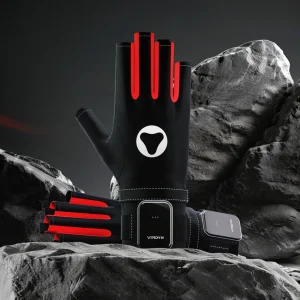
Best Virdyn mHand Pro an Inertia Motion Capture Gloves for Kenya Virtual Reality Planning, Solution
View Kenya Solution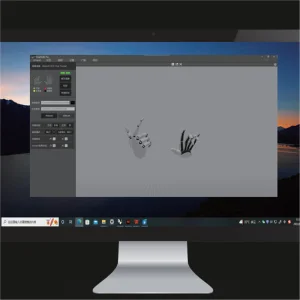
Best Virdyn mHand Studio Motion Capture Gloves Software System for Kenya mHand Pro Planning, Solution
View Kenya Solution
Design Motion Capture Provides Advanced Technology Tools for Kenya Virtual Film Production Planning, Solution
View Kenya Solution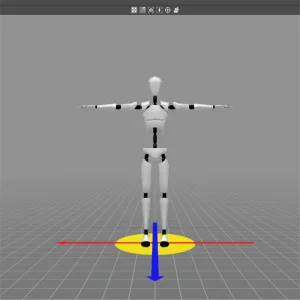
Design Virdyn VDMocap Studio Plus Motion Capture Software System for Kenya VDSuit Full Planning, Solution
View Kenya Solution
Best Virtual Live Technology Empowerment Makes Kenya Online Education and Learning As Fun As Watching Cartoons Planning, Solution
View Kenya Solution
Design Motion Capture Technology to Help the Development of Kenya Creative Advertising with Realistic Effects Planning, Solution
View Kenya Solution
Best How Do Brands Use Virtual Spokesman to Tell Good Stories: Kenya Motion Capture Technology Empowers Brand Propagation Planning, Solution
View Kenya SolutionFrequently Asked Questions for the Kenyan Market
Addressing core technical questions from institutional procurement managers, university directors, and studio executives.
How does an optical mocap system perform under unpredictable power grids in Kenya?
We mandate an industrial double-conversion online UPS (Uninterruptible Power Supply) combined with active harmonic filtering. This safeguards the master PoE+ switches, sync clocks, and high-precision FPGA cameras against brownouts and surges, while maintaining clean battery runtime for graceful calibration cache saves.
Can optical mocap cameras operate in non-air-conditioned high-ambient spaces in Nairobi or Mombasa?
Our optical sensors operate reliably within a 0°C to 45°C thermal envelope. For coastal regions like Mombasa with high humidity and salinity, we deploy conformal-coated circuit assemblies and sealed dust-proof camera enclosures to prevent condensation-induced tracking artifacts.
What minimum physical studio dimensions are needed for full-body tracking in Kenya?
For single-actor dynamic actions (running, martial arts, dramatic dance), a minimum clear volume of 5m × 5m × 3m is recommended. For multi-actor athletic or sports biomechanics analysis, an 8m × 8m to 12m × 10m stage equipped with 16 to 24 optical cameras provides optimal triangulation and zero line-of-sight occlusion.
How are import customs, logistics, and local onboarding handled for Kenyan buyers?
We support fully documented DDP (Delivered Duty Paid) shipments via air cargo into Jomo Kenyatta International Airport (JKIA), Nairobi. Comprehensive customs clearance documentation, local tariff classification support, and white-glove virtual commissioning sessions ensure your team is tracking in under 48 hours.
Accelerate Your Motion Capture Capability in Kenya
From initial spatial layout design and camera triangulation calculations to full hardware deployment, our dedicated technical engineers are ready to support your organization.