
Architecting the Optimal Optical Mocap Stage in Colombia
Selecting, deploying, and calibrating high-fidelity optical motion capture infrastructure in Colombia requires addressing specific geographical, infrastructural, and spatial factors. Whether outfitting an LED wall stage in Chapinero or a scientific laboratory at Ruta N, system integrators must adopt a multi-modal paradigm that synthesizes retroreflective photogrammetry with real-time algorithmic sensor fusion.
1. Mitigating Altitude and Atmospheric Thermal Distortion
At high-altitude plateaus such as Bogotá (2,640 meters above sea level), subtle air density changes and uneven thermal pockets generated by high-power LED production volumes induce optical shimmer and refraction indices alterations. High-resolution NIR (Near-Infrared) strobe sensors require dynamic focal length stability algorithms and active wand re-calibration routines to ensure 3D spatial marker tracking remains within a ±0.15mm tolerance.
2. Hybridizing Optical Precision with Inertial Resilience
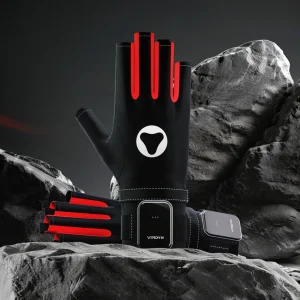
While multi-camera optical setups deliver absolute Euclidean global coordinate positioning, severe occlusions occur when actors interact with complex set elements, weapons, or other performers in dense choreography. Integrating secondary wearable inertial measurement nodes (such as the VDSuit Full platform) provides redundant bone rotation data. When optical markers are blocked, software kinematics engines immediately transition to IMU vector interpolation, preventing skeletal snap or limb loss.
3. Zero-Latency Pipeline Integration
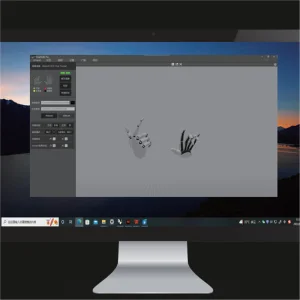
Colombian virtual production stages rely on Unreal Engine 5's Live Link protocol. To guarantee frame synchronization across SMPTE timecode networks, capture clusters must employ dedicated PTP (Precision Time Protocol) grandmaster clocks. Raw skeletal markers are processed, filtered, solved against rigid-body definitions, and mapped directly onto virtual skeletons within 12 milliseconds, enabling immediate real-time in-camera visual effects (ICVFX).
- Low-Latency Processing: Network UDP streaming guarantees real-time delivery to game engines and DCC platforms.
- Anti-Magnetic Interference: Dual-layer filtering resists interference from sound stages loaded with structural steel.
- High-Framerate Coverage: Strobe cameras operating between 240Hz and 480Hz accurately trace explosive martial arts movements.